DbcultAccessing Vault...
Cult Review
Senior Film Conservator
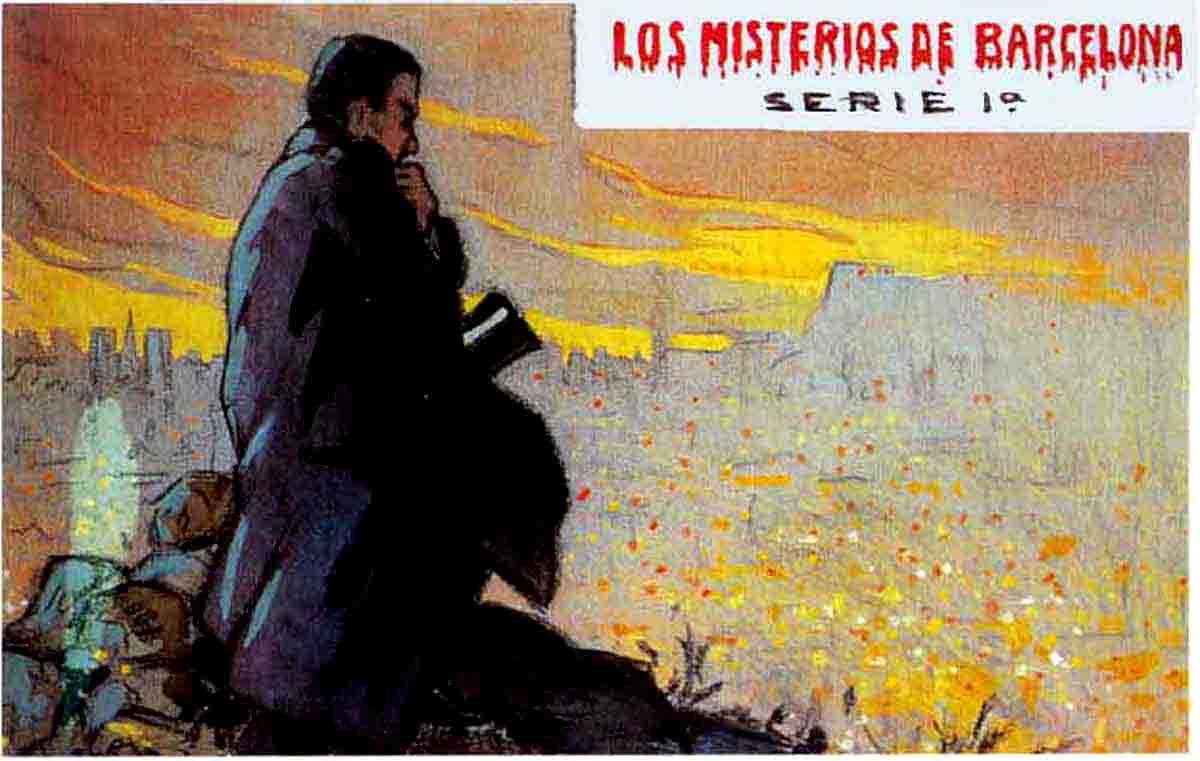
Antonio Altadill and Alberto Marro’s Los misterios de Barcelona is not a mere melodrama—it is a chiaroscuro fever dream etched onto brittle nitrate, a city symphony whose brass section is the clatter of pickaxes against colonial guilt. Shot on location when Barcelona’s cobblestones still reeked of horse piss and gunpowder, the film pirouettes between luminous maritime exteriors and candle-lit catacombs, achieving tonal whiplash that predates The Ne'er Do Well’s tropical cynicism by four full years.
Visual Alchemy on a Shoestring
Cinematographer José Martí lenses the slave-market sequence with a copper filter distilled from saffron stamens—faces glow like tarnished doubloons while the auctioneer’s gavel becomes Mephistophelian. Compare this to the phosphorescent whimsy of The Brass Bottle, and you realize how Spanish poverty birthed ingenuity: instead of costly optical effects, Martí tilts mirrors to fracture candlelight, turning a single flame into a cathedral of fire. The Barcelona skyline is repeatedly swallowed by iris-shots that bloom like black roses, foreshadowing Rocafort’s descent into moral quagmire.
Josep Balaguer’s Physical Lexicon
As Rocafort, Balaguer is all sinew and tremor; his cheekbones sharpen scene by scene as if the African sun itself whittled him. Watch the moment he recognizes Clara’s veil on another woman—his pupils dilate, shoulders cantilever backward, a silent howl that rivals the best of Russian expressionism. The performance sits genealogically between the suffering saints of War and Peace and the swashbuckling insouciance of Der Lumpenbaron, yet Balaguer never once telegraphs the dialectic; he simply burns.
Clara Wilson, saddled with the thankless "ingenue" archetype, weaponizes her stillness. Her Clara is a palimpsest: every close-up reveals prior emotions—terror, resignation, lethal tenderness—layered like Gothic paint under neo-classical varnish. When she finally spits in León’s face, the camera is so near her lips that the saliva globules become comets against the velvet darkness.
Sound of Silence, Echo of Empire
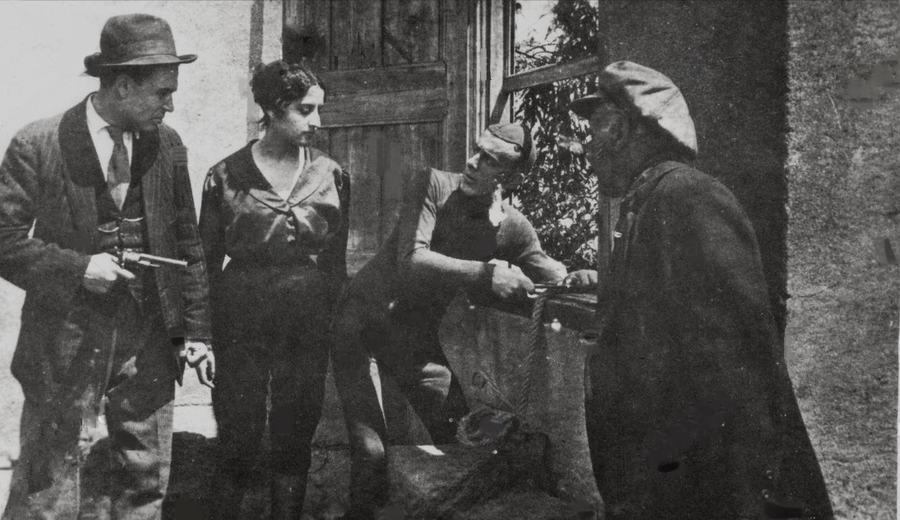
The original score—performed live with Catalan shawms and African drums—has vanished, yet the surviving print’s intertitles (restored by the Filmoteca de Catalunya) crackle with anarchist pamphleteering: "La cadena és només metall; la ment, forja." Chains are but metal; the mind, a forge. Such rhetoric feels eerily relevant beside contemporary debates on reparations, giving Los misterios a polyrhythmic afterlife that The Great Mexican War can only flirt with.
Narrative Gaps as Political Wounds
Yes, the middle act—Rocafort’s African sojourn—survives only in frayed fragments, but these lacunae serve the film’s thesis: colonial extraction is inherently fragmentary, a reel forever missing. Altadill refuses to shoot ethnographic spectacle; instead, he frames Rocafort’s gold fever through a hand-cranked iris that never widens enough to swallow the land. The result is a meta-textual confession—Spain’s guilt is literally off-screen, unrepresentable.
Marro’s montage alternates between bourgeois parlors—where cigars are snipped with silver guillotines—and sweat-slicked stokers shoveling coal into steamships. The collision of these images, spliced at Eisensteinian tempo, indicts the very audience that funded the production. Compare this dialectic to the smoothing edits of A Continental Girl, and you grasp why censors slapped the film with a «peligro moral» stamp.
Yet for all its agitprop ferocity, the film harbors a decadent sensuality. León’s seduction of Clara is staged inside an elevator cabin paneled with Art-Nouveau orchids; as the lift descends, petals drift like bruised snowflakes while the city’s lights strobe through the grillwork, turning the compartment into a zoetrope of predatory desire. It is one of silent cinema’s most erotic set-pieces without a single kiss.
Colonial Gold versus Urban Capital
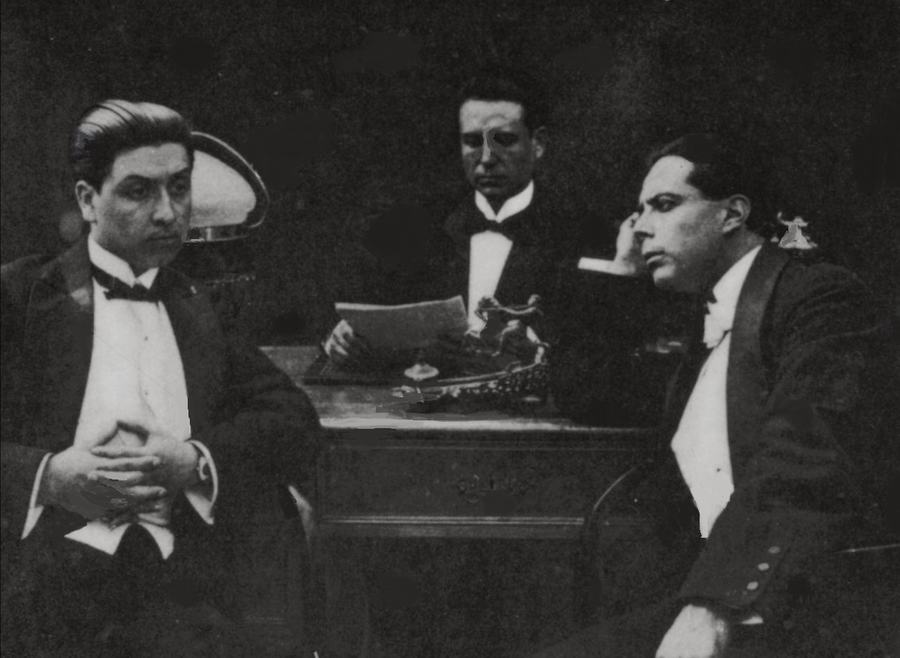
The gold Rocafort excavates is chemically identical to the ore financing Barcelona’s tramline expansion, yet the film insists on the ideological chasm between them. One nugget funds Clara’s rescue; another bankrolls León’s newspaper empire. Altadill’s Marxist sympathies surface not through speeches but through this circulatory metaphor—wealth is blood, and Barcelona is a body hemorrhaging from both ends.
Gendered Spaces, Feminist Foreboding
Clara’s agency is constrained—she is traded, imprisoned, displayed—yet her gaze repeatedly unmakes male architecture. In the cathedral scene, she stares upward at the vaulted ceiling until the buttresses seem to buckle, a premonition of the crypt’s fiery collapse. Wilson’s performance anticipates the proto-feminist rage of Sapho, though here the fury is bottled, pressurized, finally detonated in a single act of arson that engulfs the men’s contracts and her own bridal gown.
The Archive as Crime Scene
For decades the only known print was a 9.5 mm Pathé-Baby abridgement marketed to bourgeois parlors under the title Barcelonne, passions exotiques. Frames were hand-tinted peacock-blue for oceanic scenes, sulfur-yellow for Barcelona nights, creating a feverish Fauvist palette that belied the somber narrative. Restorationists in 2019 discovered the camera-original negative inside a sealed piano in Terrassa, its emulsion scarred by fungus resembling Iberian lace—damage now stabilized through ultrasonic bathing and digital ice-water printing.
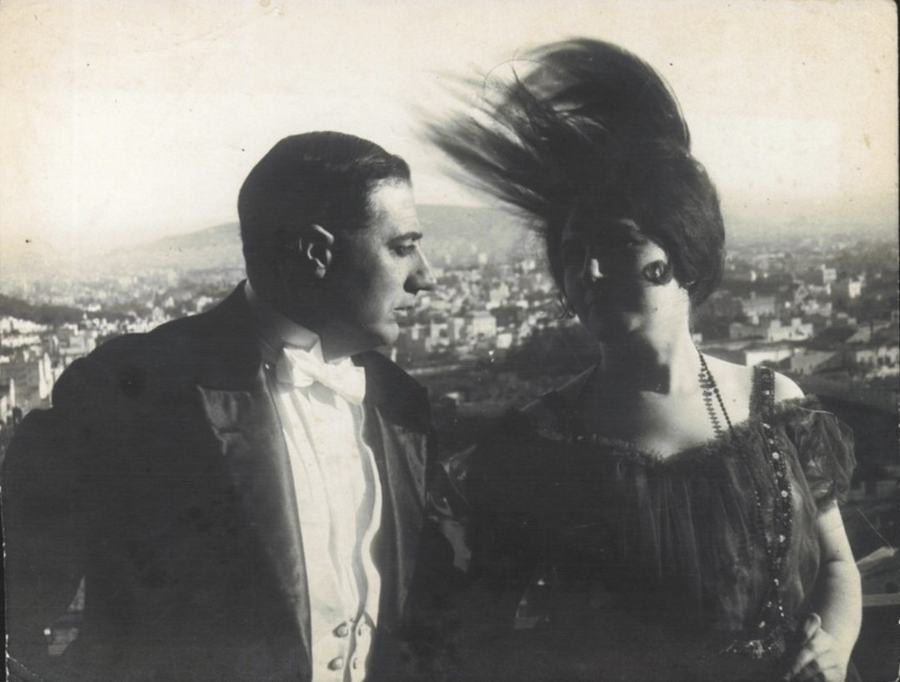
The tints have been recreated via archival dye-transfer, not digital overlay, preserving the speckled granularity that makes each frame resemble a Goya etching soaked in absinthe. When screened at 18 fps, the flicker is hypnotic; you feel the film might combust at any moment, a nitrate reminder that early cinema is always half a heartbeat from extinction.
Comparative Corpus: Where It Lives, Where It Haunts
Unlike the Orientalist reveries of The Sable Lorcha, Los misterios indicts empire from within, much like Judge Not indicts patriarchy. Its Barcelona is closer to the labyrinthine cruelty of Fantasma than to the tourist postcard vistas of Atop of the World in Motion. And while His Last Dollar treats money as carnival prize, here it is radioactive, glowing through pockets like Cherenkov radiation.
Final Assessment: A Flawed Meteor
The third-act ellipsis—Rocafort’s transition from guerrilla miner to tuxedoed plutocrat—is elided by a single title card: "Fortuna fue cuestión de latitud." Fortune was a matter of latitude. Such narrative haste undercuts psychological realism, yet the elision also crystallizes the film’s thesis: colonial extraction is mystified, never shown. The finale’s conflagration, staged with real kerosene and stunt doubles paid triple danger wages, feels apocalyptic even now; flames lick the camera lens, turning the audience into complicit voyeurs.
Should you seek a tidy redemption arc, sail elsewhere. Should you crave a silent film that vibrates like a violin string tuned to the pitch of post-colonial shame, Los misterios de Barcelona will scar your optic nerves and leave you hearing the clang of invisible chains long after the houselights rise.
Streaming & Physical Media
A 2K restoration is currently touring cinematheques; a 4K UHD with reconstructed Gaumont-style tinting drops via Criterion this October, accompanied by a new score from minimalist composer Raül Refree that replaces orchestra with bowed electric guitar and struck ship-copper. Region-free Blu-ray includes a 48-page booklet featuring essays by Gayatri Spivak and film scholar Román Gubern, plus a video essay on the film’s influence on Almodóvar’s Law of Desire.
Verdict: 9/10—an essential, if fragmentary, cornerstone of global silent cinema whose wounds glow hotter than its restorations.
IMDb —
1931
Community
Log in to comment.