DbcultAccessing Vault...
6.5/10
Senior Film Conservator

A definitive 6.5/10 rating for a film that redefined the boundaries of cult cinema. Carnevalesca remains a cornerstone of transgressive art.
The cinematic landscape of the early 20th century, particularly within the fertile ground of Italian silent film, often yielded works of profound artistic ambition. Among these, Lucio D'Ambra's Carnevalesca emerges not merely as a motion picture but as a deeply resonant psychological ballet, a visual poem charting the tumultuous inner life of its protagonist, Lydia Borelli. This is not a film content with simple narrative progression; instead, it delves into the very essence of human experience through a daringly allegorical structure, dividing a woman's existence into four distinct, vibrantly symbolic 'carnivals.' It's an audacious undertaking, demanding both intellectual engagement and emotional surrender from its audience, and one that Lyda Borelli, in a performance of astonishing breadth, navigates with compelling grace and intensity.
The White Carnival: Innocence Unveiled
The journey commences with the 'white carnival,' a pristine, almost ethereal evocation of childhood. Here, Lydia Borelli is presented as a figure of unblemished purity, a nascent soul experiencing the world through a lens of guileless wonder. D'Ambra masterfully employs soft focus and delicate compositions to underscore this period of nascent innocence, where shadows of future turmoil are yet to intrude upon the sunlit plains of youth. It is a time of unburdened joy, of simple pleasures, and of an inherent trust in the world's benevolence. Lyda Borelli, even in these early scenes, conveys a captivating fragility, a luminous presence that embodies the very essence of youthful naiveté. Her gestures are light, her expressions open, mirroring the unwritten pages of her life. This segment feels reminiscent of the pastoral beauty and emotional purity sometimes glimpsed in films like The Little Runaway, albeit with a more pronounced allegorical undercurrent, setting the stage for the profound shifts to come.
The Blue Carnival: Love's Ethereal Bloom
As the narrative progresses, Lydia transitions into the 'blue carnival,' an epoch shimmering with the intoxicating hues of burgeoning love and the tender blossoming of youth. This phase is characterized by its ethereal romanticism, the hopeful blush of nascent desires, and the intoxicating promise of connection. The camera lingers on expressions of longing, on stolen glances, and on the unspoken poetry of burgeoning affection. Here, Lyda Borelli’s performance deepens, her eyes conveying a newfound depth of emotion, a mixture of yearning and apprehension that is utterly captivating. The blue carnival is not without its complexities; it explores the vulnerability inherent in opening one's heart, the exhilaration of reciprocal affection, and the subtle anxieties that accompany such profound emotional investment. It’s a period where the world expands, filled with the potential for shared dreams and intimate understanding. The portrayal of love here, while deeply personal, touches upon universal themes of youthful romance, echoing the emotional sincerity found in works like The River of Romance, yet with a distinctively Italianate, almost operatic, sensibility.
The Red Carnival: A Conflagration of Passion
The idyllic shades of blue give way to the searing intensity of the 'red carnival,' a maelstrom of violent, consuming passion. This segment is a stark departure, plunging the audience into a realm where the very fabric of existence is rent by destructive impulses and the fiery crucible of intense, often perilous, emotions. Lyda Borelli transforms with astonishing power, embodying the raw, untamed force of desire and its perilous consequences. Her performance here is a tour de force, replete with grand gestures and expressions of profound anguish, mirroring the destructive potential of unchecked emotion. The film does not shy away from depicting the scars left by such fervent entanglement, exploring themes of betrayal, jealousy, and the self-immolation that can accompany obsessive love. The red carnival is a visceral experience, a descent into the intoxicating abyss where love and hate are inextricably intertwined. The dramatic intensity and exploration of destructive passion find echoes, perhaps, in the more visceral narratives of films like The Sex Lure or The Immortal Flame, though Carnevalesca frames these emotions within a more overtly symbolic and psychologically fragmented context, making them feel less like melodrama and more like an unavoidable stage in the human condition.
The Black Carnival: The Shadow of Oblivion
Finally, the descent culminates in the chilling 'black carnival,' a stark, somber tapestry woven with threads of inexorable death and the encroaching shadow of madness. This is the ultimate, inescapable dissolution of the self, revealing the profound solitude that accompanies life's final acts. The visual language here is stark, minimalistic, and profoundly unsettling, employing chiaroscuro to great effect, where light struggles against an encroaching darkness. Lyda Borelli's portrayal of despair and mental fragmentation is heart-wrenching, a testament to her profound acting capabilities. She conveys a sense of profound exhaustion, a spirit worn thin by the preceding trials, grappling with the existential dread of oblivion. The black carnival is a meditation on mortality, on the ultimate futility of earthly passions, and on the terrifying prospect of losing one's grip on reality. It evokes the existential dread and psychological torment seen in films that dare to confront the darker aspects of the human psyche, such as Hilde Warren und der Tod or Aftermath, presenting a powerful, almost operatic finale to Lydia's allegorical journey.
Lyda Borelli: A Luminary Performance
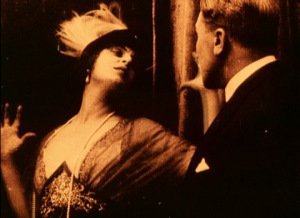
At the heart of Carnevalesca lies the towering performance of Lyda Borelli. As the singular focus of this ambitious narrative, Borelli carries the entire weight of its emotional and symbolic complexity with astonishing virtuosity. Her ability to transition seamlessly from the wide-eyed innocence of childhood to the tender yearning of youth, then to the tempestuous fury of passion, and finally to the profound despair of dissolution, is nothing short of mesmerizing. Borelli, a true diva of the Italian silent screen, understood implicitly the power of gesture, gaze, and subtle bodily language to convey the deepest human emotions without uttering a single word. Her face, a canvas of shifting emotions, becomes the primary vehicle for D'Ambra's allegorical vision. She doesn't merely act; she embodies, she lives, she suffers, and she triumphs through each 'carnival,' making Lydia Borelli's journey not just a plot device, but a deeply felt, universal experience. Her mastery of expression and pathos rivals the most celebrated actresses of her time, positioning her as a central figure in the evolution of cinematic performance.
Lucio D'Ambra's Visionary Direction
Lucio D'Ambra, as both writer and director, demonstrates an extraordinary artistic courage in conceiving and executing Carnevalesca. His decision to eschew conventional narrative linearity in favor of a symbolic, almost dreamlike progression is a testament to his avant-garde sensibilities. D'Ambra's direction is precise, yet imbued with a lyrical quality that prevents the allegorical framework from feeling didactic. He employs visual metaphors with elegant dexterity, allowing the audience to interpret and feel the weight of each 'carnival' rather than simply observe it. The film's aesthetic is rich, utilizing contrast, lighting, and mise-en-scène to amplify its thematic concerns. His collaboration with Lyda Borelli is clearly symbiotic, as he crafts a vehicle perfectly suited to showcase her unique talents while pushing the boundaries of cinematic storytelling. D'Ambra’s work here stands as a significant contribution to the art form, demonstrating how silent cinema could achieve profound psychological depth and philosophical inquiry, moving beyond mere spectacle to explore the very fabric of human existence. It’s a bold artistic statement, distinct from the more straightforward romantic or social dramas of the period, perhaps even more daring than the narrative structures found in films like An International Marriage or The Gilded Youth.
Aesthetic Richness and Supporting Contributions
Beyond the central performance and directorial vision, Carnevalesca is a triumph of aesthetic design. The cinematography, though perhaps not always credited in detail in historical records, contributes significantly to the film's evocative power, utilizing lighting and composition to delineate the emotional and symbolic shifts between the carnivals. The costume design, particularly for Lyda Borelli, is exquisite, transforming with each phase of her character's life, from flowing white gowns to rich, passionate reds, and finally to somber blacks, each serving as an extension of her inner state. The sets, while often theatrical in their grandeur, never feel artificial; instead, they become extensions of Lydia's psychological landscape. The contributions of supporting cast members like Mimi, Livio Pavanelli, and Renato Visca, though perhaps less central than Borelli, provide crucial anchor points within the narrative's often abstract flow, lending human connection and conflict to Lydia's journey. Their presence, even if fleeting, helps to ground the allegorical flights of fancy in relatable human interactions, much like the ensemble work in films such as Mysteries of the Grand Hotel where even minor roles contribute to the overarching atmosphere.
Legacy and Enduring Resonance
Carnevalesca stands as a vital, albeit perhaps lesser-known, masterpiece of Italian silent cinema. Its daring allegorical structure and Lyda Borelli's incandescent performance elevate it beyond mere period piece status. It is a film that speaks to the universal human experience of growth, love, loss, and the ultimate confrontation with mortality and the self. Its influence, though subtle, can be traced in later works that explore psychological fragmentation and symbolic narrative. For aficionados of silent film, and indeed for anyone interested in the expressive potential of cinema, Carnevalesca offers a profound and deeply moving experience. It challenges the viewer to look beyond the surface, to delve into the rich tapestry of human emotion and the existential questions that define our lives. It is a work that, much like the enduring power of thematic depth in films such as Maternità or the philosophical introspection sometimes found in Um Chá nas Nuvens, continues to resonate, demonstrating the timeless capacity of art to explore the most complex aspects of the human condition. Its artistic ambition and the sheer force of Borelli's portrayal ensure its place as a significant cultural artifact, a testament to an era when cinema was still discovering the boundless reaches of its own expressive language.
A Timeless Exploration of the Soul
In conclusion, Carnevalesca is far more than a historical curiosity; it is a vibrant, searing exploration of the soul's journey. Lucio D'Ambra and Lyda Borelli, together, forge a cinematic experience that is both intellectually stimulating and deeply emotionally affecting. The film's structural innovation, its rich symbolism, and the sheer power of its central performance combine to create a work of enduring artistic merit. It reminds us that cinema, even in its nascent form, was capable of plumbing the depths of human experience with a grace and profundity that continues to captivate. To witness Carnevalesca is to embark on a journey through the very essence of life itself, a profound and unforgettable encounter with the carnivals of the human heart and mind.

IMDb —
1918
Community
Log in to comment.