DbcultAccessing Vault...
Cult Review
Senior Film Conservator
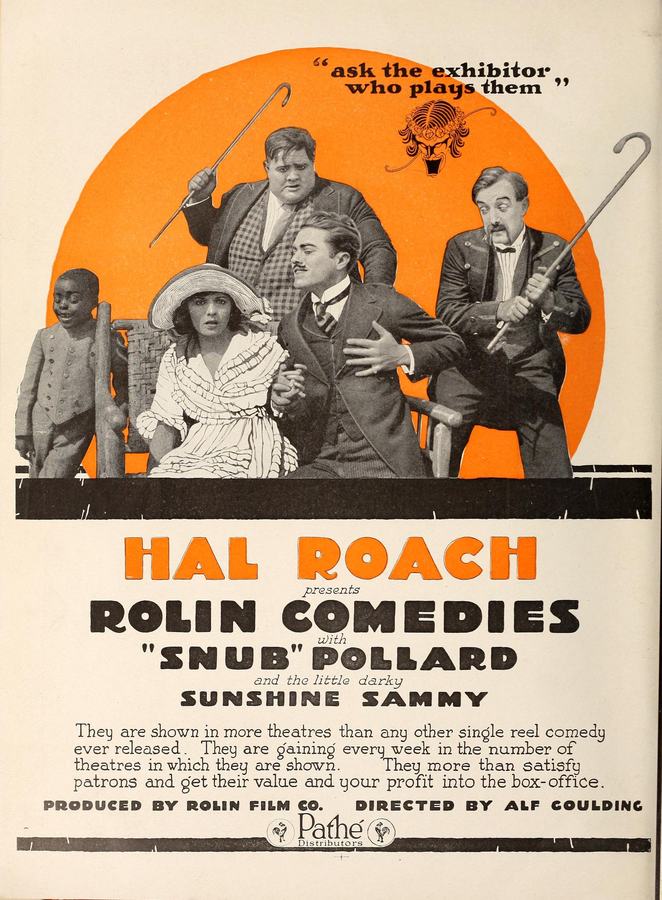
The first thing you notice is the smell—imaginary yet palpable—of scorched lard and disobedience. Cash Customers (1921) doesn’t merely invite you into a tenement flat; it shoves you nose-first into its skillets, its gaslight, its perilous lease agreements. Produced by Hal Roach and starring rubber-limbed ‘Snub’ Pollard alongside the cherubic Hughie Mack, this two-reel marvel distills the entire silent-comedy cosmos into twelve frantic minutes, then spikes the punch with bootleg adrenaline.
Post-war America was rationing everything—flour, patience, square footage—so filmmakers weaponized scarcity. The cramped set is not a liability but a launchpad: every doorway doubles as guillotine, every saucepan becomes both sustenance and shrapnel. When Snub ignites a contrabadeaux hotplate cobbled from a sardine tin, you feel the act’s reckless democracy; if the proletariat can’t own a kitchen, they’ll improvise one in defiance of physics and fire codes.
Played with operatic fury by Marie Mosquini, the landlady storms in like an avenging ledger book, hair coiled like smoke from a just-extinguished stove. She’s capitalism’s rent-collecting id, but Roach refuses to flatten her into villainous silhouette. Watch her nostrils flare—first in suspicion, then in carnal glee as she anticipates eviction: you’ll swear you see the first germs of the cruel landlord trope that will later haunt German Expressionism.
Snub’s rail-thin silhouette rhymes comically with Mack’s bulbous frame; together they form a living dumbbell of imbalance. Their chemistry predates Abbott & Costello’s polished duos by two decades, yet feels raw, almost documentary. Mack’s wide eyes telegraph panic while Pollard’s walrus mustache twitches like a lie detector. In a lesser short, fat equals gluttony equals punchline; here, girth is gravitational center, the axis around which centrifugal gags orbit.
Forget beauty-parlor slapstick or heist capers: domestic gastronomy is the film’s ticking bomb. Eggs catapult, bacon frisbees, a rogue pancake adheres to the ceiling like a communion wafer. Each airborne entrant is timed to a metronome of escalating hysteria, recalling the mechanized chaos of French industrial farce but stripped of urbane polish. The payoff? A volcanic omelet detonating in the landlady’s face—yolk as yellow as the Hazard diamond on her rental agreement.
Director Charley Chase (uncredited but stylistically unmistakable) choreographs sequences like Rube Goldberg on amphetamines. Note the triple-revolve door gag: Snub exits, re-enters wearing the landlady’s skirt, exits again trailing a line of flame from a ruptured gas line. The cut is invisible, the stunt performed in real time, the skirt’s hem singed by genuine fire. Cine-urbanologists can trace a straight line from this combustible exit to the cartoonish naval explosions of Scandinavian slapstick two years later.
Modern comedies metabolize laughs every 20 seconds; Cash Customers averages one every six. Yet pauses exist—microscopic pockets where Snub glances at the camera, acknowledging our complicity. These winks are neither gimmicky nor Brechtian, but conspiratorial, as if to say: yes, we’re all fugitives from the same economic prison. The breaths keep the farce from asphyxiating; without them, the humor would be a strobe light sans darkness.
Contextualize this romp among its blood-relatives: the period melodrama striving for moral uplift, or European psychodrama mining sexual pathology. Cash Customers skips the sermon, spits out the pathology, and opts instead for kinetic existentialism—predating even Keaton’s One Week in its belief that shelter itself is a joke played on humanity.
Among the credited cast hides Ernest ‘Sunshine Sammy’ Morrison, the first Black child star in Hollywood history. His role—brief, mostly reaction shots—carries more semiotic weight than pages of dialogue. Morrison watches the Caucasian fracas with sardonic detachment, his gaze a silent critique of tenant anarchy he can’t afford to join. He’s the ancestor of the sidelined but hyper-observant characters in revisionist Westerns, the kid who sees everything, laughs sparingly, and knows the next rent hike is coming for him too.
Watch the sequence where Snub balances a tower of dirty dishes on a broomstick: the camera frames him against a window, the outside world a tantalizing blur of sunlight and pedestrians who aren’t late on rent. The dishes wobble, gravity poised to deliver class vengeance. That single rectangle of overexposed street life is the film’s moral horizon—an unattainable elsewhere, glimpsed but never reached, like the elusive open road in Teutonic road poems.
There’s no orchestral score on surviving prints—just the rustle of celluloid, the clatter of projector gears. The absence is orchestral in itself: you supply the sizzle of lard, the landlady’s shrieks, the whoosh of Snub’s body sliding under the bed. Contemporary exhibitors sometimes commissioned live foley—coconut hoofbeats for a pancake flipping. Seek those prints if you can; they turn the short into participatory theater, a communal confidence game.
Marie Mosquini’s landlady is neither shrew nor gold-digger; she’s a working woman whose only capital is a deed. The film’s violence against her—custard pies, soot explosions—reads today like misogynist catharsis. Yet note how she always re-enters, hairpins intact, demanding arrears. Her resilience weaponizes the stereotype, transforming victimhood into sovereignty. She’s the prototype for the indomitable female lead who elbows through slapdoor patriarchy.
Snub and Mack steal eggs, coal, even the milk bottle left by a neighbor. Moralists might decry petty larceny, but the film portrays pilfering as grassroots Keynesianism: redistribute comestibles, stimulate belly-laughs. The ethics echo biblical male-bonding tales where friendship trumps dogma, yet here the covenant is sealed with bacon grease, not incense.
Pollard’s body speaks a dialect extinct in today’s CGI era: the vernacular of cartilage. His gangly legs knot around chair rungs, torso torques 180° without Industrial Light & Magic. The stunts are linguistic—each pratfall a consonant, each double-take a vowel—spelling sentences that translate in any tongue. Compare that to exotic adventure epics where meaning drowns under intertitles.
At twelve minutes, the film is a bullet. Yet rewatching induces temporal dilation; you swear you’ve lived entire lease terms inside those cramped rooms. The phenomenon mirrors aristocratic costume fantasias where a ballroom waltz feels like centuries. Here, the waltz is replaced by a frantic two-step between tenant and landlord, the orchestra a hissing radiator.
Most circulating copies derive from a 16 mm dupe stored in a Norwegian archive, discovered beside Hans Christian Andersen silents. The print is speckled, missing a title card or two, but the blemishes enhance the scroungy texture—like finding a gouged skillet at a flea market and realizing it cooks better than your five-ply copper.
Imagine a TikTok micro-series where Gen-Z roommates battle a drone-wielding property manager. Same DNA. Algorithmic humor owes its attention-span to shorts like Cash Customers, even if today’s creators have never threaded a 16 mm projector. The difference? Roach’s crew risked fractured tibias for a gag; swipe-era creators risk demonetization.
Network comedies stretch 22 minutes, pad beats with irony-deflating dialogue, then resolve with group hugs. Cash Customers offers no catharsis beyond carbonized breakfast. The absence of moral homework liberates; laughter becomes enough, no therapy couch required. Its laugh-per-minute ratio is denser than 30 Rock, Arrested Development, or any “golden age” darling critics genuflect before.
As the landlady coughs soot and the boys skitter into the street, the curtain falls—no moral, no reset button, only the lingering aroma of scorched breakfast. You’ll exit craving both a stack of pancakes and a rent-controlled apartment, knowing neither will taste as good as this brief, incandescent slice of celluloid chaos.
Verdict: Essential viewing for slapstick scholars, history nerds, or anyone who’s ever hidden instant noodles from their landlord. Stream it, project it, hell—cook spaghetti while watching, but keep a fire extinguisher handy.
IMDb —
1922
Community
Log in to comment.