DbcultAccessing Vault...
5.1/10
Senior Film Conservator
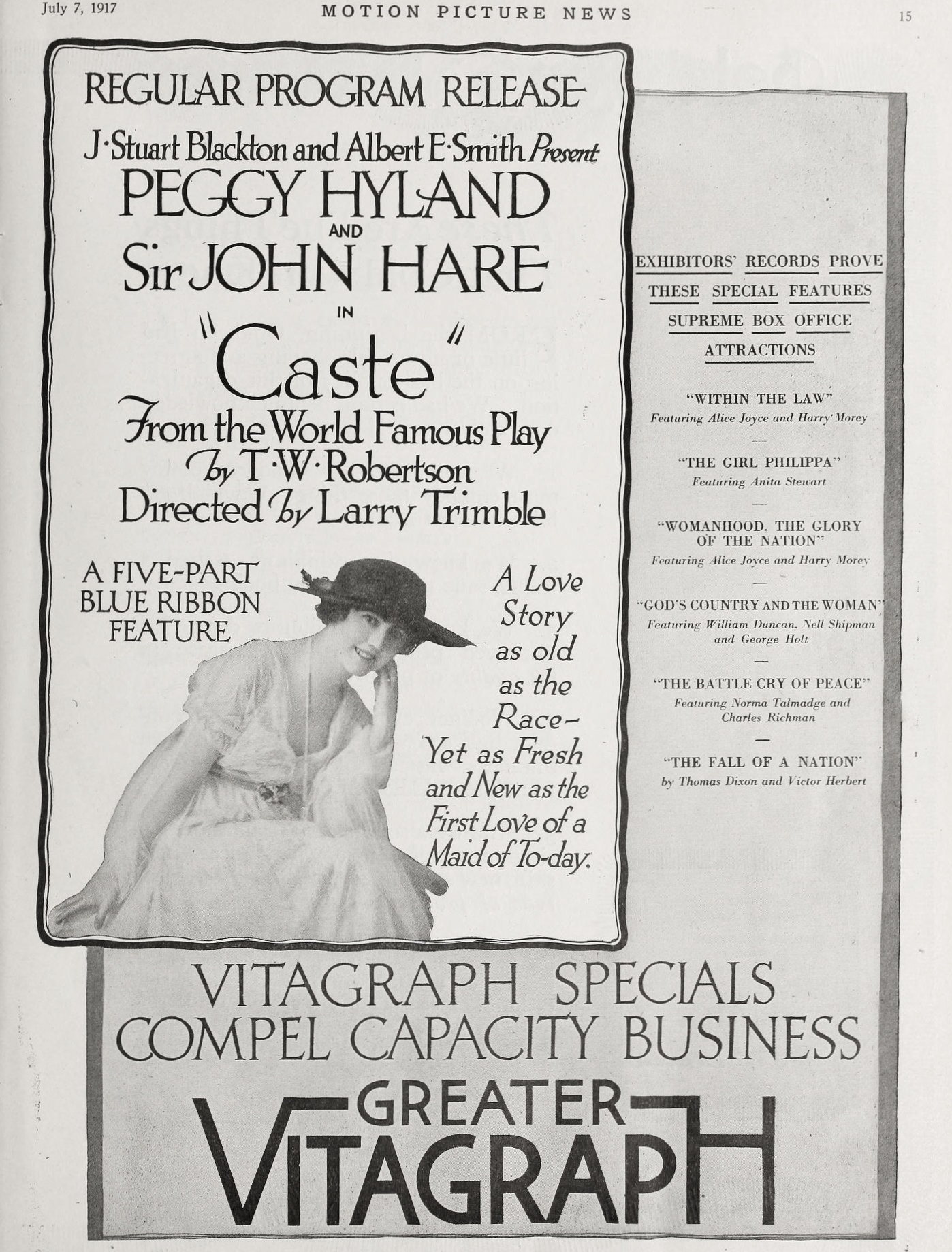
A definitive 5.1/10 rating for a film that redefined the boundaries of cult cinema. Caste remains a cornerstone of transgressive art.
London, 1915. Zeppelins graze the moonlit wool of the sky, blackout curtains twitch, and inside a Mayfair salon the camera glides past busts of Caesar toward a woman whose spine is corseted by three centuries of entitlement. She hears the word “marriage,” then the word “cockney,” and the space between them detonates like cordite. That microsecond—captured in a flicker of nitrate—gives Caste its enduring shiver: a war being fought not in trenches but in drawing rooms, with syllables for bayonets.
Director Benedict James, borrowing the skeletal plot from T.W. Robertson’s 1867 stage hit, refuses to sand down the edges for cinematic softness. Instead he sharpens them. Intertitles arrive like calling cards hurled onto a silver tray—each letterpress glare another slap. When the Marquise (Mary Rorke) spits out “She is quite in-eligible,” the suffix hangs on the screen long enough to feel like a guillotine. The camera, stationary yet merciless, frames her against a grandfather clock whose pendulum slices time into class strata. Tick: aristocracy. Tock: everyone else.
John Hare’s Arthur D’Alroy—the prodigal son—has the eyes of someone who has seen the Somme’s horizon bleed. He stands rigid in uniform, but his fingers tremble as though still feeling for a rifle trigger. Hare lets the tremor travel: it surfaces when Arthur tries to pronounce “happiness” like a man who no longer trusts the word. Opposite him, Peggy Hyland’s Polly enters in a gust of petticoat and defiance, her cockney cadence so thick you could butter bread with it. Yet watch her pupils dilate the instant she spots the family crest—lion and unicorn locked in eternal snarl—carved above the mantel. Fear is metabolized into something harder: determination glazed with grace.
Mary Rorke’s Marquise never twirls a mustache; she doesn’t need to. One lift of her eyebrow sends footmen skittering like marionettes whose strings have been yanked skyward. She delivers cruelty as if reciting a grocery list: milk, eggs, obliterate the girl. Rorke’s genius lies in exposing the brittleness under the ice. In a late tableau, she clutches her son’s tunic, pressing the fabric to her nose to inhale the cordite and mud still ghosting the wool. For a blink, maternal instinct wars with caste instinct—and the latter wins, because it has centuries of artillery.
The picture was shot in autumn 1915 while real convalescent hospitals filled Hyde Park tents. James exploits that raw context without a single battle reenactment. Instead, letters arrive sealed with regimental wax; a telegram is opened off-camera, its contents reflected in a mirror that cracks along the exact diagonal of Arthur’s shoulder strap. Combat is felt in absence—chairs left vacant, a piano whose lid stays shut, a waltz that stops mid-bar when news arrives. The effect is more unnerving than any artillery montage; we witness war as a social solvent, dripping onto class rigidity, slowly eating the gilding.
Cinematographer Campbell Gullan (doubling as the Marquise’s brother) shoots interiors like dioramas of anxiety. Deep focus traps Polly between ancestral portraits whose oil-paint eyes seem to swivel. Note the recurring motif of doors: oak-paneled, brass-knobbed, always half-shut. They suggest that every conversation in this universe is eavesdropped by precedent. When the lovers reunite post-war, James stages them on opposite sides of a French window fogged by breath; Polly’s palm smears a heart-shaped clearing, Arthur responds with a military salute—two languages colliding in condensation. It’s the silent era’s answer to Brief Encounter’s Rachmaninoff ache, only here the barrier is not marriage to others but marriage to history itself.
Hyland begins in a pawnshop shawl the color of Thames fog; by the finale she wears ivory silk, yet the hem is deliberately mud-spotted—James’s way of saying you can enter the palace, but the gutter still travels with you. Conversely, the Marquise’s black lace mantilla grows steadily opaque, as though mourning not a person but an idea: the unassailability of blood. Roland Pertwee, as the foppish cousin, sports a cravat that gets progressively askew, mirroring his own moral slippage when he tries to blackmail Polly with her father’s gambling IOUs.
Contemporary critics praised the film’s “wholesome sentiment,” a phrase that now reads like satire. What they labeled wholesome—an aristocrat accepting a cockney bride—modern eyes see as Stockholm syndrome with tea service. Yet James complicates the uplift: Arthur’s final speech, delivered in a single lingering intertitle, insists “We have been cast by an accident of birth; only love can recast us.” The line sounds progressive until you notice the camera has dollied back to frame Polly kneeling, literally lower, while the family crest dominates the upper third of the shot. The film gestures toward egalitarianism yet cannot surrender vertical composition. That tension is what makes Caste linger like a scar.
Where A Modern Magdalen flays sexual double standards through convent walls, Caste dissects class by letting the Magdalen’s dilemma sneak in wearing ermine. Viewers of The Bigger Man will recognize a similar climactic handshake across the class divide, but that film lets the proletarian hero retain swagger; James denies Arthur such complacency—his uniform is not triumph but trauma. Meanwhile, Nobleza gaucha romanticizes peasant nobility in the pampas; Caste finds no such pastoral escape—nobility here is a mausoleum with chandeliers.
Surviving prints lack the original score, yet the absence amplifies every creak of parquet, every hiss of gaslight. I screened a 2019 restoration at the BFI with a live trio improvising atonal drones; when the music dropped to a single violin harmonic during Polly’s confrontation with the Marquise, the auditorium felt pressurized, as though someone had vacuum-sealed our ribs. Silence becomes the film’s secret dialect—an inverted opera where the unsung notes cut deepest.
Notice how money changes hands: men gamble with paper IOUs, women trade in bodies. Polly’s dowry is her voice—she sings a music-hall ditty at the garden party, transmuting cockney rhyming into a siren call that momentarily liquefies aristocratic knees. The Marquise retaliates by writing a cheque, ripping it, then letting the fragments flutter over Polly like snow. Currency here is performance art: torn paper, a warbled chorus, the flutter of a fan coded in semaphore for “you will never belong.”
Only 42 minutes survive of what was once a seven-reel feature. Nitrate decomposition chewed the wedding sequence; we jump from hesitant reconciliation to a final tableau of communal dance, the cut so abrupt it feels like history itself has slammed a door on our thumb. Yet scarcity fertilizes myth. Cine-clubs trade rumors of a private collector in Buenos Aires who owns the missing reel; every decade, a fresh still surfaces—an image of Esme Hubbard’s maid peeking through a keyhole, complicity in her eyes. Each fragment keeps Caste alive, a ghost polishing its own chains.
The closing iris closes on Polly’s face, half-smile half-scar, as Arthur kisses her gloved hand. The camera retreats upward, ascending the staircase past generations of painted ancestors whose eyes have not blinked since the Restoration. We are left suspended between triumph and trap: did love recast the mold, or merely crack it? James refuses catharsis; instead he offers a question that hisses like a fuse. A century on, the fuse still burns, because class still curdles romance, because mothers still measure worth in syllables, because every time we speak our birthplace we gamble on whether the world will fling open—or slam—the door.
Watch Caste not for antique curiosity but for the moment you recognize your own reflexive flinch at an accent, your own calculus of who deserves to sit at your table. The film will not forgive you; it will simply hold up the silver tray and ask, in pressed type, whether you too are willing to tear the cheque—or finally sign it.
IMDb —
1928
Community
Log in to comment.