DbcultAccessing Vault...
Cult Review
Senior Film Conservator
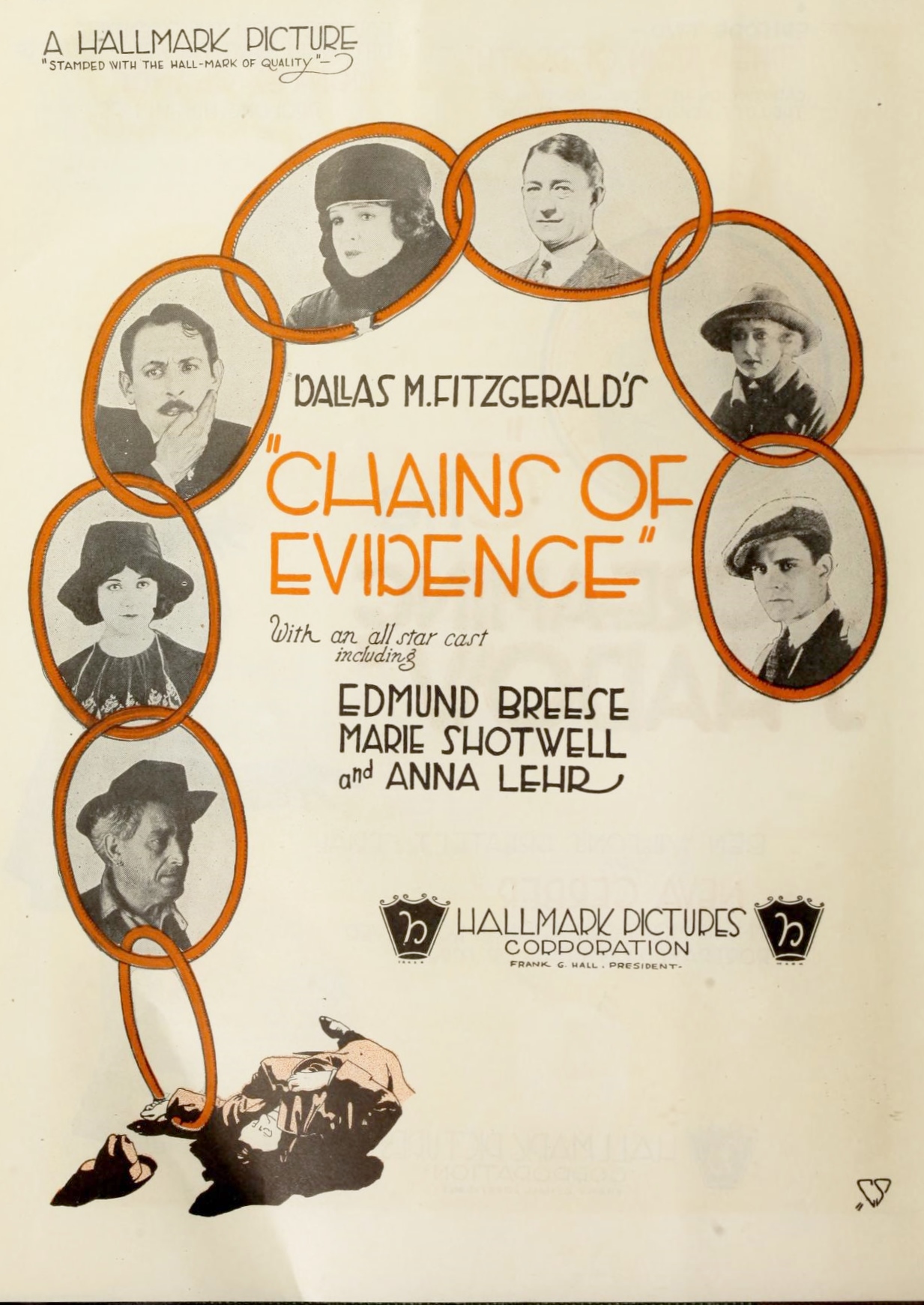
Marie Shotwell’s matriarch glides across the parquet like a predatory swan, every fold of her tea-gown concealing matrimonial chess moves; the camera, timid yet voracious, drinks in the tension until the gaslights hiss.
There is, in this 1916 one-reeler stretched to five acts, a perfume of law-book leather mingled with the metallic sting of radium—an element so coveted it glows like original sin. Edison-bleached intertitles flicker, announcing Edith Sturgis’s homecoming not as domestic celebration but as the first tremor beneath a fault-line. She is the New Woman, fresh from Parisian lecture halls where justice is debated in three languages, yet unprepared for the cloistered barbarism of an American household that has already replaced her dead mother with a statuesque enigma.
The film’s architects—J. Clarkson Miller scripting with scalpel precision, John J. Glavey and Leon D. Britton weaving subplot sinew—eschew the moral absolutes of Victorian stagecraft. Instead, they gift us a moral gyroscope that wobbles. Consider Edmund Breese’s Judge Sturgis: a jurist whose sentences read like granite, yet whose parental blindness invites catastrophe. His gavel once fell on Dick—Mrs. Sturgis’s unacknowledged son—branding the boy criminal and birthing a grudge that ferments in newsroom ink and gangland alleyways alike.
Anna Lehr’s Edith, swaddled in travel-worn tweeds, embodies modernity colliding with patrician hypocrisy; her emotive glances convey encyclopedias of disillusion without the aid of spoken word. When she flees the paternal manor, the camera lingers on a slamming door, the vibration traveling through the foyer like an omen. Enter Dick, embodied by a smoldering unknown (program notes list James F. Cullen, though some prints credit Wallace Ray—such are the ghosts of distributed celluloid). His is the trajectory of the wrongly condemned, a trope later refined in The Honor System yet here rendered with raw, pre-code urgency.
The pilfered radium functions less as plunder than as Pandora’s phosphorescence. In 1916, before the element’s carcinogenic truth was excavated, radium embodied the era’s promethean hubris—bottled starlight promising miracle cures. Dr. Allen’s travelling case, pried open within the Sturgis library, becomes the Holy Grail for a shoemaker whose son drags a twisted limb through life. This subplot, easily overlooked amid murder accusation and amorous entanglement, is the film’s bleeding heart: a plea for medical compassion that predates Homunculus 4’s mad-science parables.
Cinematographer Joseph P. Mack, constrained by carbon-arc lumens, nevertheless achieves chiaroscuro poetry: watch how hallway darkness nibbles at the judge’s silhouette seconds before the fatal gun-crack. The murder itself occurs off-camera, respecting censorial prudishness yet amplifying dread. We glimpse only the aftermath—spectacles cracked on Persian rug, cigar still curling smoke toward the coffered ceiling—an ellipsis that Hitchcock would applaud.
Once suspicion clamps Dick like iron, the narrative pivots into juridical nightmare. George Cooper’s prosecuting attorney snarls with the relish of a man who’s memorized every punitive statute; his gestures punch toward the camera, invoking the same prosecutorial malice found in A Man’s Law. Meanwhile, Edith’s albatross of loyalty drives her into the maw of public contempt. A witness swears he saw Dick near the study at the fatal hour; another claims the glint of a revolver beneath the reporter’s trench-coat. The evidence chains itself link by link—titular, literal—until only the confession of a peripheral artisan can break the forge.
That artisan—Edward Elkas’s wizened shoemaker—emerges from narrative shadow like a figure out of Dickens filtered through German expressionism. His monologue, delivered in cramped parlor lit by solitary tallow candle, recounts stealthy trespass, the radium’s tantalizing glow on his calloused palms, and the sudden intrusion of Brownlow’s assassins. Close-ups reveal every furrow of remorse, every twitch of paternal desperation. The scene crescendos as he lifts the crippled boy, offering both contrition and plea for clemency. It is here the film transcends whodunit mechanics, morphing into meditation on class, access, and the ethics of theft when life hangs in balance.
Silent cinema historians often pigeonhole 1916 features as either static pictorialism or proto-Griffith dynamism. Chains of Evidence hybridizes both impulses. Interior scenes favour proscenium-like framing—figures arranged in depth, doorframes and balustrades creating staggered planes—while exterior chase sequences (Dick fleeing torch-bearing constables along waterfront warehouses) adopt rapid cross-cuts predating the muscular montage of The Quickening Flame. Tinted prints enhance mood: amber for hearthside nostalgia, viridian for nocturnal tension, crimson for murder tableau. Contemporary restorations sometimes omit these chromatic annotations, inadvertently amputating emotional temperature.
Note also the symbolic deployment of literal chains: manacles on Dick’s wrists echo the chain Edith clasps around her neck—a family heirloom—mirroring the metaphorical chains of precedent that bind judicial offspring. Such visual rhymes reveal a sophistication often denied early feature filmmakers.
Anna Lehr’s Edith oscillates between porcelain fragility and flinty resolve without succumbing to melodrama’s semaphore gestures. Watch her eyes in the courtroom sequence: pupils dilate not in blank horror but in analytical calculation, as though mentally paging through codicils. Across the narrative chessboard, Marie Shotwell’s stepmother radiates matriarchal menace through the subtlest of arsenic smiles. Their confrontations—one in moonlit conservatory, another besides a ticking mantel clock—crackle with subtext: generational discord, feminine agency, the commodification of marital security.
Male co-stars orbit these dual suns. Edmund Breese essays judicial gravitas tinged with Lear-like blindness; James F. Cullen (or Wallace Ray, depending on print) embodies the post-millennial antihero, handsome yet harrowed. Their chemistry with Lehr avoids saccharine cliché—note the restraint in their reunion kiss, framed in silhouette so the emotional voltage lies in posture rather than osculation.
Beneath its murder-mystery chassis, the film throbs with Progressive-era disquiet. Radium, that era’s nuclear fetish, embodies scientific optimism shadowed by lethal potential—an ambivalence later mirrored in atomic-age noir. The Brownlow gang, never individuated beyond looming shadows, represents systemic rot that seeps from slum to salon. Edith’s academic cosmopolitanism collides with parochial jurisprudence, forecasting cultural clashes that will reverberate through Unprotected and jazz-age exposes.
Moreover, the trope of the wronged son resurrected via truth-insurance prefigures the exoneration narratives that crowd today’s true-crime podcasts. The film asks: can institutional justice recalibrate once its infallible mask slips? The answer, whispered rather than sermonized, suggests restitution is personal, not procedural.
At a lean 58 minutes, Chains of Evidence maintains the sprint velocity of its nickelodeon ancestry while accommodating plot sprawl. Transitions deploy iris-out/in devices, punctuating chapters like novella headings. Compression occasionally courts incoherence—secondary characters such as Peggy Worth’s maid or Eva Gordon’s society columnist flicker past without payoff—yet such ellipsis mimics life’s peripheral phantoms. Modern viewers raised on three-hour graphic-novel sagas may find this brevity bracing, akin to binge-reading a yellow-backed potboiler aboard a transatlantic steamer.
Place Chains of Evidence beside Zudora’s occult convolutions or The Lone Wolf’s Daughter’s cosmopolitan crime and what emerges is a hybrid: domestic melodrama cross-pollinated with underworld thriller, anticipating the tonal braid of 1940s noir. Unlike The Fall of a Nation’s jingoistic pageantry, this film trains its lens inward, dissecting microcosm rather than macrocosm.
Its DNA can be traced to later courtroom classics, yet its most direct descendant may be Hitchcock’s The Wrong Man, another study in circumstantial devastation. The difference: Hitchcock drapes existential dread over Catholic guilt, whereas Chains of Evidence locates dread within social stratification—an arguably more radical indictment.
No assessment can ignore the film’s textual instability. Multiple reissue negatives swap scene order; intertitles mutate; one extant print excises the shoemaker’s confession entirely, rendering resolution abrupt and quasi-theological. Archivists at MoMA’s 2018 retrospective stitched a composite employing two 16-mm exhibition prints and a 35-mm French Pathé fragment, yielding a 4K scan that restores tinting schema yet betrays scratch-etched emulsions. Home viewers streaming public-domain transfers on ad-supported platforms often ingest truncated 44-minute edits accompanied by generic piano noodles—an injustice akin to judging Beethoven through kazoo.
Chains of Evidence survives as both artifact and experience, a celluloid séance summoning an era when scientific marvels danced with moral panic. Its gender politics, though coded, empower female intellect; its class commentary, though veiled, indicts carceral reflex; its visual grammar, though primitive, presages noir chiaroscuro. For cinephiles tracing crime genre phylogeny, for sociologists excavating progressive-era neuroses, or for any viewer craving narrative velocity without superhero bloat, this forgotten curio gleams like radium in a lead-lined box—dangerous if mishandled, luminous if respected.
Seek the fullest restoration available, dim the lights, silence notifications, and allow the flicker to transport you to a world where love attempts to untie the chains of evidence, sometimes succeeding, sometimes merely rebranding them as heirlooms. The judge is dead, the gang scattered, but the questions—about justice, mercy, and the price of truth—refuse to be interred.
IMDb 6.9
1925
Community
Log in to comment.