DbcultAccessing Vault...
4.6/10
Senior Film Conservator
A definitive 4.6/10 rating for a film that redefined the boundaries of cult cinema. Champagne caprice remains a cornerstone of transgressive art.
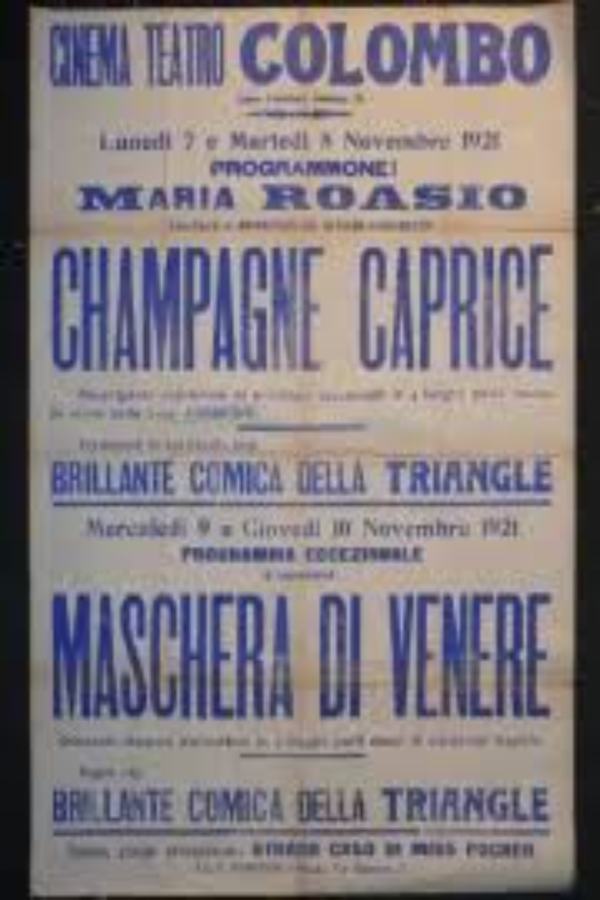
To watch Champagne Caprice is to step into a bygone era of Italian cinema where the celluloid itself seems to tremble with the weight of melodrama and social friction. Released in 1919, this film emerges from the fertile ground of a post-war Europe, a time when the tension between traditional morality and the burgeoning avant-garde was reaching a boiling point. The screenplay, penned by the collaborative minds of Giovanni Drovetti and Roberto Omegna, serves as a sophisticated critique of temperance culture, wrapped in the guise of a kidnapping thriller. It is a work that demands more than a casual glance; it requires an interrogation of its visual metaphors and the rhythmic pacing that Omegna, acting as both writer and cinematographer, so masterfully employs.
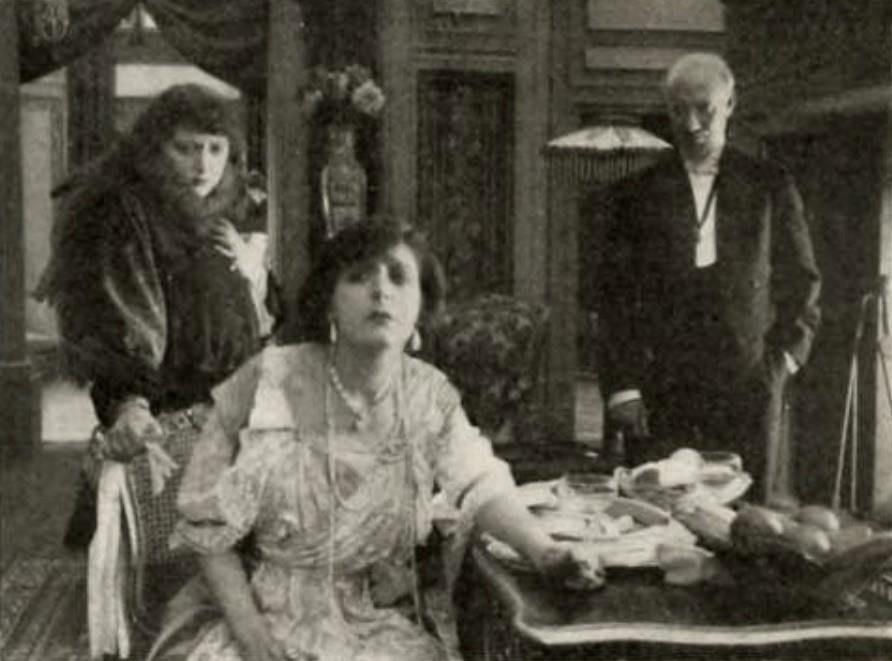
The protagonist, Maude, portrayed with a delicate yet palpable restlessness by Maria Roasio, is introduced as the prize jewel of a temperance advocate. Her life is a series of curated, sober moments, designed to reflect the values of her adoptive father. This environment is sterile, almost clinical, mirrored in her engagement to a physician—a man of science and order. In many ways, the doctor represents the ultimate safety of the status quo, much like the characters we see in The Passing of the Third Floor Back, where moral rectitude is the primary currency. Yet, beneath Maude’s compliant exterior lies a latent hunger for the irrational, a desire for the 'caprice' that the title so provocatively suggests.
The introduction of the Gypsy violinist, played with a magnetic, feral intensity by Renato Maupre, acts as the catalyst for the film's primary conflict. He is not merely a suitor; he is a force of nature, a Dionysian figure who enters the Apollonian world of the anti-alcoholic league and shatters it. The violin becomes his weapon, a tool of seduction that transcends the spoken word. While cinema of this period often relied on broad gestures, Maupre’s performance is nuanced, utilizing his gaze to convey a sense of predatory longing that is both terrifying and alluring. This dynamic of the 'outsider' invading a structured society is a trope explored in various forms across the era, notably in The Fox Woman, where the boundaries between the civilized and the wild are blurred beyond recognition.
One cannot discuss Champagne Caprice without acknowledging the technical prowess of Roberto Omegna. As a pioneer of Italian cinematography, Omegna brings a level of visual sophistication to this film that was rare for its time. The use of light and shadow in the villa scenes is particularly striking. Once the violinist has successfully abducted Maude and incapacitated her fiancé, the film shifts from the brightly lit, flat aesthetic of the city to a more chiaroscuro-heavy environment. This villa is a space out of time, a liminal zone where the laws of the league no longer apply. The shadows seem to dance in time with the unheard music, creating an atmosphere of claustrophobic intimacy that rivals the psychological depth of Le crépuscule du coeur.
The editing, too, deserves scrutiny. Drovetti and Omegna utilize a cross-cutting technique during the doctor's immobilization that heightens the suspense, a technique that would later become a staple of the thriller genre. By contrasting the doctor’s helpless struggle with the violinist’s triumphant journey to the villa, the filmmakers create a sense of inevitable doom. This structural choice mirrors the thematic collapse of the doctor’s rational world. In comparison to other 1919 releases like A Trip to Mars, which looked toward the stars for spectacle, Champagne Caprice looks inward, finding its spectacle in the volatile landscape of human emotion and class resentment.
The title itself is a stroke of genius. 'Champagne' represents the forbidden, the luxury, and the fleeting intoxication that the anti-alcoholic league fears most. It is the antithesis of the 'water' that Maude has been raised on. The 'Caprice' is the sudden, unaccountable change of mind or behavior—the break from the doctor, the surrender to the violinist, and the ultimate rejection of her sober reality. The film posits that life without caprice is not life at all, but a slow stagnation. This theme resonates deeply when placed alongside the gritty realism of Los misterios de Barcelona, where the urban underworld serves as a similar site of chaotic liberation.
The supporting cast, including Umberto Scalpellini and Cesare Gani Carini, provide a solid foundation for this emotional upheaval. Carini’s portrayal of the league president is particularly effective; he is not a mustache-twirling villain but a man genuinely convinced of his moral superiority. This makes the violinist's victory even more poignant, as it is a victory of passion over a well-intentioned but suffocating ideology. The kidnapping, while problematic by modern standards, functions in the narrative as a necessary rupture, a violent birth into a new state of being. It shares a certain DNA with the high-stakes drama of The Hostage, though it swaps political stakes for deeply personal ones.
As we look back at Champagne Caprice over a century later, its relevance remains surprisingly intact. It serves as a precursor to the psychological thrillers of the 1940s, and its exploration of the 'mad musician' trope prefigures many of the gothic romances that would follow. The film’s ability to weave together social commentary with visceral suspense is a testament to the vision of Drovetti and Omegna. While it may lack the epic scale of The Life and Death of King Richard III, it possesses an internal intensity that is arguably more haunting.
The final act in the villa is a masterclass in silent storytelling. Without a single word of dialogue, we understand the shift in Maude’s psyche. We see the moment her fear transforms into fascination, and eventually, into a shared madness with her captor. It is a dark, complex resolution that avoids the easy moralizing of its contemporaries. This ambiguity is what elevates the film from a simple melodrama to a work of art. It reminds us that the human heart is a mercurial thing, often choosing the intoxicating danger of the unknown over the safe, sober path laid out by others. In this regard, it captures a sense of existential yearning similar to that found in Aftermath, albeit through a much more romanticized lens.
For the modern cinephile, Champagne Caprice is an essential viewing experience. It provides a window into the evolution of Italian narrative style and the early experimentation with genre blending. It is a film that rewards those who appreciate the nuances of silent performance and the power of visual metaphor. The collaboration between Renato Maupre and Maria Roasio creates a screen chemistry that is electric, grounding the heightened plot in a believable, if tragic, human connection. It stands alongside works like Dämon und Mensch as a fascinating study of the duality of the human spirit—the constant battle between our higher ideals and our most primal urges.
In an age of digital perfection and over-explained narratives, there is something profoundly moving about the flickering, grainy beauty of a film like Champagne Caprice. It invites us to fill in the silences with our own emotions and to find our own meaning in the shadows of the villa. It is a reminder that cinema, at its best, is an act of caprice—a sudden, beautiful departure from the mundane. Whether you are a scholar of silent film or a casual viewer looking for a story of grand passion, this 1919 gem is a bottle of vintage cinema that has only improved with age. It remains a sparkling, slightly dangerous, and utterly intoxicating journey into the heart of human desire.
Ultimately, the film asks us: what are we willing to sacrifice for a moment of true, unadulterated passion? Maude’s journey from the sobriety of the league to the champagne-soaked madness of the villa is a journey we all recognize on some level. It is the eternal struggle to find balance in a world that demands we choose between the doctor and the violinist, between the safety of the shore and the intoxicating pull of the deep sea. As the final frame fades to black, we are left not with answers, but with the lingering echo of a violin and the faint, sweet taste of a caprice that changed everything.
IMDb —
1919
Community
Log in to comment.