DbcultAccessing Vault...
4.4/10
Senior Film Conservator
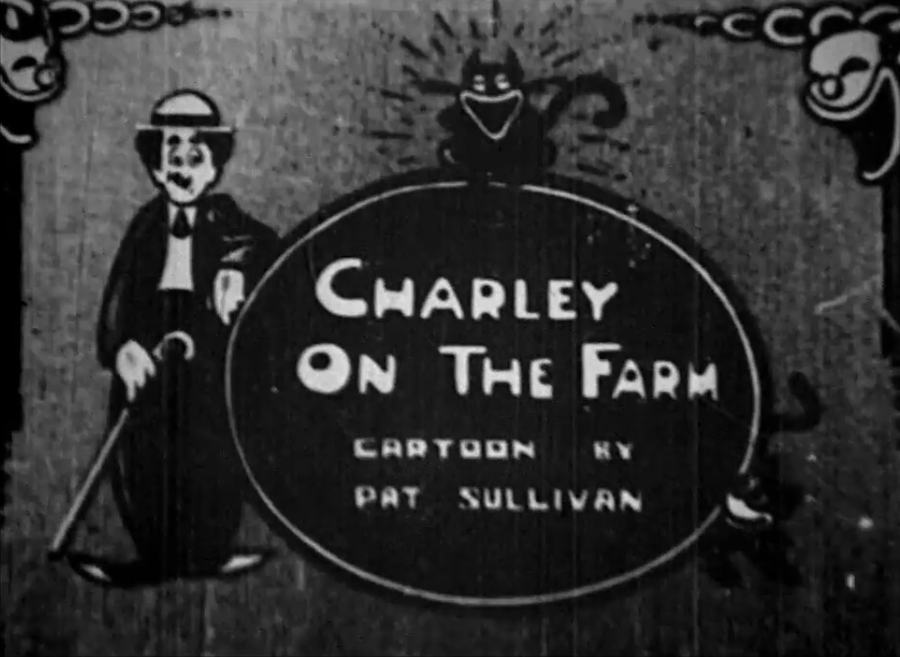
A definitive 4.4/10 rating for a film that redefined the boundaries of cult cinema. Charley on the Farm remains a cornerstone of transgressive art.
The year 1919 was a pivot point for global consciousness, a time when the world was shaking off the dust of the Great War and looking toward a future defined by industrial acceleration and the birth of modern celebrity. In the midst of this transition, Pat Sullivan—the man who would eventually give us Felix the Cat—was busy experimenting with the most potent cultural icon of the era: Charlie Chaplin. Charley on the Farm is not merely a piece of early animation; it is a fascinating, unauthorized bridge between the physical genius of the vaudeville stage and the limitless potential of the ink-and-paint medium.
When we watch Charley being ejected from a boxcar in a quintessential cow town, we are witnessing the birth of the animated picaresque. Unlike the high-society dramas of the period, such as Snobs, which dealt with the rigid stratifications of human class, Sullivan’s Charley exists in a state of constant physical flux. He is a creature of the margins, much like the characters in Pals First, yet his struggles are rendered with a surrealist edge that live-action film could not yet replicate. The setting—a rugged, agrarian outpost—serves as the perfect foil for Charley’s urban, slapstick sensibilities.
The narrative engine of Charley on the Farm is the protagonist's desperate, if misguided, attempt to secure honest work. This theme of seeking employment was a staple of the silent era, often explored with more gravitas in films like The Saleslady or the socially conscious The Dollar and the Law. However, Sullivan approaches the concept of labor through the lens of the absurd. Charley’s disappointment upon learning that 'farm hand' implies hard labor is not just a joke; it is a commentary on the Tramp’s identity as an eternal outsider who refuses to be domesticated by the Protestant work ethic.
"The farm is not a sanctuary here; it is a gauntlet of biological and mechanical demands that the animated frame struggles to contain."
The animation style is primitive by modern standards, yet there is a raw vitality in the way the cow town is depicted. It lacks the sweeping romanticism of The Border Wireless, opting instead for a minimalist, almost claustrophobic presentation of rural life. The cows are not just animals; they are obstacles in a geometric dance of survival. Sullivan uses the frame to emphasize Charley’s smallness, a technique that mirrors the vulnerability seen in The Probation Wife, albeit with a comedic payoff that softens the blow of his social exclusion.
To understand the significance of Charley on the Farm, one must look at how it deviates from the contemporary cinematic landscape. While films like A Girl's Folly were busy deconstructing the illusions of the film industry itself, Sullivan was deconstructing the persona of the world's most famous man. There is an atavistic quality to the animation—a return to the basic impulses of movement and reaction. Where The Spreading Dawn might use atmosphere and shadow to evoke emotion, Sullivan uses the 'squash and stretch' of Charley’s body to convey the protagonist's internal state.
The film’s pacing is relentless, a staccato rhythm that feels modern even a century later. It shares a certain DNA with the frantic energy of Chasing Rainbows, though it lacks the musicality of later talkies. Instead, the music is in the line work. The way Charley’s hat moves independently of his head, or the exaggerated arc of a pitchfork, creates a visual vocabulary that would eventually define the golden age of animation. It is a far cry from the historical sobriety of A Vida do Barão do Rio Branco, proving that even in 1919, cinema was already bifurcating into the 'serious' and the 'subversive.'
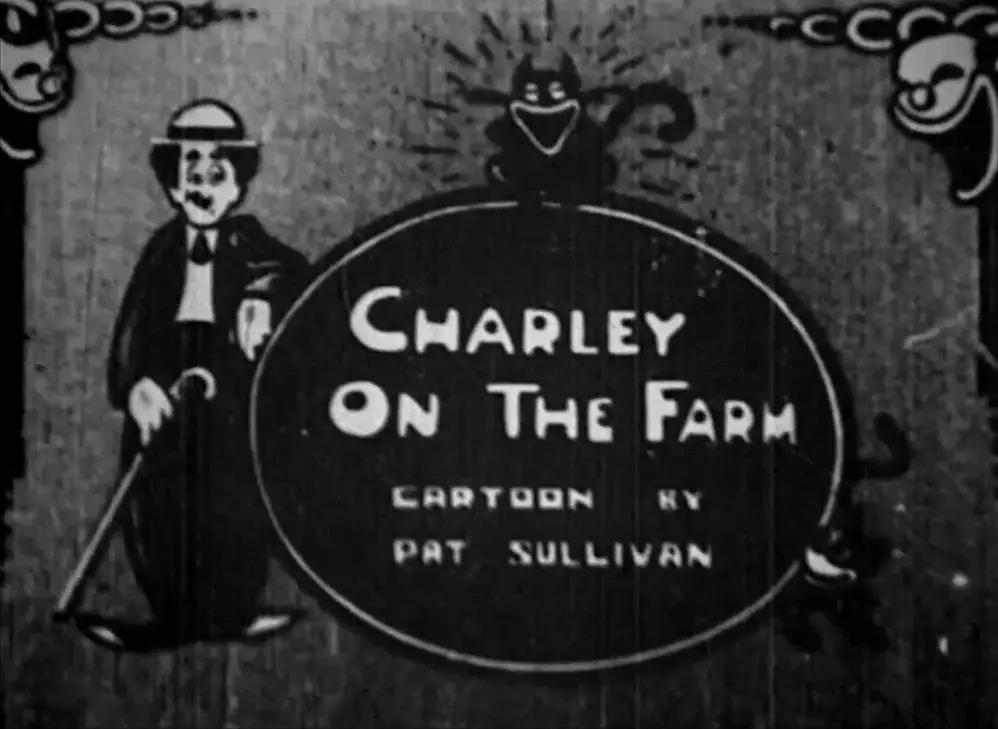
Sullivan’s draftsmanship in this short is particularly noteworthy. While the backgrounds are sparse—often just a single horizon line and a few suggestive strokes for a barn—the character of Charley is a marvel of economy. Every movement is calculated to evoke the 'Chaplinesque' without the benefit of the actor’s nuanced facial expressions. This requires a different kind of virtuosity, one that focuses on silhouette and silhouette-based storytelling. In this regard, the film is a precursor to the action-oriented serials like The Red Glove, where the body's movement through space is the primary narrative driver.
The 'cow town' itself is rendered with a cynical eye. This isn't the noble frontier. It’s a place of dirt and duty. When Charley is thrown off the boxcar, the impact is felt not just by the character, but by the audience. It is a moment of 'fate and fortune,' echoing the themes found in Fate and Fortune, where the whims of the universe dictate the hero's path. But unlike the protagonists of From Dusk to Dawn, who might find a supernatural or dramatic escape from their circumstances, Charley’s only escape is his own ingenuity—and his refusal to stay down.
Viewing Charley on the Farm through a 21st-century lens reveals its status as a proto-meme. The Tramp was the first truly global brand, and Sullivan was the first to realize that this brand could be decoupled from the physical person of Chaplin. This realization paved the way for every character-driven franchise that followed. While a film like A Pair of Pink Pajamas might rely on the specific charms of its cast, Charley on the Farm relies on the iconography of the costume—the cane, the hat, the oversized shoes—to do the heavy lifting of characterization.
The film also captures a specific American anxiety about the disappearance of the frontier. By 1919, the 'wild' west was being tamed by railroads and industrial farming. Charley’s attempt to become a farm hand is a doomed effort to participate in a dying myth. The 'cow town' he enters is already a parody of itself, a place where the work is mechanized and the soul is weary. This subtext adds a layer of melancholy to the slapstick, making it a more profound experience than its brief runtime might suggest. It shares this sense of being 'after the gold rush' with The Passing of the Third Floor Back, where the arrival of a stranger disrupts the established order of a stagnant environment.
Ultimately, Charley on the Farm is a triumph of pen-and-ink subversion. It takes the most recognizable human being on the planet and subjects him to the laws of cartoon physics, where a kick can send a man into the stratosphere and a cow can become a sentient engine of chaos. Pat Sullivan’s work here is a crucial link in the evolutionary chain of cinema. It bridges the gap between the theatrical traditions of the 19th century and the digital abstractions of the 21st.
For the modern cinephile, the film offers a rare glimpse into the laboratory of early animation. It is a reminder that before there were pixels, there were lines; before there were algorithms, there was the hand-drawn sweat of artists who saw the world not as it was, but as it could be stretched, squashed, and reimagined. Whether you are a scholar of the Chaplin mythos or a fan of animation history, this short is an essential text. It is a vibrant, flickering testament to the power of the image to transcend the limitations of the physical world, proving that even on a farm, the Tramp remains the master of his own whimsical, if exhausted, destiny.
IMDb —
1918
Community
Log in to comment.