DbcultAccessing Vault...
Cult Review
Senior Film Conservator
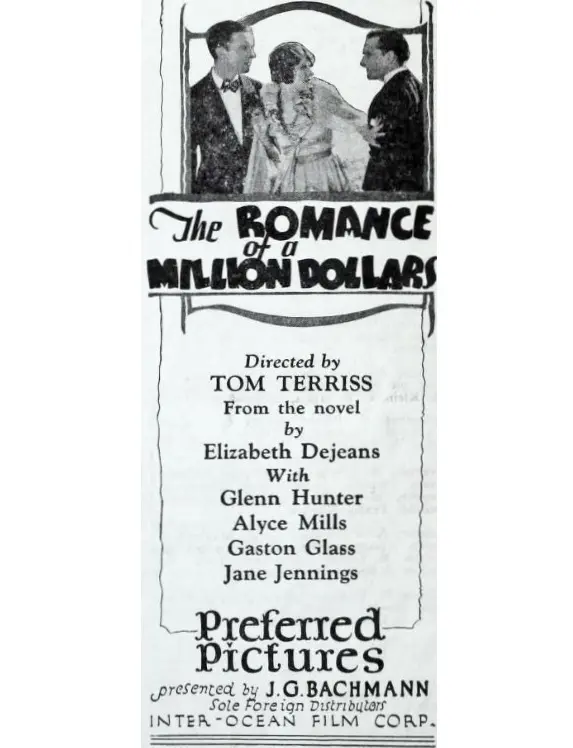
Should you dedicate your precious viewing hours to The Romance of a Million Dollars today? Short answer: yes, but with significant caveats. This film is a fascinating window into early cinematic storytelling, ideal for cinephiles and historians intrigued by the genre's formative years, but it will undoubtedly test the patience of modern audiences accustomed to faster pacing and nuanced character development.
It’s a film best suited for those with a deep appreciation for silent or early sound-era pictures, individuals who can forgive theatrical excesses for a glimpse into the narrative foundations of Hollywood. Conversely, it is decidedly not for viewers seeking contemporary storytelling, subtle performances, or briskly edited sequences. If period melodrama and straightforward moralizing aren't your cup of tea, you might find its charm elusive.
Early cinematic works often present a conundrum for the modern critic: how to assess them fairly, acknowledging their historical context without excusing their dated elements. The Romance of a Million Dollars is a prime example of this challenge. Its heart is in the right place, a straightforward tale of virtue tested and eventually rewarded, but its execution frequently buckles under the weight of its own ambitions.
This film works because it offers a clear, archetypal narrative of a falsely accused hero. Breck Dunbarton’s journey is one of persistent injustice, making his eventual triumph all the more satisfying for audiences eager for simple moral clarity. The dramatic stakes, while perhaps overblown by today’s standards, were undoubtedly compelling for its original viewers, tapping into universal anxieties about trust, betrayal, and familial loyalty.
This film fails because its melodramatic flourishes often overshadow any potential for genuine character depth or psychological realism. The plot relies heavily on contrivance and the almost cartoonish villainy of West, which, while typical for the era, feels less like a character study and more like a narrative device. The pacing, too, is a product of its time, often feeling protracted and lacking the dynamic rhythm contemporary audiences expect.
You should watch it if you are a student of film history, a devotee of early 20th-century storytelling, or someone seeking to understand the evolution of narrative structure in cinema. It serves as an excellent case study in how foundational tropes were established and how audiences engaged with moralistic tales before the advent of complex anti-heroes and ambiguous endings.
The plot of The Romance of a Million Dollars is a veritable masterclass in early melodrama, weaving a tapestry of misfortune around its protagonist, Breck Dunbarton. From his release from a reformatory, a shadow of past transgressions (real or perceived) follows him, even as his kindly Uncle Ezra endeavors to offer him a clean slate and a future. This initial setup immediately establishes Breck as an underdog, a figure for whom the audience is primed to root.
The subsequent false accusation at college, leading to his expulsion, is a pivotal moment. It reinforces the theme of unjust suffering, propelling Breck into the Army and, crucially, to France. This sequence, while perhaps rushed in its narrative implications, serves as a convenient mechanism to introduce Marie Moore, the ambulance driver, and to mature Breck through wartime experiences. It’s a common trope of the era, using grand external events to sculpt character, even if the internal turmoil remains largely unexplored.
Upon his return home, the narrative shifts from external conflict to internal, familial strife. The love triangle between Breck, West, and Marie, coupled with the mysterious disappearance of money and a robbery, escalates the tension. The film shrewdly positions West as the obvious antagonist, yet keeps the audience guessing (or, rather, waiting) for the definitive proof of his villainy. The disguise of West as 'Madame Volnova' is a particularly audacious, if transparent, narrative flourish that speaks volumes about the theatricality prevalent in early cinema. It’s a moment that might elicit a chuckle today but was likely intended as a shocking reveal.
The cast of The Romance of a Million Dollars delivers performances that are very much products of their time. The broader gestures, exaggerated facial expressions, and often overt emotional displays are characteristic of an era transitioning from silent film to the talkies, where the need to convey emotion visually was paramount. There's a certain charm in this theatricality, even if it feels jarring to modern sensibilities.
Glenn Hunter, as Breck Dunbarton, embodies the quintessential wronged hero. His performance, while lacking the subtle nuances we expect today, effectively conveys innocence and steadfastness in the face of adversity. He carries the emotional weight of the film with a earnestness that, despite its broad strokes, manages to make him a sympathetic figure. One can almost feel the frustration building in him as suspicion continually falls his way, a testament to Hunter's ability to project inner turmoil through external means.
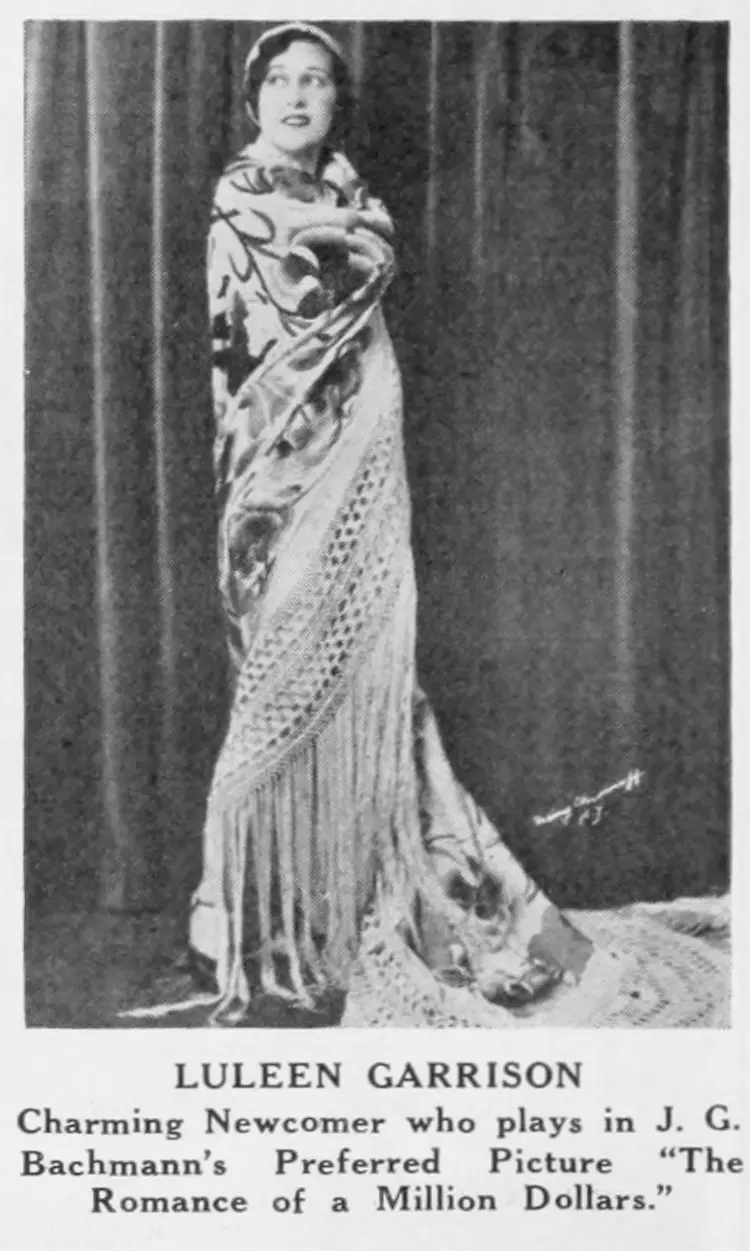
Luleen Garrison, portraying Marie Moore, brings a gentle strength to her role as the love interest and eventual catalyst for truth. Her character, while not deeply explored, serves as a moral compass and a beacon of hope for Breck. Her portrayal, especially in the scene where she uncovers West's deception, is a highlight, managing to convey both vulnerability and resolve. Compare her understated presence to the more overtly dramatic turns in films like The Cost, and you see the subtle differences even within the same period.
The villainous West, likely played by Thomas Brooks or Gaston Glass given the cast list and common casting archetypes, would have been tasked with a more overtly 'evil' portrayal. The transformation into 'Madame Volnova' would require a significant physical and performative shift, leaning heavily into caricature to ensure the audience understood the duplicity. This kind of unambiguous villainy was a staple, serving to simplify moral choices for the audience and heighten the stakes for the hero. It’s a performance style that leaves little to the imagination, which, for its time, was a virtue.
The direction in The Romance of a Million Dollars, likely overseen by a filmmaker deeply entrenched in the narrative conventions of the early 20th century, prioritizes clarity and emotional impact over visual experimentation. The camera serves primarily as a storyteller, ensuring that plot points are clear and character reactions are legible. One can infer a reliance on medium shots and close-ups to capture the expressive faces of the actors, a technique perfected in the silent era to communicate without dialogue.
Cinematography, while perhaps not groundbreaking by today's standards, would have been crucial in establishing mood and highlighting key narrative elements. The use of lighting to create shadows around the villain, or to bathe the hero in a more sympathetic glow, would have been standard practice. Imagine the scene where Marie discovers West's disguise; the lighting might have been stark, emphasizing the shock of the reveal. The framing of Breck, often isolated or looking forlorn, would visually underscore his victimhood. The production design, though not explicitly detailed, would have aimed for a sense of comfortable affluence within the Dunbarton household, contrasting sharply with Breck's earlier institutional setting or the harshness of the battlefield.
Pacing is another element intrinsically tied to the era. Early films often took their time, allowing scenes to unfold without rapid cuts. This deliberate tempo can feel slow to modern viewers, but it was designed to allow audiences to absorb the visual information and emotional beats fully. The narrative progression of Breck's repeated misfortunes, his service in the Army, and the eventual domestic drama, would have unfolded at a stately, almost episodic, pace. This is a far cry from the quick-fire editing seen in contemporary thrillers or even action films like The Texas Trail from a similar period, which relied on kinetic energy.
At its heart, The Romance of a Million Dollars is a meditation on the corrosive nature of suspicion and the enduring power of truth. Breck’s journey is a relentless test of his character, constantly under scrutiny despite his inherent goodness. This theme, while universal, takes on a particular poignancy in an era grappling with rapid social change and shifting moral landscapes. The film implicitly argues that true character will always shine through, no matter how dark the surrounding machinations.
One unconventional observation is how the film, perhaps inadvertently, shines a light on the precariousness of social standing in the early 20th century. Breck, despite his uncle's trust, is always one false accusation away from ruin. His reformatory past is a brand, a mark that makes him an easy target for West's machinations. This speaks to a societal anxiety where reputation, once tarnished, was incredibly difficult to restore, even with wealth and familial connections. It's a subtle undercurrent that adds an unexpected layer of social commentary to an otherwise straightforward melodrama.
The film's most glaring flaw isn't its period-specific acting or pacing, but its almost naive belief in the ultimate triumph of transparent good over transparent evil. It leaves little room for ambiguity, which, while satisfying in a simple way, feels less like a narrative choice and more like a narrative obligation.
The concept of 'a million dollars' in the title itself signifies not just monetary wealth, but a metaphor for a life of honor, love, and social acceptance. Breck's fight isn't just for money; it's for his very identity and the right to belong. The film's resolution, where he gains both the fortune and the girl, is the ultimate fulfillment of this 'romance' – a romance with a life free from calumny. It works. But it’s flawed.
For the casual viewer, The Romance of a Million Dollars might be a tough sell. Its deliberate pace and overt theatricality require a certain mindset and an appreciation for film history. It's not a film you'd put on for a casual Friday night viewing unless you're specifically seeking out historical cinema.
However, for those with a genuine interest in the evolution of cinematic storytelling, character archetypes, or the social mores reflected in early 20th-century American cinema, it is absolutely worth watching. It provides valuable insight into how narratives were constructed, how moral lessons were imparted, and what constituted 'entertainment' in a bygone era. Think of it less as a modern movie experience and more as a historical document that happens to tell a compelling story.
The Romance of a Million Dollars is not a forgotten masterpiece waiting to be rediscovered by the masses. It is, however, a significant artifact for those who appreciate the foundational layers of cinematic art. Its story of enduring virtue against relentless calumny is a testament to the power of simple, moralistic narratives that captivated audiences a century ago. While its execution often feels dated, its thematic core remains surprisingly resilient.
For the adventurous cinephile or the dedicated historian, this film offers more than mere entertainment; it offers an education. It’s a chance to witness the roots of narrative filmmaking, to understand how early storytellers crafted drama and captured the imaginations of their audiences. Approach it with patience and an open mind, and you might find yourself charmed by its earnestness, even as you chuckle at its more theatrical moments. It’s a valuable piece of the puzzle in understanding cinema’s grand evolution.
IMDb —
1926
Community
Log in to comment.