DbcultAccessing Vault...
Cult Review
Senior Film Conservator
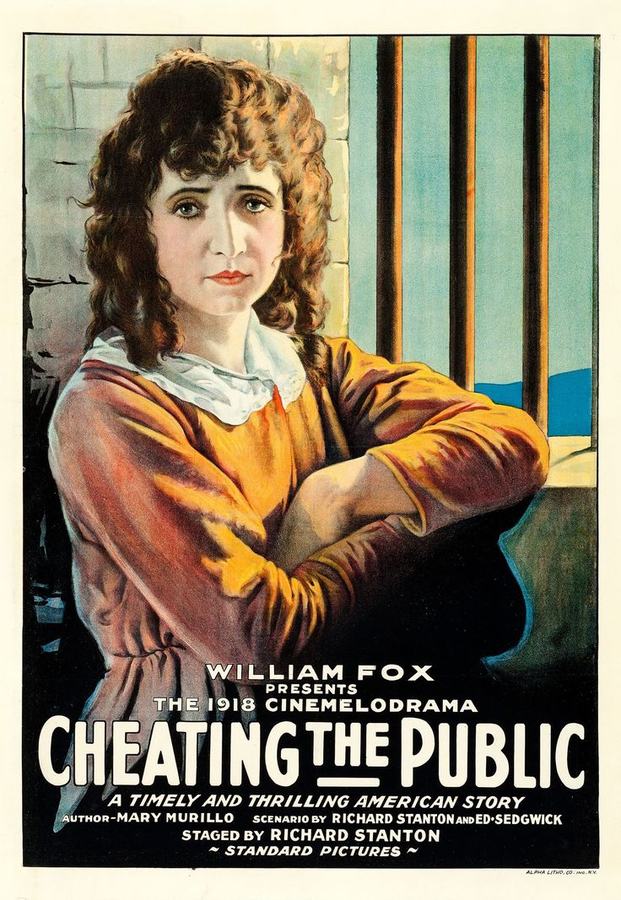
Silence screams loudest when the machinery of capital is greased with human fat. Cheating the Public—a title that cynically winks at its own audience—arrives like a coal-dust hurricane out of 1919, brandishing the sort of naked class rage that modern studio boards would vet into oblivion. Edward Sedgwick, Richard Stanton, and scenario scribe Mary Murillo conspire to weld melodrama to muckraking, producing a 65-minute locomotive of populist fury that feels eerily predictive of every labor headline you scroll past today.
Bert Glennon’s cinematography (often misattributed to lesser names) revels in tenebrous tableaux: the mill floor is a Hadean hive of clattering shuttles and carbon-choked air, shot through with diagonal shafts of mercury-vapor light that stripe the workers like felons in a line-up. Compare this to the pastoral escapism of The Precious Parcel or the drawing-room shenanigans in The Twin Triangle, and you realize how radical it was to frame toil itself as antagonist. Intertitles arrive sparingly, but when they do—“His ledger counted souls as ciphers”—they land like brickbats.
Ralph Lewis’s Dowling is no cardboard plutocrat; he exudes the flushed bonhomie of a man who believes his own benevolent mythology, right up to the instant the pistol fires. Watch the micro-twitch in his left cheek when Mary mentions her mother—an involuntary spasm of rejected-id rage that predates Method acting by decades. Beverly Griffith’s Mary, all prairie-grace shoulders and coal-fire eyes, performs femininity as moral artillery; her courtroom breakdown never tips into swooning victimhood. Meanwhile, Bertram Grassby’s Chester carries the unease of privilege awakening—his gait is that of a man wearing someone else’s itchy coat.
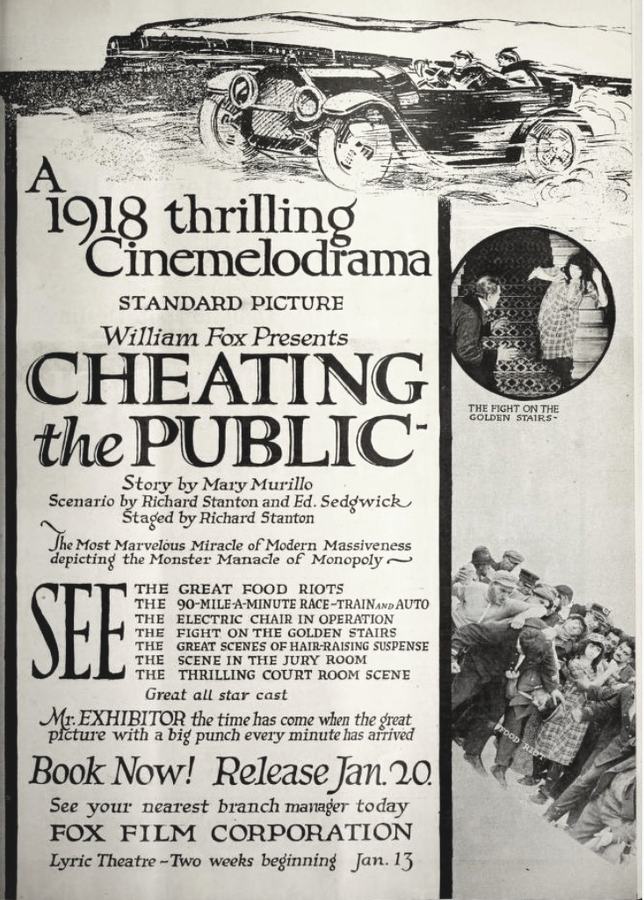
Act I anatomizes the wage-cut betrayal with ruthless economy: a single shot of a pay envelope slit open, copper coins spilling like arterial blood. Act II detonates the personal vendetta, layering Oedipal residue atop class warfare. Mary’s visit to Dowling’s Gothic manse—stuffed with antlered taxidermy and oil portraits that leer—echoes the Expressionist terror soon to bloom in Wenn Tote sprechen. The fatal gunshot is staged in negative space: we see only Mary’s recoiling silhouette and a velvet curtain swallowing the blast.
Justice here is a sausage grinder lubricated by political ambition. Prosecutors brandish the blood-stained dress like a medieval relic; the defense attorney, visibly paid in factory scrip, snoozes through testimony. When the gallows is erected in the town square opposite the mill gates, the film achieves a Brechtian coup: capital punishment as town festival, complete with popcorn vendors. The real-time cross-cutting between Mary’s cell, the governor’s hurtling train, and Bull’s tavern confession anticipates the climactic locomotive tension of The Man o' War's Man by a full year.
Murillo’s script weaponizes the oldest of romantic wounds. Dowling’s vendetta is not merely economic; it is erotic reprisal for a humiliation suffered in his youth, making Mary the surrogate vessel for generational spite. The assault scene—implied rather than shown—carries a visceral charge that 1919 censors somehow missed, perhaps because the film cloaks it within the guise of capitalist critique. Contrast this with the relatively sanitized gender politics of Her Father's Son, and you see how Cheating the Public weaponizes the personal-as-political long before the phrase was coined.
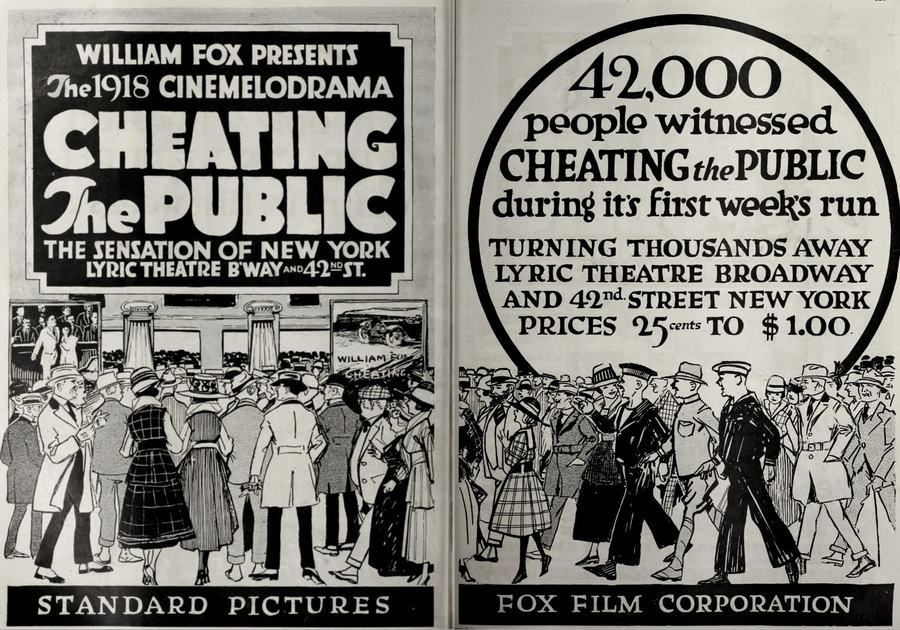
Yes, the eleventh-hour pardon is melodrama’s oldest trope, yet Sedgwick stages it as cosmic locomotive: pistons shrieking, telegraph wires humming Morse like metallic crickets, Chester leaping between boxcars against a matte-painted moon. The tension is less Will he make it? than Can capitalism ever truly be halted? The marriage finale—Mary and Chester framed before the mill gates now bearing a tattered ”Employees Welcome” sign—offers not closure but precarious détente. We sense the loom will soon roar again, perhaps under kinder management, perhaps not.
Surviving prints circulate without original cue sheets, inviting each curator to conjure their own soundtrack. I’ve witnessed a live trio accompany it with ragtime, and the cognitive dissonance was revelatory: jaunty syncopation undergirding wage slavery. Seek out the recent restoration by San Francisco Silent Film Festival, which commissioned a minimalist drone score—bowed electric guitar and timpani heartbeat—that transforms every loom thud into an arrhythmic cardiac arrest.
Watch Cheating the Public back-to-back with Oliver Twist (1916) and you’ll detect the DNA of every proletarian revenge fantasy from Norma Rae to Parasite. The film’s uneasy marriage of agitprop and crowd-pleasing rescue thrashes against the same contradiction that haunts contemporary social-thrillers: how to indict systemic rot while delivering the catharsis Hollywood demands? By refusing to torch the mill—preferring instead the fragile promise of reform—the film lands on a utopian horizon that feels, in 2024, both quaint and achingly aspirational.
Flawed? Certainly. The comic-relief drunk (Tom Wilson, recycling his Drifter shtick) dates badly, and the interracial workforce subtext is blinkered. Yet its fury is evergreen, its formal DNA audacious. Like a coal seam still smoldering decades after the mine closes, Cheating the Public burns with a heat that no amount of corporate paternalism can fully extinguish. Seek it, let it scorch, and emerge blinking into neon daylight newly suspicious of every corporate logo that promises ”We’re family.”
IMDb 6.7
1933
Community
Log in to comment.