DbcultAccessing Vault...
Cult Review
Senior Film Conservator
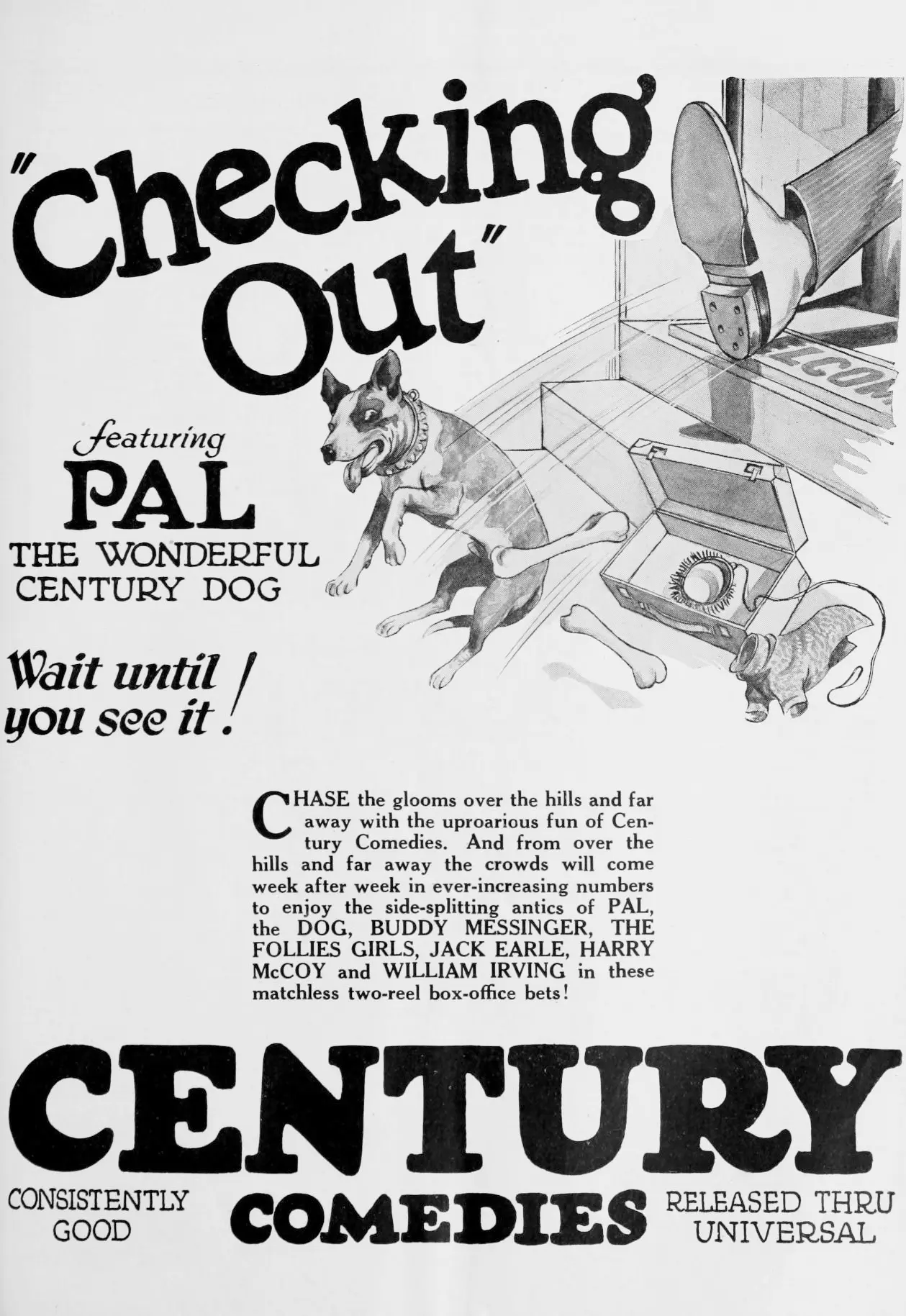
There exists a peculiar period in the silent era where the hierarchy of the screen was not determined by the prestige of the actor’s lineage, but by the charisma of their paws. In the 1924 short Checking Out, we witness the zenith of this phenomenon. Produced under the prolific banner of Century Comedies, the film is less a vehicle for its human star, Harry Sweet, and more a testament to the undeniable magnetism of Pal, the Dog. This was not their first rodeo; having previously appeared together in a Mah-Jong themed comedy, the chemistry between the deadpan Sweet and the hyper-intelligent Pal had already been codified into a lucrative formula. However, Checking Out pushes this dynamic to its logical, if absurd, conclusion.
The film opens with a tableau that is as charming as it is indicative of the era's fascination with anthropomorphism. Sweet and Pal are seen operating a hot dog stand, an image that serves as a meta-textual joke on the dog’s own species. They are dressed identically, a visual gag that suggests an egalitarian partnership rather than a master-pet relationship. This opening sequence evokes the same kind of working-class struggle seen in The Twinkler, though here the stakes are played for broad laughs rather than nocturnal melodrama.
No silent comedy is complete without an antagonist, and Al Alt fills this role with a sneering, mustache-twirling efficiency. As a rival stand owner, Alt represents the predatory nature of early 20th-century capitalism. The ensuing conflict is not merely a battle of wits but a physical deconstruction of the sets. The destruction of the hot dog stands is choreographed with a rhythmic intensity that mirrors the chaotic energy found in Toonerville's Fire Brigade. It is a spectacular erasure of their livelihood, forcing our protagonists into a state of nomadic desperation that leads them to the doors of a grand hotel.
The transition from the outdoor stand to the indoor hotel lobby allows director Noel M. Smith to explore the spatial dynamics of the service industry. The hotel becomes a stage for Pal’s most impressive feats of physical comedy. While Harry Sweet is distracted by the romantic allure of Betty Young (playing the hotel operator), Pal is forced to compensate for his partner’s dereliction of duty. The dog takes on the roles of bellhop and check boy simultaneously, a feat of editing and canine training that remains impressive even a century later. This sequence highlights a recurring theme in silent cinema: the competence of the animal versus the distraction of the human, a trope also explored in various ways in Back from the Front.
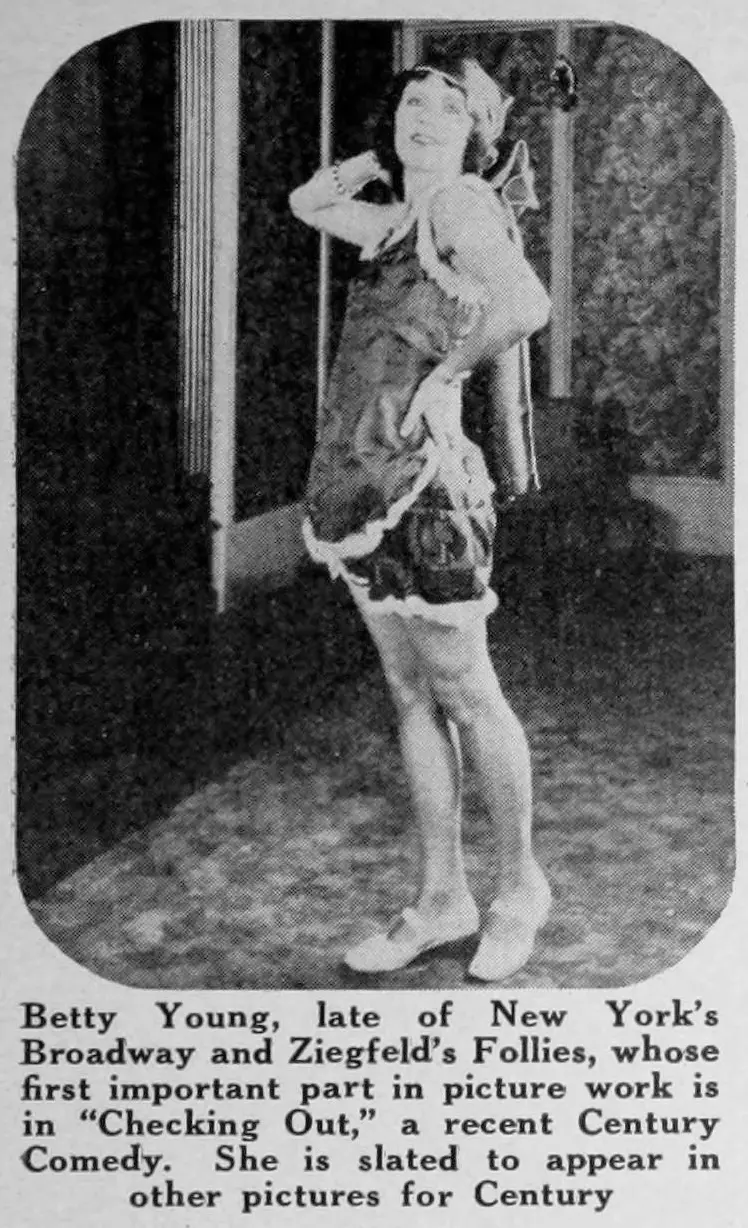
The middle act of Checking Out takes a turn toward the surreal when Al Alt reappears, not as a competing merchant, but as a full-blown criminal. In a moment of high-impact slapstick, Alt forcibly removes Sweet from the premises via defenestration. The physical stunt work here is quintessential Sweet—a performer who often risked life and limb for a chuckle. Yet, despite the gravity of being thrown through a window, the narrative focus remains tethered to the hotel interior where a robbery is afoot.
The film’s climax is perhaps one of the most iconic images in the Century Comedies catalog. Harry Sweet manages to disarm the crooks, but rather than holding them at bay himself, he entrusts the weaponry to Pal. The sight of a Pit Bull standing on its hind legs, dual-wielding pistols, is an image that defies the pastoral sentimentality often associated with early cinema dogs. When one of the criminals, perhaps reflecting the audience's own incredulity, attempts to rush the canine, Pal fires a warning shot. This is a moment of pure cinematic audacity. It subverts the 'Lassie' archetype of the helpful helper and replaces it with a figure of canine authority and potential lethality. The gun-toting dog is a precursor to the more stylized violence we might see in modern genre parodies, yet here it is played with a straight face that enhances the hilarity.
The resolution of the film involves the arrival of the police, but the true closure is domestic. In a scene that mirrors the traditional happy endings of films like The Bashful Lover, a wedding is hastily arranged between Sweet and the hotel operator. However, the film refuses to let the humans have the final word. When the minister asks if there are any objections, the camera lingers on Pal. The dog’s slow, deliberate nod of approval is the final punctuation mark on the film's thesis: Pal is the one who permits this union. He is the guardian of the social order, the breadwinner of the duo, and the ultimate judge of character.
One cannot help but compare the tone of this ending to the more somber social critiques found in Egyenlőség or the psychological depth of The Man Who Played God. While Checking Out occupies the lighter end of the cinematic spectrum, its execution is no less precise. The direction by Noel M. Smith ensures that the pacing never falters, moving from the wreckage of the street to the high-stakes standoff with a fluidity that belies the film's short runtime.
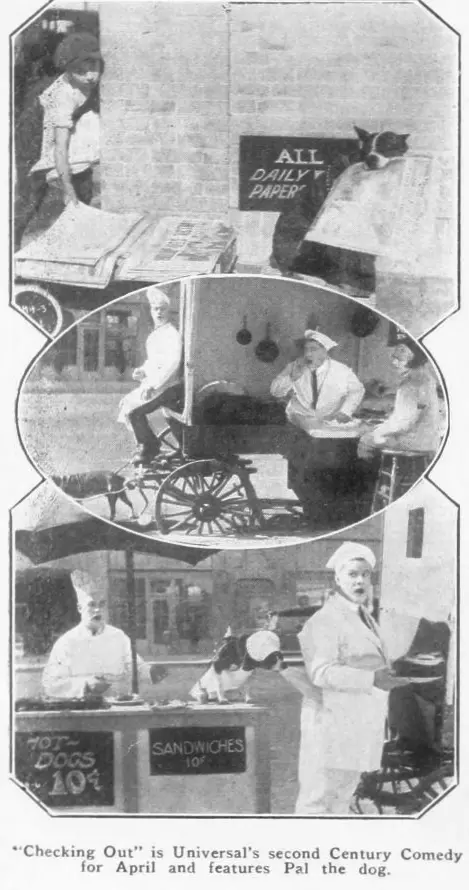
Visually, the film utilizes the high-contrast lighting typical of mid-20s comedies, though the hotel sets are surprisingly detailed for a short of this nature. The use of deep focus during the hotel lobby scenes allows for multiple layers of action—Pal busy in the background with luggage while Sweet flirts in the foreground. This visual density is a hallmark of high-quality silent shorts, reminiscent of the craftsmanship in Lulù or even the mystery-laden frames of Lucille Love: The Girl of Mystery.
The performance of Harry Sweet deserves a nuanced re-evaluation. Often overshadowed by the likes of Keaton or Lloyd, Sweet possessed a unique, rubbery physicality that made him the perfect foil for an animal co-star. His willingness to play the 'underling' to a dog speaks to a lack of ego that was rare among the leading men of the time. Shortly after this film, Sweet moved on from Century Comedies, perhaps seeking roles where he wouldn't be outshone by a four-legged companion who could handle a firearm better than most men. His departure marked the end of a specific era of canine-human partnership that had defined the studio's output.
Pal, who would later achieve even greater fame as 'Pete the Pup' in the Our Gang (Little Rascals) series, is the true auteur of this piece. His ability to convey complex emotions—judgment, exhaustion, and protective fury—without the aid of dialogue is a masterclass in screen acting. Unlike the melodramatic animals in The Sin of Martha Queed or the peripheral creatures in Lena Rivers, Pal is the engine of the plot. He is not a mascot; he is the protagonist.
In conclusion, Checking Out is more than just a historical curiosity. It is a vibrant, anarchic, and technically proficient comedy that captures a unique moment in film history. It stands alongside other eccentric gems of the era, such as Sands of the Desert or the avant-garde leanings of La montagne infidèle, as a testament to the boundless creativity of early filmmakers. Whether you are a scholar of silent slapstick or a casual fan of canine antics, this film offers a delightful glimpse into a world where a dog’s nod was the final word in law and love.
As we look back at the wreckage of the hot dog stand and the triumphant bark of the finale, we recognize that Checking Out is a celebration of resilience. It suggests that even when your business is obliterated and you are thrown through a window, as long as you have a loyal, gun-toting companion by your side, everything will turn out just fine. It’s a message that is as absurd as it is strangely comforting, much like the film itself.
IMDb —
1921
Community
Log in to comment.