DbcultAccessing Vault...
Cult Review
Senior Film Conservator
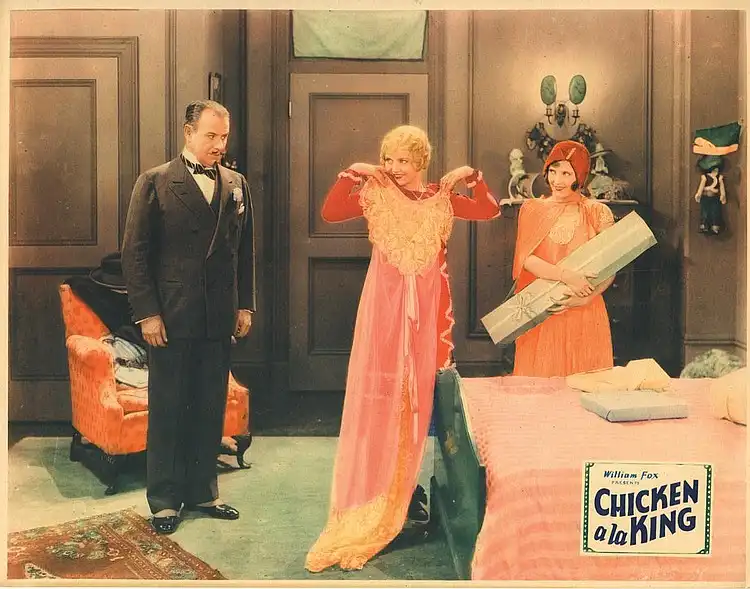
Alright, let's just get this out of the way upfront: no, Chicken a La King is probably not going to be your next favorite movie, unless your favorite movies are exclusively 1928 transitional talkies that feel like they're actively fighting themselves. If you're a die-hard silent film enthusiast curious about the early, really early, days of sound, or perhaps a masochist with a penchant for historical oddities, then sure, give it a whirl. Everyone else? You can probably skip this one without a second thought, and your day will be no poorer for it. It's less a film and more a time capsule of an industry scrambling to figure things out.
The first thing that hits you, naturally, is the sound. Oh, the sound. It's not just bad; it's aggressively bad in spots. Characters seem to be either whispering into their collars or shouting directly into a tin can, with very little in between. There’s a scene early on, I think it’s Arthur Stone’s character trying to impress some society types, where he keeps turning his head away from the apparent microphone location, and the dialogue just drops out entirely. Then he'll remember, snap his head back, and suddenly you're blasted with whatever half-baked punchline he was delivering. It’s almost comedic in its inconsistency, though I don’t think that was the intent.
Nancy Carroll, bless her heart, tries. She really does. She’s got that silent film sparkle in her eyes, that expressive physicality, but when she has to deliver lines, it’s like she’s suddenly unsure what to do with her hands. Her performance feels constrained, like she’s constantly calculating where the mic is, rather than just acting. There are moments where she looks genuinely frustrated with the whole ordeal, and you can’t really blame her.
The plot, such as it is, concerns itself with some sort of social climbing, I think. Our heroine, played by Carroll, is trying to make a good impression, possibly with a rich suitor or a new employer. There’s a whole bit involving a fancy dinner party where the titular dish is served. And it’s… fine. The chicken itself looks rubbery, honestly, and the reaction shots to it are hilariously over-the-top, like everyone’s just been served a plate of poisoned gruel instead of a moderately expensive meal.
Pacing is another animal entirely. Scenes just sort of… happen. There’s no real flow. A conversation will end abruptly, and then the next scene will start with absolutely no transition, leaving you to wonder if you missed a reel change. Or, conversely, a scene will go on for what feels like an eternity, with characters exchanging pleasantries that offer no real insight or plot advancement. One particularly egregious example is a scene with Ford Sterling and George Meeker attempting some sort of comedic banter. It stretches out for so long, the laugh track (if they had such a thing back then) would have died of old age.
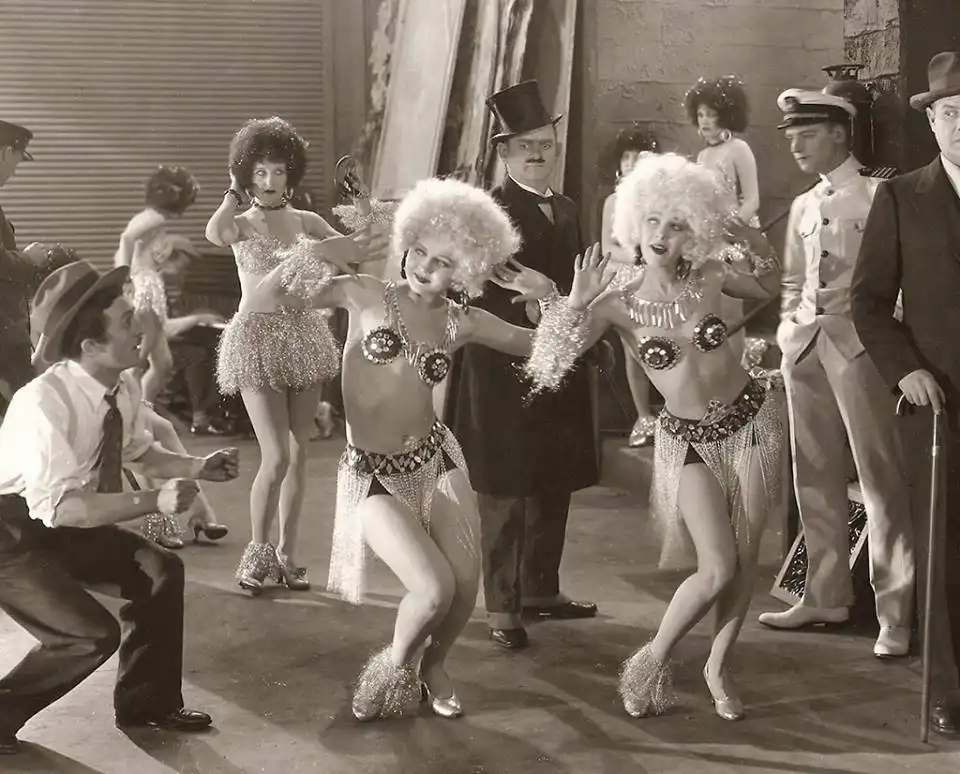
And the costumes! There’s a dress Carol Holloway wears in the second act, a shiny, sequined number, that looks like it belongs in a completely different movie, possibly a burlesque show from a decade later. It just screams 'look at me!' in a way that clashes with the somewhat demure aspirations of the scene it's in. It’s a small detail, but it really pulled me out of it.
There are these small, almost accidental moments of charm, though. A quick, unscripted-feeling glance between Carroll and another character, a genuine smile that breaks through the stiff acting. These tiny flickers remind you of the potential these actors had, even when the technology was actively working against them. You can almost feel the movie trying to convince you this moment matters, and sometimes, for a split second, it almost does.
Then there's the character of 'King' – I'm still not entirely sure if it's a nickname or a literal title, but the actor playing him (I believe it's George Meeker) has this strange habit of perpetually raising one eyebrow, even when the dialogue doesn't call for it. It makes him look less regal and more like he's constantly surprised by everything happening around him. It becomes a running gag in your head, whether you want it to or not.
The film’s tone shifts are also quite jarring. One minute it’s a light romantic comedy, the next it’s attempting some sort of dramatic stakes, and then it veers into slapstick with Arthur Stone tripping over a rug. It’s like the numerous writers (and there were many, if the credits are to be believed) each had a different idea for the film and just threw them all into a hat.
Ultimately, Chicken a La King is a fascinating historical artifact. It’s a testament to the sheer chaos and experimentation of early sound cinema. It’s clunky, awkward, and often baffling, but it’s never entirely boring if you approach it as an archaeological dig rather than a coherent narrative. It’s a film that asks a lot of its audience, and mostly, you’ll leave feeling like you’ve just witnessed a grand, ambitious, slightly disastrous experiment. And sometimes, that’s just as interesting as a masterpiece.
IMDb —
1924
Community
Log in to comment.