DbcultAccessing Vault...
Cult Review
Senior Film Conservator
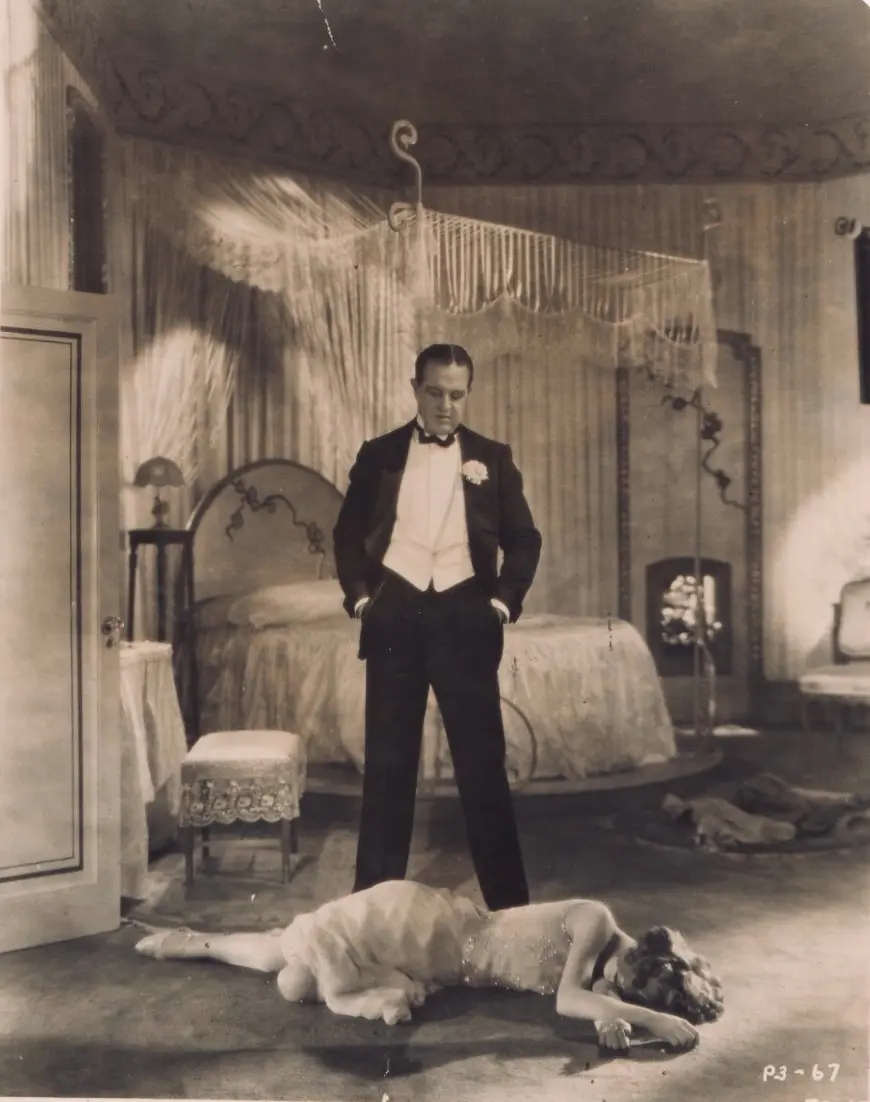
The 1920s cinematic landscape was often preoccupied with the 'working girl'—a figure of both aspiration and cautionary moralizing. In the 1925 feature Chickie, we find perhaps the most crystallized version of this trope. Directed with a keen eye for the spatial politics of the era, the film transcends its melodramatic roots to offer a scathing yet sympathetic portrait of social climbing. Dorothy Mackaill, portraying the titular Chickie Bryce, delivers a performance that is as much about the twitch of a lip as it is about the grand gestures of the silent screen. Unlike the more overtly tragic undertones found in The Branded Woman, Chickie operates in a space of vibrant, almost frantic energy, reflecting the jittery pulse of a decade defined by its own excesses.
The film’s brilliance lies in its visual dichotomy. On one side, we have the cramped, utilitarian world of the stenographer’s office—a place of staccato rhythms and predictable futures. Here, Chickie meets Barry, played with a grounded, almost weary sincerity by John Bowers. Their romance is one of shared lunches and modest dreams, a narrative path that mirrors the domestic stability explored in Married in Name Only. However, the introduction of Jake, the millionaire, shatters this equilibrium. Jake isn’t merely a man; he is a manifestation of vertical mobility. His world is one of expansive ballrooms and predatory luxury, a setting that reminds one of the high-stakes social maneuvering in Broadway Gold.
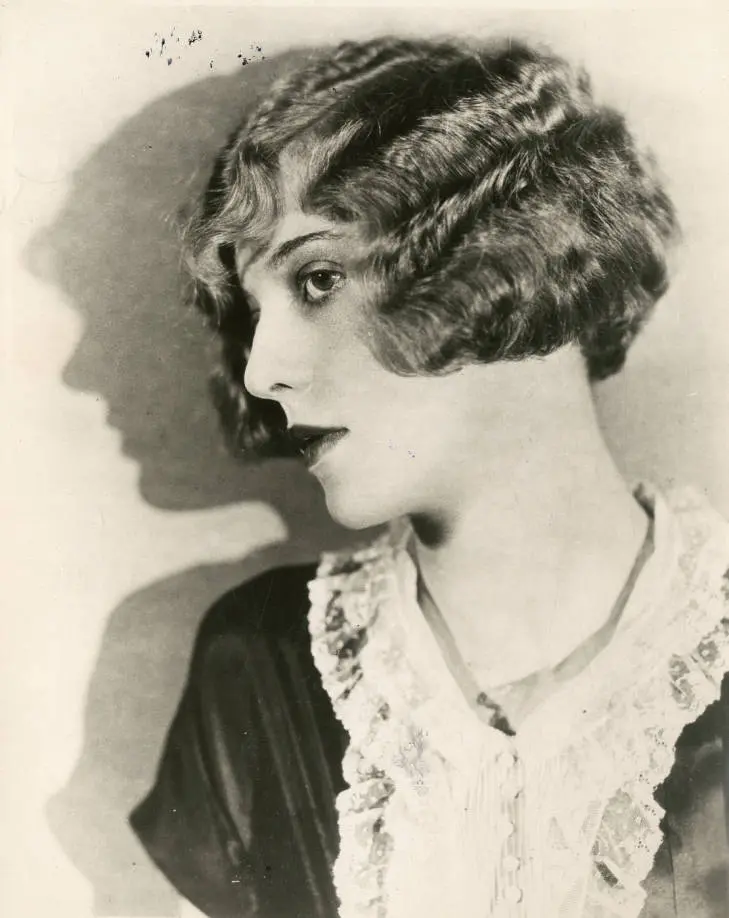
Mackaill’s Chickie is not a cynical opportunist. Rather, she is a victim of the very dreams the culture has sold her. The screenplay, penned by Elenore Meherin and Marion Orth, meticulously tracks her psychological unraveling as she attempts to reconcile her genuine affection for Barry with the intoxicating possibility of a life without financial anxiety. This isn't just a love triangle; it’s a class war fought in the theater of the human heart. The cinematography captures this tension through tight framing that emphasizes Chickie’s claustrophobia within her own social strata, contrasted with the wide, echoing shots of Jake’s estate that suggest a different kind of emptiness.
While the central conflict involves Chickie’s choice between two men, the narrative’s true engine is Ila. In a performance of chilling possessiveness, the character of Ila serves as the dark mirror to Chickie’s innocence. Her obsession with Barry is not born of love, but of a pathological need for ownership. This introduces a layer of suspense that rivals the atmospheric dread of The Isle of the Dead, albeit in a domestic setting. Ila’s machinations are subtle, relying on the social mores of the time to alienate Chickie from Barry. She weaponizes Chickie’s brief flirtation with the upper class, painting her as a fallen woman to the very man who should have been her sanctuary.
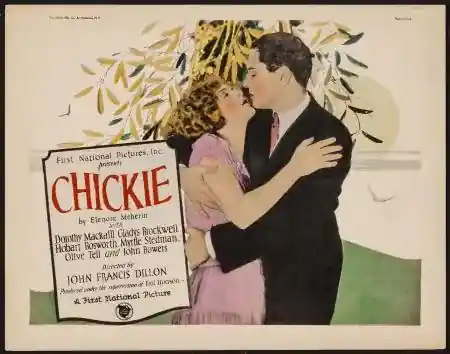
This dynamic elevates the film from a simple romance to a complex study of female rivalry and the fragility of reputation. In an era where a woman’s standing was her only currency, Ila’s actions are nothing short of an assassination. The film deftly handles these themes without the heavy-handed didacticism often found in contemporary morality plays like Syndig Kærlighed. Instead, it allows the tragedy to emerge naturally from the characters' conflicting desires and the rigid societal structures that hem them in.
Technically, Chickie is a marvel of its time. The editing maintains a brisk pace that keeps the audience tethered to Chickie’s escalating panic. There is a specific sequence involving a gala where the lighting creates a chiaroscuro effect, highlighting the artifice of the millionaire’s world. It’s a visual language that speaks volumes more than the intertitles ever could. The film shares a certain kinetic energy with Trapped by the London Sharks, though it swaps the literal underworld for the metaphorical shark tank of high society.
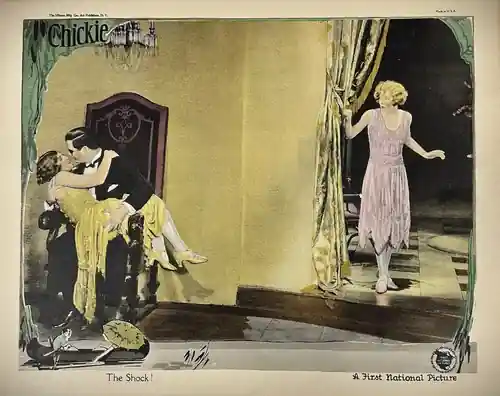
The supporting cast, including the venerable Hobart Bosworth and Myrtle Stedman, provide a necessary weight to the proceedings, acting as the moral compasses that Chickie occasionally ignores. Their presence grounds the film, preventing it from floating away into the realm of pure fantasy. Even the minor roles, such as those played by Lora Sonderson and Paul Nicholson, contribute to a sense of a lived-in, breathing world. It’s a far cry from the more isolated character studies like The Runt or the absurdist leanings of Sadhu Aur Shaitan.
Viewing Chickie today, one is struck by its modernity. The pressure to 'have it all'—the career, the perfect romance, the social status—is a contemporary anxiety that Mackaill’s character navigates with heartbreaking vulnerability. The film doesn't offer easy answers. When Barry attempts to win her back, the interference of Ila isn't just a plot device; it's a commentary on the difficulty of reclaiming one's narrative once it has been hijacked by others. This theme of stolen identity and social entrapment is also present in Green Eyes, though Chickie handles it with a more delicate, humanistic touch.
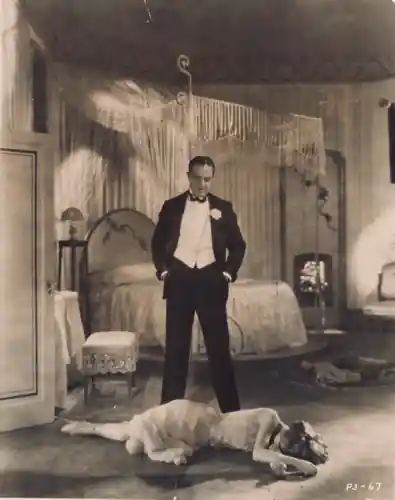
Moreover, the film’s exploration of the 'stenographer' as a new class of woman is fascinating. She is independent, yet tethered; she has agency, yet is constantly subjected to the whims of the men she serves and the men she loves. This duality is captured perfectly in the scenes where Chickie is at work, her focus split between the dictation she must record and the life she wishes to lead. It’s a subtle form of character development that reminds us of the meticulous detail found in In a Naturalist's Garden, where every small movement contributes to a larger ecological understanding—in this case, a social ecology.
In the grand tapestry of 1920s cinema, Chickie stands out as a vibrant thread. It lacks the grandiose historical scale of Christopher Columbus, but it possesses an emotional intimacy that makes it far more enduring. The film’s refusal to paint its characters in monochrome—Barry is not perfect, Jake is not a simple villain, and Chickie is wonderfully flawed—ensures its relevance. It avoids the slapstick simplicity of A False Alarm or the chaotic energy of Loose Lions, opting instead for a grounded, psychological realism.
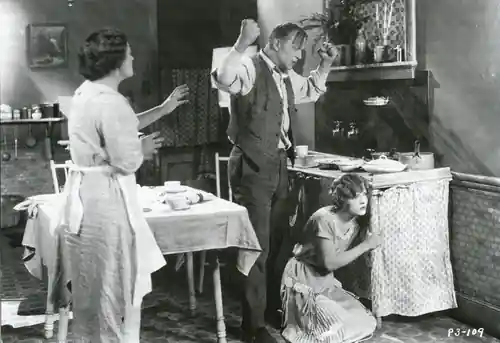
As we watch Chickie navigate the final acts of her drama, we are reminded that the quest for 'more' is often a journey toward discovering what is 'enough.' The film’s resolution, though satisfying in its own melodramatic way, leaves the audience with a lingering sense of the cost of such a journey. Like the characters in The Shuttle, Chickie is a passenger on a vessel she cannot entirely control, moving toward a destination that is both beautiful and terrifying. For anyone interested in the intersection of class, gender, and the silent art of performance, Chickie is an essential, if often overlooked, chapter in film history. It is a work of high lexical diversity in its visual storytelling, a film that doesn't just show us a story, but makes us feel the weight of every typed word and every stolen glance.
Ultimately, the strength of Chickie lies in its refusal to be just one thing. It is a romance, a social critique, and a thriller all rolled into one. It captures a moment in time when the world was changing faster than the people in it could adapt, creating a friction that still sparks today. Whether you are drawn to the period costume design, the nuanced performances, or the sharp social commentary, this film offers a rich, multi-layered experience that rewards careful viewing. It is a testament to the power of the silent medium to convey complex human emotions without the need for a single spoken word, standing tall alongside the likes of Seven Bald Pates as a masterclass in narrative economy and emotional depth.
IMDb 5.8
1931
Community
Log in to comment.