DbcultAccessing Vault...
Cult Review
Senior Film Conservator
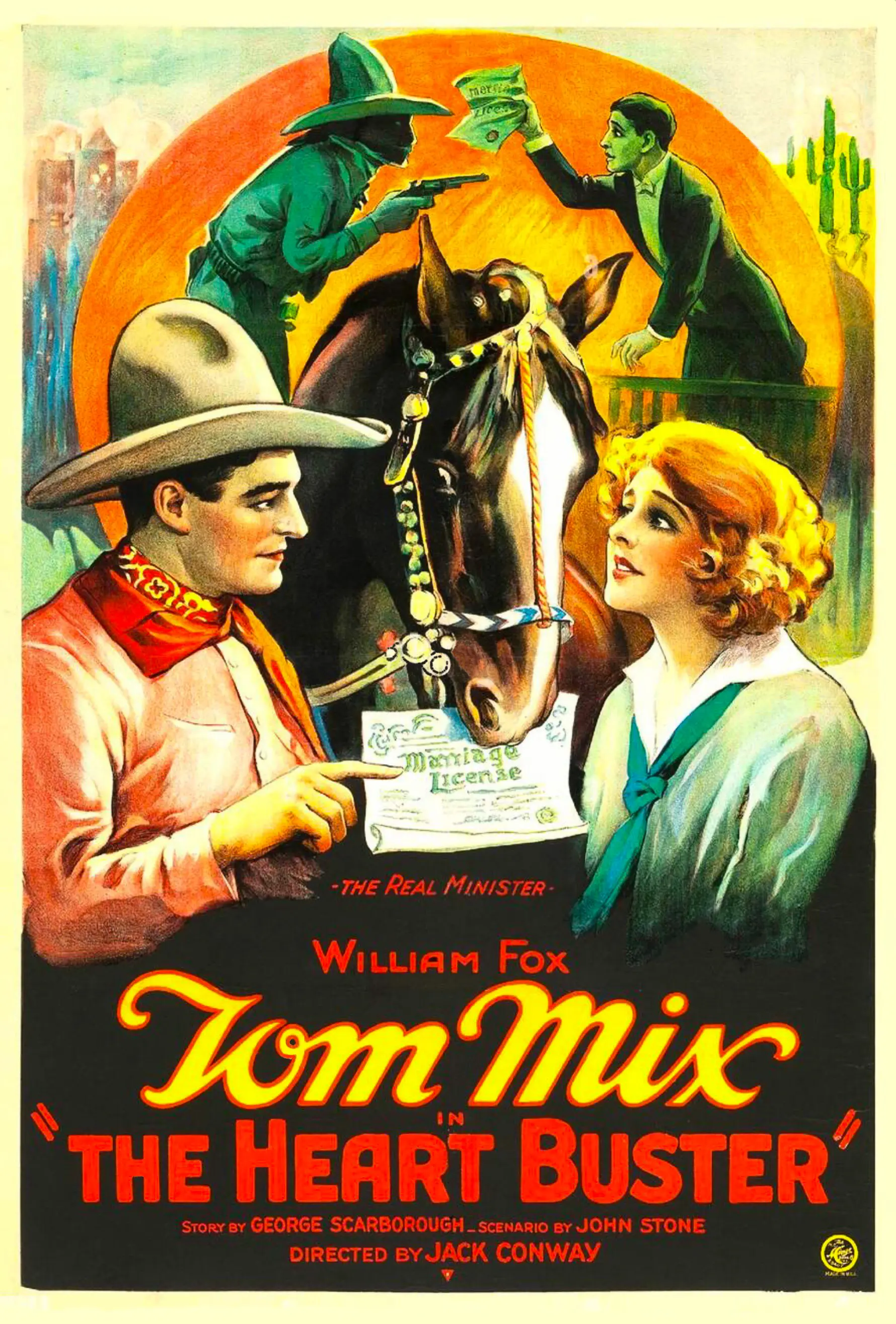
To witness Tom Mix in his prime is to observe a specific mutation of the American mythos. In The Heart Buster (1924), directed by Jack Conway, we are presented with a fascinating intersection of the burgeoning stunt-film and the traditional moral play. While many contemporary critics might dismiss these early Fox releases as mere vehicles for Mix’s athleticism, a closer inspection reveals a complex layering of social anxieties regarding the encroachment of urban vice upon the pastoral ideal. Unlike the somber, almost religious gravity found in The Little Minister, Mix’s work here is infused with a kinetic joy that prioritizes the spectacle of the body over the sanctity of the word.
The plot, a taut construction by writers John Stone and George Scarborough, centers on the impending marriage of Rose Hillyer (Esther Ralston) to the nefarious Edward Gordon (Cyril Chadwick). Gordon is the quintessential 'slicker'—a bigamist whose predatory nature is hidden behind the polished manners of a city-dweller. This trope was a staple of the era, reflecting a broader cultural suspicion of the rapidly expanding American metropolis, a theme also explored with varying degrees of cynicism in New York Luck. Here, the threat is not just to Rose’s heart, but to the very integrity of the Hillyer household.
The narrative engine of The Heart Buster is fueled by the 'ticking clock'—a device that Mix’s films utilized with surgical precision. Tod Walton (Mix) possesses the proof of Gordon’s previous marital entanglements, yet the physical evidence is delayed. This creates a vacuum of action that Walton must fill with sheer ingenuity. The decision to kidnap the minister is a stroke of comedic genius that elevates the film from a standard melodrama to a proto-action-comedy. It subverts the solemnity of the marriage rite, suggesting that the spirit of the law (protecting the innocent) is far more vital than the letter of the law (the ceremony itself).
Comparing this to the more grounded stakes of Her Tender Feet, one can see how The Heart Buster pushes the boundaries of acceptable hero behavior. Walton is not a lawman in the traditional sense; he is a vigilante of virtue. His rapport with Tony the Horse is not merely a gimmick; Tony acts as a silent witness and an enabler of Walton’s physical transcendentalism. The stunts performed are not just for show; they are the vocabulary through which Walton expresses his devotion to Rose.
The cinematography captures the rugged terrain with a clarity that was becoming the hallmark of the Fox Western. There is a specific texture to the 1920s film stock—a silver-nitrate luminescence that makes the dust of the chase feel almost tactile. When we look at the historical sweep of The Mutiny of the Elsinore, the scale is larger, but the emotional intimacy of The Heart Buster is far more resonant. We are invited into the interiority of Walton’s desperation, even as he masks it with the bravado of a showman.
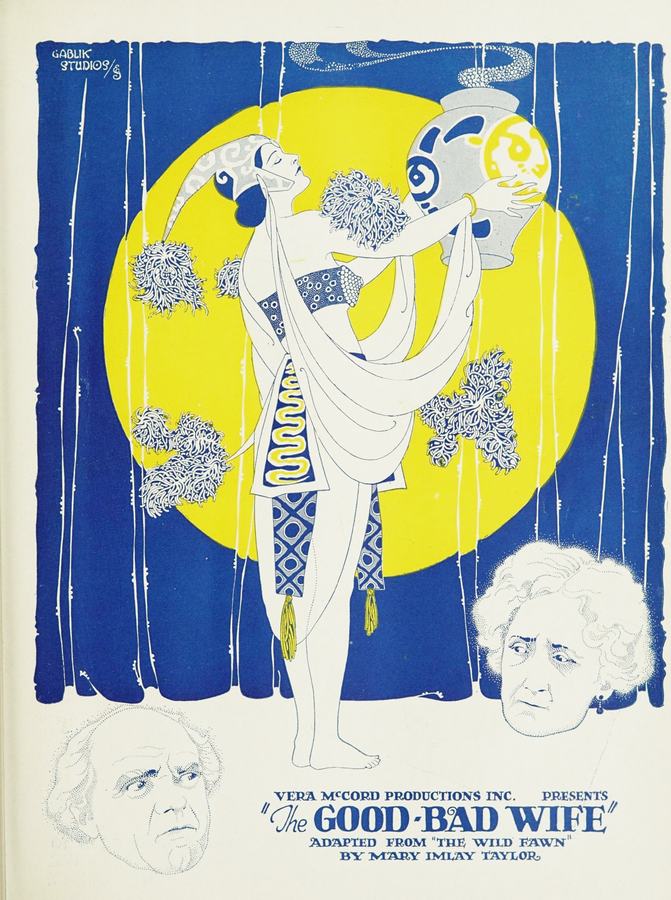
Esther Ralston provides a performance that, while constrained by the 'damsel' archetypes of the period, hints at a deeper internal conflict. Her Rose Hillyer is not merely a passive prize; she is a woman caught between the social pressure of a 'good' marriage and the intuitive recognition of Walton’s worth. In the pantheon of silent heroines, she holds her own, avoiding the hyper-theatricality found in The Marionettes or the stylized artifice of Diane of the Follies.
Cyril Chadwick plays Gordon with a chillingly placid exterior. He is the antithesis of the Western hero. Where Mix is broad, muscular, and transparent, Chadwick is narrow, feline, and opaque. This dichotomy is the core of the film’s moral conflict. Gordon represents the 'New World' of deception and paper-thin reputations, while Walton represents the 'Old World' of deeds and physical truth. This clash of values is far more sophisticated than the film's 'B-movie' reputation might suggest. It echoes the thematic weight of European productions like Um eines Weibes Ehre, though filtered through the uniquely optimistic lens of American frontierism.
The pacing of the film is relentless. Once the 'tricks' begin, the audience is given little time to breathe. The kidnapping of the minister, played with delightful confusion by William Courtright, serves as the pivot point where the film transitions from suspense into high farce. It is a sequence that would not be out of place in an An Eskimotion Picture short, yet it retains a sense of urgency because the stakes—Rose’s future—are so clearly defined.
To understand the impact of The Heart Buster, one must look at the landscape of 1924 cinema. This was the year of grand epics and experimental dramas, yet the Western remained the bedrock of the industry. While films like Ashes of Vengeance sought to elevate the medium through historical grandeur, Mix and Conway were perfecting the art of the popular narrative. They understood that the audience didn't just want to see a story; they wanted to feel the vibration of the horse’s hooves and the visceral thrill of a narrow escape.
In terms of direction, Jack Conway exhibits a burgeoning mastery of the medium. His use of the frame to emphasize Mix’s scale against the horizon is masterful. He avoids the static compositions often found in earlier works like Bawbs O' Blue Ridge. Instead, the camera seems to be in constant dialogue with the action, panning and cutting with a rhythm that anticipates the modern action film. This fluidity is what separates a Tom Mix production from the more stilted entries of the era, such as Prinzessin Tatjanah.
The title itself is a fascinating piece of marketing. It suggests a romantic tragedy, yet the film is anything but. It is a 'heart buster' in the sense that Walton must break the romantic illusions Rose has built around Gordon to save her from a much harsher reality. This subversion of romantic expectations is a clever touch by the writers. It places the film in conversation with more gritty social dramas like Salvation Nell, albeit with a much more triumphant resolution.
As we reach the climax, the resolution is both satisfying and cinematically explosive. The 'proof' finally arrives, but it is almost redundant; Walton’s actions have already proven his character. The final confrontation between Walton and Gordon is not just a fight; it is the inevitable collapse of Gordon’s house of cards. Unlike the ambiguity found in The Knocking on the Door, The Heart Buster leaves no doubt about the triumph of justice. It is a clean, decisive victory that satisfied the moral appetites of the 1924 audience.
The contribution of the supporting cast cannot be overstated. Frank Currier as the father figure provides the necessary emotional grounding, while Tom Wilson adds a layer of character depth that prevents the film from becoming a one-man show. However, it is always Mix who remains the sun around which the other planets orbit. His screen presence is a combination of circus performer and classical hero, a blend that was perfectly suited for the silent era's reliance on visual communication. Even when compared to the ruggedness of Outlawed, Mix possesses a unique charisma—a 'spark' that explains his status as the highest-paid star of his time.
If there is a critique to be made, it is perhaps in the film's occasional reliance on slapstick during moments that might have benefited from more sustained tension. Yet, this was the Fox formula—entertainment above all else. The film does not have the psychological complexity of So sind die Männer, but it possesses an honesty and a vigor that are infectious. It is a reminder that cinema, at its most fundamental level, is about movement and the triumph of the human spirit over the obstacles of fate.
Ultimately, The Heart Buster stands as a monumental example of the silent Western. It captures a moment in time when the cowboy was the ultimate symbol of American virtue, and Tom Mix was his most vibrant prophet. It is a film that demands to be seen not as a relic, but as a living, breathing piece of action cinema that continues to influence the genre a century later. From the dust-choked chases to the heart-stopping stunts, it is a testament to the power of the image to tell a story of courage, love, and the enduring power of a man and his horse.
IMDb —
1923
Community
Log in to comment.