DbcultAccessing Vault...
Cult Review
Senior Film Conservator
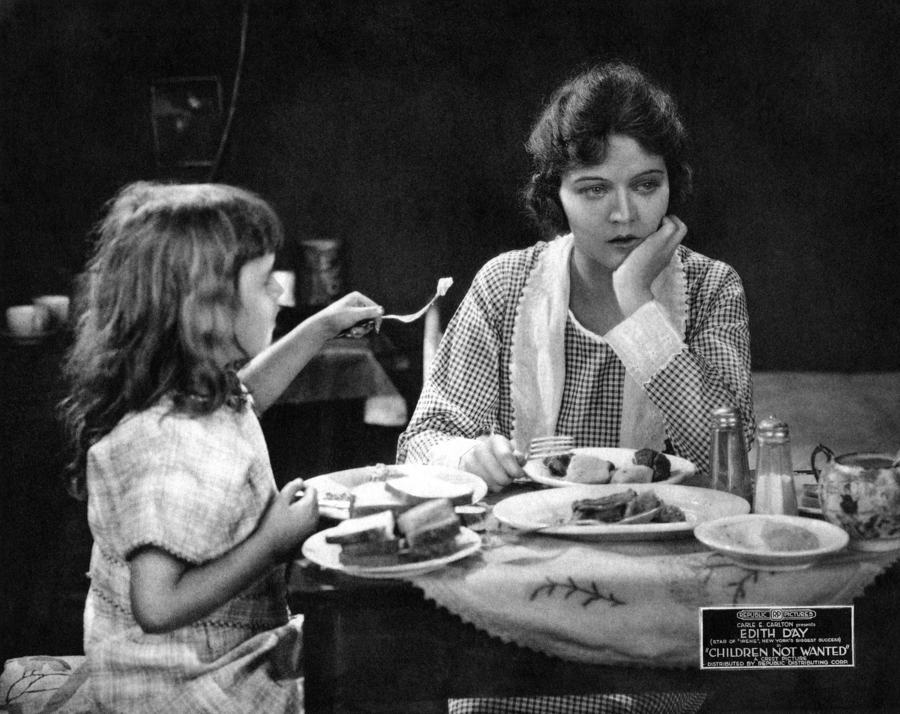
Stepping back in time to the nascent years of cinema, one often finds narratives that, despite their age, resonate with an astonishing contemporaneity. Such is the case with Children Not Wanted, a 1918 silent drama that, with its stark title, immediately confronts the viewer with a societal challenge that feels remarkably familiar even today. This isn't merely a relic of a bygone era; it's a poignant exploration of resilience, the arbitrary cruelties of fate, and the enduring human quest for belonging and justice. Directed with a sensibility that balances melodrama with genuine emotional weight, the film, though perhaps lesser-known in the grand pantheon of silent masterpieces, offers a compelling glimpse into the social fabric and moral complexities of its time.
At its heart lies Dorothy Crane, portrayed with a compelling blend of vulnerability and nascent strength by Edith Day. Day, a prominent figure in early film and stage, imbues Dorothy with a quiet dignity that belies her character’s tumultuous circumstances. Orphaned herself, Dorothy's world is upended when her dearest friend passes away, leaving behind a four-year-old daughter, Betty. This sudden, unexpected guardianship becomes the catalyst for Dorothy's arduous journey. The initial scenes, depicting Dorothy’s unwelcomeness in the home of her aunt and uncle, set a somber tone, highlighting the precarious position of women and children without traditional familial support in the early 20th century. This isn't just a plot device; it's a reflection of a societal reality where safety nets were threadbare, and individual fortunes often hinged on the whims of others. The casual cruelty of her relatives, framed against the backdrop of Dorothy's profound grief, immediately elicits empathy and establishes the film's central conflict: the struggle for autonomy and a safe haven.
Dorothy's decision to flee to New York City, a beacon of opportunity for many, quickly reveals its darker underbelly. The film meticulously illustrates the profound challenges faced by single women, especially those with dependents, in securing basic necessities. The repeated rejections from landlords, who explicitly declare 'children not wanted,' serve as a stark indictment of urban housing policies and societal attitudes. This theme is not merely incidental; it is foundational to the film's title and its enduring message. It forces Dorothy into an immediate and desperate struggle, emphasizing the systemic barriers that often stood in the way of independence and stability for women like her. This particular aspect of the narrative could draw interesting parallels to other early films exploring the hardships of urban migration, such as One of Many, where the unforgiving nature of city life often tested the moral fiber and resilience of its protagonists. The search for a home becomes a metaphor for the search for acceptance and a place in a society that seems determined to exclude her.
A momentary respite arrives in the form of Mrs. Farley, a kindly soul who offers Dorothy and Betty a room. This act of benevolence, seemingly small, represents a crucial turning point, injecting a much-needed ray of hope into Dorothy’s beleaguered existence. It underscores the film's subtle commentary on the importance of community and individual compassion in the face of institutional indifference. With a roof over her head, Dorothy can begin to rebuild. She finds employment through the want ads, securing a position as a receptionist for Marcus Hazzard, a gem dealer. This professional pivot introduces her to a new social sphere, one populated by collectors and connoisseurs, and crucially, to Robert Barrington, played by Joe King. King portrays Barrington with a gentlemanly charm, offering a stark contrast to the more predatory male figures Dorothy encounters. Their burgeoning romance provides a much-needed emotional anchor, a testament to love's capacity to bloom even in the most arid of circumstances. The quiet, developing affection between Dorothy and Barrington offers the audience a sense of impending happiness, making the subsequent dramatic twists all the more impactful.
However, the path to true love in silent cinema is rarely smooth. Hazzard, the ostensibly respectable gem dealer, soon reveals a darker side, developing an unwelcome attraction to Dorothy. His advances introduce an element of danger and discomfort, highlighting the vulnerabilities faced by women in the workplace during an era with few protections. This unwelcome attention, in turn, sparks the virulent jealousy of Hazzard’s business partner, Madame Duval, portrayed by Ruth Sullivan with a captivating intensity that hints at a deep-seated possessiveness and malice. Sullivan's performance, though perhaps exaggerated by modern standards, perfectly captures the melodramatic sensibilities of the period, making Madame Duval a truly formidable antagonist. Her simmering resentment creates an atmosphere of unease, foreshadowing the inevitable explosion of passions.
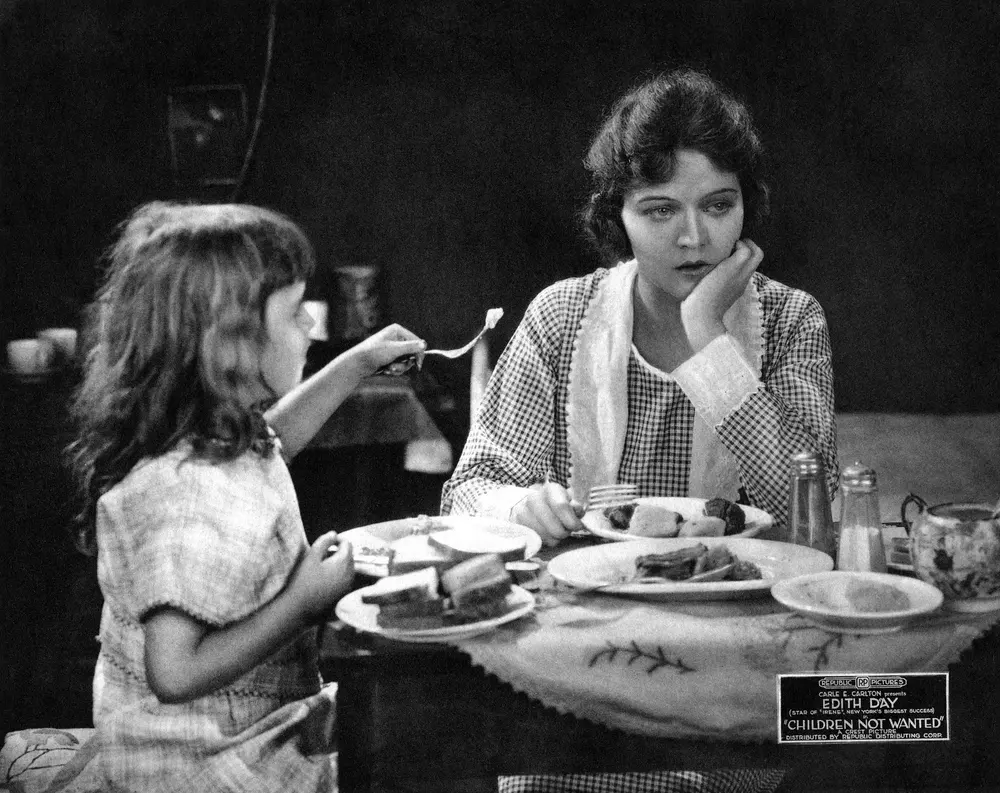
The film masterfully builds tension, culminating in a pivotal scene that forever alters Dorothy's trajectory. Due to Mrs. Farley's sudden illness, Dorothy is forced to bring Betty to the office. This seemingly innocuous decision places the innocent child directly into the crucible of adult desires and deceptions. Hazzard, seizing the opportunity of Dorothy's vulnerability, summons her to his private office and makes explicit sexual advances. The scene is charged with a palpable sense of dread, capturing the power imbalance and the threat of exploitation. Just as the tension reaches its peak, a gunshot rings out, and Hazzard collapses. The subsequent reveal of Betty, standing in the doorway with a smoking pistol at her feet, is a stroke of brilliant, albeit shocking, melodrama. The image of the innocent child, inadvertently holding the instrument of death, is profoundly unsettling and immediately plunges Dorothy into a desperate predicament. Her instinctive reaction—to believe Betty guilty and flee—is born of maternal protectiveness and a deep-seated fear of a system that has already shown itself to be indifferent to her plight. This moment of flight, propelled by a mother's desperate love, echoes the themes of unjust accusation and flight from a flawed justice system found in other silent films, such as The Criminal, which often explored the ambiguities of guilt and innocence.
The aftermath of the shooting sees Madame Duval, consumed by her festering jealousy, waste no time in implicating Dorothy. With the assistance of her enigmatic Hindu servant, Ali Bey, she constructs a narrative that places the blame squarely on Dorothy's shoulders, leveraging the circumstantial evidence and Dorothy’s flight. This segment of the film delves into the mechanics of false accusation and the ease with which truth can be twisted by malicious intent. The police, often portrayed as somewhat bumbling or easily misled in early cinema, are quick to pursue Dorothy, adding to the sense of urgency and peril. The film's writer, Arthur Stuart Sinclair, masterfully constructs a plot that keeps the audience on edge, uncertain of how Dorothy can possibly extricate herself from such a damning situation. The performances of supporting cast members like Mario Majeroni (as Ali Bey) and Jean Robertson (as an unspecified character, likely a minor role that adds texture) contribute to the atmosphere of intrigue, even if their roles are less central to the emotional core.
The eventual revelation of truth, however, arrives through an unexpected source: Ali Bey. His conscience, perhaps pricked by the injustice or by a deeper moral code, compels him to confess that it was Madame Duval who fired the fatal shot, driven by her consuming jealousy over Hazzard's affections for Dorothy. This dramatic confession serves as the film's ultimate catharsis, exonerating Dorothy and exposing the true villain. It’s a classic trope of silent melodrama, where justice, though delayed, is ultimately served, often through the unexpected intervention of a minor character or a sudden moral awakening. This resolution, while perhaps predictable to modern audiences, would have been deeply satisfying to viewers of the era, reaffirming a belief in the triumph of good over evil. The film concludes with Dorothy finally free from the shadow of accusation, able to embrace the happiness she so richly deserves with Robert Barrington. It’s a conclusion that, despite the preceding turmoil, reaffirms the power of love and perseverance.
From a technical standpoint, Children Not Wanted showcases the stylistic conventions of early silent film. The acting, characterized by broad gestures and expressive facial movements, was necessary to convey emotion and plot without dialogue. Edith Day, in particular, excels at this, communicating Dorothy's despair, fear, and eventual hope with clarity. The cinematography, though perhaps simplistic by contemporary standards, effectively uses close-ups to emphasize emotional moments and wider shots to establish the urban environment. The film’s pacing, typical of the era, allows for moments of quiet contemplation punctuated by bursts of dramatic action. The use of intertitles, while serving a functional purpose, also contributes to the narrative’s rhythm, guiding the audience through the complex emotional landscape.
Thematically, Children Not Wanted offers a rich tapestry for analysis. Beyond the immediate plot, it explores the societal pressures on women, particularly those navigating life without traditional male support. Dorothy's struggle to find housing and employment, her vulnerability to male predation, and her ultimate triumph against injustice speak volumes about the era's gender dynamics. The film also touches upon the concept of childhood innocence and its precariousness in a harsh world. Betty, though a catalyst for much of the drama, remains largely an innocent figure, a symbol of the vulnerability that Dorothy is fiercely protecting. The film implicitly asks: what is the cost of societal indifference to its most vulnerable members? This exploration of social issues, often couched within melodramatic narratives, was a hallmark of early cinema, allowing filmmakers to comment on contemporary concerns while entertaining audiences. Films like The Married Virgin or Tangled Lives (1918) similarly grappled with the complex moral and social dilemmas faced by women in a rapidly changing world, using dramatic narratives to explore themes of choice, consequence, and societal judgment.
In conclusion, Children Not Wanted, while a product of its time, transcends its specific historical context to deliver a compelling and emotionally resonant story. It’s a testament to the power of silent film to convey complex human experiences through visual storytelling and the nuanced performances of its cast. Edith Day's portrayal of Dorothy Crane is particularly memorable, anchoring the film with a compelling blend of fragility and resolve. The film’s exploration of themes like societal prejudice against children, the challenges faced by independent women, the corrosive nature of jealousy, and the eventual triumph of justice ensures its continued relevance for those interested in the evolution of cinema and the enduring human spirit. It serves as a valuable historical document, offering insight into the anxieties and aspirations of an era, while simultaneously delivering a captivating narrative that holds its own as a piece of dramatic entertainment. For anyone keen to delve into the rich tapestry of early American cinema and appreciate the foundational storytelling techniques that laid the groundwork for future generations of filmmakers, this film is an understated yet profoundly impactful viewing experience.
IMDb —
1921
Community
Log in to comment.