DbcultAccessing Vault...
Cult Review
Senior Film Conservator
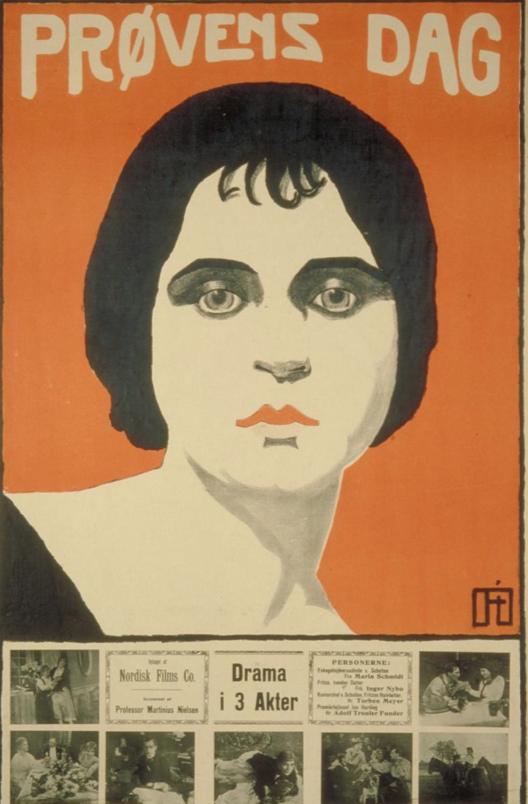
There is a moment, roughly halfway through Harriet Bloch’s one-reel wonder Prøvens Dag, when the camera lingers on a child’s hand releasing a grass blade into the wind. Nothing in the intertitles heralds the gesture; no orchestral cue (for there is none) bullies us into sentiment. Yet that floating sliver of green carries the weight of every adult lie we have just witnessed. It is cinema as osmosis: meaning seeps through epidermis, not exposition. To watch the film today is to realize how rarely modern narratives trust the audience to exhale their own epiphanies.
Set in a coastal parish that feels carved from amber and penance, the plot pirouettes around the titular “Day of Proving,” a tradition equal parts civic audit and puritanical carnival. Each townsfolk must present a sealed envelope—handmade paper, raspberry-wax seal—containing a full-disclosure ledger of the year’s sins. These confessions will be read aloud by the sysselmand, a sort of secular priest, while the community decides whose transgressions merit ostracism, whose warrant forgiveness, and whose, terrifyingly, demand ritual drowning in the icy fjord. Bloch, herself the daughter of a disgraced theologian, structures the film like a Lutheran Stations of the Cross, only the cross is a maypole and the stations are faces.
Tronier Funder, all cheekbones and glacier eyes, plays Ejnar, the botanist returned from Tierra del Fuego with a valise of outlawed seeds and the restless gait of a man who has seen continents shrug. His crime, nominally, is smuggling flora that could upend the region’s monoculture; symbolically it is the heresy of otherness—the mere suggestion that life can be re-rooted. Across the narrative’s diagonal, Torben Meyer’s Amts, the watchmaker, sells illicit minutes to workers desperate to stretch the eve of their daughter’s death or the last candle of a bankruptcy hearing. Where Ejnar dreams of botanical multiplicity, Amts deals in temporal larceny; together they embody the film’s twin fascinations: expansion versus entropy.
Bloch’s script refuses the temptation of a central hero. Instead perspective hopscotches: one vignette peers through the cracked spectacles of Inger Nybo’s schoolmistress, the next drinks in the sulfuric swagger of Marie Schmidt’s suffragette fugitive who, hidden beneath floorboards, scribbles manifestos on discarded hymnals. The effect is cubist; we assemble the village like a shattered mirror re-stitched with ethical solder.
Shot on orthochromatic stock that renders Danish skin like porcelain soaked in moonjuice, the cinematographer (unnamed in surviving prints) favors stark top-lighting, carving cheekbones into cathedral buttresses. Interiors are framed through doorways, so characters appear perpetentially threshold—poised between confession and damnation. The mise-en-scène hoards vertical lines: linden trunks, table legs, church spire, all converging on the fjord’s horizontal void. The visual grammar whispers: gravity—moral, physical—is irresistible.
Compare this to the ornate claustrophobia of The Gray Mask or the cosmopolitan whirligig of Arsene Lupin; Prøvens Dag opts for austerity, confident that silence can scream louder than revolvers.
Contemporary exhibitors often paired the reel with a single cellist instructed to improvise “within the negative space.” Viewing it today—especially in 4K restorations where flicker becomes heartbeat—you become hyperaware of audio phantom limbs: the rustle of rye, the hush of wool skirts, the fjord’s guttural tide. The absence of synchronized speech transmogrifies every blink, every swallow, into potential evidence. When Ejnar finally confronts the tribunal, the intertitle reads merely: “I carried seeds, not sins.” Yet the 15-second hold on his quivering pupils feels like a novella of subtext.
Marie Schmidt’s unnamed radical arrives midway, soaked in brine and pamphlets. In a lesser narrative she would hijack the plot, deliver speeches, ignite rebellion. Bloch refuses that trope. Instead the fugitive’s presence is catalytic: her whispered syllables pollinate the dreams of the schoolmistress, who in turn plants them in her pupils, who stage a clandestine pageant where they crown a linden stump “Queen of Unsaid Things.” Thus suffrage becomes not ballot-casting but seed-scattering, a dispersal of forbidden language into soil and psyche.
Contrast this with the aerial escapism of A Romance of the Air or the consumptive tragicism of La dame aux camélias; here female agency is subterranean, mycelial, unstoppable precisely because it sidesteps spectacle.
Torben Meyer’s watchmaker is the film’s most aching creation: a man who has dissected chronology yet cannot mend his own grief. His vials of pilfered minutes—distilled through clockwork contraband—literalize Benjamin’s thesis that under capitalism even time becomes homogeneous, sellable. In a bravura sequence, the camera superimposes the slow drip of sand from an hourglass onto the rapid bustle of market day; the suture of opposites births a vertigo that anticipates Eisensteinian montage by half a decade.
The moral dilemma: if you can buy time, can you also return it? When a fisher, whose daughter perished while he was overtime at sea, begs Amts to refund those squandered minutes, the watchmaker’s silence is a black hole swallowing ethos. No intertitle dares translate it.
The final reel is a crescendo of pageantry. Townsfolk don ancestral garb—lace so stiff it could slice bread, wool so thick it could moor boats. They parade their envelopes like relics. A marching band of children bangs pots, kettles, and whale-bone crutches, producing a cacophony that feels both celebratory and penitential. The sysselmand, robed in ermine that might once have lined a viking hull, reads each confession atop a hay-cart converted to dais. As names are uttered, faces ignite or dim like lanterns in squall.
Bloch’s genius lies in withholding catharsis. Some verdicts feel just, others arbitrary; a few are comically petty (a baker admits to using extra cardamom), yet the public still demands symbolic penance—he must kneel while children toss cinnamon sticks at his brow. The accumulation of micro-humiliations scalds more than any grand guignol punishment. You realize the village is not purging sin but performing virtue, a ritualized theater that reifies power by pretending to dismantle it.
Night descends like a velvet verdict. Those deemed unforgivable are rowed toward the fjord’s center, where melted snow has layered a collar of frigid freshwater atop the denser salt tide—a phenomenon locals call the double death. The camera, positioned onshore, watches lanterns bob until distance renders them constellations. Cut to black. No intertitle announces fate; the film trusts you to fathom the physics of hypothermia and history.
Yet even here Bloch seeds ambiguity: a final superimposition shows grass seeds sprouting through a boot-print, suggesting that what is buried—evidence, memory, people—will germinate. The political subtext: Denmark’s 1915 constitutional reforms (granting voting rights to some women) were sprouting simultaneous to the film’s release. Art and nation mirror each other, both trembling on the cusp of bloom or rot.
Where Strife externalizes class war through factory gates and picket lines, Prøvens Dag internalizes it as moral accountancy. Where The Queen's Jewel seeks the gleam of monarchical redemption, Bloch’s film finds only the dull sheen of communal complicity. And beside the Orientalist opulence of Die Königstochter von Travankore, this Danish austerity feels almost radical in its refusal of escapism.
For decades the film was thought lost until a 2018 nitrate deposit in a Helsingør attic yielded a print riddled with mold blooms that resembled Nordic runes. Restorationists used digital ice-baths to halt decay; the scars remain, fluttering like moth wings. Thus every contemporary screening is a meta-commentary on the theme: we watch a community confront its stains while the very celluloid confesses its own mortality.
Critics seeking genealogical through-lines will note seeds of Dreyer’s later interrogations of faith, the communal tribunal echoes in Day of Wrath, the face-as-landscape in Passion of Joan of Arc. Yet Prøvens Dag stands sovereign, a one-reel rebuttal to anyone who claims silent cinema aged into irrelevance. Its questions—who owns time, who gets to speak, which secrets deserve oxygen—feel ripped from tomorrow’s headlines.
So if you wander some midnight, down a digital rabbit hole or an actual fjord-shored village, and encounter whispers of this nearly-forgotten Danish fever-dream, heed the invitation. Bring your own envelopes. Fill them with whatever you’ve smuggled—seeds, minutes, unvoiced revolutions. Then release them into the dark. The community you save may be your own.

IMDb 6.6
1932
Community
Log in to comment.