DbcultAccessing Vault...
Cult Review
Senior Film Conservator
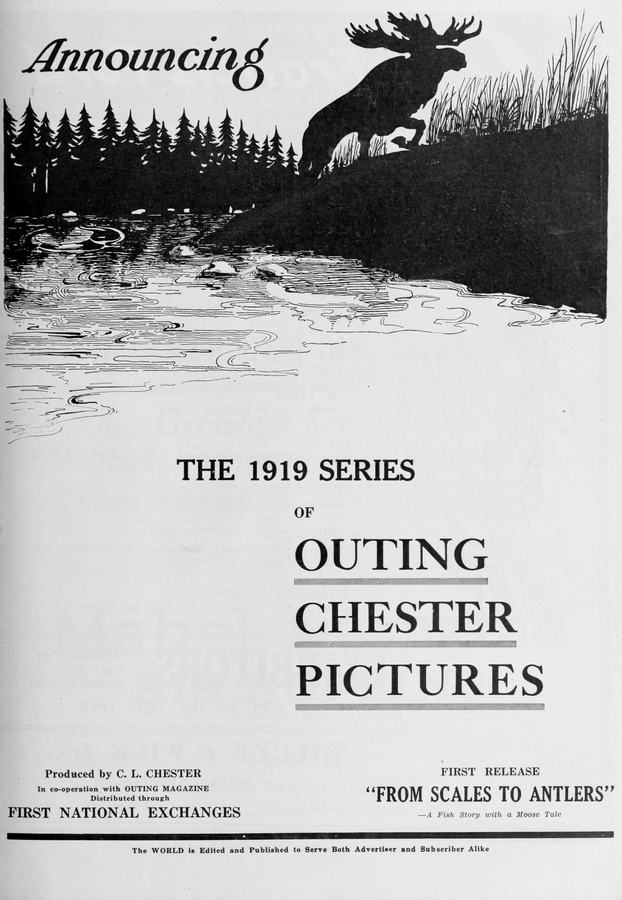
There is a peculiar, almost haunting quality to the way C.L. Chester captures the wilderness in From Scales to Antlers. While many contemporary documentarians seek to impose a human-centric narrative upon the natural world, Chester chooses the path of the silent observer, a spectral presence that haunts the periphery of a moose’s daily life. This isn't merely a film about an animal; it is a film about the texture of time, the weight of gravity, and the sheer, unadulterated persistence of life in the shadows of the deep woods. Unlike the frantic, high-stakes narrative beats found in something like Gambler's Gold, where every movement feels calculated for maximum tension, Chester allows his subject to dictate the pace. The result is a work of slow cinema that demands a surrender from the audience—a willingness to inhabit the slow, deliberate tempo of the forest.
The cinematography is nothing short of revolutionary in its restraint. The camera doesn't just look; it stalks. It lingers on the moss-covered bark, the way the light filters through the canopy like dust motes in a forgotten attic, and the rhythmic heave of the moose’s flanks. There is a tactile quality to the imagery that reminds me of the topographical obsession found in Scrambles in the High Alps. However, where that film sought to conquer the terrain, From Scales to Antlers seeks to merge with it. The moose is not an object of conquest but a sovereign of its own domain, navigating the labyrinthine undergrowth with a grace that defies its massive bulk.
The title itself suggests a metamorphosis, a transition from the reptilian 'scales' of prehistoric survival to the crowning glory of the antlers. This biological cycle is presented with a reverence that borders on the religious. We see the velvet-covered nubs as they begin their seasonal ascent, a process that feels both tender and violent. It is a far cry from the domestic dramas of Jilted Janet or the social stratifications of A Little Princess. Here, the only social contract is the one between the hunter and the hunted, the creature and its environment. The moose’s antlers are its burden and its beauty, a physical manifestation of the passage of time that mirrors the film’s own structural integrity.
Chester’s use of sound—or more accurately, the absence of artificial sound—creates a vacuum into which the viewer is pulled. The crunch of dry leaves under a cloven hoof, the distant call of a loon, the soughing of the wind through pine needles; these are the only dialogue the film requires. In many ways, this moose is more expressive in its silence than the protagonists of The Silent Woman. There is an emotional honesty in the creature’s gaze—a mixture of wariness and indifference—that challenges the viewer to justify their own presence in this sacred space.
When we look at the history of cinema, films that dare to dwell in such profound isolation are rare. Consider the stark landscapes of The Land of Promise (1917), which depicted the struggle against the elements as a heroic human endeavor. Chester flips this script by removing the human element entirely. The struggle here is not a narrative choice; it is an ontological reality. The moose does not 'strive' in the way a human character might in The Fatal Card; it simply exists. This existential purity is what makes From Scales to Antlers so profoundly moving.
There is a sequence midway through the film where the moose stands perfectly still in a clearing as a heavy mist rolls in. The image is so static, so meticulously framed, that it resembles a daguerreotype from the era of Fantomas: The Mysterious Finger Print. But unlike the mystery of a fingerprint, the mystery of the moose is not something to be solved. It is something to be witnessed. The film avoids the trap of 'explaining' nature, a mistake often made by less confident filmmakers who feel the need to justify their footage with educational tidbits. Chester understands that the image is enough.
The logistics of filming such a creature in its natural habitat without disturbing its behavior are staggering. One imagines Chester and his crew as modern-day hermits, blending into the undergrowth with the same patient resolve as their subject. This dedication to authenticity is reminiscent of the commitment seen in A Sagebrush Hamlet, where the setting is as much a character as the actors. In From Scales to Antlers, the woods are a living, breathing entity, a complex network of shadows and light that Chester navigates with the precision of a surgeon.
We must also discuss the ethics of the 'stalking' camera. Is there something voyeuristic about this level of intimacy? Perhaps. But it is a voyeurism born of love rather than exploitation. Unlike the transactional nature of relationships in By Right of Purchase, there is no sense that the moose is being 'owned' by the lens. It remains elusive, even when it is center-frame. It is a wild thing, and Chester never lets us forget it. The film’s refusal to provide a 'climax' or a 'resolution'—no dramatic fight with a predator, no heartwarming rescue—is its greatest strength. It honors the mundane reality of nature, which is often far more interesting than the dramatized versions we are usually fed.
As the film draws to a close, we see the moose receding into the dark heart of the forest. It is a departure that feels earned, a final act of privacy for a creature that has allowed us a glimpse into its world. This sense of finality is not unlike the bittersweet conclusions of The Lady of Lyons; or, Love and Pride, though stripped of its romantic melodrama. Instead, we are left with a feeling of profound insignificance, which is perhaps the greatest gift a wildlife documentary can offer.
In the grand scheme of cinema, From Scales to Antlers stands alongside works like Die siebente Großmacht in its attempt to capture the hidden forces that shape our world. It is a film that refuses to be hurried, a film that breathes with the forest. Whether you are a fan of the technical mastery seen in Almost Married or the whimsical charm of The Downy Girl, there is something here that will resonate on a primal level. It is a reminder that beyond our cities, our dramas, and our petty lotteries—as mocked in The Lottery Man (1919)—there is a world that does not need us. And in that realization, there is a strange, cold comfort.
In conclusion, C.L. Chester has crafted a masterpiece of environmental immersion. From Scales to Antlers is a triumph of patience over spectacle, a film that understands that the most profound stories are often the ones that are never told, only felt. It is a mandatory viewing for anyone who believes that cinema still has the power to connect us to the ancient, the wild, and the true.
IMDb —
1919
Community
Log in to comment.