DbcultAccessing Vault...
Cult Review
Senior Film Conservator
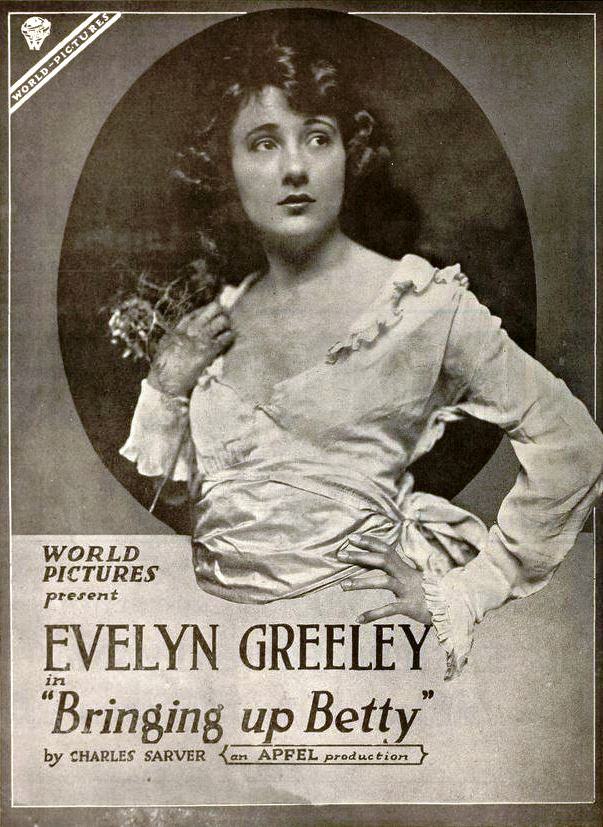
Venturing into the archives of early 20th-century cinema, one often stumbles upon forgotten treasures that, despite their age, resonate with surprising contemporary relevance. Bringing Up Betty, a 1918 silent film, is precisely such a find. Directed by Lyster Chambers and penned by the collaborative talents of Clara Beranger and Charles Sarver, this picture is far more than a mere historical artifact; it's a vibrant tapestry woven with threads of deception, romance, and the eternal dance between genuine affection and mercenary ambition. In an era when the moving image was still finding its voice, this particular production offers a fascinating glimpse into the nascent storytelling techniques and societal commentaries that defined the period. It stands as a testament to the ingenuity of filmmakers who, without the benefit of synchronized sound, managed to craft narratives that engaged, entertained, and often subtly critiqued the world around them.
At its core, Bringing Up Betty unravels a narrative that begins with a calculated deception. Theodore Morton, portrayed with a delightful blend of gravitas and cunning by Ben Johnson, is a steel magnate of considerable means. Faced with a deluge of fortune-hunting suitors vying for the hand of his innocent niece, Betty (Grace Hansen), Morton devises an elaborate ruse: he declares himself utterly bankrupt during a lavish lawn party. This strategic pronouncement sends the avaricious Lord Dormer and the Duke of Medonia scrambling for the exits, their mercenary intentions exposed and thwarted. It's a brilliant opening gambit, immediately establishing Morton as a character of formidable intellect, albeit one prone to theatricality in his protective instincts. The film wastes no time in illustrating the transactional nature of marriage in certain societal circles, a theme that, regrettably, remains pertinent even a century later.
However, Morton's cleverness inadvertently opens the door to another predator. Carl Gates, a character embodied by Oliver Smith with a suitably smarmy demeanor, is quickly informed of Morton's financial deception by his fiancée, Adele Shelby (Grace Carlyle), who, conveniently, serves as Morton's banker's secretary. This insider information transforms Gates into a new, more insidious threat. He wastes no time in pursuing Betty, who, tragically, accepts his proposal under the misguided belief that such a union will somehow alleviate her uncle's fabricated financial distress. This segment of the plot is particularly poignant, highlighting Betty's inherent goodness and her willingness to sacrifice her own happiness for the sake of her family, even if that sacrifice is founded on a lie. It's a classic damsel-in-distress scenario, yet one with a twist, as her distress is born from her own virtuous, if naive, intentions.
The narrative then takes an invigorating turn towards the romantic and the adventurous. During a yachting expedition with the odious Carl, Betty falls overboard. Her rescue comes in the form of Tom Waring, an architect portrayed by Reginald Denny, who is not merely present but actively competing in a race. The sheer serendipity of this encounter is a hallmark of early romantic comedies, providing a convenient, yet charming, mechanism for the protagonists to meet. Tom wins the race with Betty on board, a symbolic victory that foreshadows their burgeoning romance. This sequence is executed with a kinetic energy that must have been exhilarating for audiences of the time, showcasing action and burgeoning affection in equal measure. The development of their romance is swift and palpable, a stark contrast to the calculating machinations that define Betty's engagement to Carl.
The climax of the film hinges on Adele Shelby's eventual change of heart. Discovering the full extent of Carl's deceit, she informs Theodore Morton, setting in motion the final, intricate phase of his grand plan. Morton, in cahoots with his banker, orchestrates Carl's ruin in the stock market, a financial coup that yields a staggering $700,000. This sum is then presented to Adele as an incentive to marry her now-impoverished and unfaithful fiancé. Her acceptance frees Betty from her ill-conceived engagement, allowing her to pursue a genuine connection with Tom. The resolution, while somewhat cynical in its financial engineering of happiness, ultimately delivers a satisfying conclusion, punishing the villain and uniting the deserving lovers. It's a narrative arc that speaks volumes about the era's perception of justice and the power of well-placed wealth.
The ensemble cast of Bringing Up Betty delivers performances that are, by necessity, highly physical and expressive. Grace Hansen, as Betty, embodies the quintessential ingenue of the silent era. Her expressions range from wide-eyed innocence to burgeoning affection and dismay, conveying a spectrum of emotions without uttering a single word. Her portrayal is sympathetic, drawing the audience into her predicament and making her eventual liberation all the more satisfying. Ben Johnson, as Theodore Morton, is a masterful presence. He skillfully navigates the fine line between benevolent protector and manipulative schemer, his facial expressions and gestures communicating a shrewd intelligence and a deep, if sometimes unconventional, love for his niece. Johnson ensures that Morton remains a likable character, despite his deceptive methods, because his intentions are ultimately pure.
Oliver Smith's Carl Gates is a wonderfully detestable villain. Smith uses broad, yet effective, strokes to paint Gates as a man driven solely by greed. His smirks, his predatory gaze, and his general air of self-satisfaction are all expertly deployed to ensure the audience actively roots against him. Reginald Denny, as Tom Waring, brings a refreshing sincerity to the role of the hero. His earnestness and genuine affection for Betty are conveyed through open gestures and a warm, inviting presence. His character serves as the moral compass and the romantic ideal against which Carl's venality is sharply contrasted. The chemistry between Hansen and Denny, though conveyed through silent glances and physical proximity, is surprisingly palpable, making their eventual union feel earned and joyful.
Grace Carlyle's Adele Shelby is a particularly intriguing supporting performance. Initially complicit in Carl's schemes, her eventual moral awakening and pivotal role in the plot's resolution add layers to the narrative. Carlyle manages to convey Adele's initial ambition and later remorse with subtle shifts in her demeanor, demonstrating that even secondary characters could possess complex internal lives in silent cinema. The supporting cast, including Joseph Weber, Maude Turner Gordon, Lyster Chambers, Evelyn Greeley, and Morgan Wallace, all contribute to the rich tapestry of the film, creating a believable world for the central drama to unfold. Their collective ability to communicate character and emotion without dialogue is a testament to the unique artistry required for silent film acting, where every gesture, every tilt of the head, and every expressive eye movement carried significant narrative weight.
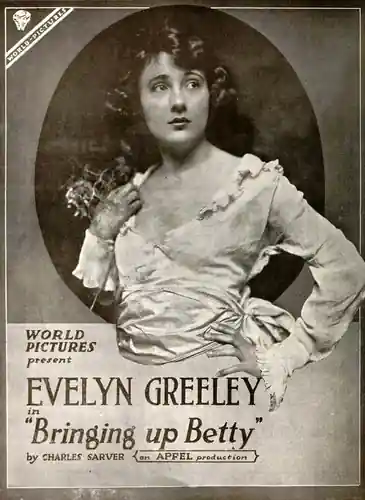
Bringing Up Betty, beyond its engaging plot, delves into several compelling themes that were undoubtedly resonant in 1918 and continue to provoke thought today. The most prominent is the commodification of marriage and the corrupting influence of wealth. The initial parade of fortune-hunters, and Carl Gates's subsequent pursuit of Betty, starkly illustrate how social status and financial gain could overshadow genuine affection. Theodore Morton's deception, while born of good intentions, underscores the lengths to which people would go to protect their loved ones from such mercenary impulses. The film posits a clear dichotomy between superficial attraction driven by greed and the authentic connection forged through shared experience and mutual respect, as exemplified by Betty and Tom's romance.
Another notable theme is female agency, or the gradual awakening of it. Betty initially appears as a passive pawn in the schemes of men, her choices seemingly dictated by her uncle's fabricated plight or Carl's manipulative charm. However, her rescue by Tom and the subsequent blossoming of her own desires mark a subtle shift. The film, while not overtly feminist by modern standards, does allow Betty to ultimately choose her own path, freed by the machinations of others, but nevertheless making a conscious decision for love. Adele Shelby's character also represents a form of agency, as her decision to expose Carl and accept the financial offer demonstrates her capacity to control her own destiny, even if it means a pragmatic, rather than romantic, union. The writers, Clara Beranger and Charles Sarver, craft a narrative that, while adhering to the conventions of romantic comedy, injects layers of social commentary regarding wealth, class, and the pursuit of happiness.
From a technical perspective, Lyster Chambers's direction is competent and effective for the era. The cinematography, while not groundbreaking, efficiently tells the story, utilizing clear compositions and well-paced editing to maintain audience engagement. Intertitles are used judiciously, providing necessary dialogue and exposition without overwhelming the visual storytelling. The yachting sequence, in particular, demonstrates a flair for action and dynamic framing, capturing the excitement of the race and the drama of Betty's rescue. The film's overall aesthetic is clean and functional, prioritizing narrative clarity and emotional impact over stylistic flourishes, a common and often effective approach in early silent features.
To fully appreciate Bringing Up Betty, it's illuminating to consider it within the broader context of its cinematic contemporaries and thematic predecessors. The film's central conceit of a wealthy patriarch feigning bankruptcy to ward off undesirable suitors bears a superficial resemblance to the machinations seen in some melodramas, though Betty maintains a lighter, more comedic tone. The theme of deceit and its eventual unraveling, however, finds a strong parallel in films like The Liar (1918), where hidden truths and false pretenses drive much of the dramatic tension. While The Liar might delve into darker psychological territory, the fundamental narrative engine of unmasking a deception remains a shared element, highlighting a prevalent societal concern about authenticity and integrity.
The romantic entanglement born from an unexpected, almost accidental, meeting is a staple of romantic comedies across eras. Betty's dramatic rescue by Tom Waring during a race, leading to instant sparks, is an archetype that can be seen in numerous films. One might draw a thematic connection to the spirit of adventure and chance encounters found in films such as The Car of Chance, where fate and fortunate circumstances bring characters together. While the modes of transportation and specific scenarios differ, the underlying principle of serendipity guiding two destined lovers is a common thread that audiences of the period clearly cherished. Similarly, the nautical drama of Betty falling overboard and being rescued could find a distant cousin in films like Sea Sirens, which, as its title suggests, likely explored maritime adventures and the perils of the open water, albeit perhaps with a more pronounced melodramatic bent.
Furthermore, the film's exploration of societal expectations surrounding marriage and the pursuit of genuine affection over material gain resonates with other contemporary works. The idea of a woman being 'brought up' or guided towards a suitable match, often against her initial inclinations, was a common narrative trope. While the specific context is different, the underlying tension between duty and desire can be observed in films like A Mormon Maid, which, despite its distinct cultural setting, similarly explores a young woman's struggle against oppressive societal structures to forge her own path and find true love. The ultimate resolution of Bringing Up Betty, where the villain is punished and the deserving couple united, also aligns with the moralistic leanings of many films from this era, ensuring that virtue is rewarded and vice is justly condemned. The use of financial maneuvering to achieve this justice, as seen in Morton's stock market scheme against Carl, adds a layer of sophisticated, albeit cynical, pragmatism to the happy ending, contrasting with simpler narratives of purely moral retribution.
The lighthearted, often farcical tone, coupled with the romantic elements, also places Bringing Up Betty squarely within the burgeoning genre of romantic comedy. In this regard, it shares a spirit with films such as He Fell in Love with His Wife, which, as its title suggests, likely explored the humorous and endearing complexities of marital relationships and the unexpected turns that lead to genuine affection. Both films, in their own ways, navigate the terrain of human relationships with a lightness of touch, ensuring that while there might be obstacles and misunderstandings, the ultimate outcome is one of joy and romantic fulfillment. The emphasis on character-driven humor and charming misunderstandings, rather than overt slapstick, marks these films as precursors to the more sophisticated romantic comedies that would follow in subsequent decades.
Bringing Up Betty may not be as widely celebrated as some of its more iconic silent contemporaries, but it undeniably holds a significant place in the historical tapestry of early American cinema. It is a film that successfully blends romantic comedy with elements of social commentary, all delivered through the expressive artistry of silent acting. Its narrative, while rooted in the conventions of its time, still manages to entertain and engage, proving that compelling storytelling transcends the need for spoken dialogue.
The film offers a valuable window into the societal values, anxieties, and aspirations of 1918, a world still grappling with the aftermath of World War I and on the cusp of significant social change. Its focus on wealth, marriage, and personal integrity reflects concerns that, in various guises, continue to preoccupy us. For silent film enthusiasts, Bringing Up Betty is a delightful discovery, showcasing strong performances, a clever plot, and the enduring charm of a bygone cinematic era. It reminds us that even without sound, the power of visual narrative and expressive human performance can create a truly captivating and memorable experience. The intricate dance of deception and revelation, culminating in a triumph of genuine affection, ensures that this silent gem continues to resonate with its timeless themes.
IMDb 5.6
1932
Community
Log in to comment.