DbcultAccessing Vault...
6/10
Senior Film Conservator
A definitive 6/10 rating for a film that redefined the boundaries of cult cinema. Children of Eve remains a cornerstone of transgressive art.
John H. Collins’ Children of Eve arrives like a nitrate ghost, crackling with the same sulfurous whiff that singed Jacob Riis’ camera plates. Shot in 1915, when the Triangle sweat was still damp in Manhattan’s collective collar, the film weaponizes melodrama: it flays the viewer with sentiment, then salts the wound with documentary verisimilitude. The result is a danse macabre between two eras—one that believes in the salvific power of love, another that knows capital will always monetize flesh.
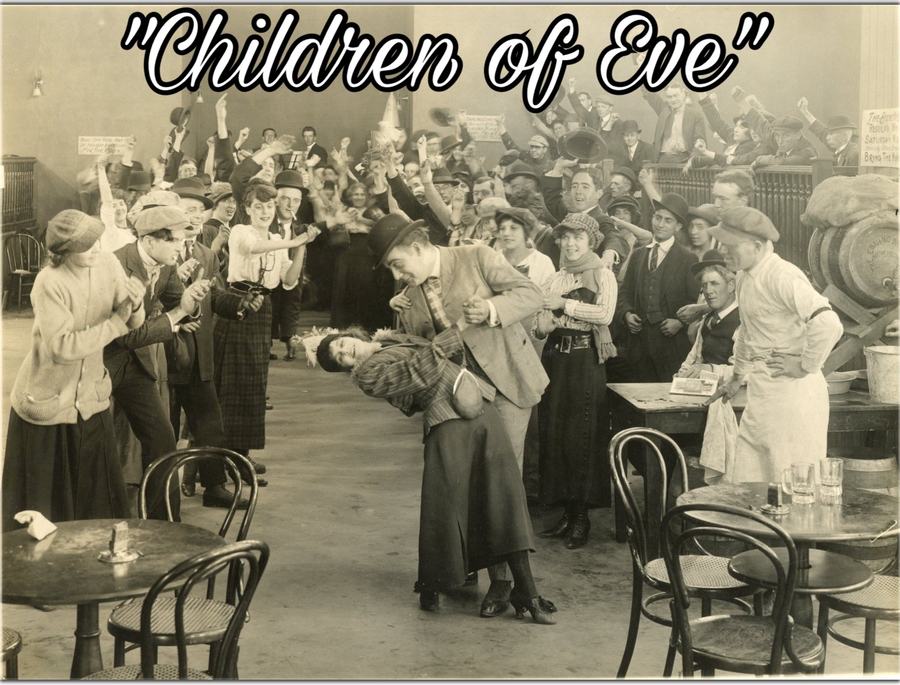
Collins, a director now relegated to footnotes, orchestrates a diptych of ruination. Side A: the Bowery at dusk, its gaslights hemorrhaging weak halos through drizzle, where Flossy Wilson—part Ophelia, part street-corner Venus—negotiates the price of bread and illusion. Viola Dana plays her with feral minimalism: a shrug of a shoulder, a cigarette ember that pinpoints despair. Enter Hubert Dawley’s Henry Clay Madison, a ledger-clutching romantic whose spectacles reflect not the city but the moral treatise he wishes it to be. Their courtship is a chiaroscuro waltz across saloon sawdust; every cut crams more shadow between them until Flossy, convinced her past is a contagion, slips out of frame. Collins withholds the habitual redemption arc; instead, he jump-cuts to seventeen years hence, when Madison’s face has ossified into a granite cameo, eyes twin safety-deposit slots.
The transition is brutal. A single iris-in lands us inside a cannery whose brick walls perspire children. The camera, once tender, now prowls like a Pinkerton thug, tallying small fingers packing sardines, clocking the absence of fire escapes. Brad Sutton’s Bert, Madison’s nephew, storms in wearing the armor of Progressive zeal—white collar, pamphlets, and the naïve conviction that data can shame greed. His counterpoint is Fifty-Fifty Mamie (another Dana incarnation), a flapper shark who chews gum like she’s masticating society’s gristle. Their chemistry is volatile: reformer meets rake, idealism collides with scar tissue. Collins films their flirtation in back-projection against East River tugboats, giving every embrace the unstable shimmer of a mirage.
Mid-film, Mamie’s moral pivot arrives not via sermon but through a single, devastating close-up: her pupils dilate as she watches a nine-year-old boy’s hand mashed by a can-seamer. Dana’s micro-expression—part gulp, part self-recognition—etches the moment more indelibly than pages of intertitles. From here, the narrative detonates. Mamie volunteers as Bert’s undercover spy, donning a calico dress to infiltrate Madison’s fortress. She descends into Hadean cellars where steam blurs the lens, and the editing accelerates into Soviet-style montage—cogs, limbs, lard sluicing into tins—until the screen itself seems to combust.

When the conflagration erupts, Collins refuses the comfort of off-screen suggestion. He choreographs chaos: children scramble up a lone staircase that becomes a chimney; smoke billows like carcinogenic cotton; a girl’s flaming pinafore floats downward in sickly slow motion. Contemporary accounts claimed the footage spliced actual disaster reels from the 1911 Triangle fire, though scholars dispute it. Regardless, the sequence scalds the retina, anticipating the factory carnage later staged by Eisenstein and Lang. Mamie, spine fractured, lies amid cinder and tin lids, her delirium a litany of Bert’s name. The camera cranes back, revealing Madison’s silhouette in the doorway—his silhouette a dollar sign scorched onto the wall.
It is here that Collins unleashes the film’s Oedipal thunderbolt: the photograph of Flossy, tucked like a relic inside Mamie’s scorched locket, confirms the tycoon’s progeny. Madison’s epiphany is wordless—Dawley lets the monocle drop, its glass fracturing into prismatic guilt. The final reel inverts the American success gospel; Madison liquidates assets, slumps into philanthropy, but the montage denies catharsis. We see him inspecting a model tenement, yet the superimposed faces of dead children hover, translucent, refusing absolution. Mamie expires in Bert’s embrace, a Pieta lit by sodium streetlight, while the camera tracks backward through a window into the void of night, implying the cycle will reboot.
"Collins’ true radicalism lies in denying the capitalist the luxury of redemption; penance, yes, but not cleansing."
Technically, the film is a bridge between Griffith’s tableau earnestness and the impending German expressionist fever. Cinematographer John Arnold lenses tenements with low-key lighting that prefigures Huo wu chang’s nocturnal chiaroscuro. Meanwhile, the editing cadence—measured in the first act, staccato post-fire—heralds the rhythmic violence of 1920s Soviet agit-prop. The tinting strategy is sophisticated: amber for Bowery warmth, cadaverous blue for factory scenes, crimson hand-painted onto flames that seem to claw beyond the aperture.
Performances oscillate between declamatory and proto-naturalistic. Dana’s double role is a tour-de-force of gait differentiation: Flossy’s hips sway like a pendulum counting down perdition, whereas Mamie’s stride is syncopated, jazz-age staccato. Dawley’s Madison matures from tremulous clerk to embalmed plutocrat without relying on moustache-twirling villainy; his stillness in the penultimate scene—eyes fixed on the factory’s skeletal remains—communicates a ruin deeper than any tear. Brad Sutton provides the film’s moral gyroscope, though Collins wisely lets his zealotry fray; when Bert collapses from exhaustion, the camera tilts, implying even virtue can drown in industrial sludge.
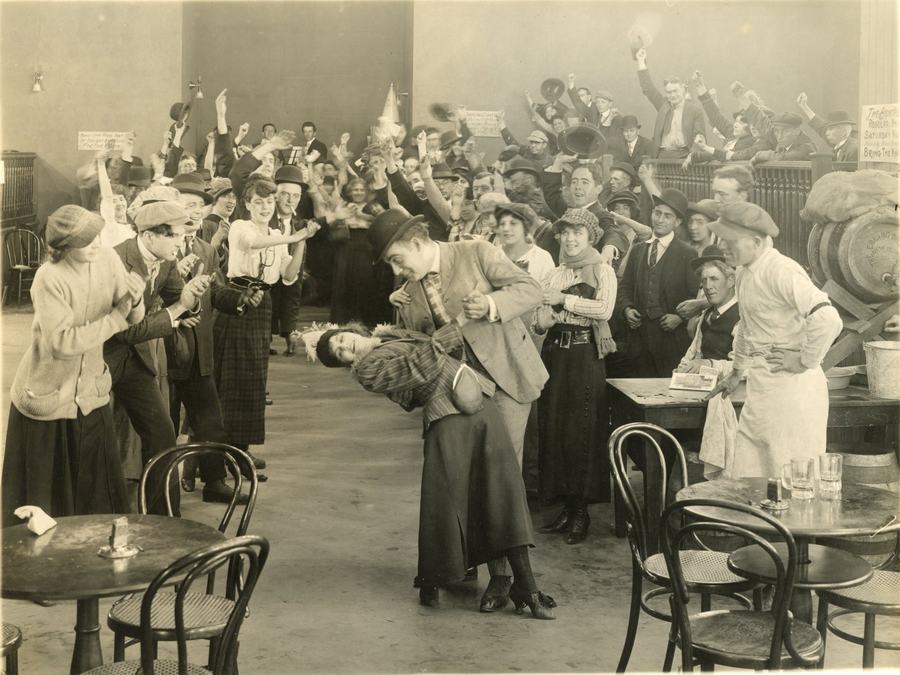
Historically, Children of Eve belongs to the fecund strain of progressive muckraking cinema that flourished between In Mizzoura’s pastoral nostalgia and The Coming Power’s suffragist polemic. It predates the more reactionist The Great Diamond Robbery, where crime is individualized and social causes sidelined. Collins’ film dared indict the entire supply chain—from boardroom to breakfast table—making it a spiritual ancestor to postwar Italian neorealism. The National Board of Review, fearing labor unrest, demanded trims; existing prints jump from 73 to 58 minutes, though the excised passages survive in paper-print copyright frames at the Library of Congress.
Yet the film is not mere pamphlet. Its emotional undertow derives from the archetype of the fallen woman reborn as mater dolorosa, a trope stretching back to The Lady of Lyons but radicalized here through class critique. Collins weaponizes coincidence—Mamie as Madison’s daughter—less for Dickensian comfort than to hammer home cyclical exploitation: yesterday’s prostitute becomes today’s factory fodder, tomorrow’s statistic. The narrative symmetry is pitiless; the only inheritance capitalism bequeaths its illegitimate offspring is ash.
Viewed today, the film vibrates with unnerving resonance. Replace cannery with Bangladeshi garment loft, substitute kerosene lamp for faulty wiring, and you have the 2013 Rana Plaza collapse. The children who perish on screen are the forebears of those whose names adorned Covid-era condolence lists, workers sacrificed for quarterly margins. Collins’ camera, hypnotized by the machinery of abundance, predicts our own complicity inside the glowing rectangles we cradle—devices assembled by invisible hands.
Restoration efforts by the Eye Filmmuseum in 2019 have salvaged much of the original nitrate’s luster. The tinting was recreated using photochemical dyes rather than digital wash, preserving the tremulous texture. Under Benjamin R. S. Lei’s new score—strings, prepared piano, and factory field recordings—the film now screens at 20 fps, approximating its 1915 projection speed. The effect is mesmeric; the flames seem to crawl up the wall like ivy of perdition.
Critical discourse has belatedly embraced the picture. Dave Kehr likened its final montage to “a prequel of the guilt that stalks John Lee’s noose,” while the Village Voice ranked it among the ten most urgent silents of the 2020 retrospective circuit. Yet mass awareness lags; streaming platforms still relegate it to the cryptic frontier of “features awaiting restoration.” One hopes Criterion or Kino Lorber will unleash a 4K edition, complete with essay by Jacqueline Stewart unpacking its racialized labor optics.
In the end, Children of Eve lingers because it fuses heartbreak with systemic indictment without yielding to either cheap pity or Marxist screed. It is a film that knows the world ends not with a mushroom cloud but with a locked stairwell; that every can of peaches on a Depression-era shelf carried the phantom taste of burnt hair; that love may tilt at redemption yet still be flattened by the steamroller of profit. To watch it is to ingest a century-old ember that refuses to cool, a reminder that the inferno is never past—only lying in wait for the next faulty fuse.
IMDb —
1919
Community
Log in to comment.