DbcultAccessing Vault...
Cult Review
Senior Film Conservator
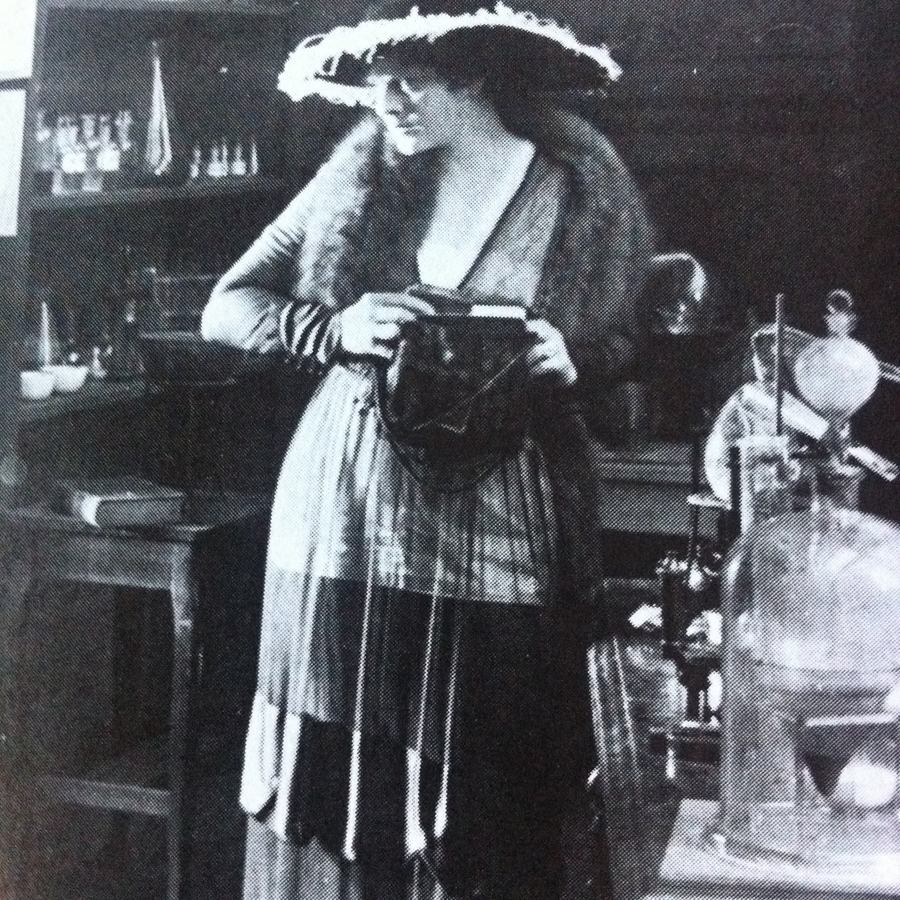
The celluloid arrives like a glass negative soaked in laudanum: every frame of George Scarborough’s scenario trembles with the phosphorescence of guilt. From the first iris-in on Jane Carleson’s dressing-room mirror—its oval halo flickering between candescent gold and bruised mauve—we sense the film’s intent to poison beauty itself. Ethel Barrymore, regal even when silent, lets her eyes conduct a muted symphony; one glance at the poisoned epistle and the camera cuts to an extreme insert of the envelope’s gummed flap, glistening like a serpent’s underbelly. The moment is less intertitle than incantation.
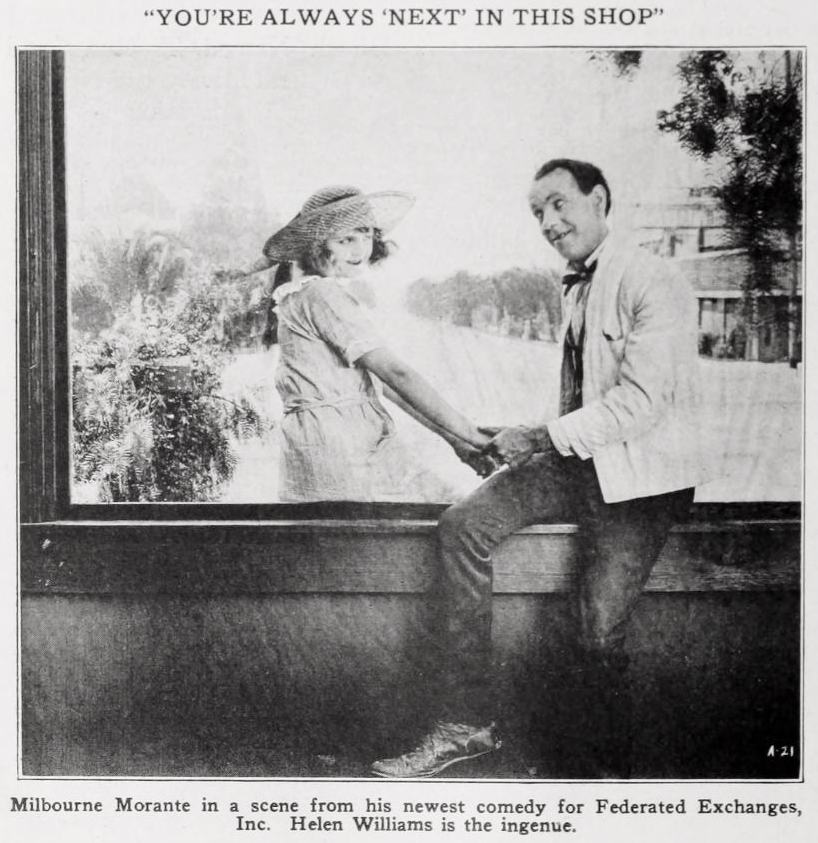
Percy Standing’s Henry Strong does not simply enter parlors—he annexes them. His Fifth-Avenue penthouse, shot in forced perspective, dwarfs Jane against Corinthian pillars that loom like guillotines. When he offers her a diamond rivière, the gemstone constellation catches the projector’s carbon-arc and sprays prismatic shrapnel across the audience, a visual prophecy of the shattering to come. Compare this to the claustrophobic boudoirs of Den kulørte slavehandler, where desire is bartered, not bargained; Scarborough counters by making wealth a cathedral in which devotion becomes sacrilege.
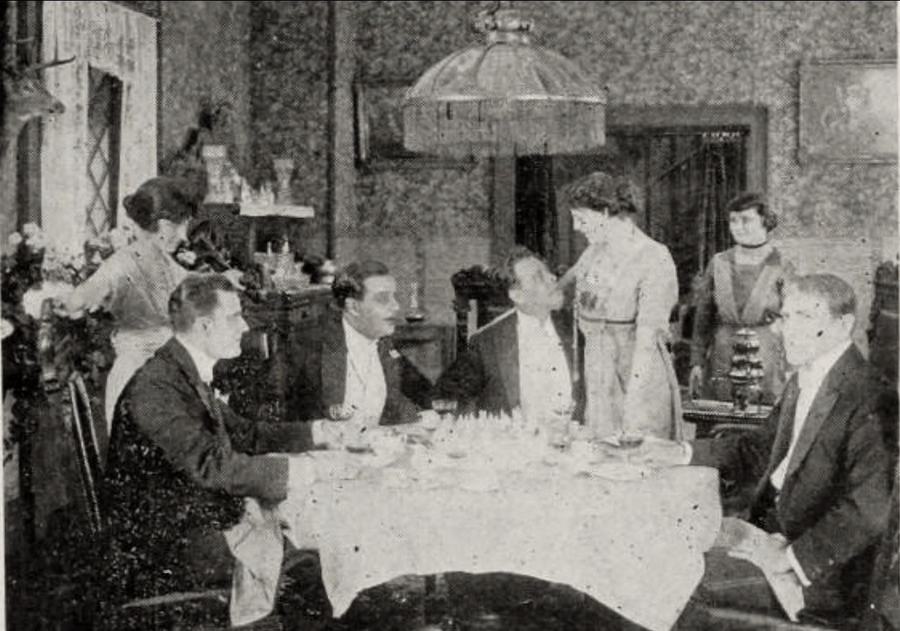
Mahlon Hamilton’s Murray Campbell, by contrast, is introduced via a dolly shot gliding past towers of legal ledgers—each spine stamped with the names of men he condemned. The camera halts on his hands: ungloved, ink-smudged, trembling as he pens a marriage license rather than a death warrant. The irony is exquisite; the same quill that signed gallows orders now drafts his own doom.
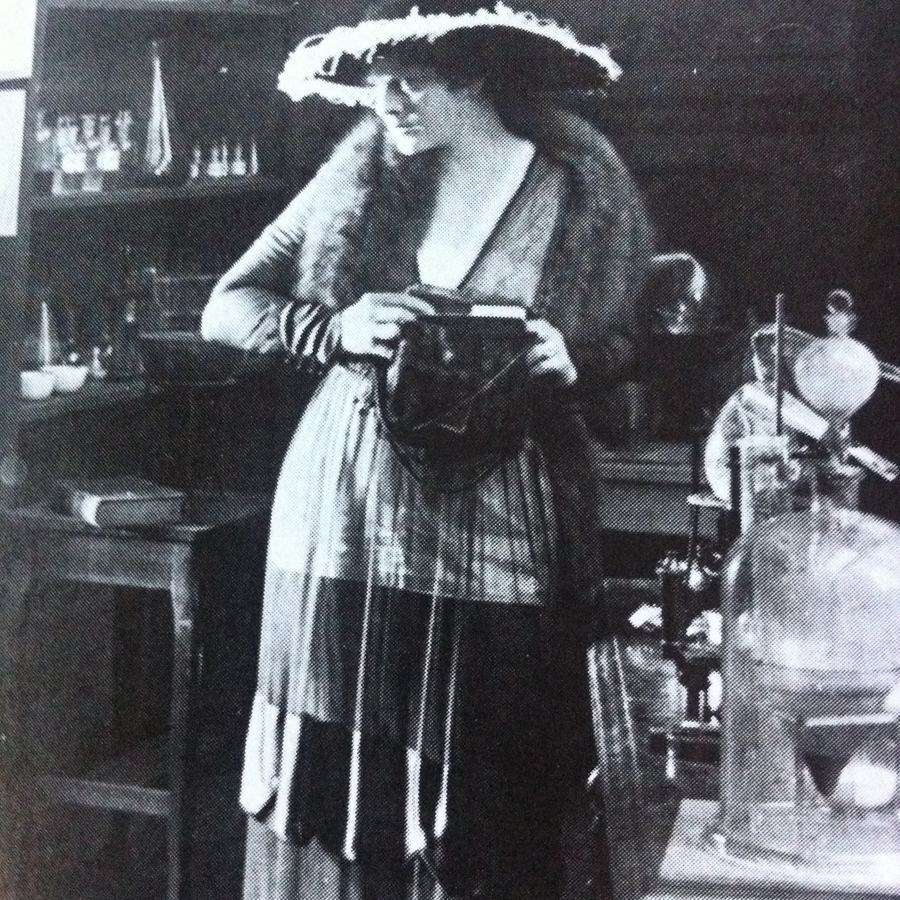
Paul Lawrence’s Hamilton Ross embodies the era’s ambivalence toward science: half Promethean hero, half Faustian meddler. His lab set—an angular fortress of retorts, bell jars, and a Tesla coil that spits indigo thunder—owes more to German Expressionist nightmares than to Edison’s sterile workshops. When Ross powders arsenic into the envelope glue, the director superimposes a microscopic view: crystalline lattices writhing like bacilli in a petri dish. The visual prefigures the viral paranoia of Leben heisst kämpfen, yet here the contagion is not ideological but erotic.
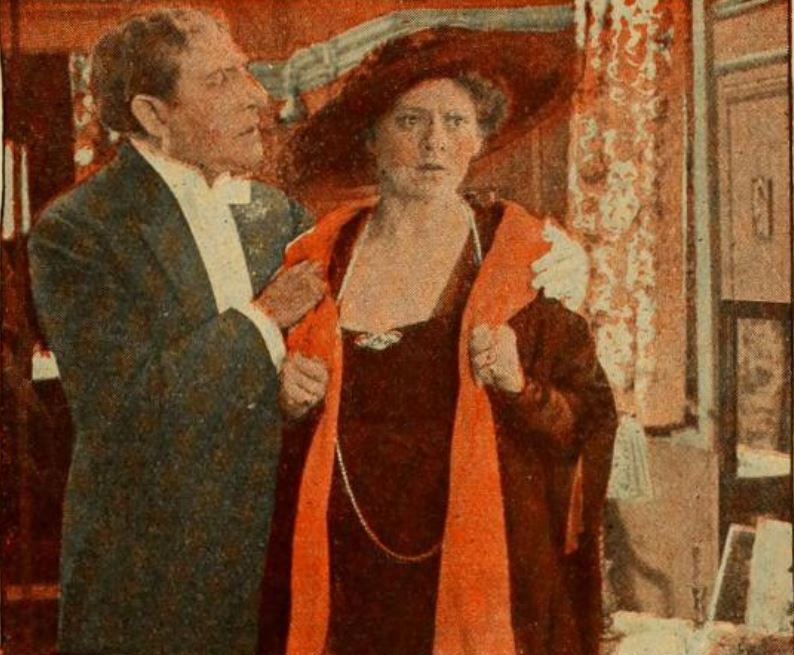
Watch how Ross’s pupils dilate as he seals the letter—a macro-close-up achieved by backlighting the actor’s iris with a handheld candle. It is cinema’s first, subconscious acknowledgment that the gaze itself can be lethal.
The trial sequence unfolds on a set so cavernous it swallows echoes. Jurors are staged like a medieval triptych: seven faces illuminated by a single skylight, the rest dissolving into tenebrous charcoal. The prosecution’s exhibit table displays the fatal envelope under a glass dome—an objet d’art worthy of Poe. When the DA (ironically Campbell’s deputy) lifts it, the camera tilts 15 degrees, subtly queasy, as though the screen itself recoils from the artifact. Compare this expressionistic slant to the upright moral geometry of An American Gentleman; Scarborough prefers vertigo to virtue.
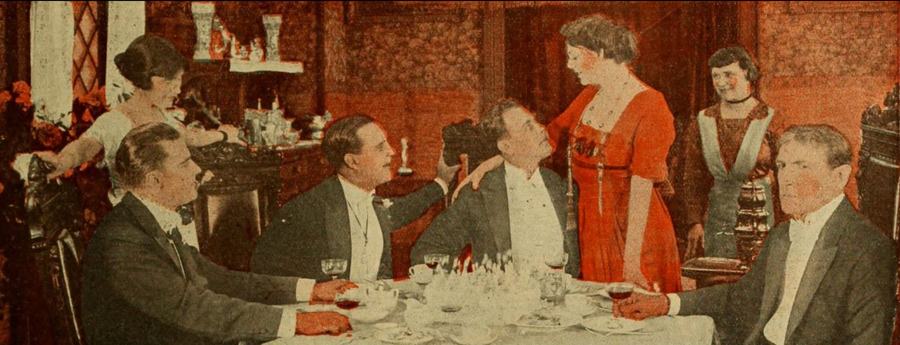
"Justice, like quicksilver, slips through the gloved hand of certainty; only the stain of poison remains visible."
Barrymore’s performance is a masterclass in negative space. Denied voice, she weaponizes stillness: a microscopic tightening of the lacrimal duct, a breath held until the ribs quiver like bowstrings. In the pivotal re-enactment scene—Jane confronting Ross in the lab—the actress positions herself so that a Bunsen burner’s flame bisects her face: one half lambent, the other submerged in umber shadow. The chiaroscuro is dialogue, spelling out betrayal and bereavement in a language older than words.
Note the single tear she permits to travel from the outer canthus to the philtrum, traversing a full seven seconds of screen time—an eternity in 1915 montage. Contemporary critics missed it; audiences today, reared on 4K close-ups, will spot the tear’s saline prism catching the projector beam, refracting a miniature galaxy. It is the birth of cinematic micro-expression, predating Coral’s voluptuous suffering by almost a decade.
Scarborough’s script—adapted from his own Saturday Evening Post potboiler—elevates the envelope to a character. Observe the montage: paper fibers pulped from virgin spruce; a child’s marbleized candy dissolved into pigment; a brass monogram press embossing Strong’s initials—each step cross-cut with Ross’s trembling fingers. The sequence lasts 42 seconds yet feels geologic, a birth-of-a-letter reminiscent of the cosmos vignette in One Hundred Years of Mormonism, only here the genesis is venomous.
When Strong breaks the wax—crimson, of course—the crack reverberates on the soundtrack via a low-frequency thud achieved by a kettle-drum struck backstage during exhibition. It is silent cinema’s earliest foley experiment, predating Murnau’s hypnotic diegesis by seven years. The poison does not merely kill; it ruptures the fourth wall, reminding spectators that their own breath mingles with the toxic dust of fiction.
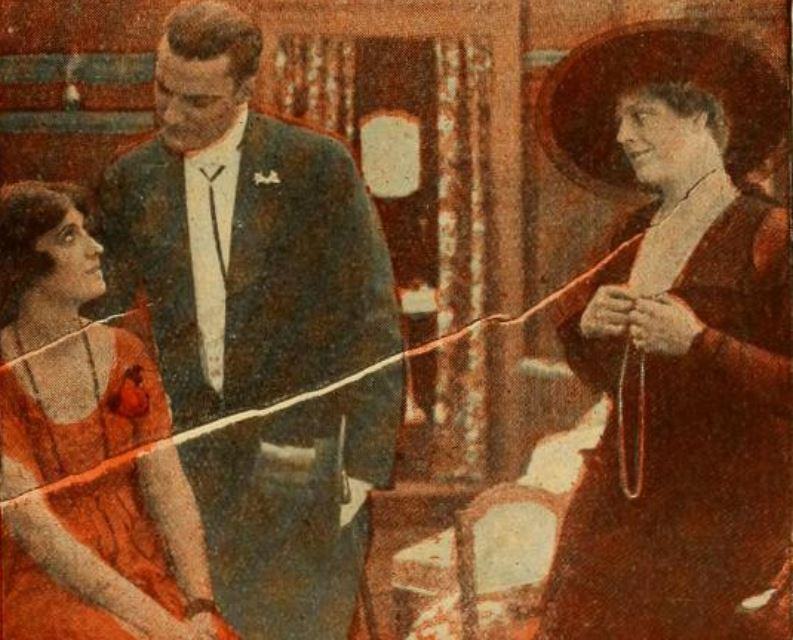
Unlike the damsels trussed in The Rajah’s Diamond Rose, Jane is neither parcel nor prize. She engineers the exoneration, commandeering a motorcar—rare feminine agency in 1915—to chase Ross to the docks. The pursuit sequence, shot on location in a single fog-choked dawn, intercuts her gloved hands on the steering column with the chemist’s manic packing of vials. Each cut obeys eyeline match, yet the rhythm subverts classical continuity: Jane’s glances are off-axis, rupturing the male gaze that cinema was busy codifying. In essence, she hijacks the apparatus of looking, becoming both subject and surveillant.
The surviving 35 mm print—stored at MoMA—has been digitally unrestored to preserve its bruised patina. Night interiors swim in umber, while courtroom scenes leach toward sickly olive, as though justice itself suffers from jaundice. The only chromatic respite arrives during Jane’s flashback of her wedding: the footage is tinted amber using a saffron dye derived from marigold petals, a 19th-century postcard technique. The warmth is cruelly ironic, foreshadowing the arsenic’s yellowish tinge. One exits the screening tasting metal on the tongue, a synesthetic echo of Strong’s final convulsion.
Where Red and White Roses used a child’s innocent posy to mask deceit, The Final Judgment weaponizes correspondence—an everyday act weaponized, the way modern horror weaponizes videotapes or URLs. The film predicts our anxieties about digital messages laced with ransomware; only the vector changes, the human vulnerability remains.
Meanwhile, The Mill on the Floss drowns its sinners in biblical floodwater; Scarborough chooses a subticide—death by paper cut, by bureaucratic flap, by the mundane made lethal. It is the first cinematic acknowledgment that modernity’s greatest menace is not the beast in the jungle but the envelope on the salver.
Fast-forward to 1944: the poisoned letter resurfaces in The Woman in the Window, metamorphosed into a pair of scissors. By 1950, it becomes the cigarette laced with cyanide in D.O.A. Scarborough’s toxic triangle—desire, knowledge, power—ripples through Hitchcock’s Notorious wine cellar, through Leave Her to Heaven’s lake, even through Phantom Thread’s mushroom omelet. Each iteration refines the formula, yet none match the primordial shock of watching silence itself go viral across a gummed rectangle.
The 2019 2K restoration tours arthouses each October; check MoMA’s calendar for 35 mm prints with live Wurlitzer scores. Streaming is elusive—Criterion Channel rotates it sporadically under the "Pre-Code Poison" sidebar. For the daring, an unrestored 480p rip floats in the Internet Archive; watch on a CRT to replicate the flicker that original nickelodeon audiences embraced. Do not dare smartphone viewing—the granularity of arsenic crystals demands projection.
Ninety minutes of nitrate hypnosis later, one staggers out aware that love letters have never been safe, that every sealed confession carries a whiff of graveyard iodine. The Final Judgment is not merely a curio; it is the Rosetta Stone of toxic cinema, the instant when American storytelling learned that intimacy itself could be a murder weapon. Watch it, but wash your hands afterward—preferably without licking the envelope of your next electricity bill.

IMDb 5.8
1919
Community
Log in to comment.