DbcultAccessing Vault...
7.4/10
Senior Film Conservator
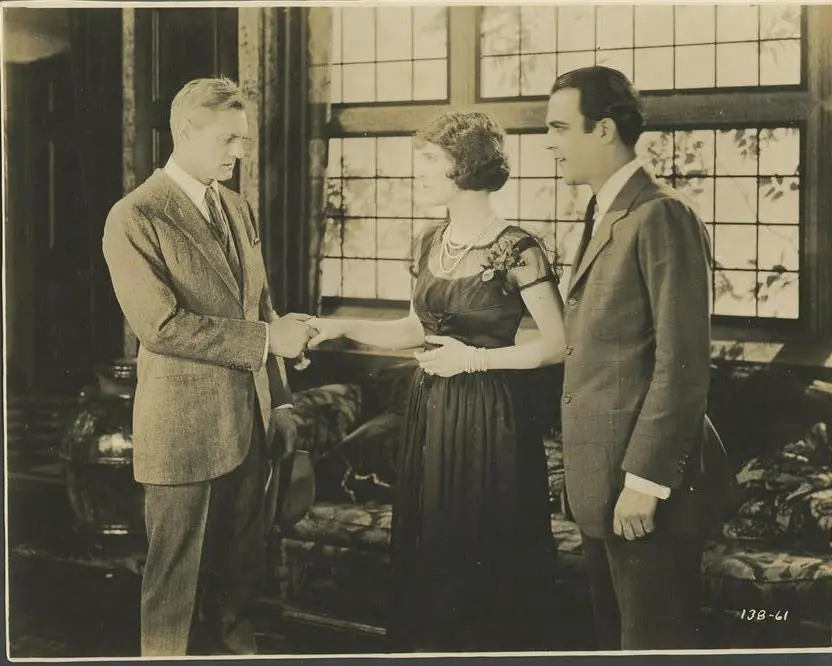
A definitive 7.4/10 rating for a film that redefined the boundaries of cult cinema. Children of the Whirlwind remains a cornerstone of transgressive art.
Is 'Children of the Whirlwind' worth watching today? Short answer: yes, but with significant caveats. This film is a fascinating historical artifact best suited for silent film enthusiasts and those curious about early cinematic moral dramas, yet it will likely test the patience of modern audiences accustomed to faster pacing and more nuanced character development.
It's a journey back to an era of grand gestures and overt morality plays, offering a unique window into the anxieties and storytelling conventions of the 1920s. For the right viewer, it’s a rewarding, if at times challenging, experience.
This film works because of its compelling central premise: a man’s desperate struggle for redemption against the relentless pull of his past. It taps into a universal human desire for second chances, elevated by a surprisingly grounded performance from Lionel Barrymore. The film's directness, a hallmark of silent cinema, allows its core thematic conflict to resonate without unnecessary embellishment.
This film fails because its narrative predictability and reliance on certain melodramatic tropes occasionally undermine its emotional impact. Some supporting characters feel more like archetypes than fully fleshed individuals, and the pacing, while deliberate, can feel sluggish by contemporary standards, particularly in its expositional sequences.
You should watch it if you appreciate the unique artistry of silent cinema, are a fan of early crime dramas, or wish to witness Lionel Barrymore in one of his formative, less bombastic roles. It's also a must-see for anyone interested in the evolution of cinematic storytelling and the moral narratives popular in the early 20th century.
At its core, 'Children of the Whirlwind' presents the harrowing odyssey of Larry Brainerd, a man recently released from Sing Sing prison. His parole is not merely a formality; it represents a profound opportunity for metamorphosis. Larry is not just leaving prison; he is attempting to shed the very skin of his former life, a life steeped in crime, to embrace an existence defined by honesty and hard work. This internal struggle for self-reinvention forms the emotional spine of the narrative.
Yet, the world outside the prison walls is far from a clean slate. The film deftly illustrates how the past, particularly a criminal past, casts a long, inescapable shadow. Larry’s old gang, a collective of nefarious figures, refuses to simply let him disappear into obscurity. Instead, they actively conspire to drag him back into their illicit fold, viewing his departure as both a betrayal and a potential threat to their operations. This external pressure creates a palpable sense of dread and urgency, threatening to unravel Larry’s fragile grasp on a future free from incarceration and moral compromise.
The plot, while straightforward, is an effective vehicle for exploring themes of societal judgment, the difficulty of rehabilitation, and the enduring power of past affiliations. It’s less about intricate twists and more about the relentless, grinding pressure on a man trying desperately to do right. The 'whirlwind' of the title isn't just a metaphor for the criminal underworld; it’s a palpable force threatening to consume Larry's newfound hope.
In the silent era, acting was an art form of heightened expression, relying heavily on pantomime, facial contortions, and grand gestures to convey emotion without dialogue. 'Children of the Whirlwind' provides a fascinating case study in this craft, particularly through the lens of its lead, Lionel Barrymore. Barrymore, even in these nascent stages of his storied career, brings a gravitas and nuanced intensity to Larry Brainerd that anchors the entire film.
His portrayal of a man torn between a desperate yearning for redemption and the terrifying magnetic pull of his old life is remarkably effective. Consider the scene where Larry first emerges from prison: Barrymore’s posture, a subtle slump of weariness combined with an almost imperceptible spark of hope in his eyes, communicates volumes about his character’s internal state. He avoids the overt hamming often associated with the period, opting instead for a more restrained, internal struggle that occasionally bursts forth in moments of genuine anguish or resolve. This makes his performance feel surprisingly modern in its psychological depth.
Barrymore’s ability to convey complex emotions through body language and subtle facial shifts sets him apart, even among his talented peers. He makes you feel Larry's burden.
The supporting cast, while less developed, plays their parts with conviction. Ruby Blaine, as the potential love interest or moral compass, projects an innocence and vulnerability that contrasts sharply with the hardened world Larry inhabits. Her wide-eyed expressions and gentle demeanor provide a visual shorthand for the purity Larry aspires to. Marguerite De La Motte, in a more ambiguous role, hints at the moral complexities that exist even within the film’s relatively black-and-white world, her gaze often carrying a weight of unspoken history.
Joseph R. Tozer and Bert Tuey, embodying members of the old gang, are appropriately menacing. Their performances lean into the villainous archetypes of the era, relying on scowls, furtive glances, and aggressive posturing to establish their threat. While not as layered as Barrymore’s work, their collective presence effectively creates the oppressive atmosphere that constantly threatens Larry's freedom. It’s a testament to the ensemble that the danger feels consistently present, even when the narrative slows.
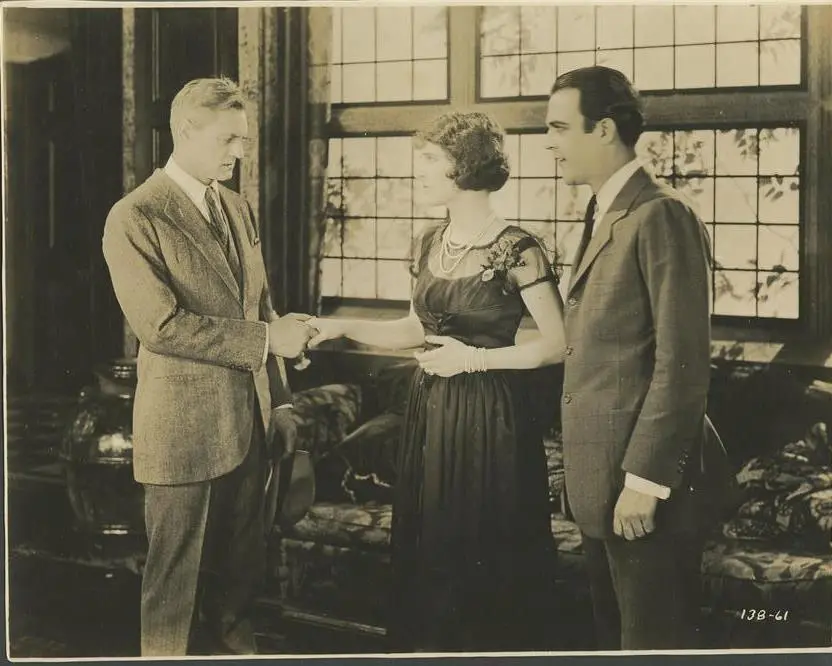
'Children of the Whirlwind' benefits from direction that, while adhering to the conventions of its time, demonstrates a clear understanding of visual storytelling. The director, likely working within the established grammar of silent film, uses shot composition and editing to build tension and convey character psychology. There’s a deliberate pacing to the scenes, allowing the audience to absorb the visual information and the emotional beats.
Cinematography, a crucial element in silent film, plays a vital role in establishing the film’s tone and atmosphere. The use of light and shadow, while perhaps not as dramatically stylized as later film noir, is employed effectively to differentiate between Larry’s grim past and his hopeful future. Interiors often feel claustrophobic, reflecting Larry’s trapped existence, while exteriors, though limited, hint at the open possibilities he craves. The camera often lingers on Barrymore’s face, allowing his expressions to carry the narrative weight, a smart directorial choice given his capabilities.
One particularly effective sequence involves the gang’s initial attempts to lure Larry back. The director employs a series of quick cuts between Larry’s determined, almost defiant, expressions and the shadowy, conspiratorial faces of his former associates. This simple juxtaposition visually emphasizes the internal and external conflict at play, creating a palpable sense of a man besieged. It's a classic silent film technique, but executed here with precision.
However, the film occasionally falls into the trap of over-reliance on intertitles. While necessary for exposition in silent cinema, there are moments where a more visually driven approach could have conveyed information or emotion more economically. This isn't a unique failing of this film, but rather a common characteristic of the period, reflecting an evolving understanding of cinematic language. Despite this, the visual narrative generally holds strong, communicating effectively without the benefit of spoken dialogue.
The pacing of 'Children of the Whirlwind' is, by modern standards, deliberate. It takes its time to establish Larry’s predicament and the forces arrayed against him. This slower rhythm can be a double-edged sword. For those accustomed to the rapid-fire editing and constant narrative propulsion of contemporary cinema, the film might feel sluggish in places, particularly during its more expositional or contemplative moments. There are extended stretches dedicated to character reactions and the gradual unfolding of events, which demand a certain patience from the viewer.
Yet, this measured pace also allows for a deeper immersion into Larry’s psychological state. It permits the audience to truly feel the weight of his struggle, the slow burn of his hope, and the creeping dread of his impending doom. The film trusts its visuals and performances to carry the emotional load, rather than relying on a frantic plot to keep interest. It’s a struggle. A compelling one.
The tone is undeniably melodramatic, a staple of silent-era moral dramas. Good and evil are often clearly delineated, and emotions are expressed with an overt intensity. Larry’s desire for redemption is pure, his antagonists are unambiguously villainous, and the stakes feel existential. This isn't a criticism; it's an observation of the film's chosen mode of storytelling. It leans into the operatic nature of its narrative, inviting the audience to engage with the story on an emotional, rather than purely intellectual, level.
I'd argue that the film's reliance on these melodramatic tropes, while common for its era, paradoxically undercuts some of the genuine grit its premise promises. While it aims for an earnest portrayal of rehabilitation, the broad strokes sometimes dilute the potential for more complex character motivations, leaving the viewer with emotional clarity rather than sustained empathetic depth. It’s a film that tells you how to feel, rather than allowing you to discover it organically. This is not necessarily a flaw for its intended audience, but it is a point of distinction for contemporary viewers.
Yes, if you have an appreciation for silent film history and classic moral dramas. It offers valuable insights into early cinematic storytelling.
It is primarily for silent film enthusiasts, film historians, and fans of Lionel Barrymore's early work. Those interested in the themes of redemption and social struggle will also find it engaging.
It is not for viewers who prefer fast-paced narratives, complex character studies, or modern cinematic techniques. If you struggle with the conventions of silent cinema, this might be a challenging watch.
Parts of it hold up remarkably well, particularly Barrymore's performance and the core emotional struggle. Other aspects, like the pacing and some melodramatic elements, show their age.
Ultimately, 'Children of the Whirlwind' is more than just a historical curiosity; it’s a robust example of silent-era storytelling, driven by a powerful central performance and a timeless theme. While it demands a certain patience from the modern viewer, its strengths lie in its emotional honesty and its portrayal of a man’s arduous journey toward redemption. It's a film that, despite its age, still manages to resonate, particularly through the compelling struggle of its protagonist.
It’s not a flawless film, nor does it attempt to reinvent the wheel of narrative cinema. Instead, it offers a solid, if conventional, exploration of good versus evil, personal choice, and the societal forces that shape our lives. For those willing to engage with its particular rhythm and style, 'Children of the Whirlwind' provides a rewarding glimpse into a foundational period of film history, proving that a strong performance and a clear narrative can transcend the limitations of time. It's certainly a more engaging watch than some of its contemporaries, offering a tighter narrative than, say, The Soul of Kura San, and a more focused moral dilemma than The Conspiracy. See it for Barrymore; stay for the thoughtful, if somewhat dated, commentary on second chances.
IMDb 5.4
1928
Community
Log in to comment.