DbcultAccessing Vault...
Cult Review
Senior Film Conservator
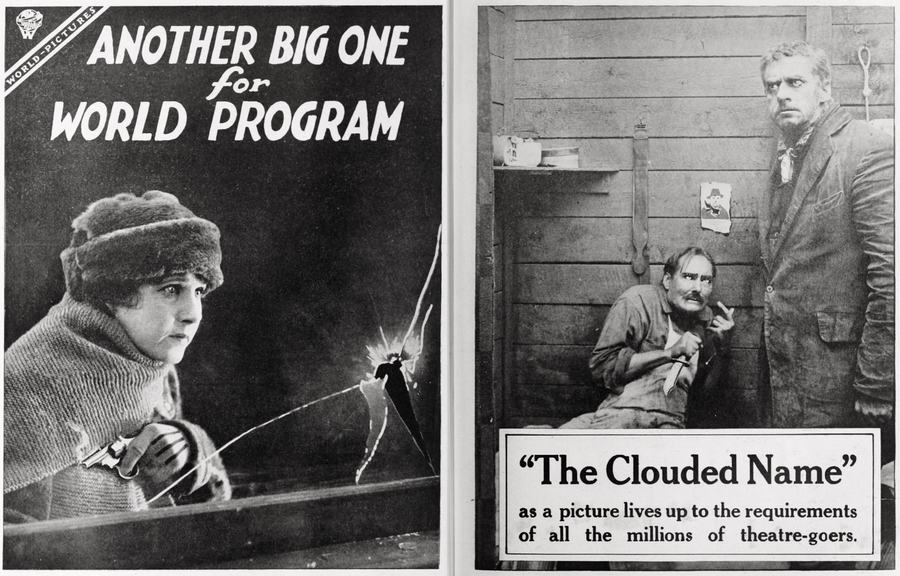
Ah, the silent era! A time when stories unfolded not through spoken dialogue, but through the eloquent dance of shadow and light, the subtle flicker of an actor's gaze, and the grand, sweeping gestures that spoke volumes. In this mesmerizing tableau of early cinema, we find The Clouded Name (1917), a film that, despite its age, still pulsates with a raw, emotional intensity, weaving a narrative tapestry rich with themes of identity, societal prejudice, and the relentless pursuit of truth. It's a journey into the heart of human drama, where a simple name, or lack thereof, can cast a shadow long enough to obscure a man's very essence.
Our protagonist, a man known only as 'Bill,' enters the narrative shrouded in an almost mythological mystery. His steadfast refusal to offer a surname, or perhaps his genuine lack of one, immediately brands him. In the rigid social structures of the early 20th century, a man without a recognized lineage was a man without standing, perpetually tainted by the suspicion of illegitimacy. This isn't just a plot device; it's a profound commentary on how deeply ingrained societal judgments were, and how quickly an individual could be ostracized for not conforming to established norms. Bill's predicament resonates even today, reminding us of the enduring power of perception over reality. John Lowell, in the role of Bill, portrays this quiet stoicism with remarkable subtlety, conveying a deep well of unspoken pain and resilience through his expressions and bearing. He’s not a man who rails against his fate; rather, he carries it with a weary dignity, seeking to carve out his own worth through honest labor, an endeavor that often speaks louder than any ancestral claim.
The logging camp serves as more than just a backdrop; it's a microcosm of society, a harsh, unforgiving environment where true character is revealed. Here, among the sweat and sawdust, Bill finds not only work but a chance to redefine himself through his actions. His physical prowess and unwavering commitment to the grueling labor earn him the respect of the other men. This is a crucial step in his journey, as it shows that while society might judge him by his lack of a name, his peers in the trenches judge him by his deeds. But the camp also introduces a fascinating sub-narrative: Bill's quiet magnetism for some of the 'ill-treated wives.' This subtle detail hints at the broader societal discontents and the unspoken yearnings of women trapped in less-than-ideal marriages. It suggests Bill, with his mysterious past and inherent decency, represents a kind of hope or escape, a stark contrast to the often brutal or neglectful men they are bound to. It's a testament to Lillian Case Russell's writing that such nuances are woven into the fabric of the plot, adding layers of social commentary that elevate the film beyond a simple melodrama. One might draw parallels to the social undercurrents explored in films like The Savage Woman, where female characters often found themselves navigating complex societal expectations and personal desires within challenging environments.
Enter Edith Barrett, played by the expressive Corene Uzzell, the daughter of one of the camp owners, a figure of grace and privilege who finds herself inexplicably drawn to the enigmatic Bill. Their burgeoning connection forms the romantic core of the story, a fragile bloom threatened by the weeds of envy and deceit. This is where Charles A. Robins' portrayal of Clyde Van Allen, the entitled son of the other camp owner, truly shines in its villainy. Clyde is not merely a rival; he is an embodiment of unearned privilege and malicious manipulation. His jealousy, born of a sense of entitlement and perhaps a deep-seated insecurity, drives him to a despicable act: fabricating a story that Bill wronged a woman in the camp. This lie is a masterstroke of emotional warfare, expertly designed to prey on Edith's sensibilities and the prevailing social anxieties surrounding a man of unknown origins. The ease with which Edith is swayed underscores the fragility of reputation and the pervasive power of gossip, particularly when wielded by someone of Clyde's social standing. She becomes engaged to Clyde, a decision that feels less like love and more like a retreat into safety and societal expectation, a tragic consequence of Bill's 'clouded name.'
The narrative reaches a dramatic crescendo with Bill's heroic rescue of Edith from the clutches of a treacherous snowstorm. This is a classic silent film trope, yet here it serves a poignant purpose. It's an act of pure, selfless bravery, an irrefutable demonstration of Bill's true character and his profound affection for Edith. One would expect such an act to shatter the illusions Clyde has so carefully constructed, to reveal Bill as the honorable man he truly is. Yet, astonishingly, Edith proceeds with her marriage to Clyde. This decision is perhaps the most heartbreaking and insightful element of the film's early dramatic arc. It speaks volumes about the societal pressures and internal conflicts that often dictated women's choices in that era. Was it a fear of scandal? A deeply ingrained belief in the fabricated narrative? Or simply the overwhelming weight of expectation that she marry someone of her own social standing, regardless of where her heart truly lay? It highlights the tragic irony that even undeniable heroism could not overcome the deep-seated prejudice sown by a single lie and the stigma of an unknown past. This moment echoes the profound internal struggles seen in films like The City of Purple Dreams, where characters often found themselves entangled in webs of duty versus desire, with societal expectations often triumphing over personal inclination.
The tension, simmering throughout, finally boils over with the long-awaited revelation from Bateese, the camp cook, portrayed with a grounding presence by Jules Cowles. Bateese, a character who has silently observed the unfolding drama, carries the weight of a secret that has shaped Bill's entire life. His confession is a dramatic turning point: Bill is the legitimate son of his mother and the elder Van Allen, Clyde's father. The marriage, for reasons left to our imagination but likely rooted in social or financial expediency, was kept secret. This revelation is a masterstroke of storytelling, instantly recontextualizing every interaction, every judgment, every slight Bill has endured. His 'illegitimacy' was a cruel fabrication, a consequence of a hidden truth. This twist not only vindicates Bill but also exposes the hypocrisy and deceit at the heart of the Van Allen family, particularly Clyde's own father. It's a powerful statement on the destructive nature of secrets and the eventual triumph of truth, however delayed. This theme of hidden parentage and the revelation of true identity is a common, yet always compelling, narrative device, often seen in other melodramas of the era, such as The Legacy of Happiness, where ancestral secrets often dictate the fates of modern characters.
Just when it seems the path for Bill and Edith might finally clear, the narrative takes a dark, unexpected turn with the introduction of Julie, the dance hall girl. Julie embodies a different kind of justice, one born of passion, betrayal, and desperation. Her presence highlights Clyde's character once more, revealing him not just as a jealous rival but as a callous philanderer who had promised her marriage, only to break his word. Julie's explosive act – shooting Clyde for his treachery – is a visceral, shocking climax. It's a moment of raw, untamed emotion, a stark contrast to the more restrained drama that preceded it. Her subsequent act of turning the gun on herself, a desperate finality, serves a dual purpose: it provides a swift, albeit tragic, resolution to Clyde's villainy and, crucially, leaves Edith free from the bonds of a marriage built on deceit and manipulation. This sudden, violent resolution, while perhaps jarring to modern sensibilities, was a common dramatic device in silent film, often used to deliver swift justice and clear the stage for the protagonists' ultimate happiness. It speaks to a certain moral absolutism prevalent in the storytelling of the time, where good and evil were often clearly delineated and retribution could be swift and severe, a dramatic flourish that could be compared to the intense, almost fated confrontations found in films like Satan's Private Door, where moral transgressions often met equally dramatic consequences.
At its core, The Clouded Name is a compelling exploration of identity, legitimacy, and the insidious power of societal judgment. Bill's journey is a powerful testament to the idea that true worth is not dictated by birthright or social standing, but by character and action. The film deftly navigates the class divides of the era, portraying the stark contrast between the entitled leisure of the Van Allens and the arduous labor of the logging camp. Lillian Case Russell's screenplay intelligently weaves these threads, creating a tapestry where love, betrayal, and the pursuit of truth are inextricably linked. The resolution, while dramatically abrupt, ultimately champions authenticity over artifice, and genuine affection over forced unions. It's a narrative that, despite its century-old vintage, still speaks to fundamental human experiences: the desire for acceptance, the pain of misunderstanding, and the enduring hope for a love that transcends superficial barriers. The emotional depth conveyed through the silent performances is particularly noteworthy, a testament to the actors' skill in communicating complex feelings without the aid of spoken words. The film's message, that a name or a perceived past should not define a person, remains profoundly relevant, urging us to look beyond surface appearances and embrace the true essence of an individual.
In an era dominated by sprawling epics and grand romantic gestures, The Clouded Name stands as a finely crafted melodrama, proving that compelling storytelling doesn't always require massive budgets or elaborate special effects. It relies on the strength of its narrative, the emotional performances of its cast, and the universal themes it explores. The film, a product of its time, offers a fascinating window into the social mores, gender roles, and dramatic conventions of the early 20th century. It reminds us of the power of visual storytelling, where a single glance, a subtle shift in posture, or the dramatic use of intertitles could convey an entire world of meaning. It's a film that asks us to reflect on the nature of identity and the societal constructs that often bind or liberate us. While perhaps not as widely known as some of its contemporaries, it’s a valuable piece of cinematic history, offering insights into the evolving art of narrative film during its formative years. For aficionados of silent cinema, or those curious about the roots of dramatic storytelling on screen, The Clouded Name is a compelling watch, a testament to the enduring power of human drama, proving that even a century later, a well-told story, especially one about identity and redemption, can still resonate deeply. It's a reminder that beneath the surface, human emotions and societal pressures have always been complex, making these early films not just historical artifacts, but poignant reflections of our shared human experience.
IMDb 4.8
1933
Community
Log in to comment.