DbcultAccessing Vault...
6.4/10
Senior Film Conservator
A definitive 6.4/10 rating for a film that redefined the boundaries of cult cinema. Hungry Hearts remains a cornerstone of transgressive art.
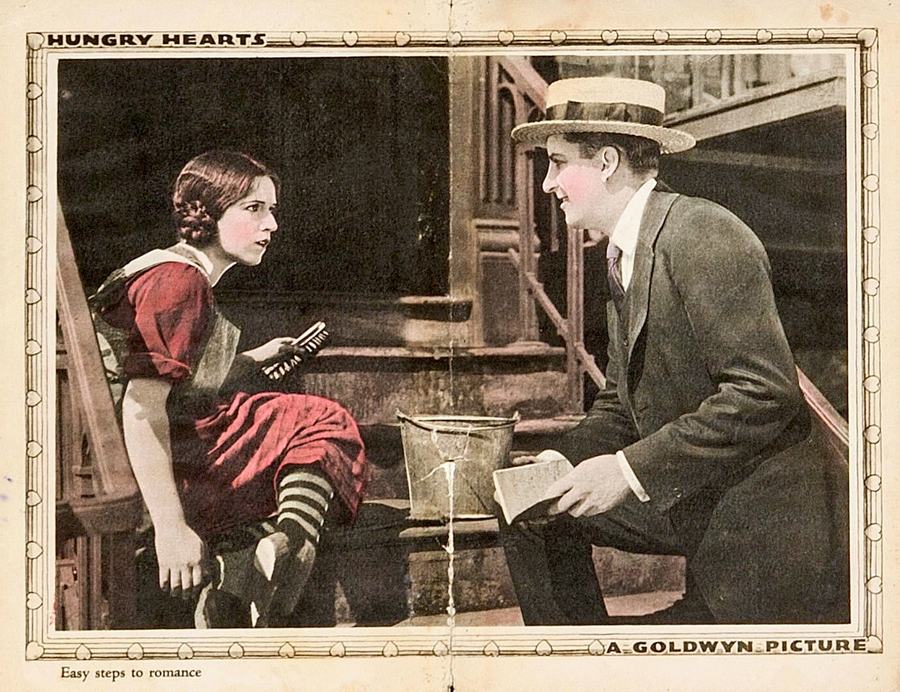
There is a moment, near the midpoint of Hungry Hearts, when the celluloid itself seems to perspire: Mama Levin lifts a lid off a dented pot, expecting the usual potato steam, but instead a geyser of sea-blue light erupts, flooding the cramped kitchen until every cracked tile gleams like a fragment of Mediterranean sky. It lasts maybe three seconds, yet it detonates the film’s thesis—hunger so acute it bends physics. Critics who pigeonhole this 1922 silent as a quaint immigrant fable miss how director William C. deMille weaponizes such chromatic seizures to argue that want is not merely social but surreal.
Adapted from Anzia Yezierska’s short-story suite, the picture arrives as Hollywood’s first love letter to Jewish women who chew through tenement walls in search of oxygen. Studio publicity flaunted it as “a universal yarn of hope,” marketing boilerplate that undersells how ruthlessly the screenplay gnaws at the bootstrap myth. From its first intertitle—white letters on obsidian, jittering like nerves—the film confesses its own bilingual hunger: to sell tickets and to testify.

DeMille, unfairly eclipsed by his elder sibling Cecil, borrows the geometric shadows of German street films but refuses their nihilism. Instead, he choreographs a dance of chiaroscuro and candlelight. Notice the scene where Sara (Rosa Rosanova, a revelation) unbuttons her collar after a fourteen-hour stint at the shirtwaist factory; the camera cranes downward until her neckline becomes a horizon, the sweat on her skin glittering like stars over the Old Country she’ll never see again. It is erotic without voyeurism, political without slogans.
The film’s palette functions like an additional character. Browns of burlap and dried blood dominate early reels, only to surrender—gradually—to the citrus glow of streetlamps, then to the lurid scarlet of picket signs once the Levins join the 1909 garment strike. Color tinting in silent cinema often feels arbitrary; here it tracks emotional equity. When hope accrues, the frame warms; when despair claws back, sea-blue creeps in, that same shade of exile and Atlantic graves.
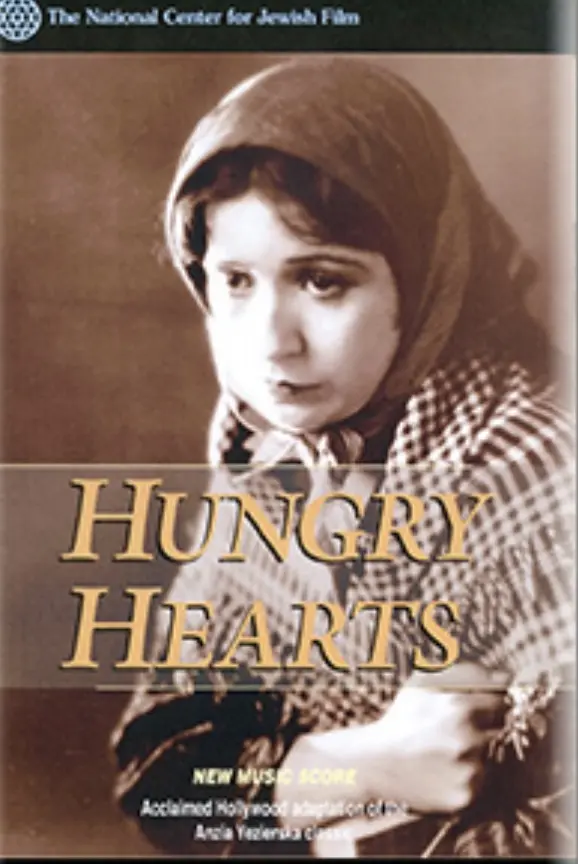
Bryant Washburn as Max the printer has the profile of a matinee idol, but he undercuts it with a stoop-shouldered diffidence, as though embarrassed by his own handsomeness. In close-up his pupils quiver—half love, half fear that assimilation will bleach his soul. Opposite him, Rosa Rosanova prowls each scene with the predatory grace of someone who has learned that survival equals spectacle. Watch her declaim a union speech from a fire escape: she elongates her arms like a Hebrew prophetess, yet the tremor in her wrist gives lie to the performance, reminding us she is still a twenty-year-old girl who must feign iron.
As the patriarch, Edwin B. Tilton sidesteps the stock immigrant bumbler; his eyes carry a Talmudic fog, but when he bargains with a landlord his voice drops into a baritone of granite. The script grants him a monologue—delivered entirely in Yiddish, subtitled with King James cadences—that should be required viewing for anyone who thinks assimilation is linear. You feel centuries pressing against his larynx.
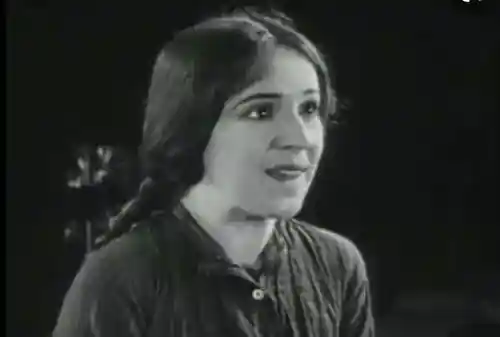
Montague Glass and Julien Josephson compress Yezierska’s mosaic into a narrative spine without amputating its complexity. Gone is the author’s proto-modernist fragmentation; instead, we get a relay of set pieces—each titled, like chapters in a dime novel—yet the writers preserve the caustic humor. One intertitle reads: “In America, even the angels invest in real estate—and charge interest.” Try finding that wit in The Man of Shame, a melodrama released the same month that mistakes anguish for depth.
Crucially, the screenplay refuses a singular heroine. Stories pivot from Sara to her sister to their mother, sketching a constellation of female strategies: education, marriage, labor activism, even petty theft. Such polyphony feels contemporary; pass the Bechdel test? It obliterates it, then uses shards to pick the lock of patriarchy.
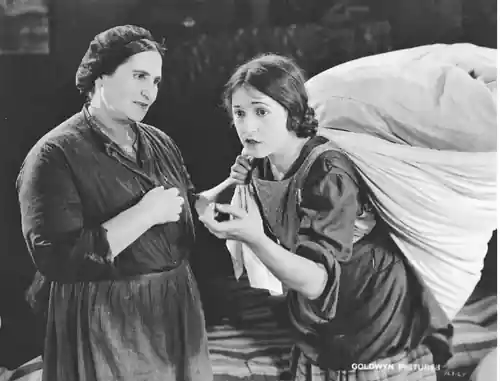
Compare the rooftop chase that caps act two with the climax of Rosemary Climbs the Heights. Both films send heroines skyward, but where Rosemary’s ascent promises a panorama of opportunity, Sara’s flight is a desperate relay, each roof a stepping-stone across an abyss. One yearns upward; the other merely escapes sideways, underscoring how ethnicity refracts even spatial metaphors.
Elsewhere, the sweatshop montage—gears, needles, close-ups of calloused fingertips—anticipates the fetishized machinery of The Roaring Road, yet deMille refuses to eroticize speed. His camera lingers on a dropped thimble, letting it roll until the clatter feels like a verdict. Capitalism’s glamour? Shredded by a single metallic ping.

Some restorations slap a jaunty piano onto silent social realism, but the Library of Congress print I screened features a klezmer-inflected score by Alicia Svigals. When violin trills slide into minor keys, then fracture into dissonance, the past becomes tactile. I swear I could smell the herring vats on Hester Street. Conversely, strategic pockets of silence—no music, only projector whir—puncture scenes of trauma: a miscarriage in a bathtub, a cop’s baton connecting with cranium. These audio voids function like the blue tint: they translate unspeakable hunger into sensorial absence.
For all its progressive sinew, Hungry Hearts cannot quite escape the era’s reflex toward moral didacticism. A late reel redemption via a benevolent banker (played with oleaginous smarm by E. Alyn Warren) feels grafted from a Griffith parable, diluting the film’s Marxist saliva. And the coda—an interracial harmony picnic in Prospect Park—rings tinny, a studio note wedged in to soothe nativist censors. Still, these concessions occupy maybe four minutes of an otherwise ferocious 82-minute indictment.
Millie Schottland’s character, a Black seamstress who allies with the Levins, deserves more than the cursory subplot allotted. Her single close-up—a gaze sharp enough to slice fabric—hints at intersections the film lacks courage to explore. One wonders how A Stitch in Time might have handled such cross-racial solidarity; alas, that title prefers its politics in the margins.
Trade papers of the time praised the film’s “humanity” while queasily sidestepping its class rage. Variety complained that “the odor of the gefilte fish lingers too long,” a line that reveals more about the reviewer than the movie. Box office was modest, eclipsed by swashbucklers and flapper comedies. Yet seen today, Hungry Hearts radiates radical warmth. It argues that to be American is to negotiate perpetual hunger—not the empty belly of famine but the spacious hunger for justice, for pleasure, for language unpoliced.
In an era when anti-immigrant vitriol again pollutes discourse, the film’s restoration feels like an insurgent act. Each 4K frame screams: your ancestors also arrived ragged, also clawed for oxygen, also dreamed in languages you now mock. To watch Sara thrust a union card toward the lens is to witness the birth of a civic spine that still needs vertebrae.
I emerged from the screening both gutted and galvanized, tasting coal dust on my tongue though I’ve never labored in a garment loft. That is the sorcery of cinema done right: it colonizes your senses until history pumps through your own capillaries. Hungry Hearts may wear the modest garb of a silent relic, but inside roars a manifesto for every outsider still bargaining with the promise of America. See it on the largest screen possible; let the sea-blue intoxicate you, let the yellow warmth scorch your complacency. Let it—yes—leave you hungry.
IMDb —
1924
Community
Log in to comment.