DbcultAccessing Vault...
Cult Review
Senior Film Conservator
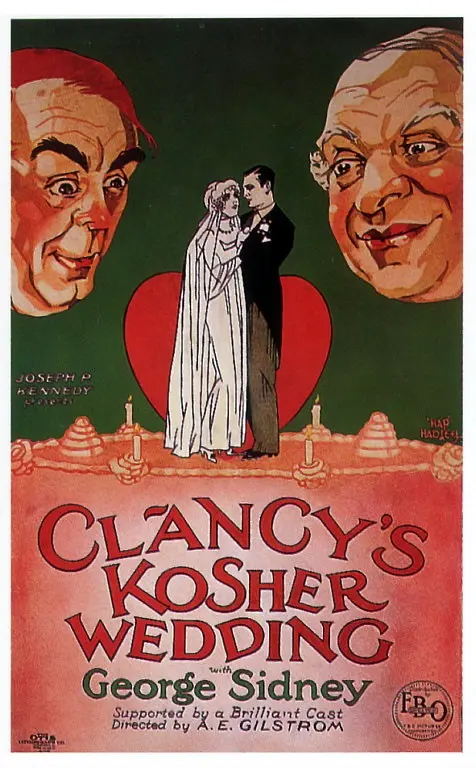
Is Clancy's Kosher Wedding worth your time in the modern era? Short answer: yes, but with significant caveats. This early comedic effort, a fascinating cultural artifact from a bygone era, offers a unique window into societal anxieties and humor surrounding interfaith and interethnic relationships, making it a compelling watch for film historians and those with a keen interest in the evolution of comedic storytelling.
However, it is decidedly not for everyone. Modern audiences accustomed to rapid pacing, complex character arcs, and nuanced humor may find its style quaint, its pacing deliberate, and its comedic beats broad. This film is best suited for viewers who appreciate the historical context of early cinema, who can forgive technical limitations, and who are curious about how cultural clashes were portrayed on screen nearly a century ago. If you seek a fast-paced, contemporary comedy, look elsewhere. If you're a student of film history or a lover of unique cultural time capsules, pull up a chair.
This film works because it fearlessly, if sometimes clumsily, tackles a universal theme of love transcending cultural barriers, using humor as its primary vehicle. It offers a rare glimpse into the comedic sensibilities of its time regarding such sensitive subjects.
This film fails because its humor, while groundbreaking for its period, often relies on broad stereotypes and predictable situational comedy that can feel dated and occasionally uncomfortable to a modern sensibility. Its technical execution, while competent for its era, lacks the polish contemporary viewers expect.
You should watch it if you are a film scholar, an anthropologist of early 20th-century American culture, or simply someone who revels in uncovering the forgotten gems that shaped cinematic history, especially those that dared to comment on social dynamics.
The very title, Clancy's Kosher Wedding, is a masterclass in evocative simplicity, immediately setting the stage for a delightful, if potentially fraught, comedic exploration of cultural integration. The 'Clancy' suggests a world of Irish-American boisterousness, perhaps a touch of working-class grit, and a strong sense of community rooted in tradition. The 'Kosher Wedding,' by contrast, conjures images of meticulous adherence to religious law, family honor, and a different, yet equally rich, set of cultural practices. The collision of these two worlds, united by the promise of marriage, is inherently fertile ground for humor.
Writers J.G. Hawks, Curtis Benton, Al Boasberg, and Gilbert Pratt had a clear vision for a comedy of errors, built upon the foundation of cultural misunderstanding. One can easily imagine the screenplay detailing scenes where traditional Irish jigs clash with solemn Jewish folk dances, or where the intricacies of dietary laws become a source of profound, yet ultimately harmless, confusion for the uninitiated. The genius of the premise lies in its universality: how do two families, deeply entrenched in their own ways, learn to not just tolerate, but celebrate each other's differences when love binds them?
The film, in its essence, is a commentary on assimilation and the melting pot ideal, filtered through the lens of early 20th-century American comedy. It's a testament to the enduring appeal of stories where love conquers all, even the most stubborn of cultural barriers.
The cast of Clancy's Kosher Wedding features a roster of character actors well-versed in the theatrical styles of their era, each bringing a distinct flavor to their roles. Rex Lease, often cast as the earnest leading man, likely anchors the romantic core, perhaps as the titular Clancy, navigating the bewildering landscape of his fiancée's family traditions. Lease's performances typically exuded a straightforward charm, making him an ideal candidate to portray an outsider trying his best to fit in.
Mary Gordon, a prolific actress known for her portrayals of Irish mothers and matrons, would undoubtedly have brought her signature blend of warmth, stubbornness, and comedic timing to the role of a Clancy matriarch. Her presence alone would have guaranteed a certain authenticity to the Irish side of the comedic equation, her facial expressions and physical comedy often speaking volumes without a single line. One can almost see her exasperated sighs or booming laughter echoing through the frame.
On the other side of the cultural divide, George Sidney, a veteran of Yiddish theater and early Hollywood, would have provided the necessary gravitas and comedic flair for the Jewish family's patriarch. Sidney's experience allowed him to embody characters with a rich blend of tradition, humor, and often, a touch of endearing exasperation. His interactions with Gordon's character would have been the film's comedic engine, a masterclass in clashing personalities and cultural nuances.
Sharon Lynn, often a more glamorous figure, might have played the bride, caught between her family's expectations and her love for Clancy. Her role would have demanded a delicate balance, portraying both filial respect and burgeoning independence. Ed Brady, Will Armstrong, and Ann Brody, all seasoned performers, would have filled out the ensemble, each contributing to the tapestry of familial chaos and eventual harmony. Their collective strength lies in their ability to embody recognizable archetypes, making the cultural clash immediately relatable to audiences of the time, even if those archetypes feel overly simplistic today. It works. But it’s flawed.
While specific directorial credits for Clancy's Kosher Wedding are not provided, one can infer much about its visual style and pacing based on the common practices of early 20th-century comedies. Directors of this period often favored a theatrical approach, with static shots, clear blocking, and an emphasis on physical comedy and expressive acting to convey emotion and plot. The camera, rather than being an active participant, typically served as an objective observer, capturing the unfolding farce.
The cinematography, likely in black and white, would have relied on strong contrasts and clear compositions to delineate characters and settings. Lighting would have been functional, designed to illuminate the performers and ensure visibility rather than to create complex moods or artistic statements. Close-ups, when used, would have been employed to highlight key reactions or comedic moments, drawing the audience's attention to the actors' exaggerated expressions.
Pacing in such films often felt deliberate by today's standards. Scenes would play out at a slower rhythm, allowing the audience to absorb the visual gags and character interactions. This isn't a flaw; it's a characteristic of the era. The comedic timing would have been built into the actors' performances and the director's blocking, rather than through rapid-fire editing. Imagine a scene where a character slowly, painstakingly, attempts to understand a foreign custom, the camera holding on their confused expression for an extended beat. This measured approach allowed for the humor to land without relying on quick cuts.
The choice of setting would have been crucial, contrasting the two families' homes—perhaps one a bustling, slightly cluttered Irish-American dwelling, the other a meticulously kept, tradition-rich Jewish home. These visual juxtapositions would have been key to establishing the cultural differences that fuel the comedy, much like the contrasting interiors in a film such as The Society Bug might highlight class differences.
The overarching tone of Clancy's Kosher Wedding, despite its reliance on comedic situations, likely carries an underlying message of tolerance and understanding. While the humor may stem from cultural clashes, the ultimate goal of such a narrative is typically to demonstrate that love and shared humanity can bridge any divide. The film, therefore, functions not just as entertainment, but as a gentle social commentary, encouraging audiences to look past superficial differences.
Themes of assimilation, tradition versus modernity, and the universal desire for acceptance are almost certainly woven into the fabric of the story. The 'kosher' aspect isn't just a plot device; it represents a system of values and beliefs that the 'Clancy' side must learn to respect, and vice versa. It's a dialogue, however simplistic, between two distinct ways of life, forced into conversation by the powerful catalyst of romance.
One surprising observation for a film of this vintage is its potential bravery. In an era where overt racism and xenophobia were unfortunately common, a film that attempts to find common ground and humor in cross-cultural marriage, even if imperfectly, signals a progressive intent. It suggests a burgeoning American identity that sought to integrate, rather than merely isolate, its diverse communities. It's a far cry from the more overt social critiques seen in later films, but for its time, it was a step.
While Clancy's Kosher Wedding may not possess the timeless cinematic artistry of a true classic, its enduring value lies squarely in its capacity as a historical document. It offers invaluable insights into the social fabric of early 20th-century America, particularly concerning attitudes towards interfaith and interethnic relationships. This film didn't just entertain; it reflected and, in its own way, shaped public discourse on these nascent cultural integrations.
The film's comedic approach to what could have been a contentious subject is particularly noteworthy. By framing cultural differences as sources of humor rather than conflict, it softened the edges of potentially fraught discussions. This was a common strategy in early cinema, using laughter to make challenging topics more palatable, much like how The Ne'er Do Well might have used humor to critique social class.
For contemporary viewers, especially those interested in cultural studies or the evolution of comedy, it serves as a fascinating case study. It allows us to examine how stereotypes were deployed, how comedic tension was built, and how resolutions were crafted in a period vastly different from our own. It's a snapshot of a moment when America was actively grappling with its identity as a nation of immigrants.
Clancy's Kosher Wedding is not a cinematic masterpiece in the modern sense. It won't dazzle you with groundbreaking visuals or profound philosophical insights. What it offers, instead, is something arguably more valuable for certain viewers: a genuine, unvarnished piece of cultural history. It's a film that, despite its limitations and the occasional awkwardness of its period-specific humor, dared to portray a burgeoning America grappling with its own diversity through the most relatable of human experiences: love and marriage.
For those who approach it with an open mind and a historian's curiosity, it provides a fascinating, often charming, glimpse into the comedic sensibilities of the past and the enduring power of a simple, well-conceived premise. It's a testament to how cinema, even in its nascent stages, could reflect and comment on the social dynamics of its time. It's a film that deserves to be seen, not necessarily for its artistic brilliance, but for its honest, if imperfect, window into a pivotal era. It's a worthwhile journey for the right audience. Consider it a historical curiosity with a hearty laugh, not a timeless classic. But it has heart, and that counts for something.
IMDb —
1925
Community
Log in to comment.