DbcultAccessing Vault...
Cult Review
Senior Film Conservator
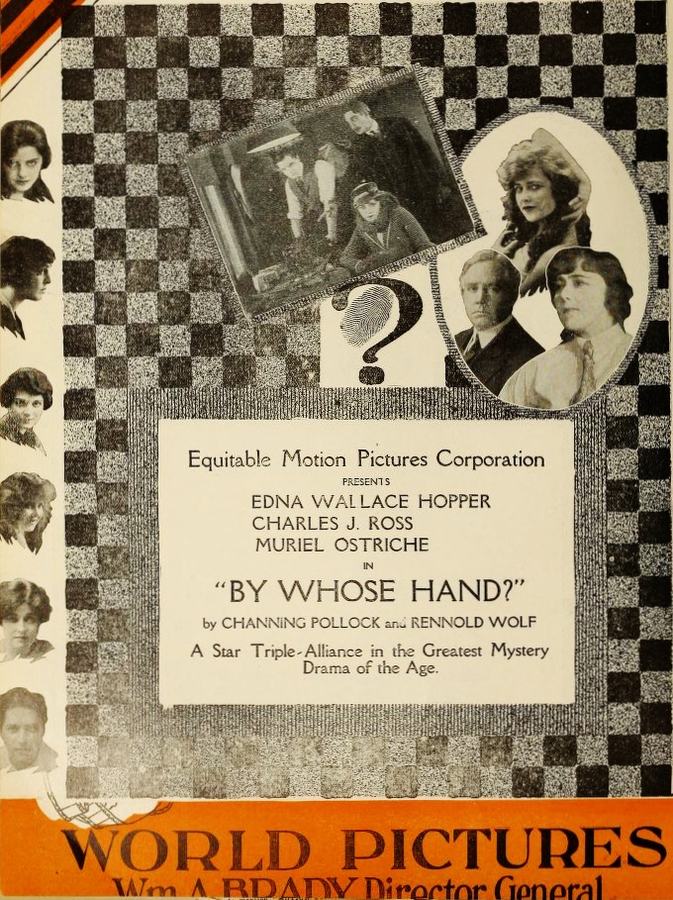
In the annals of early cinematic thrillers, few narratives ensnare the viewer with such a tantalizingly unresolved enigma as "Who Killed Simon Baird?". This isn't merely a whodunit; it's a profound exploration of human desperation, sacrificial love, and the elusive nature of truth itself, a masterclass in ambiguity that challenges the very foundations of judicial certainty. From its opening frames, the film plunges us into a world where affections are bartered, ambitions are paramount, and the price of happiness might just be a life. The narrative, crafted with intricate precision by the collaborative genius of Channing Pollock and Rennold Wolf, whose ability to weave complex moral dilemmas into compelling drama is evident here, sets a stage where every character harbors a secret, every confession casts a shadow of doubt, and the ultimate arbiter of justice is left to the individual conscience of the audience.
The central catalyst for this intricate drama is David Sterling, portrayed with a compelling blend of earnestness and underlying tension by John Webb Dillion. Sterling is a man driven by the purest of motives: to marry Helen Maitland, the object of his affections. However, the path to matrimony is paved not with roses, but with a formidable financial requirement – five thousand dollars, a sum demanded by Helen’s parents, Edith and John Maitland. This monetary hurdle, a familiar trope in many narratives of the era, from the more straightforward romantic pursuits in films like Lena Rivers to the more dramatic financial stakes in The Bargain, immediately establishes a palpable sense of urgency. David, an inventor by trade, sees his latest creation as the golden key, a device he hopes to sell to the enigmatic and wealthy Simon Baird for precisely the required sum. The initial scenes deftly establish this premise, painting a picture of a young man caught between his love and the harsh realities of economic necessity.
Simon Baird, the intended benefactor and eventual victim, remains a figure shrouded in a calculated vagueness, serving primarily as a narrative fulcrum rather than a deeply explored character. His indecisiveness regarding David's invention, a minor yet critical detail, heightens the tension, prolonging David's agony and inadvertently setting the stage for the tragedy. When Baird is found murdered the very next day, the discovery of five thousand dollars of his money in David's possession transforms a hopeful suitor into the prime suspect. Nicholas Dunaew, as Baird, manages to imbue his brief screen time with enough presence to make his demise impactful, a linchpin around which the entire subsequent drama revolves. The initial arrest and the mounting circumstantial evidence against David are presented with a stark, almost procedural efficiency, pulling the audience into the immediate gravity of the situation.
The true brilliance of "Who Killed Simon Baird?" unfurls within the confines of the courtroom, transforming what might have been a conventional mystery into a psychological battleground. Here, the film transcends mere plot mechanics, delving into the motivations and moral compasses of its characters with a theatrical flourish that is both captivating and disorienting. The trial, masterfully orchestrated by Pollock and Wolf, becomes a series of dramatic revelations that continually upend audience expectations.
The first seismic shift occurs when Edith Maitland, portrayed with formidable intensity by Edna Wallace Hopper, steps forward to deliver a stunning confession. Her declaration that she, not David, is the true murderer is delivered with a conviction that is both shocking and deeply moving. Her motive, a long-buried grievance against Simon Baird for wrongs committed years prior, adds layers of historical injustice and personal vendetta to the already complex narrative. Furthermore, her claim that she took Baird's money and gave it to David – a desperate, maternal act to secure her daughter's future – paints her as a tragic figure, willing to sacrifice her freedom for her child's happiness. This twist is reminiscent of the moral complexities found in narratives like The Final Judgment, where characters grapple with profound ethical dilemmas in pursuit of justice or protection. Hopper's performance here is pivotal, conveying both the weight of past suffering and the fierce protectiveness of a mother.
However, just as the audience begins to process Edith's confession, believing the mystery solved, the narrative executes another breathtaking pivot. David Sterling, with an act of self-sacrifice that borders on the sublime, refutes Edith's testimony. He insists that she is lying to protect him, and then, with an astonishing and almost unbelievable resolve, claims to be the murderer himself. This moment is where the film truly stakes its claim as a unique cinematic experience. It isn't just about who pulled the trigger; it's about who is willing to bear the burden of guilt, who is willing to sacrifice their life for another. Dillion’s portrayal of David in these scenes is crucial, projecting a sincerity that makes his seemingly illogical confession profoundly impactful. The interplay between Hopper and Dillion in these courtroom scenes is a masterclass in dramatic tension, each actor imbuing their character with a desperate, self-sacrificing love that blurs the lines between truth and deception.
The most audacious stroke of the film, and arguably its most enduring legacy, is its refusal to provide a definitive answer. The audience is left in a state of tantalizing uncertainty, forced to weigh conflicting testimonies and infer the true identity of the killer. This narrative strategy, while potentially frustrating for viewers accustomed to neat resolutions, is precisely what elevates "Who Killed Simon Baird?" beyond a mere genre exercise. It transforms the viewing experience into an active participation, a moral inquest where the spectator becomes the ultimate judge and jury. This approach, daring for its time, reflects a sophisticated understanding of narrative engagement, inviting prolonged discussion and contemplation long after the credits roll. One might draw parallels to the serials of the era, such as Lucille Love: The Girl of Mystery or The Black Box, which thrived on suspense and prolonged mystery, though "Simon Baird" delves deeper into psychological ambiguity rather than just plot twists.
The film’s power lies not just in its central mystery, but in the exploration of the human heart under duress. Is David truly the killer, motivated by a desperate need for money and a sudden opportunity, or is his confession a noble, albeit misguided, act of chivalry? Is Edith’s confession a long-delayed act of revenge, or a maternal lie to save her future son-in-law? The film deliberately withholds the conclusive piece of evidence, forcing us to confront our own biases, our own interpretations of character and motive. Charles J. Ross, as John Maitland, and Muriel Ostriche, as Helen, though perhaps less central to the immediate mystery, anchor the emotional reality of the situation, their reactions providing a lens through which the audience can gauge the profound impact of the confessions. J.H. Ryley rounds out the key cast, contributing to the overall dramatic weight.
Beyond the immediate thrilling plot, "Who Killed Simon Baird?" resonates with several profound thematic currents. The most prominent is, of course, the nature of truth itself. In a world where two individuals confess to the same crime, both with plausible (or at least understandable) motivations, the objective truth becomes a phantom. The film suggests that truth is not always singular or easily discernible, especially when entangled with powerful emotions like love, revenge, and self-sacrifice. This philosophical query elevates the film beyond a simple crime drama, positioning it as a thoughtful commentary on human perception and the limitations of justice systems.
Another powerful theme is that of sacrifice. Both David and Edith are willing to sacrifice their lives, their freedom, and their reputations for the sake of another. Edith sacrifices for her daughter's happiness and David's future. David sacrifices for Edith's freedom and perhaps to protect Helen from the fallout of her mother's actions. This mutual, almost competitive, self-abnegation creates a poignant emotional core, suggesting that love, in its most extreme forms, can manifest as a profound willingness to suffer for the beloved. This theme of profound self-sacrifice and interwoven destinies can be seen in other complex narratives of the era, though perhaps with less ambiguity, such as The Ventures of Marguerite, where a woman's journey is fraught with peril and difficult choices.
The film also subtly critiques societal expectations and the pressures of economic status. The initial demand for five thousand dollars, a seemingly arbitrary sum, becomes the spark for an inferno of crime and confession. It underscores how financial constraints can drive individuals to desperate measures, warping their moral compasses and pushing them to the brink. This commentary, while not overtly didactic, is woven into the fabric of the narrative, adding another layer of depth to the characters' motivations.
Considering the era of its production, "Who Killed Simon Baird?" demonstrates a remarkable sophistication in its narrative construction. The pacing, while perhaps deliberate by modern standards, allows for the gradual unfolding of information and the building of suspense. The use of the courtroom as the primary setting for the unraveling of the mystery is effective, concentrating the drama and allowing for intense dialogue and emotional confrontations. The film avoids cheap thrills, instead relying on psychological tension and the moral quandaries of its characters to captivate the viewer.
The direction, while not overtly flashy, effectively conveys the emotional stakes. Close-ups on the faces of the confessors, particularly during their dramatic revelations, would have been crucial in conveying the weight of their words and the internal turmoil. The production design, even if minimalist, would have supported the stark reality of the courtroom and the domestic settings, grounding the extraordinary plot in a relatable world. The collaborative writing effort by Channing Pollock and Rennold Wolf deserves significant commendation; their ability to construct such a layered, ambiguous narrative speaks volumes about their talent for dramatic storytelling. Their work here is as intricate as the complex plots found in a film like The Master Mind, yet with an added layer of psychological depth that makes it truly stand out.
The film's daring refusal to offer a definitive resolution is a testament to its forward-thinking approach. It challenges the passive consumption of entertainment, demanding intellectual and emotional engagement from its audience. This bold choice ensures its enduring relevance, positioning it not just as a historical curiosity but as a narrative experiment that continues to provoke thought. Unlike more straightforward mysteries of the period, where the detective invariably reveals all, "Simon Baird" entrusts the ultimate judgment to the individual, a rare and commendable artistic decision.
In conclusion, "Who Killed Simon Baird?" is far more than a simple murder mystery. It is a profound meditation on love, sacrifice, and the elusive nature of truth. It masterfully uses the framework of a crime drama to explore deeper human motivations, presenting a scenario where two individuals, driven by love and past grievances, are willing to claim culpability for a heinous act. The performances, particularly by John Webb Dillion and Edna Wallace Hopper, imbue their characters with a desperate sincerity that makes their conflicting confessions utterly believable, yet equally perplexing.
The film remains a powerful example of early cinema's capacity for complex psychological storytelling. It doesn't offer easy answers; instead, it offers a challenging, thought-provoking experience that forces the viewer to confront the ambiguity of human nature and the complexities of justice. Decades after its initial release, the question posed by its title remains unanswered by the film itself, echoing in the minds of those who witness its intricate drama. And perhaps, that is its greatest strength: to leave us not with a solution, but with a lingering, unsettling question that continues to resonate. The identity of Simon Baird's killer is not a fact to be revealed, but a truth to be discerned, a personal judgment to be rendered by each individual viewer, making "Who Killed Simon Baird?" a timeless and profoundly engaging piece of cinematic history.
It stands as a testament to the power of narrative that can thrive on uncertainty, proving that sometimes, the most satisfying ending is the one that forces us to write it ourselves. Much like the open-ended journeys in films such as Don Quixote, where reality and illusion blur, or the continuing saga of The Broken Coin, "Who Killed Simon Baird?" invites prolonged engagement with its core mystery, a truly interactive experience decades before such terms became commonplace in media. The film's brilliance lies precisely in its refusal to provide closure, instead offering an enduring invitation to ponder the depths of human motivation and the elusive nature of ultimate truth.
IMDb —
1936
Community
Log in to comment.