DbcultAccessing Vault...
6.1/10
Senior Film Conservator
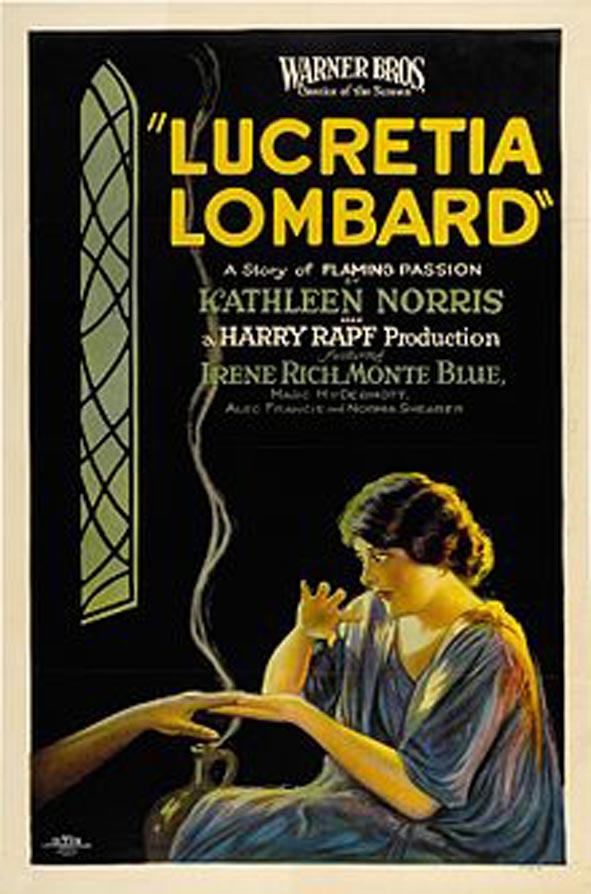
A definitive 6.1/10 rating for a film that redefined the boundaries of cult cinema. Lucretia Lombard remains a cornerstone of transgressive art.
When *Lucretia Lombard* first flickered onto the screen, its austere black‑and‑white palette seemed a perfect canvas for the tangled emotions it sought to portray. The film, anchored by Florence Lawrence’s luminous presence, navigates the treacherous terrain of a love triangle with a restraint that feels both period‑appropriate and timeless. The director’s choice to let silence speak louder than dialogue invites the viewer to decode meaning from a choreography of glances, the rustle of fabric, and the subtle shifting of light across a dimly lit parlor.
Lawrence, often hailed as "The First Movie Star," brings a dignified gravitas to the role of Lucretia, the woman bound by engagement to a respectable yet emotionally distant suitor, portrayed by John Roche. Lawrence’s performance is a study in restraint; a single raised eyebrow conveys more than a soliloquy ever could. Roche, meanwhile, embodies the archetype of early twentieth‑century propriety, his posture rigid, his smile measured—an embodiment of societal expectations that loom over the narrative like a looming edifice.
The third vertex of this triangular configuration is embodied by the ethereal Irene Rich, whose character—though unnamed in the intertitles—radiates a magnetic vitality that threatens to upend the fragile equilibrium. Rich’s movements are deliberately languid, her eyes perpetually half‑closed, suggesting a world beyond the confines of the protagonist’s prescribed path. Alec B. Francis and Marc McDermott provide a sturdy supporting framework, their seasoned gravitas lending depth to the familial and social pressures that press upon the central trio.
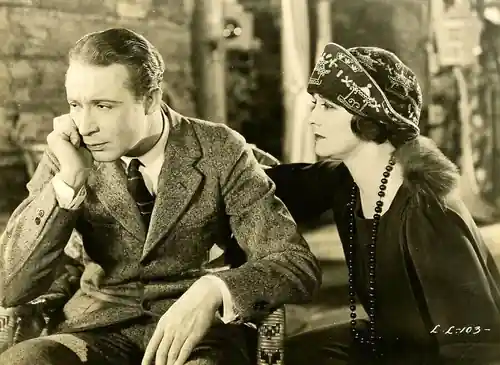
The film’s narrative architecture is deceptively simple: a man, newly engaged, encounters a woman whose allure ignites a dormant yearning. Yet within this simplicity lies a sophisticated exploration of fidelity, identity, and the performative nature of social contracts. The screenplay, co‑crafted by Sada Cowan, Kathleen Norris, and Bertram Millhauser, eschews melodramatic excess in favor of a measured pacing that mirrors the protagonist’s internal deliberations.
Thematically, *Lucretia Lombard* echoes the moral quandaries presented in contemporaneous works such as The Master Man and The Foundling, yet it distinguishes itself by focusing on the psychological rather than the external conflict. The film’s silent era constraints become a virtue, compelling the audience to inhabit the silences and infer the unspoken.
Visually, the film is a masterclass in chiaroscuro. The cinematographer employs stark contrasts to delineate emotional states: bright, diffused lighting bathes Lucretia’s domestic scenes, evoking a sense of safety and conformity, while shadow‑laden compositions accompany the clandestine meetings between the male protagonist and his new love interest. A recurring motif—an open window framing a distant horizon—serves as a metaphor for the yearning for freedom beyond societal shackles.
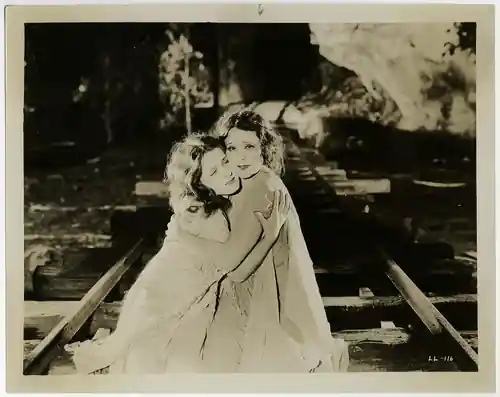
The use of deep focus during pivotal moments—particularly the scene where the engaged man hesitates at the threshold of a garden—allows the audience to simultaneously observe his conflicted expression and the lush, untamed foliage beyond, symbolizing the tension between cultivated order and wild desire.
While *Lucretia Lombard* is a silent film, the accompanying score—often performed live during original screenings—plays a crucial role in shaping emotional texture. The orchestration oscillates between plaintive strings during moments of introspection and brisk, percussive motifs when the narrative accelerates toward its climax. This dynamic auditory backdrop, though absent from the modern viewing experience, is reconstructed in contemporary restorations, allowing present‑day audiences to appreciate the film’s intended affective cadence.
When juxtaposed with Infidelity, another silent drama that interrogates marital fidelity, *Lucretia Lombard* distinguishes itself through its subtlety. Where *Infidelity* opts for overt melodrama, Lombard’s restraint invites a more contemplative engagement. Similarly, the political undercurrents of The Fall of a Nation contrast sharply with Lombard’s intimate focus, yet both films share a preoccupation with the individual’s place within larger societal structures.
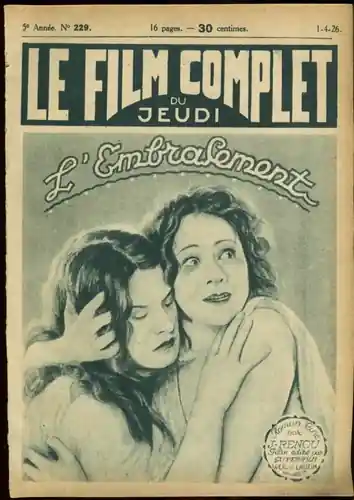
The central male character’s arc is rendered with a delicate balance of vulnerability and stoicism. His initial confidence, evident in the firm handshake during his engagement ceremony, gradually erodes as his encounters with the enigmatic woman reveal a yearning for authenticity. This transformation is underscored by subtle shifts in his posture—shoulders gradually slump, gaze softens—signaling an internal surrender to emotion.
Lucretia, portrayed by Lawrence, evolves from a figure of composure to one of quiet desperation. In the scene where she discovers a love letter, Lawrence’s trembling hands and the faint tremor in her voice (captured through intertitles) convey a cascade of emotions without resorting to melodramatic exaggeration. Her ultimate decision—to confront her fiancé rather than retreat—marks a pivotal moment of agency that resonates with contemporary feminist readings of early cinema.
Irene Rich’s character, though less defined by name, functions as a catalyst for the narrative’s emotional upheaval. Her portrayal is imbued with an almost otherworldly allure; she is simultaneously a temptress and a mirror reflecting the protagonist’s suppressed desires. The chemistry between Rich and Roche is palpable, each shared glance a silent dialogue that amplifies the film’s thematic tension.
The production design meticulously recreates early 1920s domestic interiors, from ornate mantelpieces to patterned wallpapers, grounding the story in a recognizable historical milieu. The attention to detail extends to costume design, where Lawrence’s flowing gowns contrast sharply with the more austere attire of her fiancé, visually reinforcing their divergent emotional landscapes.
The film’s pacing, measured yet purposeful, mirrors the protagonist’s internal deliberations. The first act establishes the engagement with a series of ceremonious tableaux, the second act introduces the inciting incident—the encounter with the mysterious woman—through a series of intercut scenes that juxtapose domestic tranquility with the allure of the unknown. The final act converges these threads, culminating in a climactic confrontation that resolves the love triangle without resorting to contrived melodrama.
Although *Lucretia Lombard* did not achieve the box‑office heights of contemporaneous epics, its nuanced exploration of romantic fidelity has earned it a modest cult following among silent film aficionados. The film’s restoration, spearheaded by the National Film Preservation Board, has facilitated scholarly reevaluation, positioning it as a touchstone for discussions on gender dynamics and emotional authenticity in early cinema.
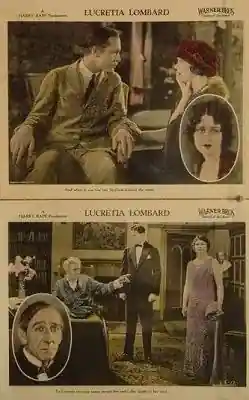
Modern critics often cite the film when analyzing the evolution of love‑triangle tropes, noting its departure from the overt moralizing of earlier works. Its influence can be traced in later melodramas that favor psychological complexity over didactic resolution.
*Lucretia Lombard* stands as a testament to the potency of restraint. Its reliance on visual storytelling, nuanced performances, and a meticulously crafted mise‑en‑scene creates an immersive experience that transcends its silent format. The film invites repeated viewings, each revealing new layers of subtext hidden within the interplay of light, shadow, and silent gesture.
For scholars, cinephiles, and casual viewers alike, the film offers a rich tapestry of emotional resonance, inviting contemplation of the timeless question: when the heart diverges from duty, which path yields true fulfillment? The answer, rendered in shades of black, white, and the occasional flicker of orange‑tinged hope, remains as compelling today as it was nearly a century ago.
IMDb 5.9
1926
Community
Log in to comment.