DbcultAccessing Vault...
Cult Review
Senior Film Conservator
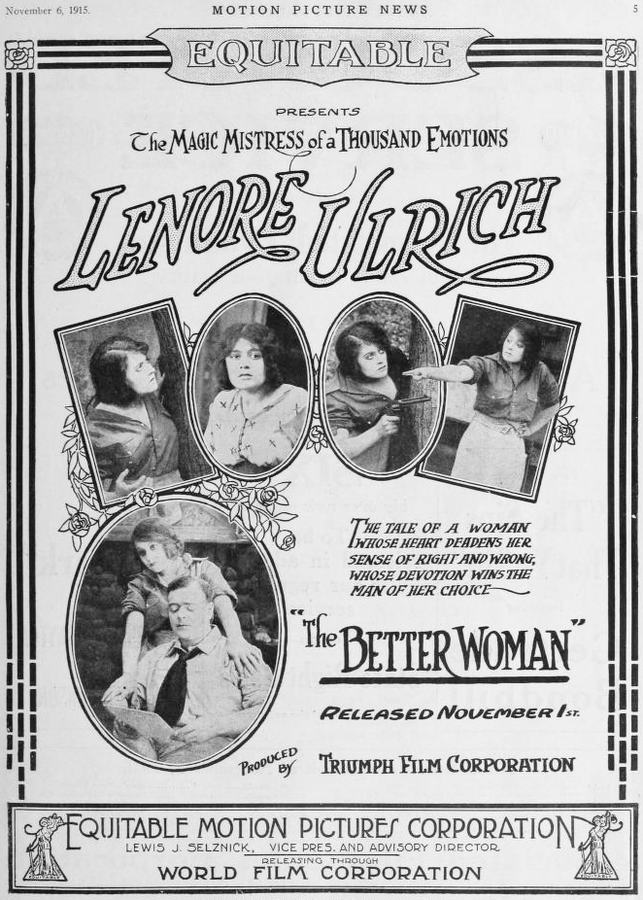
Richard Campbell’s 1915 one-reel whirlwind The Better Woman arrives like a brittle love letter fished from a derelict hotel drawer—its edges singed, ink blurred, yet throbbing with a pulse modern romances rarely hazard to feel. From the first flicker of celluloid we inhabit a frontier boomtown whose main street is less a thoroughfare than a psychological corridor: saloon, telegraph office, half-built trestle, each structure mirroring the flimsy moral scaffolding of its inhabitants.
Kate Tripler—Lenore Ulric in a performance pitched between feral kitten and wounded hawk—skitters across her father’s lobby, polishing spittoons while memorizing the cadence of every boot heel, hungry for a life larger than the scent of kerosene and stale whiskey. Enter Frank Barclay (Lowell Sherman), civil engineer, spine straight as a T-square, carrying the invisible blueprints of a life already designed elsewhere. Campbell’s screenplay refuses the balm of exposition: we intuit, rather than hear, that Frank’s heart belongs to Aline Webster, a woman who exists first as a cameo photograph—an emblem of Eastern perfection framed in tortoiseshell.
The inciting accident is not a gunshot or a stolen kiss but a typographical hiccup: a newspaper misprint announcing the wrong nuptials. The mistake ricochets through the narrative like a stray bullet, lodging finally in Kate’s conscience. Her subsequent interception and destruction of the corrective letter is the single act that transmutes her from lovesick girl to tragic architect of her own downfall. Campbell stages the moment in a dim mailroom, shadows striping Kate’s face like prison bars, the camera lingering on her thumb slowly, almost erotically, tearing the envelope—a miniature crime scene.
What follows is a shotgun wedding sans shotgun, only the pneumatic wheeze of a justice of the peace too eager to clock out for supper. Frank, sodden with contraband gin, becomes the embodiment of every audience fear: the decent man undone by rumor, capable of cruelty when his self-image is bruised. Their vows are exchanged beneath a moth-eaten bunting left over from a territorial celebration; even the décor mocks the sanctity of the moment.
Campbell’s genius lies in refusing to grant the couple a redemptive honeymoon. The morning-after hangover is filmed in a brutally static two-shot: Frank’s horror, Kate’s dawning shame, the camera immobile as if to say look, audience, at what rash contracts we sign when pride is pricked. Kate’s whispered “I thought you’d grow to love me” lands like a rusted spur in the viewer’s gut; Ulric’s quivering chin becomes an emotional seismograph registering an earthquake of naïveté.
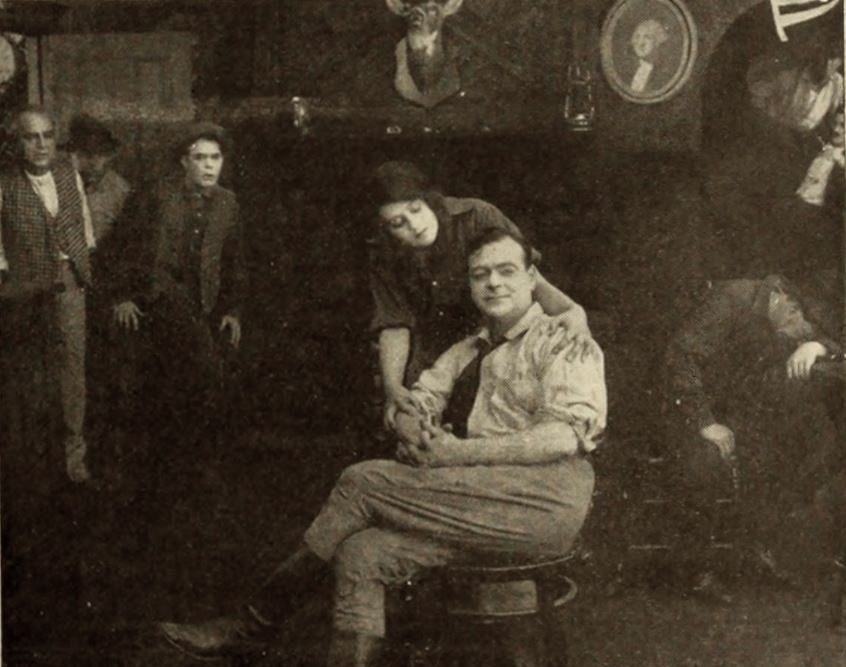
When the railroad finally ferries Aline and Alicia Webster westward, the film’s visual palette bifurcates. Aline’s ensembles—ivory lawn, Paris lace, a parasol the color of bleached bone—bleed luminescence against the umber grit of the campsite. Kate, relegated to calico and apron, becomes a study in chiaroscuro, her shadow longer than her prospects. Yet the screenplay slyly inverts the audience’s allegiance: Aline’s first on-screen act is to recoil from a laborer’s muddy handshake, a flinch so instinctive it damns her refinement as sterile cowardice.
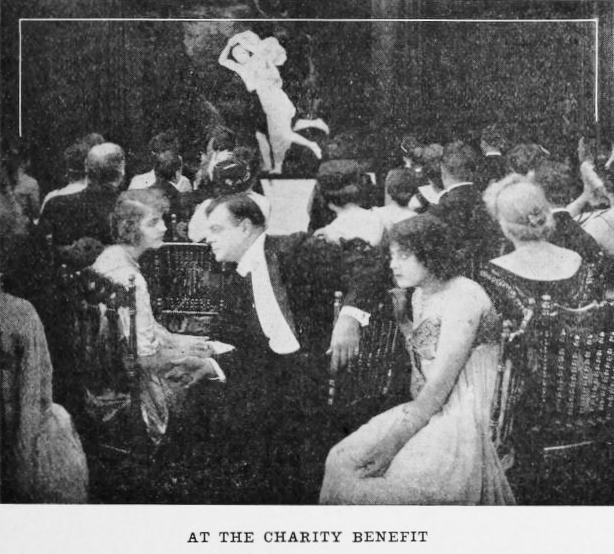
Campbell uses spatial dynamics to moral effect. During the garden party—an absurd transplantation of Gilded Age ritual to a frontier dustbowl—Kate is framed behind lattice, literally caged by the social lattice she cannot penetrate. Aline commands the foreground, yet the camera’s shallow depth of field renders her porcelain features as brittle as egg-shell, foreshadowing the brittleness of her courage when dynamite later hisses.
The third act detonates—literally—amid a labor strike. Whereas Germinal; or, The Toll of Labor wallows in the sorrow of working-class exploitation, The Better Woman weaponizes the uprising into a crucible of character. Frank’s managerial instincts clash with his nascent empathy; he straddles the bridge’s catwalk like a colossus caught between capital and conscience. Meanwhile Aline’s shriek at the first whiff of dynamite propels her into a horse trough—an ignominious baptism—while Kate strides through cordite smoke, shawl aflame, to warn the nightshift. Ulric’s eyes in this sequence are a silent film masterclass: not wild heroine valor but a calculated ferocity, the look of a woman who has already lost everything and thus has zero tolerance for further loss.
The climactic explosion sunders both bridge and subtext. As timbers rain like Lucifer’s pick-up-sticks, Kate crawls toward Frank, blood caking her cheek, and gasps out the truth about the intercepted letter. The confession is shot from an upward angle—Kate supine, the camera peering down as if God himself is auditing her contrition. Frank’s recognition is not verbal but optical: a match cut shows his gaze sliding from Aline (hysterical, unbruised) to Kate (broken, luminous). In that splice, the moral ledger flips; the better woman is no longer the one with the finest lineage but the one who dared bleed for principle.
Lenore Ulric, later a darling of Broadway’s The Harem, here wields her exotic visage—high cheekbones, feline eyes—as emotional semaphore. She modulates between comic awkwardness (a tipsy two-step with Jim Travers) and tragic gravitas without ever rupturing credibility. Lowell Sherman, predestined to become the suave villain of Springtime, gifts Frank a stiffness that gradually liquefies into vulnerability; watch how his hands—initially clasped behind back like a surveying tripod—later flutter uselessly at his sides when Kate lies injured.
Cinematographer Charles Hutchison—also essaying the role of Jim Travers—bathes the frontier in over-exposed whites, turning the landscape into a photographic negative of civilization. The railroad bridge, half-completed, recurs as a visual motif: a spine stretching toward modernity yet terminally fractured. Compare this to the jungle vine lattice of The Mysterious Man of the Jungle; both films understand that architecture exteriorizes psyche.
Modern viewers might bristle at Kate’s self-flagellating declaration that her punishment is ended, yet within 1915’s cinematic grammar this is radical self-authorship. She neither dies à la The Fighting Hope’s fallen maiden nor marches into the sunset in passive forgiveness. Instead she engineers her own absolution, walks literally through fire, and emerges as arbiter of her future. The film’s title, initially sounding like a catty value judgment, morphs into a meditation on moral evolution: betterment is not comparative but iterative.
Though the original score is lost, contemporary exhibitors likely leaned on Hearts and Flowers for Kate’s plaintive moments and the gallop from William Tell for the riot. A 2023 restoration (UCLA, 2K) commissioned a new cue by Aleksandra Vrebalov that interpolates pump-organ dissonance, evoking the spiritual rawness of The Seats of the Mighty.
Place this one-reel marvel beside the Shakespearean pastiche of Loves and Adventures in the Life of Shakespeare and you witness an industry testing the elasticity of narrative form: highbrow literary homage versus low-key psychological realism. The Better Woman lands closer to The Man Who Came Back in its willingness to let flawed women commandeer plot propulsion.
The lone surviving 35mm nitrate print was discovered in a defunct Montana parish archive, water-damaged and riddled with vinegar syndrome. After a 2022 photochemical rescue, the film streams on Kanopy and headlines the Women of the West Blu-ray box set (Kino Lorber, 2024) alongside The Patchwork Girl of Oz and The Bandit of Port Avon. Buy the set; the 2K transfer reveals cigarette burns that resemble stigmata on Kate’s cheek—an artifactual bonus.
The Better Woman is not a pristine museum piece; it is a cracked daguerreotype whose fractures refract the eternal tension between yearning and ethics. Its pleasures lie in micro-gestures: Kate’s fingertips drumming a hotel ledger in 3/4 time, Frank’s Adam’s apple bobbing when he first spies Aline’s parasol, the ash from a striker landing on a marriage certificate like a premonitory smudge. In an era when spectacle inflates to MCU proportions, here is a story that believes a misdelivered envelope can upend universes. Watch it at midnight, lights off, volume zero, and you will hear the celluloid itself whisper: we are none of us better, only becoming.
IMDb 6.4
1925
Community
Log in to comment.