DbcultAccessing Vault...
6.6/10
Senior Film Conservator
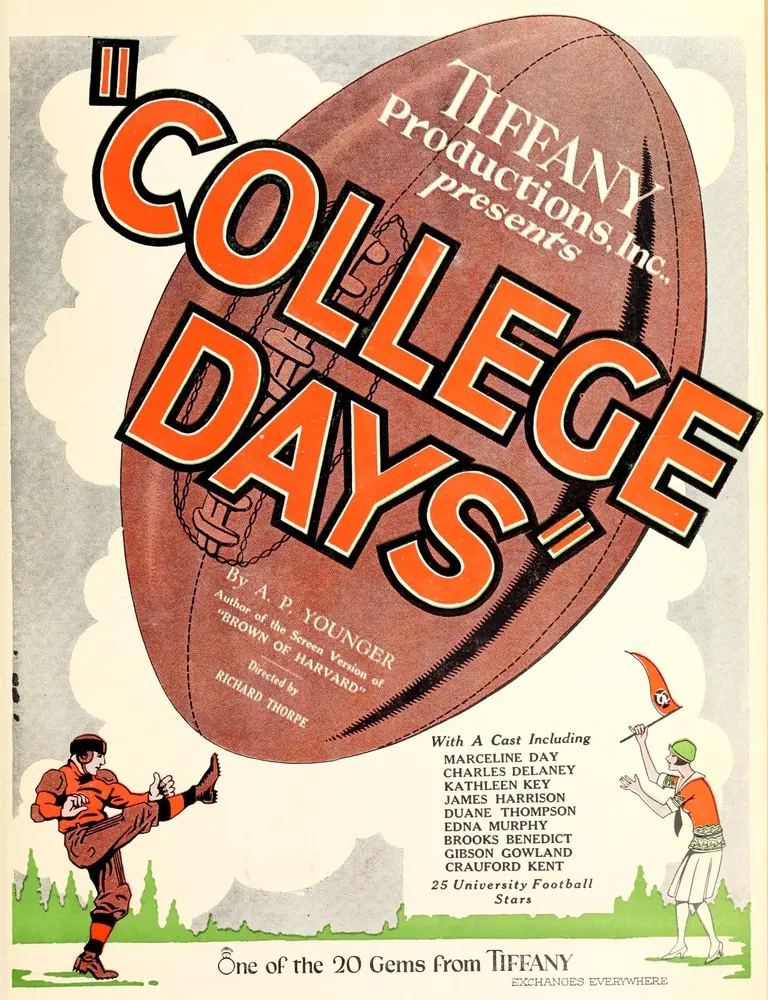
A definitive 6.6/10 rating for a film that redefined the boundaries of cult cinema. College Days remains a cornerstone of transgressive art.
Short answer: Yes, but it’s a product of its time, and its enduring charm lies in its portrayal of youthful love and the constraints of academia. College Days is a gem for film enthusiasts and those interested in a glimpse into early 20th-century American campus life. It’s not for those seeking modern, high-octane entertainment, but for anyone curious about the evolution of cinema and the enduring power of classic storytelling.
College Days is a quintessential piece of early 1930s American cinema, and it holds up remarkably well. Its charm lies in its simplicity and the authenticity of its characters. However, it’s a film that requires a bit of patience and an appreciation for the past to fully enjoy.
This film works because of its heartfelt portrayal of young love and the unrelenting pursuit of happiness. The chemistry between Gibson Gowland and Kathleen Key, who play Jim Gordon and Mary Ward, is palpable and genuine. The film’s use of the college setting is both a strength and a limitation—realistic and relatable, but confined by the era’s conventions. The performances by the supporting cast, including Charles Wellesley and Duane Thompson, add depth to the story, making the characters more than just caricatures.
This film fails because it’s hampered by its period-specific humor and dialogue. While the jokes and misunderstandings are amusing for their time, they can come off as stilted and dated to modern audiences. The ending, while satisfying in its own right, feels somewhat rushed and lacks the emotional depth that might have been achieved with more time and development. The film’s pacing can also be a bit uneven, with some scenes dragging on more than necessary, which can detract from the overall flow of the narrative.
You should watch it if you’re a fan of classic cinema, interested in the evolution of film storytelling, or you’re nostalgic for the early days of Hollywood. The film’s charm lies in its simplicity and the strong performances, particularly by Gibson Gowland and Kathleen Key. It’s a film that rewards those willing to suspend disbelief and appreciate the storytelling techniques of the past.
Jim Gordon, the son of a proud and loving father, enters the University of California as a student. On his first day, he meets Mary Ward, a campus coed, and they are immediately drawn to each other. Jim also befriends Larry Powell, his roommate, but his friendship with Larry brings the wrath of Kenneth Slade, who can’t cope with practical jokes. At a campus dance, Jim and Larry attend with Bessie and Phyllis, two vamps, and through a series of romantic complications, Jim tries to convince Mary of his love for her.
Later, Louise successfully waylays Jim on his way from the training field, which disillusions Mary. In a classroom, Jim is reprimanded and physically punished by Professor Maynard, leading to his expulsion. The dean intervenes and reinstates Jim, who plans to join the football squad against Stanford. However, Jim is again in disgrace when he goes to a roadhouse to protect Mary from her jazzy companions and then to assist her after an accident. At the last minute, he is called into the game and his team wins.
The performances in College Days are solid, with Gibson Gowland delivering a heartfelt portrayal of Jim Gordon. His earnestness and vulnerability are palpable, making his journey from a naive freshman to a mature young man relatable. Kathleen Key, as Mary Ward, brings a sense of freshness and warmth to the role, her chemistry with Gowland adding a layer of authenticity to their relationship. The supporting cast, including Charles Wellesley and Duane Thompson, also contribute to the film’s charm, adding depth and nuance to their respective characters.
Under the direction of Andrew Percival Younger, College Days captures the essence of early 1930s American campus life with a mix of realism and escapism. The cinematography by Arthur Edeson is striking, with a focus on the vibrant campus setting and the natural beauty of the surroundings. The use of natural light and the careful framing of scenes enhance the film’s visual appeal, making the campus and its surroundings feel alive and dynamic.
The pacing of College Days is uneven, with some scenes feeling rushed and others lingering longer than necessary. This can detract from the overall flow of the narrative and the emotional impact of certain moments. However, the tone of the film is well-balanced, alternating between the light-heartedness of a campus comedy and the drama of young love and its challenges. The film’s ability to navigate these different tones is a testament to the skill of the director and the cast.
Yes, College Days is worth watching for those interested in the evolution of cinema and the enduring power of classic storytelling. Its charm lies in its simplicity and the strong performances, particularly by Gibson Gowland and Kathleen Key. It’s a film that rewards those willing to suspend disbelief and appreciate the storytelling techniques of the past. However, it’s not for those seeking modern, high-octane entertainment.
Pros:
College Days is a classic piece of early 1930s American cinema that holds up remarkably well. Its charm lies in its simplicity and the strong performances, particularly by Gibson Gowland and Kathleen Key. It’s a film that rewards those willing to suspend disbelief and appreciate the storytelling techniques of the past. However, it’s not for those seeking modern, high-octane entertainment. If you’re a fan of classic cinema or interested in the evolution of film storytelling, College Days is a must-watch.
IMDb 5.9
1922
Community
Log in to comment.