DbcultAccessing Vault...
Cult Review
Senior Film Conservator
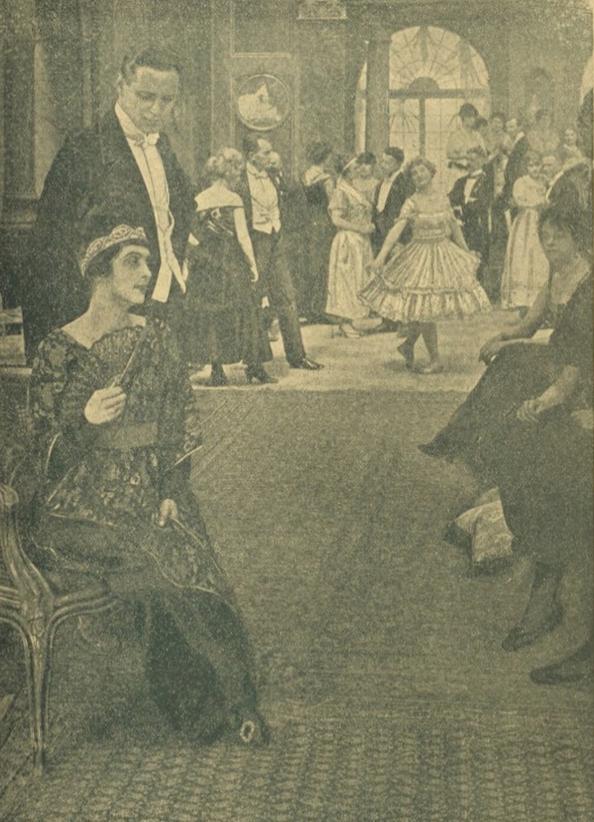
The first time Colomba tilts her cigarette holder, the smoke writes a cursive maybe across the screen—an omen that every lover here will pay in installments of marrow.
There are films that narrate; Colomba perfumes the air until narrative becomes a side effect. Co-written by star Erna Morena and scenarist Emil Rameau, this 1923 German curio weaponizes glamour the way Chaplin weaponized slapstick—turning desire into geopolitics in a republic already hemorrhaging faith. Morena, statuesque even when seated, understands that a femme fatale is not a woman but a weather system: she fronts the film like a thunderhead promising velvet catastrophe.
Plot synopses feel obscene for a picture that treats story as lingerie—something to be slipped off, balled up, forgotten under a chaise.
Still, scaffolding helps. Colomba, a widow whose mourning veils are suspiciously diaphanous, arrives in a resort town where regiments of the bankrupt elite practice the art of looking occupied. She needs no diamonds; she mines the anticipation of diamonds. One by one she harvests the men: a brittle major (Conrad Veidt) who treats gallantry like trench warfare; a jurist (Alfred Abel) clutching his rectitude the way toddlers clutch blankets; a doctor (Werner Krauss) who mistakes pathology for seduction. Each believes himself the hunter; each ends up stuffed and mounted in her shadowbox of sighs.
Director Erna Morena (yes, she wore both crowns) shoots seduction as a contagion. In one brazen tableau, the camera tracks across a ballroom where every mirror has been angled to multiply Colomba into infinity—an army of possible ruin. The edit never blinks; instead it breathes, inhaling cigar haze, exhaling the rustle of taffeta. Silent cinema seldom felt this acoustic.
Germany 1923: hyperinflation turns wallets into origami, street fights out-program the cabarets. Against such rot, Colomba’s baroque cruelty arrives like bespoke anesthesia. She offers catastrophe with a manicure—an upgrade from the raw doom outside. Audiences, pockets full of worthless marks, could at least purchase the fantasy that someone, somewhere, was in control of the swindle.
Compare her to the heroines of The Man Hater or The Deciding Kiss: those girls still bothered with moral ledgers. Colomba keeps no books; she issues receipts written in heartbeats. The film’s genius lies in never judging her. Instead it trains the viewer to anticipate the next swish of her train with the Pavlovian hunger of a dog drooling for poisoned steak.
Erna Morena operates at the rare altitude where actor and auteur combust into myth. Watch the sequence in which she feigns tears: a single droplet slides, yet her pupils glitter like fresh bullets. The tear is concession; the gaze, conquest. She weaponizes stillness the way pickpockets weaponize crowds. Co-stars orbit her like iron filings sensing a magnet. Even Conrad Veidt, monarch of the cadaverous smirk, seems to thin out when she enters the frame—his cheekbones sharpening in deference.
Alfred Abel, usually the embodiment of bourgeois rectitude (see Diplomacy), here lets his glances tremble like tuning forks. When Colomba brushes past him, the man’s starched collar appears to wilt in real time—a special effect achieved only by performance.
Cinematographer Theodor Sparkuhl (uncredited but identifiable by his taste for chiaroscuro sharp enough to shave with) drapes sets in venetian-blind shadows that slice faces into cubist desire. Light is never neutral; it sides with Colomba, haloing her nape while plunging rivals into ink. The palette, hand-tinted for prestige prints, favors bruised violets and arterial oranges—colors you taste before you see.
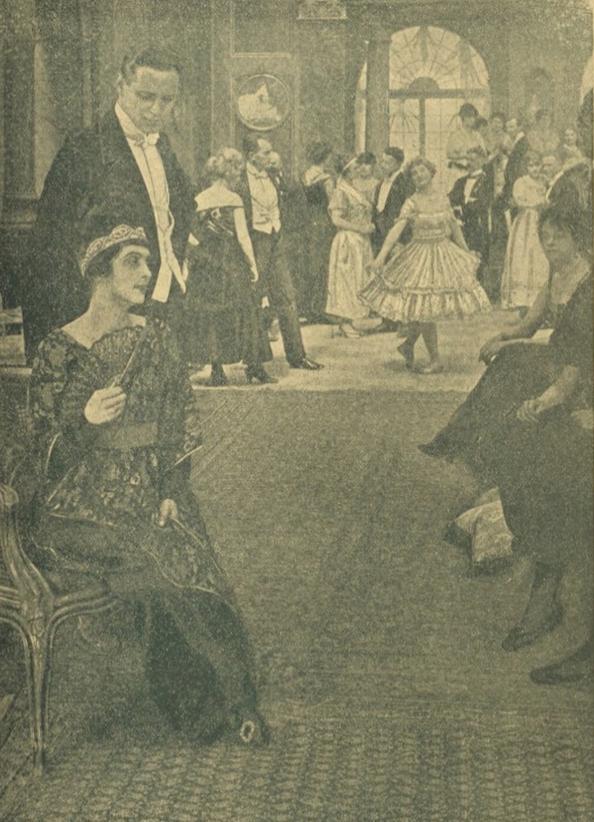
Meanwhile, the intertitles—often a weak link in silents—here resemble ransom notes assembled from Baudelaire. Example: “He kissed her glove and discovered the taste of his own obsolescence.” Such lines flirt with purple, yet in a film devoted to the narcotic of surface, linguistic excess feels apt.
Though released sans score, modern restorations often accompany Colomba with a tango that collapses into dissonance—mirroring the republic’s choreography of collapse. Viewers today, spoiled by talkie exposition, may need recalibration: the film’s grammar is glance, gesture, gaslight. Blink and you’ll miss the moment Veidt’s officer registers betrayal—nothing more than a tendon flickering beneath a glove.
This austerity pays dividends. When the climactic duel occurs—not with rapiers but with a single hand resting on a shoulder strap—the silence detonates louder than any MGM cannonade.
Post-war critics, drunk on second-wave theory, tried to reclaim Colomba as proto-feminist avenger. The argument: she confiscates patriarchal tools—gaze, purse-string, narrative agency—and reforges them into scalpels. Yet the film resists such tidy grafts. Colomba wields power not to dismantle the cage but to upholster it in velvet. Her triumph is individual, not systemic; other women in the film—Maria Forescu’s gypsy seer, Hilde Garden’s ingénue—end up collateral damage. If there is a political pulse, it is nihilist rather than egalitarian: the spectacle of a society so hollow that even its mirages devour.
Still, Morena’s authorial position complicates things. By co-writing and producing, she enacted in life the sovereignty her character flaunts onscreen—a Möbius strip of art and livelihood that feels refreshingly modern in an era when too many actresses were props with pulse.
Stack Colomba beside Die tolle Heirat von Laló and you see two diverging alleys of Weimar wit: Laló satirizes marriage through carnival chaos; Colomba strips the institution to bone and polishes it like silver. Against The Serpent, another Morena vehicle, Colomba feels leaner, venom distilled rather than decanted. The earlier film sprawls; this one coils.
If you crave moral redemption, consult Wee Lady Betty or His Wife's Good Name, where virtue ultimately cashes its check. Colomba’s universe honors no such escrow.
For decades the film slumbered in an Amsterdam archive, a single nitrate print foxed like old champagne. A 2018 4K restoration, funded by the Deutsche Kinemathek, salvages 93% of the original runtime; lost scenes are represented via production stills overlaid with lip-reader transcriptions of the script—an approach both scholarly and ghostly. The tinting follows 1920s lab notes, achieving hues that seem to bruise the screen. Streamers cinephiliac enough to carry silent rarities occasionally rotate it; physical media remains forthcoming, though rumors swirl of a Criterion box pairing Colomba with Seven Deadly Sins and Chained to the Past.
Today, when the term femme fatale is slapped on any character with eyeliner and agenda, Morena’s creation feels radical in its refusal to explain. No childhood trauma, no spurned lover—just the immaculate logic of appetite. She seduces not despite the void but through it, proving that the most lethal weapon is not a body but the promise
Watch it at midnight, lights killed, phone exiled. Let the flicker infect. And when the last card reads “Fin”, notice how the word feels less like closure and more like a door left ajar—for you to follow, for her to return.
—Review by Celluloid S. Cortex, updated 2024
IMDb —
1916
Community
Log in to comment.