DbcultAccessing Vault...
Cult Review
Senior Film Conservator
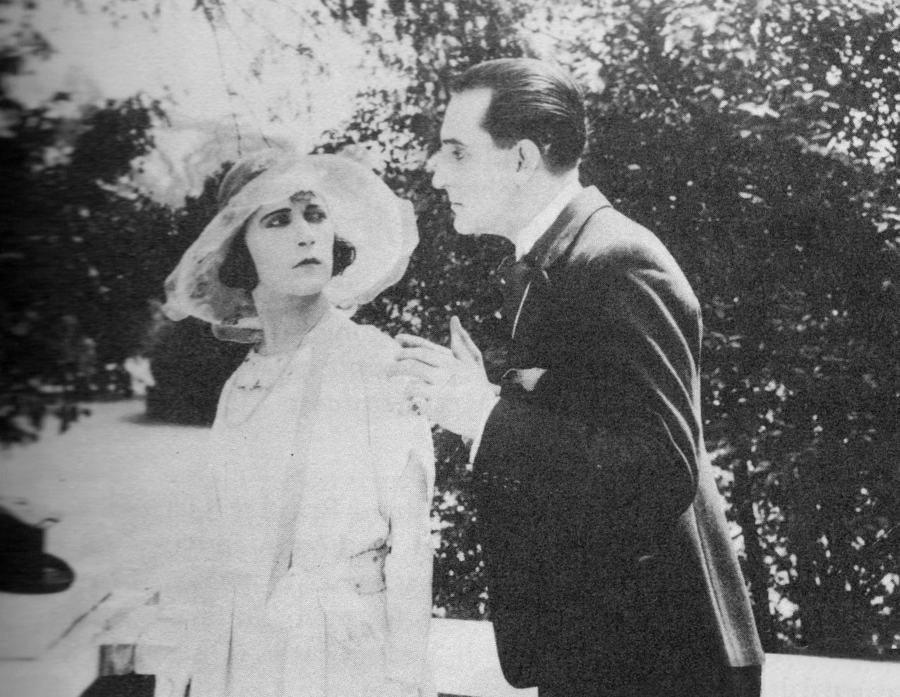
Imagine celluloid as a vineyard: every frame a trellis, every shadow a curling vine. In The Fruitful Vine those vines are barbed, dripping crimson even though the print is black-and-white. The film’s very title—biblical, fecund, deceptive—promises abundance yet delivers a harvest of thorns.
Basil Rathbone, still years shy of twirling villainous moustaches for Universal, here embodies the autumnal knight Sir Gerard: cheekbones like escarpments, eyes hooded by regret, voiceless yet roaring through gesture. The silence of the medium becomes his armor—each creak of gauntlet on stone, each stifled exhalation, amplified by the absence of spoken syllables. You hear the rustle of his surcoat even when the orchestra swells, because Rathbone sells corporeal fatigue the way a spent candle sells smoke.
“A covenant sealed in deathbed sweat cannot flower in a bed of living shame.”
Fred Raynham’s Don Lucio arrives as antithesis: silk where Rathbone is mail, teeth flashing like scimitars, a stride that bruises flagstones with swagger. The camera, hungry for contrast, lingers on the Don’s gloved hand as it brushes a goblet stem—an erotic overture that predates Valentino’s tango by twelve months. British censors of 1921 clipped several close-ups, fearing southern-European seduction might leap from the screen and pollinate repressed London wives. Those lost meters survive only in rumor, like missing verses from a decadent poem.
Director Howard Gordon, adapting Robert Hichens’ florid novella, understands that the true protagonist is neither husband nor lover but the womb—its economy, its treachery, its political liquidity. Irene Rooke’s Lady Rowena—lips quivering between girlhood and maternity—navigates corridors thick with ancestral dust, her body a relay baton passed from sire to surrogate. Notice how Gordon frames her against vaulted windows: the vertical stone bars echo the ribcage, the stained-glass light spilling like internal organs seen through translucent skin. A mise-en-abyme of fertility ensnared in feudal iron.
Why The Fruitful Vine? Scripture deploys the phrase to denote Israel’s proliferating tribes; here it curdles into bitter irony. The only fruit Rowena bears is grafted, not rooted. Hichens—whose prior Greatest Gift luxuriated in saccharine redemption—now savors the sourness of compromised legacies. The vine is fruitful, yes, but the fruit is poison for the patriarch who must swallow paternity like a dram of absinthe: hallucinatory, green-tinged, ultimately maddening.
Compare this with the continental erotics of Filibus where gender itself is a costume to be doffed mid-air. In Vine the masquerade is subtler: the knight’s honor becomes a veil, the Don’s exoticism a passport, Rowena’s chastity a deed of conveyance. All masks stay soldered to the flesh; only the infant’s blood will unmask them decades hence, long after the fade-out.
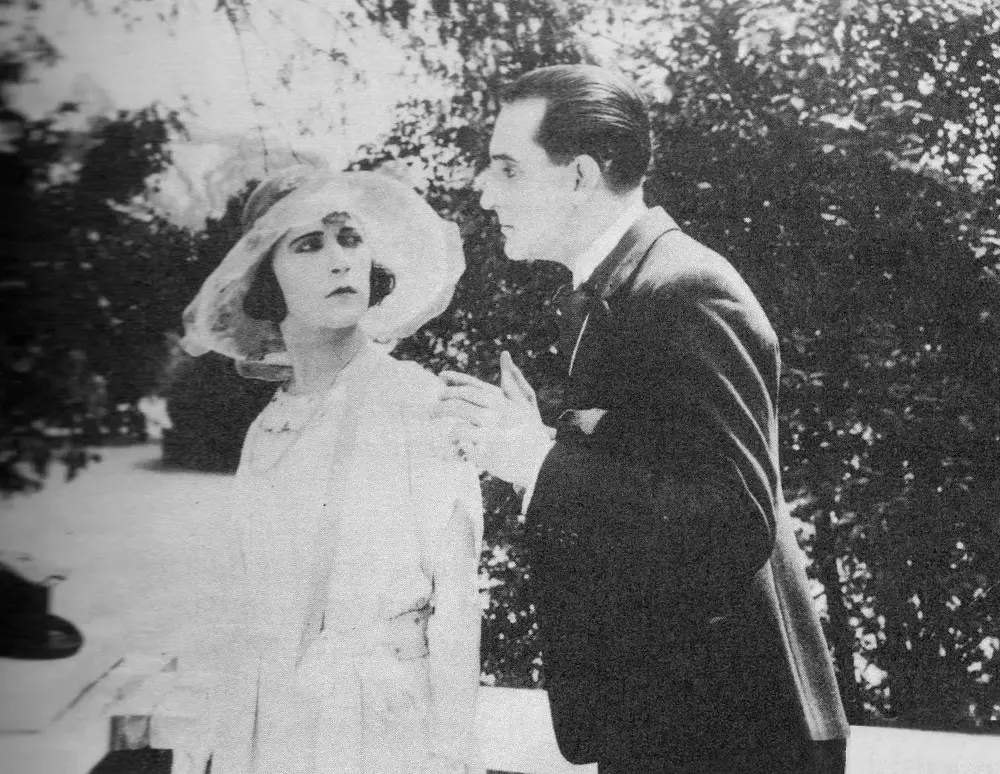
Cinematographer Teddy Arundell—later renowned for documentary aerials in Sky Hunters—here pioneers chiaroscuro that prefigures German Expressionism. Note the sequence where torchlight carves Rathbone’s profile against a tapestry of unicorns: the mythical beast, symbol of purity, becomes witness to contractual defilement. Shadows sprout antlers; the knight’s silhouette sports cuckold’s horns without need of prosthetics. Silent cinema excels at such hieroglyphs, and Arundell inscribes them with surgical precision.
ColorTint Technology of the 1920s bathed certain reels in umber for interiors, cerulean for night exteriors. Restored prints screened at Pordenone reveal Rowena’s bed-linen tinted bruise-purple—a chromatic confession beneath chaste black-and-white.
Modern audiences, spoiled by talkie exposition, may overlook how silent film dialogue intertitles operate like hammered gold leaf—scarce, precious, deliberately fragmentary. Gordon’s intertitles, calligraphed in uncial script, read like breviary marginalia. When Rowena whispers “I will be fruitful,” the words appear over an iris-shot of her abdomen, the circle closing like a noose. Musicologists reconstruct the original orchestral cues: a Wagner quotation (Parsifal) twisted into minor chords, horns drooping like spent lilies. Each leitmotif recycles the same four-note fall—an aural analogue to generational decline.
Paulette del Baye as the court gossip supplies Brechtian alienation: she addresses camera, breaking the fourth wall with eyebrow arcs that indict our voyeurism. Valia’s wet-nurse, wordless yet unforgettable, conveys peasant pragmatism—she knows the calculus of semen and soil, ignores heraldic delusions. Together they form a Greek chorus sans text, commenting through juxtapositions of body weight, of cracked knuckles, of laughter like crockery breaking.
Rathbone’s pinnacle arrives not in swordplay but in a stationary medium-shot: learning the infant’s hair will not darken to Saxon brown, his pupils dilate—a abyss widening within pale irises. No theatrical hand-to-heart, mere ocular surrender. The moment lasts three seconds yet perforates memory like an acid splash.
Feminist readings blossom effortlessly. Rowena’s agency is simultaneously affirmed and annulled: she chooses the Don for dynastic duty, yet that choice transpires within a marketplace designed by men. Her body becomes a shipping lane where foreign capital docks. Compare Woman and Wife (1918) where the ring itself is fetish; here the entire reproductive tract is mortgaged. The film anticips Kate Manne’s theory of “himpathy”—our culture’s reflex to empathize with powerful men’s sexual humiliation rather than with women’s systemic coercion. Gordon, perhaps unwittingly, stages that asymmetry in stone halls where echo carries a man’s sob farther than a woman’s consent.
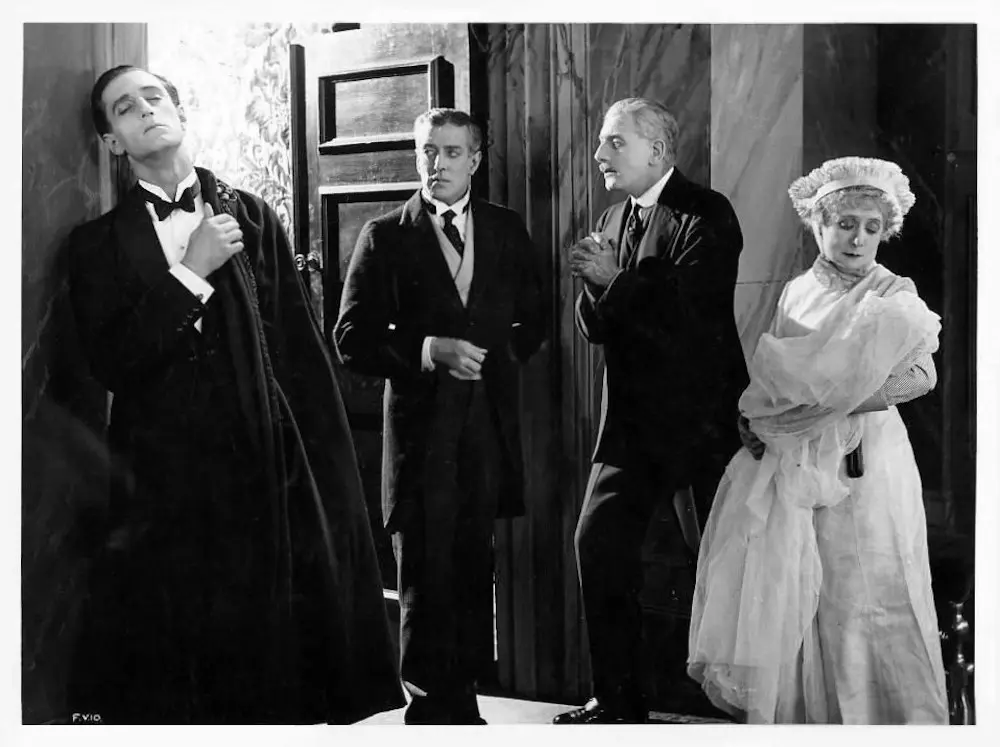
Editors Mary Dibley and Peter Dear excise redundancy with scalpel coldness. A match-cut links Rowena’s wedding veil to the infant’s swaddling cloth—one white acre of fabric travels from bride to cradle, implying transaction. The elision of gestational months, achieved via a fade-to-black and fade-up on a cherry tree now fruit-laden, compresses time into metaphor. We leap from conception to nativity without pregnancy’s viscera, because patriarchal narratives care for heirs, not for labor pains.
Upon release The Fruitful Vine outgrossed She in British provinces, scandalizing clergy who sermonized against “continental moral contagion.” Yet intellectuals rallied; the Manchester Guardian hailed it as “a lantern-slide for the subconscious.” In the U.S., Chicago’s censor board trimmed 700 feet, inadvertently crafting a brisker, more elliptical narrative that some modern scholars prefer. The lost footage remains the Holy Grail of archivists; whispers place a lone nitrate reel in a Franciscan monastery near Siena, but negotiations stall over rights.
Contemporary restorations tint each reel according to emotional temperature: amber for shame, cyan for longing, chartreuse (a pale venomous green) for moments of cuckold epiphany. Viewers at Il Cinema Ritrovato reported synesthetic nausea—testament to how color, even monochromatic, can weaponize empathy.
Visconti watched the print in 1946 and borrowed Rathbone’s weary chivalry for Senso; Kubrick screened it privately while prepping Barry Lyndon, appropriating the candlelit diffusion. Even Hitchcock lifted a visual gag—the cuckold’s reflection fractured in a goblet’s curved surface—redeployed in Notorious. Yet influence trails like a perfume: recognizable yet hard to map.
I first encountered Vine on a 9.5 mm Pathé baby reel at university, hand-cranked, the image flickering like moth-wings. The professor warned us the film was “minor.” Minor, perhaps, in duration—barely an hour—but gargantuan in aftertaste. That night I dreamt of corridors carpeted in vine tendrils; each step released grape-sweet sighs, and somewhere a child cried in Italian. The subconscious had been colonized, exactly as the Guardian critic prophesied a century prior.
Revisiting the restored 4 K last autumn, I noticed a detail previously blurred: Rowena’s rosary beads, clenched during the consummation montage, are carved not with saints but with tiny fertile vulvas—folk-fertility talismans. Production designer Robert English smuggled pagan iconography into a Catholic prop, a subversive wink that survives pixelation. Such minutiae remind us that silent cinema, though voiceless, never ceased whispering secrets to those who lean close enough to hear the sprockets sing.
Final Verdict:
A vine-wrapped dagger of a film—thorny, succulent, unforgettable.
IMDb —
1916
Community
Log in to comment.