DbcultAccessing Vault...
Cult Review
Senior Film Conservator
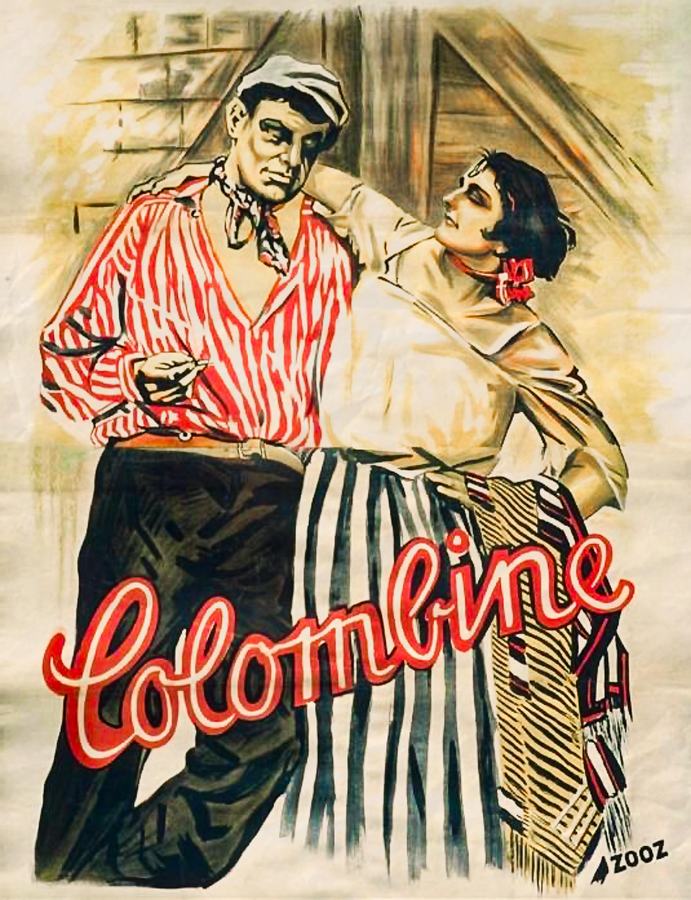
Ah, the silent era! A time when narratives unfolded not through spoken dialogue but through the intricate dance of gesture, expression, and the potent poetry of intertitles. It was an epoch of grand melodrama, stark realism, and often, an almost visceral emotionality that modern cinema sometimes struggles to replicate. Among the many cinematic treasures, some shine brightly in the annals of history, while others, like the enigmatic 'Colombine,' linger in the periphery, their brilliance perhaps obscured by the mists of time or the cruel fate of lost reels. Yet, even in its spectral presence, 'Colombine' demands our attention, particularly for its audacious exploration of ambition, artistic integrity, and the often-brutal realities of the theatrical world.
Directed with a keen eye for human frailty by Jaap Speyer and penned with a nuanced understanding of character by Emil Rameau, 'Colombine' is a masterclass in psychological drama. The film centers on the titular character, portrayed with captivating innocence and burgeoning strength by Margarete Lanner. Lanner's Colombine is not merely a dancer; she is the embodiment of youthful aspiration, a vibrant spirit yearning to transcend the mundane through the transcendent power of performance. Her initial scenes paint a picture of a wide-eyed ingenue, her movements imbued with a delicate grace that hints at untapped potential, yet also betrays a certain naiveté. This duality becomes the very crucible in which her character is forged.
The narrative truly ignites with the introduction of Herr Kroll, the formidable impresario, brought to life with chilling precision by the incomparable Emil Jannings. Jannings, a titan of early cinema, crafts Kroll not as a simplistic villain, but as a complex architect of dreams and despairs. His Kroll is a man of immense power, his gaze capable of both elevating and crushing, his gestures a blend of paternalistic charm and predatory calculation. He sees in Colombine not just talent, but a vessel for his own artistic vision and, more sinisterly, a reflection of his own unchecked desires. The dynamic between Lanner's burgeoning vulnerability and Jannings's seasoned menace creates an electrifying tension that permeates every frame.
Into this volatile mix steps Anton, the earnest, struggling artist, played by Gustav Adolf Semler. Semler imbues Anton with a noble sincerity, a stark contrast to Kroll’s Machiavellian grandeur. Anton represents pure, unadulterated love, a beacon of authenticity in a world increasingly dominated by artifice. His relationship with Colombine is depicted with a tender melancholy, a love story threatened not by external forces of fate, but by the internal machinations of ambition and the corrupting influence of power. The film asks us to ponder: can genuine affection survive the brutal crucible of artistic fame, especially when that fame is brokered by a puppet master like Kroll?
Speyer's direction is particularly noteworthy for its ability to convey profound emotional depth without the crutch of spoken words. He masterfully utilizes close-ups, allowing the subtle shifts in Lanner's eyes or the almost imperceptible tensing of Jannings's jaw to speak volumes. The cinematography, while perhaps not as overtly expressionistic as some of its German contemporaries, nevertheless employs a dramatic interplay of light and shadow, particularly in the theatrical sequences, to underscore the moral ambiguities at play. Backstage scenes are bathed in a stark, almost claustrophobic light, contrasting sharply with the dazzling, deceptive brilliance of the stage itself.
Emil Jannings, as expected, delivers a performance that oscillates between captivating charm and terrifying possessiveness. His portrayal of Kroll is a tour de force, embodying the very essence of a man who believes himself above conventional morality. One cannot help but draw parallels to his later, equally iconic roles where he often played figures of authority brought low by their own hubris. Here, however, Kroll's descent is less about external downfall and more about the internal corruption he inflicts upon others, particularly Colombine. Lanner, in turn, provides a delicate counterpoint, her transformation from hopeful ingénue to world-weary performer being both heartbreaking and utterly convincing. Her scenes with Semler are imbued with a quiet desperation, a palpable longing for a simpler life that seems perpetually just out of reach.
The supporting cast, including Erich Ziegel and Alex Otto, ably flesh out the theatrical milieu, providing a rich tapestry against which the central drama unfolds. Their reactions, often subtle yet impactful, serve to reflect the societal pressures and judgments that weigh heavily on Colombine's choices. Margarete Lanner, though perhaps less universally recognized than Jannings, anchors the film with a performance that is both vulnerable and resilient, making her character's internal struggle deeply resonant.
'Colombine' delves deep into the perennial themes of ambition and the sacrifices demanded by the pursuit of artistic greatness. It's a stark reminder that the glittering facade of the stage often conceals a darker reality of manipulation and exploitation. The film critiques a society where talent can be commodified, and innocence can be bartered for fame. Colombine’s journey is a tragic exploration of how easily one can lose oneself when navigating the treacherous currents of power and desire.
This exploration of a woman caught between two worlds, two loves, and two destinies finds echoes in other cinematic narratives of the era. One might compare Colombine's moral quandaries to the intense emotional struggles seen in films like The Other Woman, where romantic entanglements often lead to profound personal crises. Similarly, the theatrical setting and the struggles of performers bring to mind films like Footlight Maids, though 'Colombine' leans into a far more dramatic and less comedic portrayal of backstage life. The psychological depth of the film also feels akin to the intricate character studies found in something like Tangled Threads, where relationships are complex webs of loyalty and deception.
The contrast between Anton's pure intentions and Kroll's manipulative schemes forms the film's moral backbone. It forces the audience to confront the age-old dilemma: is it better to live a life of integrity and obscurity, or to achieve greatness through compromise? This is a question that resonates far beyond the silent screen, touching upon universal human experiences. The film's conclusion, without giving too much away, is neither wholly triumphant nor utterly despairing, but rather a bittersweet testament to the enduring strength of the human spirit, even when deeply scarred.
While 'Colombine' stands as a powerful work on its own, situating it within the broader cinematic landscape of its time enriches our understanding. The film’s focus on a strong female protagonist navigating societal pressures can be seen in conversation with films like Colomba or even Carmela, la sartina di Montesanto, which also explored the resilience and struggles of women in challenging circumstances. The stark realism in portraying the harshness of life, particularly for those striving for artistic recognition, might also draw a faint line to the social commentary found in films such as What Becomes of the Children?, albeit through a more personal, less overtly societal lens.
The film's exploration of intrigue and moral ambiguity, particularly concerning Kroll's character, shares thematic DNA with thrillers of the era, such as The Intrigue. While 'Colombine' is not a suspense film in the traditional sense, the psychological tension woven into its fabric is undeniably gripping. The emotional intensity, the raw portrayal of passion and betrayal, also finds resonance in universal tales of the heart, much like Heart and Soul, though 'Colombine' presents a far more cynical view of romantic ideals when confronted with stark reality.
Even when considering films with vastly different scales, such as the epic scope of Michael Strogoff or the wartime drama of Hearts of the World, 'Colombine' reminds us that the most profound dramas often unfold within the human heart, regardless of grand backdrops. It eschews external spectacle for internal turmoil, a choice that, in the hands of Speyer and his talented cast, proves incredibly effective.
Perhaps the most enduring legacy of 'Colombine' lies in its unflinching portrayal of the human condition, particularly within the often-glamorized world of performance. It serves as a powerful reminder that behind every curtain, beneath every spotlight, there are individuals grappling with their own moral compasses, their desires, and the often-exorbitant cost of their dreams. The film's power is not diminished by its age; if anything, its silent eloquence amplifies its message, allowing the audience to project their own understanding onto the rich tapestry of emotions presented.
While it may not possess the whimsical charm of a film like Mickey or the exotic allure of A Night in New Arabia, 'Colombine' offers something far more substantial: a raw, honest look at the soul's journey through temptation and disillusionment. It is a film that, despite its potential rarity, deserves to be rediscovered and celebrated for its artistic merit, its compelling performances, and its timeless exploration of the human spirit's resilience and vulnerability.
In a cinematic landscape often dominated by bombast and spectacle, 'Colombine' reminds us of the quiet power of internal drama, the potency of a well-crafted glance, and the enduring resonance of a story told with integrity and passion. It's a testament to the fact that even in silence, a film can scream volumes about the complexities of life and the unyielding pursuit of selfhood amidst a world eager to define it.
Reviewed by a dedicated cinephile.
IMDb 3.6
1929
Community
Log in to comment.