DbcultAccessing Vault...
5.2/10
Senior Film Conservator
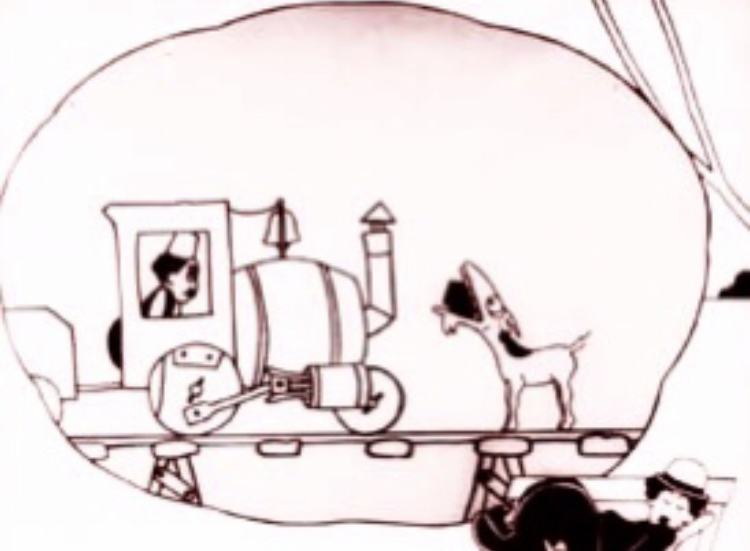
A definitive 5.2/10 rating for a film that redefined the boundaries of cult cinema. Charlie in Turkey remains a cornerstone of transgressive art.
Ah, the silent era! A veritable crucible of cinematic experimentation, where narrative conventions were still being forged, and the very language of film was in its nascent, thrilling stages. Amidst this vibrant, often chaotic landscape, certain archetypes emerged, none perhaps more enduring than the 'Little Tramp,' a character whose very silhouette became synonymous with the burgeoning art form. While Charlie Chaplin remains the undisputed maestro of this persona, the character’s immense popularity inevitably spawned myriad interpretations and imitations. One such fascinating, albeit lesser-known, foray into the world of the wandering figure is the peculiar gem, Charlie in Turkey, featuring Pat Sullivan. This isn't just another silent film; it’s a curious artifact, a dream within a dream, challenging perceptions and offering a glimpse into the collective subconscious of early 20th-century cinema.
At its core, Charlie in Turkey presents a narrative bifurcated between the mundane and the fantastical. We begin with Charlie, a figure instantly recognizable even without Chaplin's direct involvement, embodying the familiar blend of pathos and resilience. His initial setting – a second-hand bookshop – is more than just a backdrop; it's a symbolic gateway. Bookshops, by their very nature, are repositories of stories, dreams, and forgotten histories, making it the perfect catalyst for the extraordinary journey Charlie is about to embark upon. This choice of setting immediately elevates the film beyond simple slapstick, hinting at a more cerebral, introspective experience. It suggests that Charlie's subsequent adventure is not merely an external event but an internal one, sparked by the dusty tomes and untold tales within those walls.
The transition into the dream state is handled with a simplicity characteristic of the era, yet its impact is profound. Suddenly, Charlie is thrust into an exoticized 'Turkey,' a land of veils, mystery, and the legendary Queen of Sheba. This abrupt shift from the prosaic to the poetic allows the film to explore themes of escapism, desire, and the allure of the 'other.' The very act of kidnapping the Queen of Sheba is a grand, almost absurd gesture, a testament to the boundless possibilities within the subconscious. It speaks to a universal human yearning for adventure and a desire to transcend the ordinary. This fantastical abduction, however, isn't without its deeper implications. It taps into a prevalent Orientalist fascination of the time, where the East was often portrayed as a realm of exotic beauty, danger, and unbridled passion, ripe for Western exploration or, in this case, romanticized conquest. One might draw a parallel to how other films of the era, like Barbarous Mexico, attempted to exoticize foreign lands, albeit with different cultural and narrative aims. While Barbarous Mexico might have focused on a more rugged, untamed vision, Charlie in Turkey leans into a romanticized, almost Arabian Nights aesthetic.
Pat Sullivan, in taking on the mantle of Charlie, navigates a challenging tightrope. He must evoke the familiar essence of the character without simply being a mere copy. While Chaplin's inimitable grace and comedic timing are legendary, Sullivan brings his own subtle inflections to the role. His Charlie, in this dream sequence, feels perhaps a touch more bewildered, more overtly a pawn of his own subconscious desires. The physical comedy, though present, is often secondary to the situational irony and the unfolding psychological landscape. Sullivan's portrayal emphasizes the character's vulnerability and his susceptibility to fantasy, making the eventual disillusionment all the more poignant. He captures the essence of the 'wandering figure' – eternally searching, perpetually hopeful, and ultimately, often comically disappointed.
The central dramatic pivot of Charlie in Turkey lies in the unveiling of the 'Queen of Sheba.' The veil itself is a potent symbol, representing mystery, hidden beauty, and the exotic allure of the unknown. For much of the dream, Charlie's actions are driven by the imagined splendor behind this shroud. The audience, too, is invited to participate in this expectation, drawing upon centuries of myth and romanticized imagery associated with the Queen of Sheba. The film masterfully builds this anticipation, a slow burn of curiosity and desire. When the veil is finally lifted, the revelation is not one of breathtaking beauty but of stark, almost comedic, plainness. This subversion is the film’s most powerful statement. It's a direct challenge to the romantic idealization of the 'other' and a commentary on the often-disappointing gap between fantasy and reality.
This moment of truth, where the 'Turkish lady' is revealed to be anything but the fabled Queen, resonates deeply. It's a comedic punchline, certainly, but also a philosophical one. It forces both Charlie and the viewer to confront the constructed nature of their desires and the often-flawed projections placed upon exotic figures. In a way, it echoes themes found in films like Das Modell or The Artist's Model, where the perception of beauty or an idealized image is central, only for reality to often interject with a different truth. While those films might explore the artist's struggle with representation, Charlie in Turkey tackles the individual's struggle with their own romanticized illusions.
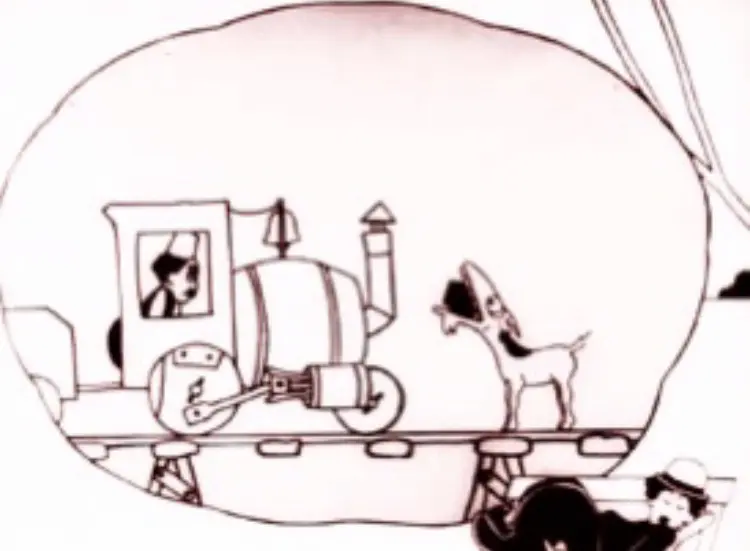
As a product of its era, Charlie in Turkey relies heavily on visual storytelling, a necessity in the absence of synchronized sound. The use of intertitles is economical, allowing the imagery to carry the bulk of the narrative. The film's aesthetic, particularly within the dream sequence, is designed to evoke a sense of the exotic, even if through relatively simple sets and costumes. The pacing, while perhaps slower by modern standards, allows for a deliberate build-up of the dream's atmosphere and the tension leading to the reveal. One can observe how early filmmakers were grappling with conveying complex psychological states through purely visual means. While not as overtly experimental as some later avant-garde pieces, the film's commitment to a sustained dream sequence demonstrates an early willingness to explore non-linear or subjective realities, a nascent form of cinematic surrealism. For context, one might compare its narrative simplicity to films like Where Love Is or Hearts or Diamonds?, which often focused on straightforward romantic or dramatic plots without the psychological layers of Charlie's dream.
The portrayal of 'Turkey' and the 'Turkish lady' in the film is undeniably a product of its time, steeped in the prevailing Orientalist tropes of Western culture. The setting is less an accurate depiction of a real place and more a theatrical backdrop for Western fantasies. The veiled woman, the exotic locale – these elements serve to heighten the sense of otherness and mystery. However, the film's ultimate twist offers a subtle critique of this very gaze. By revealing the 'Queen of Sheba' to be an ordinary woman, it deconstructs the romanticized, often objectifying, lens through which the 'Orient' was viewed. It suggests that the exotic allure often lies more in the imagination of the beholder than in the reality of the beheld. This deconstruction is quite progressive for its time, moving beyond mere spectacle to a commentary on perception. It’s a far cry from the more straightforward adventure narratives like Marvelous Maciste, where exotic locales are often just arenas for heroic deeds, rather than subjects of critical contemplation.
While Charlie in Turkey may not hold the same iconic status as Chaplin's masterpieces, its significance lies in its unique contribution to the silent film canon. It's a testament to the character's pervasive influence and the creative license taken by other filmmakers to explore its potential. The film serves as a fascinating historical document, illustrating how dream sequences and psychological narratives were being integrated into early cinema. It offers valuable insights into the cultural anxieties and fascinations of the period, particularly regarding exoticism and the role of fantasy in everyday life.
Moreover, the film's clever twist ending elevates it beyond simple imitation. It’s a moment of genuine narrative wit, demonstrating that even in the early days of cinema, filmmakers were capable of sophisticated storytelling and thematic depth. It invites viewers to reflect on their own preconceived notions and the power of illusion. In an era when films like The Mystery of the Fatal Pearl and the Sequel focused on intricate plots and suspense, Charlie in Turkey delivers a different kind of mystery – one rooted in perception and subconscious desire.
The film, despite its brevity and the limitations of its production era, leaves a lasting impression. It’s a reminder that silent films were not merely precursors to sound cinema but a complete and complex art form in themselves, capable of profound emotional resonance and intellectual provocation. Pat Sullivan's Charlie, though not the original, contributes to the rich tapestry of this character's cinematic life, offering a distinct flavor to the familiar figure. It’s a film that encourages us to look beyond the surface, to question what we see, and to appreciate the ingenious ways in which early cinema explored the human condition.
In conclusion, Charlie in Turkey stands as a fascinating, often overlooked, entry in the silent film pantheon. Its strength lies not just in its comedic elements, but in its surprisingly nuanced exploration of fantasy, disillusionment, and cultural perception. It's a film that, despite its age, continues to spark thought and discussion about the nature of dreams, the power of expectation, and the enduring allure of cinematic storytelling. For enthusiasts of early cinema, and indeed anyone curious about the evolution of film as an art form, this peculiar Turkish dream of Charlie's is well worth seeking out. It’s a delightful, if slightly melancholic, journey into the imaginative depths of a bygone era, proving that even the simplest of narratives can hold complex truths. Much like the intricate episodic adventures of Beatrice Fairfax Episode 10: Play Ball!, which built suspense through serial revelations, Charlie in Turkey builds its narrative tension towards a singular, impactful unveiling that redefines the entire dream. It’s a silent film that speaks volumes.
IMDb 5.7
1935
Community
Log in to comment.