
DbcultAccessing Vault...
6.8/10
Senior Film Conservator
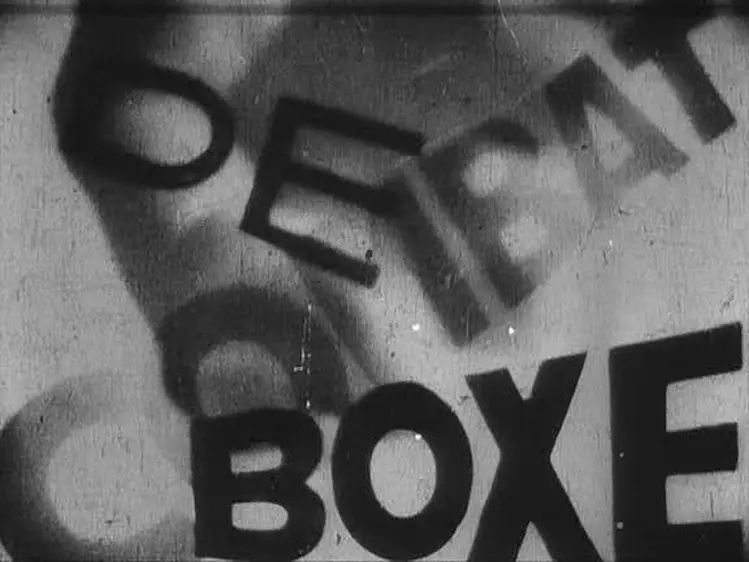
A definitive 6.8/10 rating for a film that redefined the boundaries of cult cinema. Combat de boxe remains a cornerstone of transgressive art.
Short answer: yes, but with significant caveats. Paul Werrie's Combat de boxe is a film less about a boxing match and more about the nascent possibilities of cinema itself, a curious artifact that demands a specific kind of viewership. It’s a work that offers a glimpse into the experimental impulses of early filmmakers, challenging expectations long before such an approach became common.
This film is unequivocally for cinephiles, film historians, and those with a deep appreciation for avant-garde cinema and the foundational years of the moving image. It is decidedly not for audiences seeking conventional narrative, high-octane action, or clear-cut resolutions. If you prefer your cinema neatly packaged and immediately accessible, you will likely find this short perplexing, perhaps even frustrating.
Paul Werrie’s Combat de boxe is a fascinating, if slight, piece of early cinema that bravely steps into the realm of the surreal. Given its minimalist plot — simply 'two boxers face off in a surreal boxing match' — the film's entire identity hinges on its execution of that 'surreal' element. And here, it largely succeeds, not in a grand, special-effects-laden manner, but through subtle directorial choices and a willingness to defy the literal.
This isn't a film that aims to tell a story in the traditional sense; rather, it seeks to evoke a feeling, to present an experience that transcends the mundane. It asks the viewer to engage with the visual language on a deeper level, to question what they are seeing and why.
The term 'surreal' is often thrown around casually, but in the context of Combat de boxe, it feels genuinely earned. Werrie doesn't rely on overt dream logic or fantastical elements; instead, the surrealism emerges from a subtle distortion of reality. The performances by Pierre Bourgeois and André Saint-Germain, alongside Jean Demey and Henri Dupont, are less about embodying characters and more about becoming moving sculptures within a carefully composed frame. Their movements, while ostensibly those of boxers, often possess an exaggerated, almost balletic quality that defies the brutal pragmatism of the sport.
Consider the pacing. It’s deliberate, almost languid, for a boxing match. There isn't the rapid-fire exchange of blows one might expect from a film like The Call of the Game, or the visceral tension of later sports dramas. Instead, Werrie allows moments to breathe, drawing out the anticipation and the aftermath of each interaction. This elongation of time contributes significantly to the dreamlike atmosphere, making the viewer question the very passage of events.
Paul Werrie’s direction is key to the film's unique texture. He understands that simply filming a boxing match isn't enough to achieve 'surrealism'. Instead, he employs subtle techniques. The camera angles, for instance, are not always conventional. There might be a slightly tilted frame, or an unexpected close-up that isolates a gesture, transforming it from a punch into something more symbolic. This deliberate framing forces the audience to look beyond the literal action.
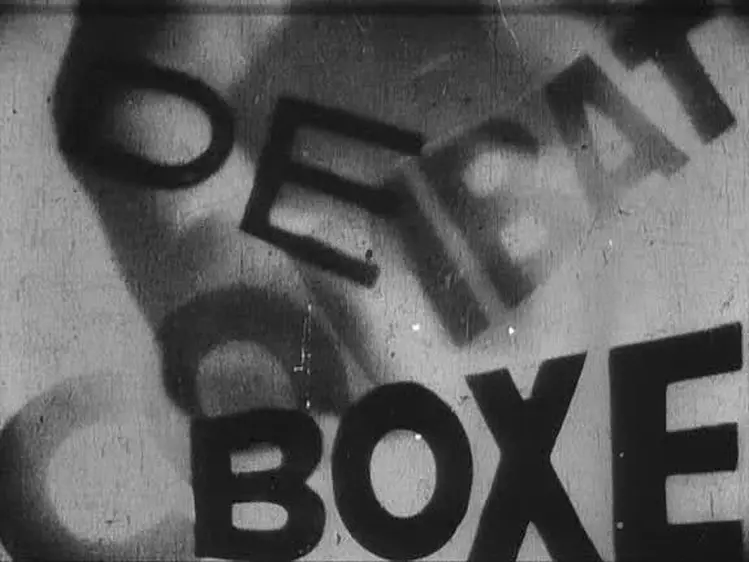
The cinematography, while constrained by the technology of its era, is remarkably effective in conveying the film's tone. The use of light and shadow, often stark and high-contrast, adds to the dramatic, almost theatrical, feel. It's less about capturing realism and more about crafting a mood. One particular shot, where the light seems to fall unevenly on the ring, creates pockets of darkness that enhance the sense of the uncanny, suggesting that not everything is as it appears.
This isn't the polished, technically sophisticated work of a modern blockbuster, nor is it trying to be. It leverages the inherent limitations of early cinema — the grainy texture, the occasional flicker — to its advantage, making them part of the film's aesthetic. It’s a bold artistic statement, especially when compared to more straightforward narrative films of the period like The Complete Life or The Pioneers.
The cast, including Pierre Bourgeois and André Saint-Germain as the primary combatants, contribute significantly to the film’s surreal quality through their unique performances. They don’t perform as typical boxers. There’s an almost ritualistic quality to their movements, a deliberate lack of genuine aggression that suggests a performance rather than a true fight. Their expressions, often stoic or subtly exaggerated, invite interpretation rather than dictating emotion.
This approach to acting is crucial. If the actors had played it straight, the film would have lost its 'surreal' edge, becoming just another early sports short. Instead, they become participants in Werrie's artistic experiment, their bodies serving as conduits for the film's abstract ideas. It's a testament to their understanding, or perhaps Werrie's precise direction, that they manage to convey so much with so little traditional dialogue or character development.
Absolutely, but only for a very specific audience. Combat de boxe is not a film you stumble upon for casual entertainment. It’s an academic curiosity, a piece of cinematic archaeology that illuminates the diverse aspirations of early filmmakers. It offers invaluable insight into how artists, even in cinema's infancy, sought to push boundaries and explore themes beyond simple storytelling. If you are fascinated by the evolution of film language, the birth of experimental cinema, or the historical context of the avant-garde, then yes, it is profoundly worth watching.
However, if your primary interest lies in a compelling narrative, emotional resonance, or modern production values, this film will likely fall flat. Its value is intellectual and historical, rather than purely entertainment-driven in a contemporary sense. It's a film that requires patience and an open mind, a willingness to engage with its ambiguities rather than demand clear answers.
The pacing of Combat de boxe is deliberately measured, almost meditative. This isn't a film designed for rapid consumption. Each frame, each movement, feels carefully considered, contributing to a tone that is both unsettling and strangely captivating. It avoids the frantic energy often associated with early action shorts, opting instead for a more contemplative rhythm that allows the 'surrealism' to seep in gradually.
The tone leans heavily into the mysterious and the enigmatic. There's a persistent sense of unease, a feeling that something is just slightly off-kilter. This is not a horror film, but it shares a similar approach to building atmosphere through subtle disjunctions. This tonal consistency is one of Werrie's greatest achievements, maintaining a singular vision throughout its short runtime.
Thematically, the film seems to grapple with ideas of performance, reality, and the arbitrary nature of conflict. Is this a real fight, or a staged spectacle? The 'surreal' elements suggest the latter, perhaps commenting on the performative aspects of human aggression or societal rituals. It’s a strong, debatable opinion to suggest that Werrie was, perhaps unknowingly, laying groundwork for ideas later explored by existentialist theatre or performance art. The fight itself becomes a metaphor, a stage for deeper, unspoken questions.
While Combat de boxe may not be as widely known as some other early cinematic milestones, its existence is a powerful reminder that experimentation was not a later development in film history. From its very beginnings, cinema has been a playground for artists willing to bend and break its emerging rules. Its 'surrealism' could be seen as an early cousin to the more overt dreamscapes found in films like The Hope, or the psychological explorations of Sex.
It stands as a testament to the idea that even with rudimentary tools, a strong artistic vision can transcend technological limitations. It challenges the notion that early films were purely about documenting reality or telling simple stories. Some, like Werrie’s, were already asking profound questions about the medium itself.
Pros:
- Boldly experimental for its time, pushing cinematic boundaries.
- Offers a unique, dreamlike aesthetic through subtle direction and cinematography.
- Historically significant as an early example of avant-garde filmmaking.
- Provokes thought and interpretation rather than spoon-feeding narrative.
- The performances, while unconventional, are integral to its artistic success.
Cons:
- Extremely limited appeal to a general audience.
- Lack of traditional plot or character development will deter many viewers.
- Pacing can feel slow, even tedious, if not approached with the right mindset.
- Its 'surrealism' might feel understated or accidental to contemporary eyes accustomed to more explicit visual effects.
- Requires significant historical context to be fully appreciated.
Combat de boxe is not a film for everyone. It works. But it’s flawed. It’s an acquired taste, a historical curiosity that, for the right viewer, offers a profoundly interesting glimpse into the early artistic ambitions of cinema. Paul Werrie crafted a film that defies easy categorization, choosing ambiguity over clarity, and atmosphere over narrative. It’s a challenging watch, but one that rewards those willing to engage with its unique brand of early cinematic surrealism. For its daring spirit and its place in the annals of experimental film, it earns a commendation, not as a crowd-pleaser, but as a thought-provoker. Seek it out if you dare to step into an unconventional ring.