DbcultAccessing Vault...
Cult Review
Senior Film Conservator
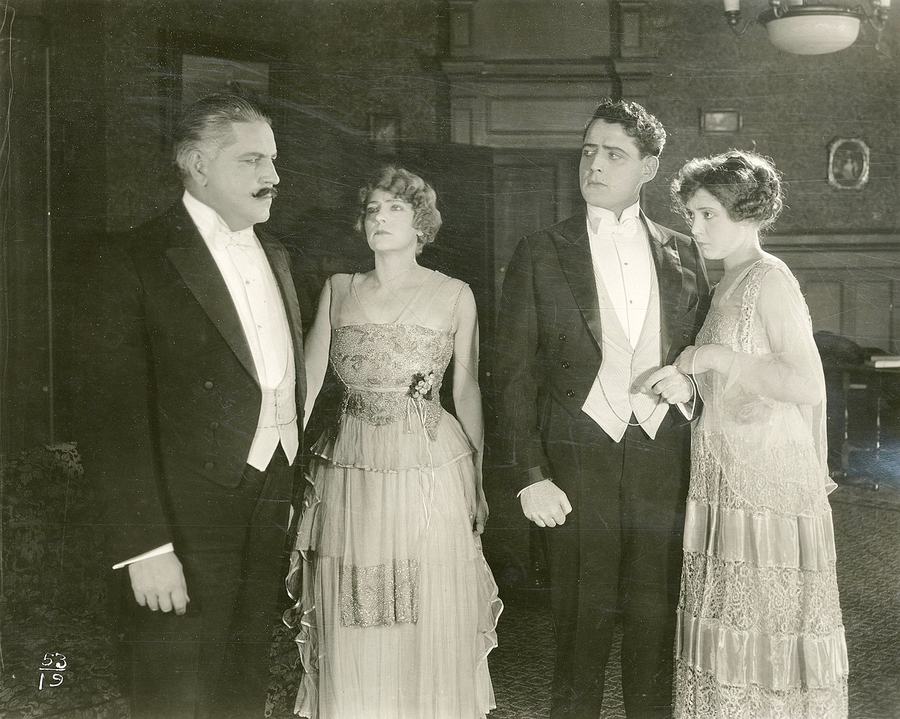
The silent era of cinema often functioned as a crucible for American anxieties regarding class mobility and the inherent virtue of the self-made man. In Come Again Smith (1919), directed with a surprisingly modern sensibility, we are treated to a narrative that is both a whimsical comedy of manners and a biting critique of the aristocratic ego. J. Warren Kerrigan, an actor whose presence could oscillate between the ethereal and the rugged, portrays Joe Smith Jr. not as a caricature of wealth, but as a man whose soul is atrophied by comfort. The film’s opening act establishes a patriarchal ultimatum that feels like a precursor to the existentialist dramas of the mid-century, yet it maintains the light-footed grace characteristic of late 1910s Hollywood.
When we encounter Joe a year later, the transformation is jarring. The cinematography captures the New York City park bench as a liminal space—a purgatory for those who have failed the capitalist test. This visual storytelling is far more nuanced than many of its contemporaries, such as the more melodramatic The Cycle of Fate. Here, the dirt under Joe's fingernails and the hollowed-out look in Kerrigan’s eyes speak to a genuine psychological disintegration. It is a testament to the era's ability to blend social realism with the burgeoning requirements of the feature-length star vehicle.
The introduction of Ned Stevens (Henry A. Barrows) brings a shift in tone. Stevens is the quintessential meddler, a man whose philanthropy is inextricably linked to his own intellectual vanity. His wager with Frank Overton (William Conklin) transforms Joe from a human being into a piece of evidence. This dynamic is fascinating; it mirrors the audience's own voyeuristic interest in Joe’s potential 'rehabilitation.' Unlike the stark moralizing found in The Spirit of the Red Cross, which served a more didactic, patriotic purpose, Come Again Smith interrogates the motivations of the benefactor. Stevens isn't just helping Joe; he’s trying to win an argument.
The middle portion of the film, set within the opulent confines of the Stevens estate, provides a sharp contrast to the gritty opening. The production design here is lavish, utilizing the sea blue and gold aesthetics of the late-Victorian hangover that still influenced 1919 interior design. It is within these walls that Joe meets Lucy, played with a luminous sincerity by Lois Wilson. Wilson’s performance is the emotional anchor of the film. While Joe is undergoing a physical and social metamorphosis, Lucy represents the moral constant. Their burgeoning romance is handled with a delicate touch, avoiding the saccharine excesses that often plagued silent romances like Pauline.
Every great silent drama requires a foil, and William Conklin’s Frank Overton is a masterclass in the 'gentleman villain.' Overton doesn't twirl a mustache; he manipulates ledgers. His scheme to swindle Lucy out of her fortune via a fraudulent stock deal provides the necessary tension to propel the plot toward its climax. This subplot elevates the film from a mere social experiment to a high-stakes thriller. It echoes the financial cynicism explored in Dukes and Dollars, where the pursuit of capital erodes all sense of communal decency.
Joe’s discovery of Overton’s duplicity is the catalyst for his true redemption. It is no longer enough for him to simply 'look' the part of a gentleman; he must act with the integrity that his father’s wealth could never buy. The irony, of course, is that the very man who was discarded as a 'tramp' becomes the only person with the clarity to see through the 'respectable' broker’s facade. This reversal of social status is a recurring motif in the works of writer John Blackwood, who consistently sought to find the nobility in the marginalized.
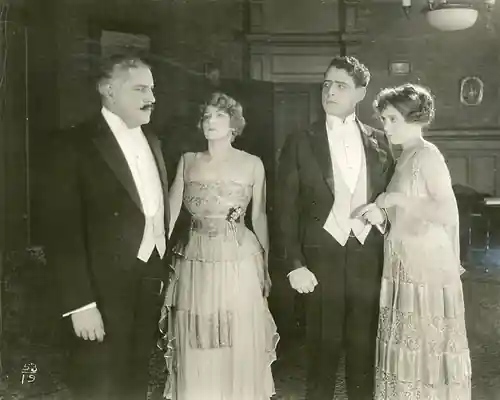
Technically, Come Again Smith is a marvel of its time. The use of lighting to differentiate between the cold, harsh reality of the park and the warm, deceptive glow of the Stevens mansion is remarkably effective. The pacing, often a stumbling block for films of this vintage, is brisk. There is a rhythmic quality to the editing that keeps the viewer engaged in Joe's dual struggle—his internal battle with his past identity and his external battle with Overton. In comparison to the somewhat static presentation of The Silent Voice, this film feels dynamic and breathing.
The cast is rounded out by stalwarts like Winifred Greenwood and Charles K. French, who provide a solid foundation for the leads. French, in particular, as the elder Smith, brings a gravitas that makes his initial challenge to his son feel less like a plot device and more like a desperate act of paternal love. The chemistry between the ensemble is palpable, suggesting a level of rehearsal and directorial vision that wasn't always present in the high-volume production environment of the late silent era.
One cannot discuss Come Again Smith without acknowledging the broader cinematic context of the 'tramp.' While Chaplin had already popularized the figure as a comedic icon, Kerrigan’s Joe Smith Jr. offers a more dramatic, almost tragic interpretation. This is not the whimsical wanderer of Poor Karin; this is a man who has looked into the abyss and seen his own obsolescence. The film’s resolution, while satisfying the genre's requirements for a happy ending, carries a lingering sense of the fragility of social standing. It suggests that the line between the millionaire and the derelict is thinner than we care to admit.
The film also touches upon the burgeoning 'Red Scare' era anxieties, though more subtly than propagandistic pieces like The Prussian Cur or Guarding Old Glory. By focusing on internal domestic corruption (the stockbroker) rather than external threats, it presents a more sophisticated view of American society. It argues that the real danger to the American dream isn't the man on the park bench, but the man in the boardroom who lacks a moral compass.
In the final analysis, Come Again Smith is a vital piece of silent cinema that deserves a place in the pantheon alongside more frequently cited classics. It possesses a lexical diversity in its visual storytelling that is rare. The way it handles themes of identity, the performative nature of class, and the redemptive power of love is both sophisticated and deeply moving. It avoids the pitfalls of its era—the over-reliance on intertitles and the exaggerated pantomime—favoring instead a grounded, character-driven approach.
For those who find themselves weary of modern cinema's often cynical take on human nature, this film offers a refreshing, albeit complex, optimism. It doesn't suggest that life is easy, or that the system is fair, but it does suggest that the individual has the capacity for profound change. Whether viewed as a historical artifact or a timeless narrative of personal growth, Come Again Smith remains a compelling, visually arresting experience. It stands as a reminder that even in 1919, filmmakers were grappling with the same questions of worth and dignity that haunt us today. The film may be over a century old, but its heart beats with a contemporary urgency that is impossible to ignore.
"A poignant exploration of the human condition masked as a social comedy, 'Come Again Smith' is a testament to J. Warren Kerrigan's range and the silent era's narrative depth."
IMDb —
1924
Community
Log in to comment.