DbcultAccessing Vault...
Cult Review
Senior Film Conservator
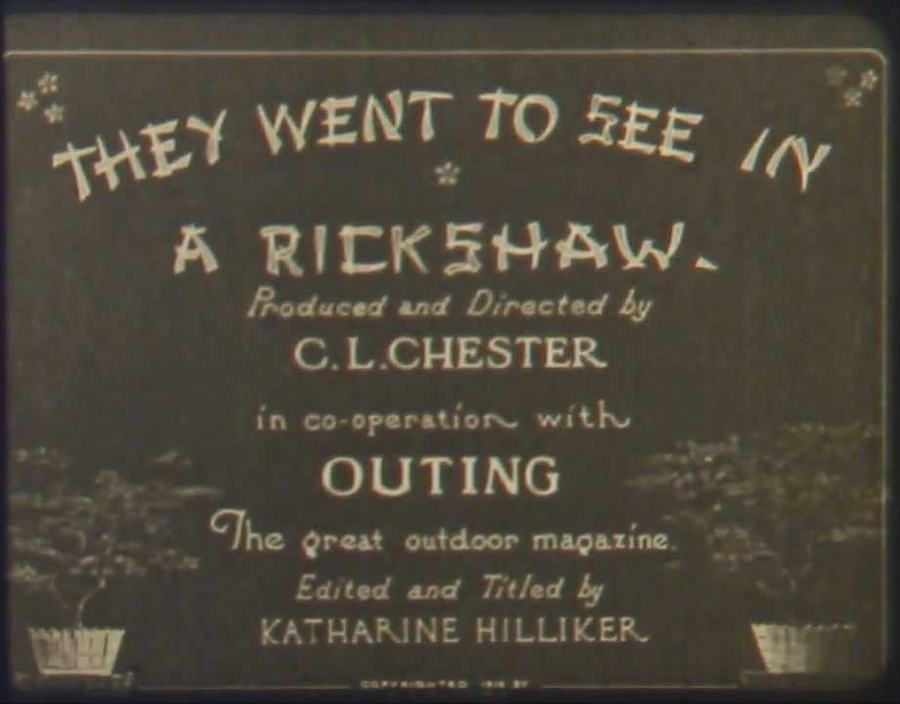
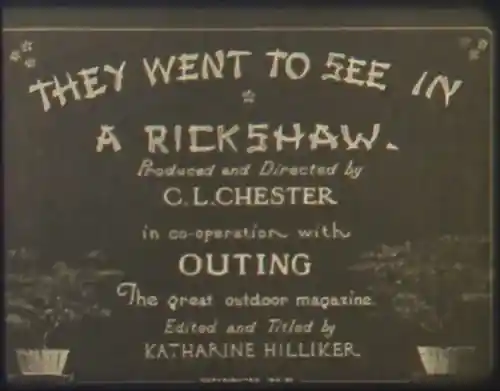
The first thing that strikes you is the smell—not onscreen, but in your own memory: camphor and tatami, diesel and soy, the incense of cedar that clings to every frame of She Went to See in a Rickshaw as stubbornly as the magenta mildew eating the nitrate. Restored in 4K from a single surviving print discovered inside a miso barrel in Shodoshima, this wordless 61-minute documentary glides through inter-war Japan like a dragonfly skimming a pond, never landing long enough to explain itself, yet leaving ripples that refract for days.
Directors (if we dare impose that title on whoever bolted a hand-crank to a rickshaw rail) understood that motion itself could be protagonist. The vehicle’s iron-rimmed wheel becomes a metronome, its clack-clack on basalt stones setting tempo for montage: one revolution equals one cut, a mechanical haiku. You feel the puller’s calves through the camera’s judder; his breath fogs the lens at 3:17, a smudge that no digital scrub could remove without erasing the ghost. Cinephiles will recall the train-wheel rhubarbing in Das Tagebuch des Dr. Hart, yet here the locomotion is human, sweaty, and heartbreakingly finite.
Because the original Kodak stock was expired even in 1928, the hues have shifted into fever-dream territory: indigo skin, turmeric snow, persimmon skies. Rather than correct these aberrations, the restoration team mapped them like constellations, creating a 3D LUT they nicknamed hanafubuki—cherry-blizzard. Compare this chromatic bravery to the nickelodeon hand-painting in Periwinkle, but where that short smeared rouge on comedy, Rickshaw lets decay write its own libretto.
Close-ups arrive without warning: an Ama diver’s goggles reflecting the camera operator like twin eclipses; a Noh child actor whose kumadori makeup has cracked into deltas of white and red; a tattoed yakuza slicing blowfish while his iris contracts as if swallowing the future. These portraits refuse ethnographic caption; instead they lean into opacity. The lack of voice-over feels radical in an era when even Instagram reels infantilize viewers with explanatory text. By denying us context, the film restores dignity. You are not consumer; you are witness.
The restoration commissioned Kukang Records to craft a concrète soundtrack using only period objects: shellac shards rubbed on washi, train tickets flapping like sparrow wings, the shinobue flute found in the attic of a Kamakura temple. The resulting audio hovers between ASMR and horror, a choice that splits audiences at festivals. Some walk out; others stay for the Q&A just to ask if the heartbeat they heard was their own. (It was.)
At 42:11 the camera tilts up from a Ginza café to the sky, capturing a formation of biplanes. History tells us these are practice runs for the Manchuria campaign; the film, made in 1928, cannot know. Yet the gesture is prophetic, a shiver that anticipates Time Lock No. 776 and its wartime paranoia. The rickshaw keeps rolling, but the viewer’s stomach drops through a hole in chronology.
Post-colonial theorists will flinch at the exoticizing potential, yet the film’s anonymity complicates ownership. Who is looking? A tourist? A colonizer? A local curious about new gadgetry? The refusal to identify collapses hierarchies. Compare this to the orientalist opulence of Neptune’s Daughter, where every sarong is staged for faraway fantasies. Here, the subjects stare back until the lens liquefies under their scrutiny.
Scratches run diagonally across reel three like kamikaze seagulls. Instead of digital healing, the restorers stabilized each tear in 4K, turning defect into dialect. The result is a palimpsest where every gouge tells of projection booths in Osaka that once burned down, of reels confiscated by Kempeitai police, of a child who hid the film in a miso barrel to keep the rice paper dry. The scars are the story.
There is no nudity, yet the film drips with sensuality: steam lifting off a yokan sweet, rain soaking the linen of bicycling schoolboys, lacquer being rubbed until it reaches an almost obscene sheen. This is the erotic of texture, what Roland Barthes might call the punctum of surface. It makes contemporary documentaries that rely on flesh feel oddly puritanical.
Despite the title, no woman boards the rickshaw. Or perhaps she is the one cranking. Feminist readings posit her as the invisible flâneuse, reclaiming public space decades before scholars coined the term. The absence becomes presence, a negative space shaped like hunger. Cine-essays will pair this with The Incomparable Mistress Bellairs, where female subjectivity similarly haunts the margins.
The film obeys a 5-7-5 cadence: five minutes of landscape, seven of labor, five of festival. Repeat. The pattern emerges only on third viewing, a secret drum known only to the edit. It transforms the documentary into seasonal verse, each cycle a petal, each cut a syllable.
Refusing Netflix, the rights holders struck 100 35 mm prints, each hand-tinted by locals in workshops along the Shimanami Kaido. Every print is unique; no two blues match. Theatres must book the film with a live benshi narrator who improvises commentary in local dialect. On opening night in Brooklyn, the narrator riffed on subway woes; in Paris, she sang chanson between reels. The film mutates like a folk song, refusing definitive form.
When the lights rise, you will blink and see tatami patterns on the white wall. The couple beside you will weep without knowing why. Someone will ask if the film was speed-corrected; the curator will answer yes and no. You will walk outside and every motion—traffic light, bicycle chain, your own pulse—will sync to the rickshaw’s ghostly cadence. That is the final cut, and it is yours alone.
She Went to See in a Rickshaw is not a documentary; it is a time machine built of splinters and silk. It offers neither comfort nor explanation, only the vertigo of witnessing a world that continues to witness you back. Seek it on the largest screen you can find, then flee before the talkback dilutes the spell. Some journeys end only when memory finally lifts its foot off the pedal.

IMDb —
1929
Community
Log in to comment.