DbcultAccessing Vault...
5.5/10
Senior Film Conservator
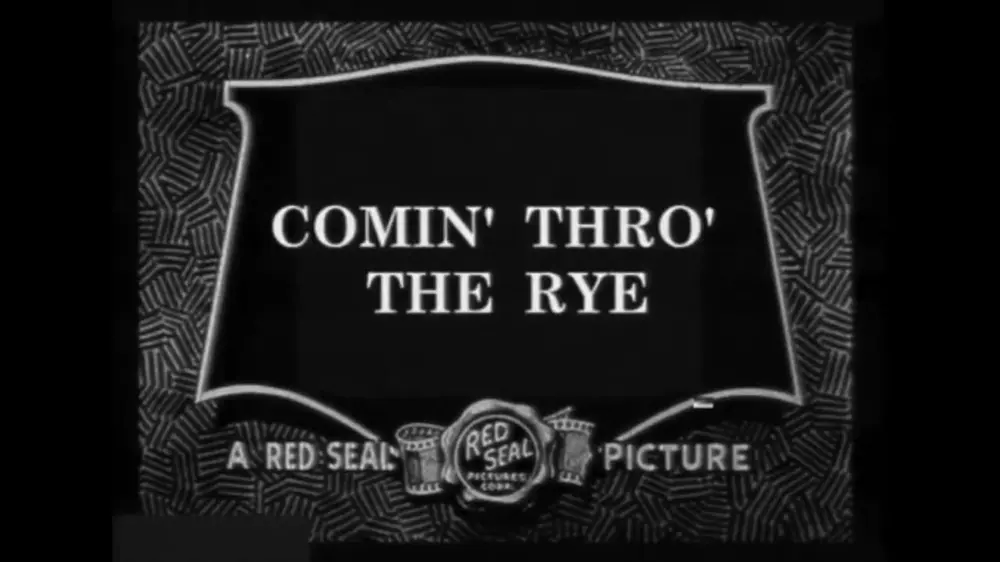
A definitive 5.5/10 rating for a film that redefined the boundaries of cult cinema. Comin' Thro' the Rye remains a cornerstone of transgressive art.
Is this film worth watching? Short answer: Yes, but only if you view it as a historical artifact rather than a piece of narrative entertainment. This short is for animation historians and those curious about the roots of interactive media, but it is certainly not for anyone seeking a traditional story or modern pacing.
Before Mickey Mouse ever whistled on a steamboat, the Fleischer brothers were already busy breaking the fourth wall. Comin' Thro' the Rye is a fascinating look at a time when cinema was still figuring out its own identity. It is a gimmick. But it is a brilliant one.
This film is worth watching for anyone interested in the evolution of sound and audience participation in cinema. It provides a direct link between the vaudeville traditions of the 19th century and the digital interactivity of the 21st. If you want to see where the concept of 'karaoke' truly began, this is the source code.
1) This film works because it successfully gamifies the cinematic experience through rhythmic synchronization.
2) This film fails because it lacks any narrative substance beyond its central technical gimmick.
3) You should watch it if you appreciate the surrealist roots of early American animation.
The 1920s were a period of frantic experimentation. While films like The Waif (1915) were exploring the emotional potential of live-action drama, Dave Fleischer was looking for ways to make the screen talk back to the audience. Comin' Thro' the Rye is a prime example of the 'Song Car-Tune' series.
The 'bouncing ball' was not just a visual aid; it was a rhythmic conductor. In an era before standardized sound-on-film, the ball provided a visual metronome that allowed a theater full of strangers to sing in unison. It is a simple concept, but the execution requires a level of mathematical precision that is often overlooked in early animation.
Consider the glee club characters. They are not just background noise. Their movements are meticulously timed to the cadence of the lyrics. When the ball hits a word, the characters react. This level of synchronization was lightyears ahead of what many other studios were attempting at the time.
Ko-Ko the Clown is one of the most underrated figures in animation history. Unlike the early, somewhat generic versions of Mickey Mouse, Ko-Ko had a distinct, slightly mischievous personality that felt grounded in reality. This is likely due to the Fleischers' use of the rotoscope, a device that allowed them to trace over live-action footage of Dave Fleischer himself.
In Comin' Thro' the Rye, Ko-Ko’s role is that of the master of ceremonies. He doesn't just exist within the frame; he commands it. There is a specific moment where he gestures to the lyrics that feels surprisingly modern. He is acknowledging the audience. He knows we are there. This self-awareness is something that Disney wouldn't fully lean into for years.
Compare this to a film like Faint Hearts, which relies on traditional theatrical blocking. Ko-Ko breaks those rules. He moves with a fluid, almost rubbery grace that defies the physics of the time. It is a stark contrast to the stiff animation found in other 1926 shorts.
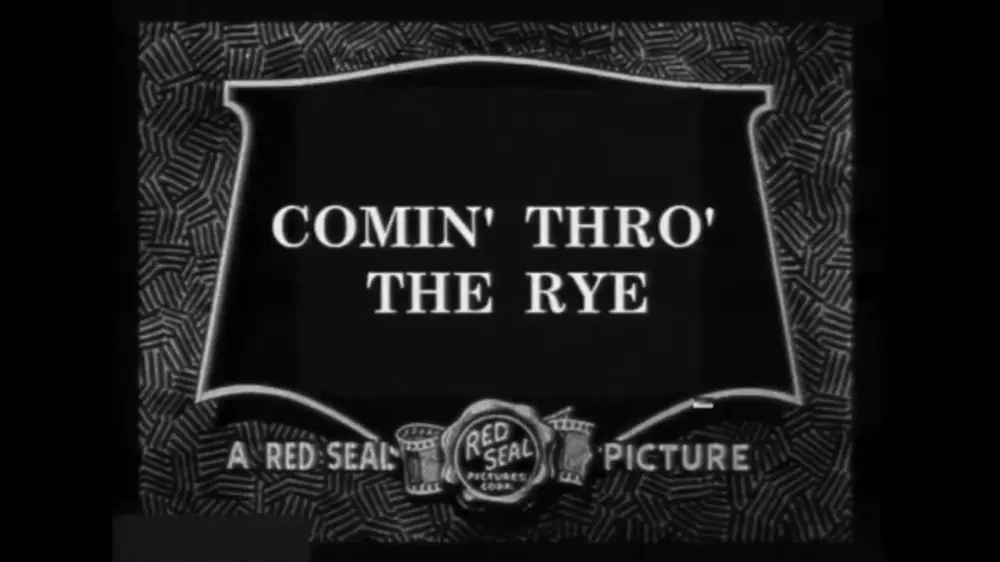
The cinematography in these early shorts is often ignored because the 'camera' is stationary. However, the composition of the sing-along screen is a masterclass in information design. The lyrics are positioned at the bottom, the animation at the top, and the ball serves as the bridge between the two.
Dave Fleischer’s direction here is focused entirely on clarity. He understands that if the audience gets lost, the film fails. The pacing is dictated by the song itself, but the visual gags are inserted during the instrumental breaks to keep the energy high. It is a primitive form of the music video.
One could argue that this short is more influential than high-budget dramas of the era, such as A Celebrated Case. While those films were refining the language of visual storytelling, the Fleischers were inventing a new way for humans to interact with technology. It is a legacy that leads directly to modern gaming.
To understand why people loved this, you have to imagine the theater in 1926. Cinema was a loud, social event. There were piano players, organists, and sometimes even full orchestras. Comin' Thro' the Rye capitalized on this atmosphere. It turned the audience into the soundtrack.
Using a Robert Burns poem as the lyrical base was a savvy move. It was familiar, sentimental, and fit the 'glee club' aesthetic perfectly. While other filmmakers were trying to capture the 'Far North' in films like A Tale of the Far North, the Fleischers were capturing the heart of the local community.
There is a certain irony in watching this today on a silent laptop or a smartphone. The film is designed for a crowd. Without the hundred voices singing along, the 'bouncing ball' feels a bit lonely. It is a reminder that some art is inextricably tied to the venue for which it was created.
Pros:
- Pioneering technical achievement in audience synchronization.
- Charming, surrealist animation style that still feels fresh.
- Short runtime makes it an easy historical study.
Cons:
- Zero narrative depth.
- The song choice may feel dated to modern ears.
- Lacks the visual variety of later Fleischer masterpieces.
Comin' Thro' the Rye is a fascinating fossil. It represents a fork in the road of cinematic history where the medium could have become more interactive and communal. While the industry eventually chose the path of passive, high-fidelity storytelling seen in films like Just a Woman, this short remains a testament to the Fleischers' restless creativity.
It isn't a 'movie' in the modern sense. It is an experience. It is a piece of engineering disguised as a cartoon. If you have six minutes to spare, watch it to see the birth of a technique that would eventually lead to everything from The Rocky Horror Picture Show to Guitar Hero. It works. But it’s flawed. And that’s exactly why it’s worth your time.

IMDb 5.7
1935
Community
Log in to comment.