DbcultAccessing Vault...
Cult Review
Senior Film Conservator
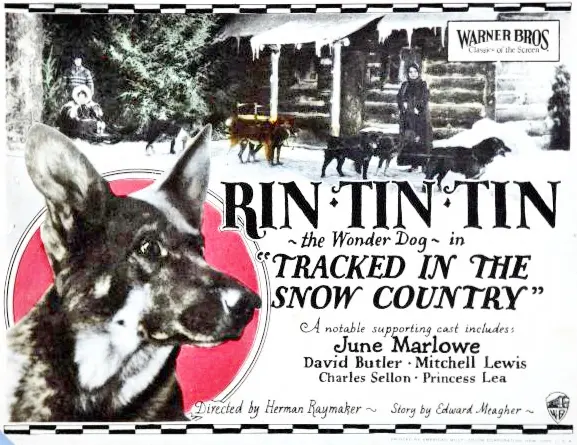
Is 'Tracked in the Snow Country' worth watching today? Short answer: Yes, but with significant caveats that demand a particular kind of viewer engagement.
This film stands as a fascinating, almost archaeological, relic for cinephiles, historians, and anyone curious about the foundational narratives of early cinema, especially those featuring animal stars. It is emphatically NOT for viewers seeking modern pacing, sophisticated dialogue, or a high-definition visual experience tailored to contemporary sensibilities.
This film works because it showcases the incredible screen presence of Rin-Tin-Tin and offers a compelling, if simplistic, narrative of canine loyalty and justice.
This film fails because its silent-era conventions, particularly the melodramatic acting and reliance on title cards, can feel alienating and slow to contemporary audiences.
You should watch it if you appreciate the historical significance of early Hollywood, enjoy animal-centric stories, and possess the patience to engage with a film from nearly a century ago.
The true, undeniable star of Tracked in the Snow Country is, without question, Rin-Tin-Tin. His performance transcends mere animal training; it borders on genuine acting, imbued with an uncanny intelligence and emotional depth that remains captivating even today. He is the anchor of the entire narrative, conveying loyalty, suspicion, determination, and sorrow through his body language and expressive eyes.
Watching Rinty, one is struck by his sheer presence. He doesn't just react; he seems to understand. Consider the scene immediately following his master's murder: the subtle shift in his posture, the mournful gaze, and the almost accusatory glance towards the real culprit. It’s a masterclass in silent communication, far more nuanced than many of his human counterparts could muster with their broad, theatrical gestures.
This canine actor single-handedly elevates the film from a simple genre piece into something memorable. His ability to track, to fight, and to convey complex emotions without a single spoken word is a testament to both his natural talent and the skilled direction of Herman C. Raymaker. In an era where human actors often relied on exaggerated expressions, Rinty’s understated intensity feels surprisingly modern.
He is the emotional core, the driving force, and the moral compass. Without him, this film would likely be a forgotten footnote. With him, it becomes a compelling argument for the power of non-human performers and a poignant reminder of the bond between man and dog.
The narrative of Tracked in the Snow Country, penned by Edward J. Meagher and Herman C. Raymaker, is a straightforward tale of good versus evil, loyalty versus betrayal. Its simplicity is both its strength and, for modern audiences, its potential weakness. The plot unfolds with a deliberate, almost methodical pace, relying heavily on title cards to advance the story and explain character motivations. This is a hallmark of silent cinema, and embracing it is key to appreciating the film.
The film's pacing, by contemporary standards, is leisurely. Scenes often linger, allowing the audience to absorb the visual information and the emotions conveyed through physical acting. There are no quick cuts or rapid-fire dialogue exchanges to propel the story forward. Instead, we follow Rinty's methodical tracking, the human characters' reactions, and the unfolding drama with a patient eye.
Directing wise, Raymaker effectively utilizes the rugged, snow-covered landscape of the Northwest as a character in itself. The vast, unforgiving environment mirrors Rinty's solitary quest and the harsh justice he seeks. The sequence where Rinty traverses the frozen wilderness, a tiny, determined speck against the immense backdrop, is particularly effective in conveying the scale of his mission and his unwavering resolve.
However, the reliance on title cards can, at times, feel cumbersome. While necessary for exposition, they interrupt the visual flow and demand a different kind of mental engagement from the viewer. For those accustomed to seamless narrative transitions, this can be a hurdle. Yet, within its historical context, it’s a perfectly functional method of storytelling, one that forces the audience to engage more actively with the visual cues and the actors' expressions.
The cinematography in Tracked in the Snow Country, while not revolutionary, is competent and often striking, particularly in its depiction of the titular snow country. The stark beauty of the frozen landscapes provides a powerful, almost poetic backdrop to Rinty's relentless pursuit. Wide shots of snow-covered peaks and dense forests emphasize the isolation and the sheer scale of the wilderness, creating a formidable antagonist in itself.
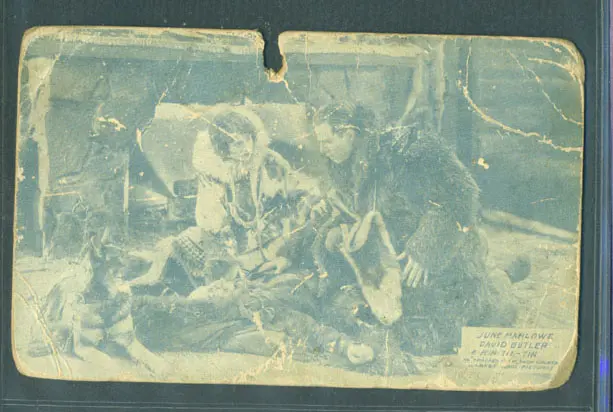
Lighting is functional, serving to highlight the characters and the key actions rather than creating complex atmospheric effects. Interior scenes are often brightly lit, characteristic of the era, ensuring that the audience can clearly see the actors' exaggerated expressions and gestures. This directness in visual presentation contributes to the film's straightforward, earnest tone.
Of course, the absence of synchronized sound is the defining characteristic of this era. The film relies entirely on its visuals, the performances, and the interspersed title cards to convey its story and emotional weight. This forces a heightened focus on the visual narrative, making every gesture, every set piece, and every camera angle crucial. The silence, when embraced, can be incredibly powerful, allowing the viewer to project their own emotional landscape onto the screen.
The tone is largely melodramatic, a common trait of early cinema. The stakes are high, the emotions are broad, and the villains are unambiguously evil. This theatricality, while perhaps jarring to modern sensibilities, was the language of storytelling at the time. It’s a world where good and evil are clearly delineated, and justice, though hard-won, is ultimately served. This film doesn't attempt the psychological complexity of a later feature like The Boy in Blue; its strength lies in its unvarnished, almost primal narrative of pursuit and retribution.
While Rin-Tin-Tin undoubtedly steals the show, the human cast of Tracked in the Snow Country plays its part in supporting the narrative. Mitchell Lewis, as one of the key human figures, embodies the archetypal villain of the era with gusto. His performance is broad, his expressions overtly sinister, leaving no doubt as to his nefarious intentions. This isn't a performance of subtle villainy; it's a performance designed to be understood from the back row of a large cinema, emphasizing clear moral distinctions.
Charles Sellon and June Marlowe, in their respective roles, provide the necessary human connection and emotional context. Their acting, like Lewis's, adheres to the conventions of silent film: emotions are writ large on the face, gestures are expansive, and reactions are often delayed to allow the audience to fully grasp the dramatic import. It’s a style that can feel over-the-top to modern eyes, used to more naturalistic portrayals.
However, to judge these performances by contemporary standards would be unfair. Within the context of 1920s cinema, these actors were delivering exactly what was expected. They were storytellers using their bodies and faces as their primary tools, often against the backdrop of live musical accompaniment that further amplified the drama. Compared to the more restrained, introspective acting seen in something like Integritas (a film from a different era, but illustrating the shift), these performances are raw, unpolished, and intensely theatrical.
My unconventional observation is that the human actors, while competent for their time, often feel secondary and less compelling than the canine lead. Rin-Tin-Tin’s 'acting' possesses an organic quality that, ironically, often feels more authentic than the stylized melodrama of his human co-stars. It’s a testament to his unique appeal and the intrinsic connection audiences feel with animals on screen.
Yes, for a specific audience, Tracked in the Snow Country is absolutely worth watching today.
It serves as an important historical document.
It showcases the groundbreaking talent of Rin-Tin-Tin.
It offers a unique insight into early cinematic storytelling and acting conventions.
However, it is not for casual viewing or those seeking a modern, fast-paced narrative.
Approach it with an open mind and an appreciation for film history.
Tracked in the Snow Country is more than just a curiosity; it's a testament to the enduring power of a simple, heartfelt story, and the magnetic appeal of its four-legged star. It works. But it’s flawed, as all films from a bygone era inevitably are when viewed through a modern lens. Rin-Tin-Tin's performance alone makes it a worthwhile watch for those with an appreciation for film history and a soft spot for canine heroes. It's a challenging watch, certainly, but one that offers rich rewards for the patient and discerning viewer. This isn't a film you'll stumble upon and casually enjoy; it's a film you seek out, understand its context, and allow its unique charm to wash over you. For its place in cinematic history and the sheer star power of its lead, it earns a respectable recommendation. Dive in, but adjust your expectations accordingly, and prepare to be charmed by the silent resolve of a truly remarkable dog.
IMDb —
1920
Community
Log in to comment.