DbcultAccessing Vault...
Cult Review
Senior Film Conservator
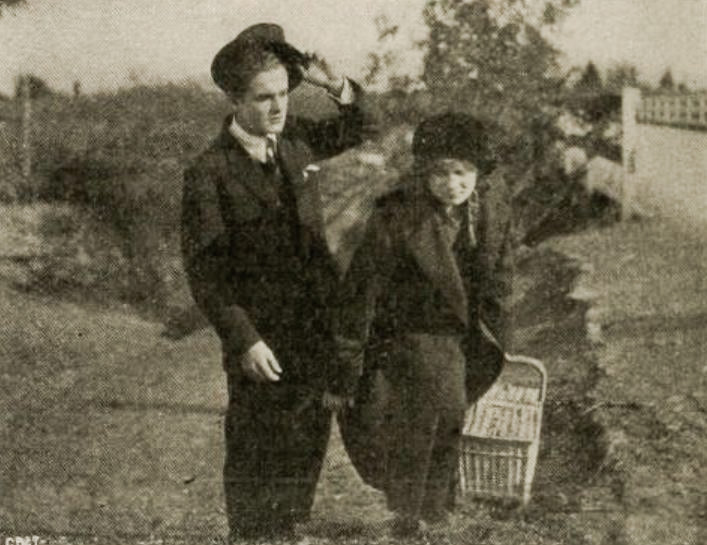
Selwyn’s The Country Boy arrives like a weathered postcard slipped between the pages of 1915: edges browned, ink faded, yet somehow pulsing with arterial heat. Shot through with the dichotomy of agrarian innocence and metropolitan predation, the picture stages a morality play that feels both prelapsarian and pre-Code, a rustic fable gnawed at by Jazz-Age cynicism.
The opening reel is a chiaroscuro hymn—sunlight knifing through barn slats, dust motes suspended like tiny golden planets—establishing Tom not as a stock yokel but as an embodiment of soil-yearning masculinity. Marshall Neilan plays him with a guileless swagger: shoulders that know the heft of a plow yet eyes always scanning horizons beyond the wheat. Dorothy Green’s Jane is introduced in a white muslin dress, the fabric so overexposed it seems phosphorescent, as though she already belongs more to memory than to flesh.
The inciting contract—Jane’s father demanding proof of solvency—recasts the American Dream as a ledger entry. Tom’s migration to New York is rendered in a smash-cut that vaults us from furrows to the Great White Way, the edit so abrupt it feels like a slap. Suddenly, the screen vibrates with electric signage, nickelodeons, and the predatory glamour of chorus lines. The contrast is not merely scenic; it is ontological. The rural dissolve becomes a visual interrogation: can identity survive the city’s centrifuge?
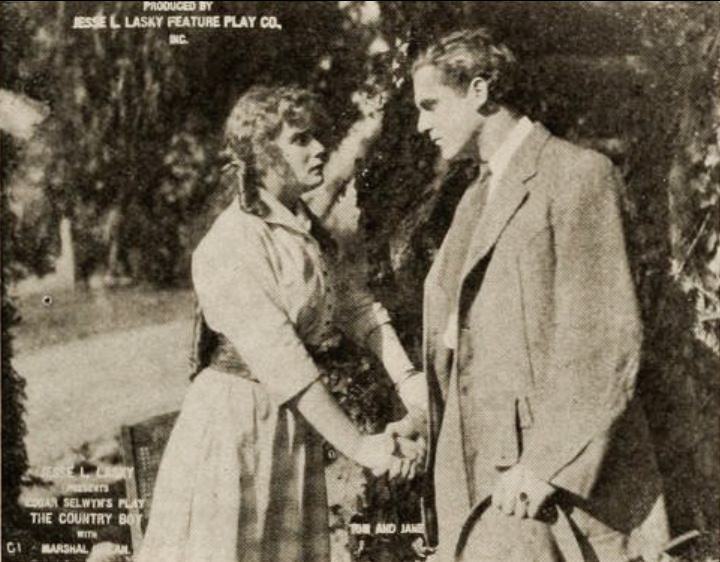
Enter Amy, essayed by the luminous Florence Dagmar. She twirls onto the set in a bead-fringed dress that catches every stray arc-light, transforming the frame into a constellation of desire. Her introductory close-up—lips parted, eyes half-lidded—registers as a silent-era femme fatale prototype, predating The Rogues of London’s vamps by several degrees of candor. Yet Selwyn refuses caricature; Amy’s affection for Tom blooms with a melancholy that hints at her own commodification within the revue.
Horace B. Carpenter’s Reginald Van Alyst is less a man than a walking balance sheet: top hat as ledger column, cane as interest rate. His courtship of Amy entails gifting a necklace so heavy it seems forged from the public debt. In a pivotal nightclub sequence, Selwyn frames the trio through a mirror splintered by a prior brawl; the fragmentation literalizes Tom’s splintering allegiances while prefiguring the shattering of pastoral certitude.
Though monochromatic, the tinting strategy speaks volumes. Exterior farmland scenes are soaked in amber, suggesting both harvest and nostalgia. Once Tom crosses the Hudson, sea-blue tint invades, a visual whisper that the metropolis is an oceanic predator. Interior speakeasies flicker with canary-yellow, the shade of incandescent bulbs and bruised morals. These chromatic choices presage the expressionist palette later refined in Der Lumpenbaron and even, obliquely, in Anna Karenina (1914).
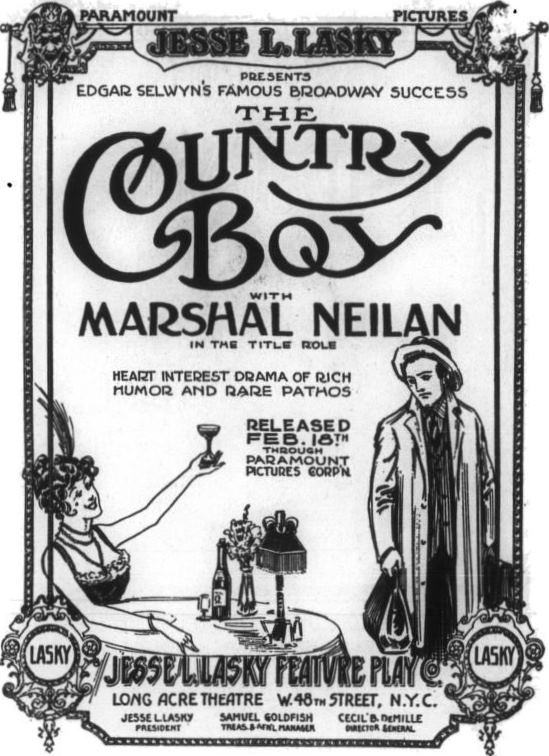
Neilam’s physical vocabulary sidesteps the era’s histrionic semaphore. When Tom receives Jane’s telegram—her father gravely ill—his fingers tremble against the paper as though testing thin ice, a tiny gestural miracle that conveys entire sagas of guilt. Conversely, Dorothy Green embodies Jane with stoic luminosity; her final bedside vigil achieves a transcendence rarely glimpsed outside The Cloister and the Hearth’s monastic pathos.
Erich von Stroheim cameos as a sleazy maître d’—cigar clamped between teeth like a wad of currency—foreshadowing the sadistic elegance he would weaponize in later directorial outings. His brief presence adds a frisson of moral corrosion, reminding viewers that the city’s rot seeps from the top of the food chain.
Edgar Selwyn’s source play translates into intertitles that gleam with aphoristic punch. “Love purchased is love repossessed” reads one card, a line that could headline a treatise on speculative bubbles. The screenplay’s cynicism about capital’s colonization of intimacy feels startlingly modern, echoing through decades to resonate with The Million Dollar Mystery’s serialized cupidity.
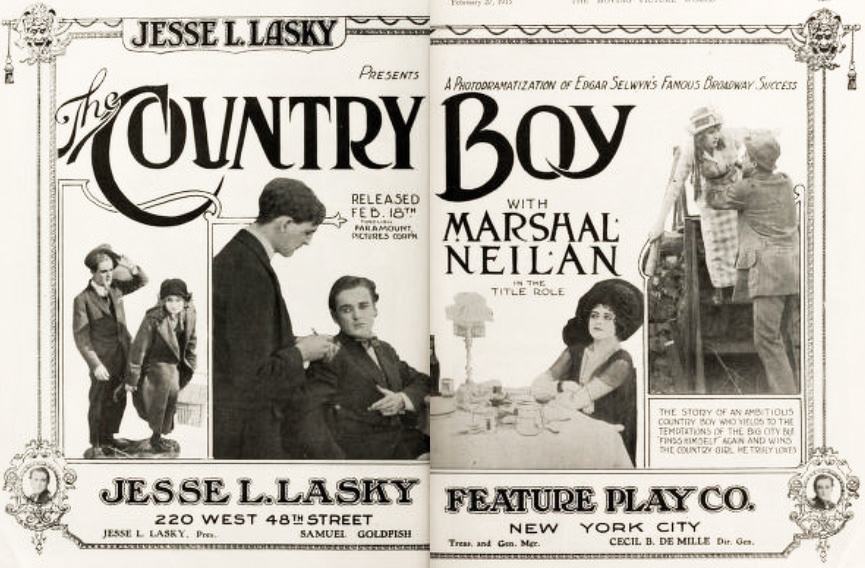
Tragically, roughly nineteen minutes remain missing—excised by a 1927 warehouse blaze that devoured more dreams than most studios care to admit. Yet the fragments that endure, stitched by archivists at MoMA, allow a coherent narrative through-line. One restored reel, a ferry deck confrontation between Tom and Reginald, showcases Edgar Lewis’s nimble handheld camera, predating the vérité wobble later canonized in wartime reportage.
Viewed today with a live prepared-piano score (as at the 2022 Pordenone Silent Fest), the film’s emotional valence mutates; dissonant clusters underline Tom’s metropolitan vertigo while pastoral motifs return as ghostly echoes, suggesting that innocence, once exiled, can only haunt. The experience parallels the spectral nostalgia of Golfo’s highland laments, though Selwyn’s canvas is distinctly trans-Atlantic.
Rather than framing Amy as harlot and Jane as angel, Selwyn complicates the dichotomy. Amy’s affection for Tom appears rooted less in gold-digging than in recognition of mutual displacement—two orphans of place. Jane, meanwhile, never capitulates to passivity; her ultimatum—“Return whole or do not return”—asserts agency within patriarchal confines, foreshadowing the proto-feminist bite of Amalia.
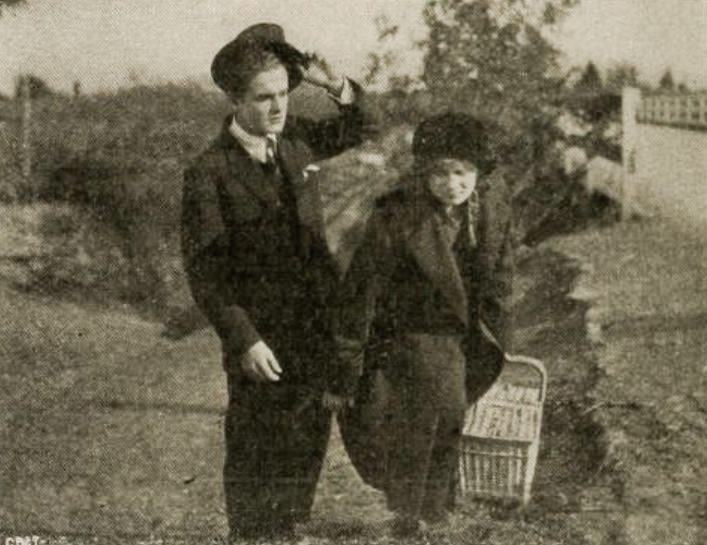
Cinematographer Tex Driscoll experiments with vignetting during Tom’s first Broadway backstage tour; the iris closure around Amy’s dressing-room mirror literalizes Tom’s myopic infatuation. Later, an overhead shot of Wall Street crowds—miniature caravans of bowler hats—creates an ant-sized anonymity that visually argues capital’s dehumanization.
Where Robin Hood mythologizes redistribution, The Country Boy interrogates acquisition itself. The film’s moral thicket feels closer to Othello’s corrosive jealousy than to the picaresque optimism of Das Abenteuer eines Journalisten. Meanwhile, its urban vertigo anticipates the expressionist angles of De røvede Kanontegninger, though Selwyn’s gaze remains realist rather than surreal.
Spoiler etiquette notwithstanding, the finale deserves scrutiny. Tom, clutching a railway ticket back to the hamlet, watches Amy disappear into a confetti of ticker-tape. The last intertitle reads: “Some journeys circle home; others spiral”. The camera holds on Tom’s indecisive boots—one angled toward Pennsylvania farmland, the other toward Manhattan’s maw—before a fade-to-black that refuses catharsis. This open vein of ambiguity positions the film alongside the cosmic irresolution of The Reincarnation of Karma rather than the tidy moral ledgers of contemporaneous melodramas.
Modern dating apps monetize courtship much like Reginald’s diamond necklace—swipe right, invest, expect dividends. In that sense, The Country Boy functions as a cautionary time-capsule, warning that when affection becomes collateral, someone will always be left holding a defaulted heart.
Fragments notwithstanding, the movie survives as a trenchant meditation on capital, longing, and the porous border between ambition and betrayal. Its visual lexicon, thematic nuance, and refusal of moral absolutes elevate it beyond its rural-simplex logline. For cinephiles tracking the DNA of American moral melodrama, The Country Boy is indispensable—an agrarian Great Gatsby before the fact, a flickering caution that the green light at the end of the dock sometimes grows from cornstalks.
Catch the 4K restoration on Criterion Channel or, if luck holds, a nitrate print at your nearest cinematheque. Bring a handkerchief; even without sound, the silence can make your eyes ring.
IMDb 7.2
1936
Community
Log in to comment.