DbcultAccessing Vault...
5.9/10
Senior Film Conservator
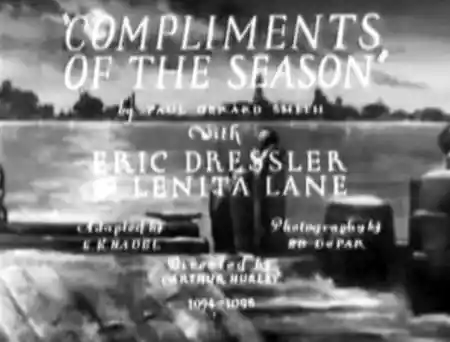
A definitive 5.9/10 rating for a film that redefined the boundaries of cult cinema. Compliments of the Season remains a cornerstone of transgressive art.
If you have twenty minutes and a soft spot for grainy, black-and-white sentiment, yes.
It is perfect for people who like to see how movies used to handle 'grit' before everything became so polished. You will probably hate it if you can't stand the crackle of old audio or stories that wear their heart on their sleeve.
I found this tucked away and honestly didn't expect much. It is a Vitaphone short from 1930, which usually means people standing very still and talking loudly at a hidden microphone.
But there is something actually sweet here. It’s about a thief played by Eric Dressler who just got out of the big house. He looks tired. Not movie-star tired, but 'I haven't slept on a real mattress in three years' tired.
The streets look like a stage set because they probably were. There is a specific kind of shadow you only see in these early 30s films that makes the city feel lonely.
He wanders around and the atmosphere is heavy. It’s Christmas Eve, which is the ultimate movie trope for 'now I must reflect on my life choices.'
Then he sees her. Lenita Lane is the girl on the bridge. She is about to jump. The way she holds her coat shut caught my eye—it feels like she’s trying to keep what little dignity she has left tucked inside.
He stops her, obviously. But it isn't some big heroic speech. It's just two people who are at the bottom of the barrel talking to each other. I like that the movie doesn't make him a saint immediately.
He’s still a guy who knows how to pick a pocket. He just chooses not to do it for a second.
There is a scene where they meet some other characters and it turns into a bit of a group effort to be decent. Pat O’Brien shows up too. He has this energy that makes the whole frame feel a bit more alive.
O'Brien always feels like he just drank three espressos before the director yelled action. It’s a nice contrast to the slower, almost sleepy vibe of the first few minutes.
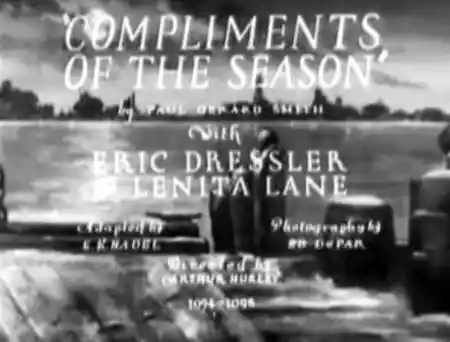
I noticed a moment where the sound cuts out slightly when someone turns their head. It’s those little 1930s technical hiccups that make me love these old shorts. It reminds you that real humans were standing in a room trying to figure out this new 'talking picture' thing.
The dialogue is a bit clunky in places. It feels written by someone who read too many pulp magazines. But that is part of the charm, I think.
It reminds me a bit of the urban loneliness in Night Life. There’s a shared DNA in how these movies viewed the big city as a place that eats people alive.
The river looks cold. I know it’s just a tank on a studio lot, but the lighting makes it look deep and oily. You can almost smell the soot and the river water.
One thing that bothered me—there is a guy in the background of one shot who just stares directly at the camera for a second. It breaks the spell, but it also makes me laugh. He was probably just an extra wondering when lunch was.
The ending is very 'Christmas spirit' and maybe a bit too tidy. But honestly? In 1930, with the world falling apart outside the theater, people probably needed tidy.
It’s a bit like The Wild Party in its visual texture, but much more somber. It doesn't have the jazz-age franticness. It’s the hangover after the party.
I kept thinking about how Eric Dressler’s character handles his hat. He’s always fiddling with it. It’s a small detail that makes him feel like a real person who doesn't know what to do with his hands now that he’s free.
It isn't a masterpiece of cinema. It’s just a nice, dusty little story about being kind when you don't have to be.
Watch it if: You want to feel a little bit of old-fashioned hope without a huge time commitment.
Skip it if: You need fast pacing or characters who don't talk like they are in a stage play.
I'm glad I watched it. It’s a reminder that even the 'small' movies from a hundred years ago were trying to say something about how we treat each other. Sometimes they even succeeded.
IMDb 5.4
1933
Community
Log in to comment.