DbcultAccessing Vault...
Cult Review
Senior Film Conservator
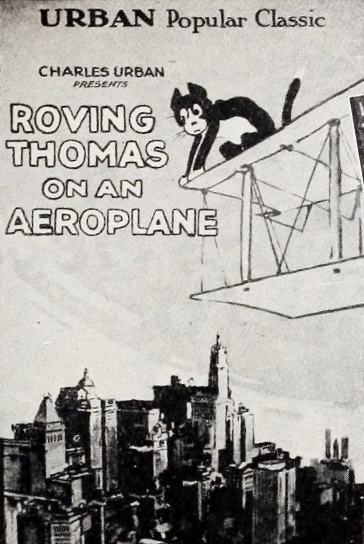
The dawn of the twentieth century was marked by a feverish fascination with the impossible, specifically the liberation of the human form from the stubborn shackles of gravity. In this cultural crucible, Roving Thomas on an Aeroplane emerges not merely as a relic of early cinema, but as a vibrant, albeit frantic, testament to the era's adventurous spirit. This short, often overlooked in the broader canon of slapstick, provides a fascinating glimpse into the primitive mechanics of both flight and filmmaking. Thomas, our perennial wanderer, finds himself thrust into the cockpit of a biplane, a machine that represents the pinnacle of technological hubris at the time. Unlike the calculated bravery seen in later aerial epics, Thomas’s ascent is characterized by a charming incompetence that resonates with the Everyman’s anxiety toward the rapidly encroaching modern age.
The choreography of the film is a masterclass in kinetic storytelling. While Sally's Blighted Career focused on the domestic tragedies of the stage, Roving Thomas takes the stage to the heavens, utilizing the vast, open canvas of the sky to amplify the protagonist's isolation and the absurdity of his predicament. The camera work, though restricted by the heavy equipment of the 1910s, manages to capture a sense of vertigo that must have been revolutionary for contemporary audiences. There is a raw, unpolished energy here that modern CGI-laden blockbusters often fail to replicate. The wind whipping through Thomas’s hair and the visible vibration of the aircraft’s struts provide an visceral authenticity that grounds the high-flying comedy.
One cannot discuss this film without acknowledging the physical prowess of the lead performer. The "Roving" series relied heavily on the ability to convey narrative through exaggerated movement, a necessity in the silent era. In this particular installment, the stakes are elevated—quite literally. The slapstick isn't just about slipping on banana peels; it’s about maintaining a tenuous grip on a rudder while several thousand feet above the ground. This tension between the threat of death and the promise of a laugh creates a unique emotional frequency. It shares a certain thematic DNA with Captain Kidd's Kids, where the danger of the sea provides the backdrop for comedic escapades, yet the aerial setting of Thomas’s adventure feels more existential, more untethered from the known world.
When examining the landscape of early 20th-century film, the diversity of tone is staggering. Contrast the lighthearted, albeit perilous, journey of Thomas with the darker, more atmospheric tension of Das rote Plakat. While the latter utilizes the shadows of the city to weave a mystery, Roving Thomas utilizes the blinding clarity of the sun to expose the folly of man. Even the pastoral, almost ethereal quality of The Lilac Sunbonnet feels worlds away from the oily, smoke-filled reality of Thomas’s aeroplane. Yet, both films are preoccupied with the idea of escape—one through the romanticization of the countryside, the other through the mechanical conquest of the air.
The technical ambition of Roving Thomas on an Aeroplane cannot be understated. In an era where many films were still static, stage-bound productions like The Vicar of Wakefield (1917), the decision to film outdoors with moving machinery was a bold leap forward. It predates the sophisticated trick shots of The Devil's Foot, relying instead on the sheer novelty of its subject matter. The film acts as a bridge between the vaudevillian roots of early shorts and the grander, more narrative-driven features that would follow in the 1920s. It possesses a certain innocence, a lack of cynicism that is refreshing to a modern viewer weary of over-engineered spectacle.
"Thomas is the quintessential avatar of the early 1900s—a man perpetually in motion, caught between the gravity of tradition and the upward pull of innovation."
Visually, the film is a fascinating artifact of early tinting and lighting. The outdoor shots possess a high-contrast quality that makes the biplane look like a skeletal insect against the vastness of the sky. This visual fragility mirrors the narrative theme of human vulnerability. In La fiaccola umana, we see the human form used as a beacon of light and drama, but here, Thomas is a speck in the distance, a reminder of how small our ambitions are when viewed from the clouds. The editing rhythm is surprisingly brisk, punctuated by title cards that maintain a dry, observational wit, preventing the slapstick from becoming too repetitive.
The supporting cast, though largely tertiary to Thomas’s antics, provides a necessary grounding. Their reactions to his takeoff—a mixture of awe and impending dread—mirror the audience’s own relationship with early aviation. This dynamic is handled with more nuance than in Pinto, where the comedy is often more localized. In Roving Thomas, the comedy is universal because the fear of falling is universal. The film taps into a primal anxiety, then diffuses it with a well-timed grimace or a frantic wave of the hand.
Beneath the surface of the gags, there is a subtle commentary on the democratization of technology. Thomas is not an aristocrat or a professional aviator; he is a 'rover,' a man of limited means but infinite curiosity. This reflects a shift in the social order, where the marvels of the age were increasingly accessible to the masses—or at least, the masses could imagine themselves in the pilot's seat. This is a far cry from the themes of inherited wealth and moral decay found in The Grasp of Greed or the legalistic entanglements of Pudd'nhead Wilson. Roving Thomas is about the freedom of the individual, even if that freedom results in a crash landing.
The film also touches upon the concept of 'ambition' in a way that differs significantly from the heavy-handed moralizing of Sins of Ambition. Here, ambition is not a vice that leads to a fall, but a prerequisite for the comedy itself. Thomas’s desire to fly is presented as a natural, if misguided, impulse. The film celebrates his audacity while laughing at his ineptitude, creating a complex rapport between the character and the viewer. We want him to succeed, yet we are delighted when he fails, because his failure is so spectacularly choreographed.
As we look back on Roving Thomas on an Aeroplane, it is essential to view it through the lens of its time. The film is a product of an era that was still discovering what the medium could do. It lacks the polish of Blood Will Tell, but it makes up for it with a sense of wonder that is often lost in more sophisticated productions. It is a cinematic postcard from a world that no longer exists—a world where the sight of a plane in the sky was enough to stop a city in its tracks. The 'Roving' series, much like Prudence, the Pirate, relied on a specific brand of adventurous whimsy that defined a generation of moviegoers.
The legacy of such films is often found in the DNA of the great comedians who followed. You can see the echoes of Thomas’s aerial struggles in the work of Buster Keaton and Harold Lloyd. The willingness to put the body in peril for the sake of a frame is a tradition that started here, in the shaky cockpits and dusty airfields of the 1910s. Even more solemn works, such as Frate sole, which deals with the spiritual and the sublime, share a common thread with Roving Thomas: the desire to look upward and find something meaningful, whether it be God or a good laugh.
In the final analysis, Roving Thomas on an Aeroplane is a triumph of spirit over substance. Its plot is thin, its runtime is short, and its technical flaws are numerous. Yet, it possesses an irrepressible charm that defies easy categorization. It is a film that understands the inherent comedy of human aspiration. We are creatures of the earth who desperately want to be creatures of the sky, and in that gap between reality and desire, Thomas finds his home. He is a 'straight crook' of the clouds, stealing moments of glory from a sky that doesn't want him there, much like the protagonist in A Straight Crook navigates the moral gray areas of his own world.
For the modern cinephile, watching this film is an exercise in historical empathy. We must strip away our knowledge of what flight became and try to see that biplane through the eyes of someone who had never seen one. When we do that, the comedy takes on a new dimension. It becomes a celebration of the new, a slapstick salute to the future. Roving Thomas on an Aeroplane remains a vital, energetic, and essential piece of the cinematic puzzle, reminding us that before we could soar, we had to learn how to fall with style.
IMDb 7
1933
Community
Log in to comment.