DbcultAccessing Vault...
Cult Review
Senior Film Conservator
Paris at carnival is already a fever dream, but Comrade John dials the delirium until the boulevards feel like arteries about to burst. Director William Elliott—pulling double duty as the stoic architect—floods the frame with confetti that behaves like shrapnel, while somewhere off-screen a brass band rehearses the apocalypse. Enter John Chance, trench-coat slicing through the confetti storm, eyes scanning for symmetry amid anarchy. He finds it in Cynthia Grey, her flapper dress torn into pennants, face luminous with the kind of terror that excites saviors. Their meet-cute is a tango of silhouettes against a wall of torches; the camera glides, stumbles, rights itself—an intoxicated pas de deux that predicts every power imbalance still to come.
Cut to steamer-class on the Atlantic, where Cynthia—now swaddled in mink stoles and convert’s zeal—listens to Prophet Stein (Lew Cody, oozing the oleaginous charm of a stock-market messiah) sermonize about a city where every balcony faces sunrise. Stein’s voice is a cathedral organ stuffed into a tuxedo; his eyes inventory Cynthia’s clavicles like a broker appraising diamonds. Cody plays him with such silky menace you half-expect the celluloid to bruise. The ship’s ballroom becomes a nave, chandeliers transubstantiated into halos, and Cynthia—poor romantic collateral—signs on the dotted soul.
The script, adapted from the blistering social-satire serial by Henry Kitchell Webster and Samuel Merwin, lands like a stack of subpoenas. It knows that American utopias are never built on ideals alone; they need real estate, preferably cheap, and parishioners with deeper pockets than doubt. When the narrative jumps to the desert, the intertitles swap Parisian wit for the cadence of a prospector’s Bible. We read: “Where the sun whips the sand into gold, the righteous will mint miracles.” Translation: grab a shovel, bring cash.
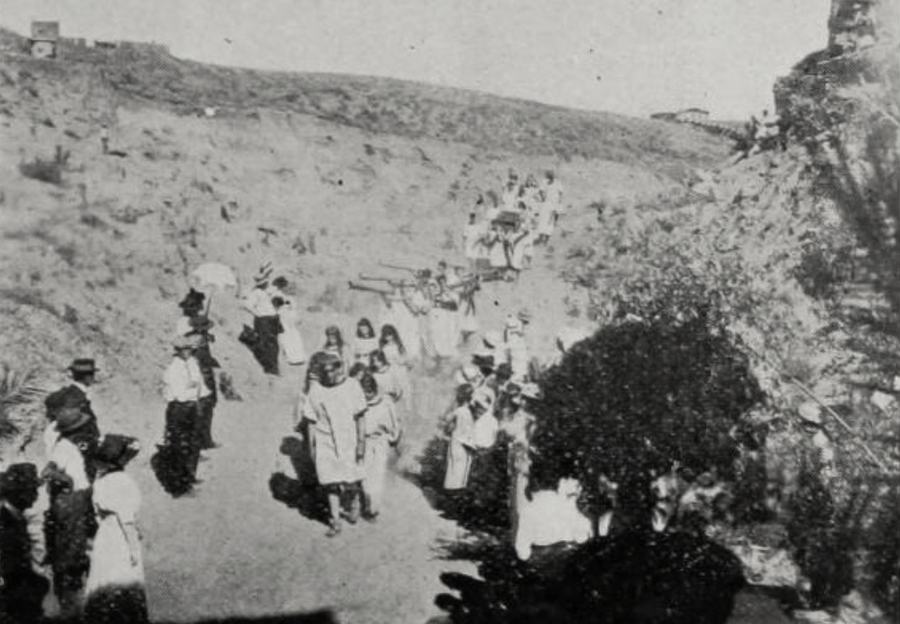
Enter the Dream City: a lunar grid of white concrete and turquoise pools, more Le Corbusier than Jericho. Chance’s drafting table is filmed like an altar; each T-square gleams with the sanctity of relics. Yet the montage of construction is scored by the hollow thud of hammers on hollow promises. Workers wear identical tunics—no names, only numbers—while overhead banners trumpet Stein’s slogan in art-deco sans-serif. The film slyly tilts the camera so the banners appear to crush the laborers, an optical whisper: someone always pays retail for paradise.
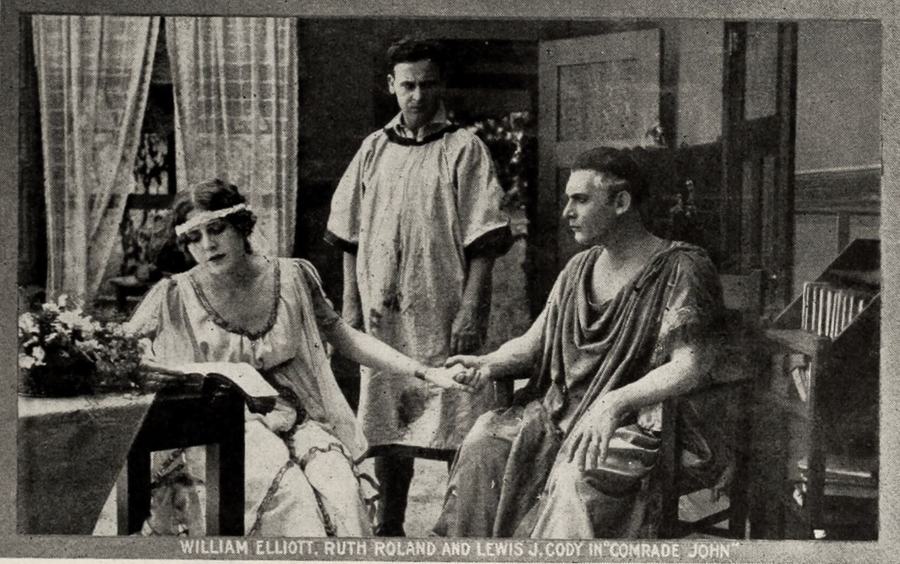
Elliott’s performance tightens here; his shoulders stiffen beneath linen suits, eyes registering each brick as both triumph and indictment. You can see the moment love corrodes complicity—when Cynthia glides through the half-finished agora in a silver gown, apostolic spotlight catching her like a marquee. Stein introduces her as “our living psalm,” but Chance reads the text beneath: she is exhibit A in a flesh-and-blood prospectus. Desire becomes indictment; silence becomes treason.
The inevitable seduction sequence is staged like communion gone septic. Stein corners Cynthia in the glass-brick observatory, moonlight segmenting his face into saint and satyr. Just as hands trespass hems, Chance storms in—not with fists but with a reporter’s business card. The ensuing exposé detonates across front pages: “Prophet’s Coffers Hollow as His Vows.” Note the symmetry: the same press that once amplified Stein’s gospel now devours it, proving newsprint is simply scripture with a shorter shelf life.

Retribution arrives in crimson dusk. The comrades—those faceless shareholders of toil—torch their own handiwork, turning white modernism into a kiln. Cinematographer William Lampe captures flames that lick the screen like hand-tinted serpents; the tinting itself alternates between infernal orange and cadaverous cyan, as though the film itself can’t decide whether this is apocalypse or baptism. Stein flees clutching suitcases of cash, but a charred roof-beam—call it cosmic joist—swings down and crowns him. Death by architecture: the one client Chance never planned for.
Our lovers escape across salt flats, sunrise gnawing the horizon. The intertitle reads: “We will build no more cities, only rooms for each other.” Yet the camera lingers on Cynthia’s eyes—still flecked with ash, still canvases where prophets might scrawl new slogans. The ending is less embrace than ellipsis, a recognition that America’s next utopia is already fundraising somewhere off-screen.
For a silent relic, Comrade John feels eerily algorithmic: charismatic founder, brand-driven commune, leveraged beauty, exit scam. Swap the desert for a coastline and you’ve got contemporary crypto-enclaves. The picture anticipates how ideology becomes real-estate brochure, how revolutionaries measure progress in square footage. Even the title is sly—Comrade implies collectivism, yet the possessive John reasserts individual primacy. That tension buzzes like faulty wiring throughout.
Compare it to Dante’s Inferno of the same decade—both use spectacle to moralize, but where the latter sermonizes in brimstone, Comrade John prefers the chill of ledgers. Or stack it beside Temptation, another tale of a woman commodified by zealotry; here, however, the woman eventually wields the press like a blade, suggesting agency can be reclaimed, if at ruinous cost.
Ruth Roland’s Cynthia is less flapper than flicker—her brightness always threatens to gutter out. Watch her pupils dilate when Stein first recites his mantra; belief looks disturbingly like infatuation. Opposite her, Elliott underplays, letting micro-movements telegraph guilt: a thumbnail worrying a coat seam, a blink held half a second too long. Lew Cody steals every reel, sauntering through frames as though auditioning for both Jesus and Barnum. His smile arrives a fraction before the rest of his face, a lag that feels serpentine.
The film’s visual lexicon oscillates between Germanic angles and American pastoral. Paris sequences evoke expressionist marble: tilted rooftops, shadows slashed across cobblestones like guillotine blades. Dream City, by contrast, is all aerodynamic optimism—until the flames, when the camera adopts handheld tremors decades before that technique had a name. Smoke becomes a character, curling around columns like Old Testament commentary.
Viewed today, the silence feels strategic: it lets our own headlines provide soundtrack—podcasts about NXIVM, tweets about space-age messiahs promising cloud cities. Each intertitle lands like a push-notification from 1923. The absence of spoken dialogue amplifies the body; you hear joints creak, fabric rasp, the imagined clink of coins in Stein’s valise. In that void, complicity resonates loudest.
Is Comrade John a masterpiece? Perhaps not by the marble yardstick of Fides or the epic swagger of Soldiers of Fortune. Yet its brittle brilliance lies in prescience—an unspoken admission that America’s favorite renewable resource is not corn or wind but credulity. The film ends with two silhouettes against an unbuilt horizon, leaving us to wonder whether they will architect something humbler or merely scout the next charlatan with a blueprint. That ambiguity is the final, sly genius: we are not spared complicity; we are handed the match.

IMDb —
1927
Community
Log in to comment.