DbcultAccessing Vault...
5.1/10
Senior Film Conservator
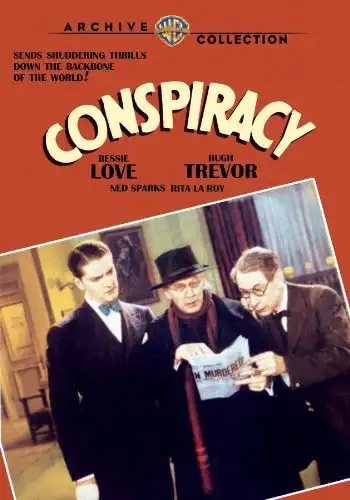
A definitive 5.1/10 rating for a film that redefined the boundaries of cult cinema. Conspiracy remains a cornerstone of transgressive art.
Is Conspiracy (1930) worth your time today? 🕰️
If you are the kind of person who enjoys watching early sound films where the actors seem terrified of the microphones hidden in the flower vases, then absolutely.
Bessie Love fans will find plenty to like here, even if the movie itself feels like it was held together with scotch tape and hope.
Anyone looking for a fast-paced modern thriller should probably stay far away from this one. It moves with the speed of a tired turtle.
The plot centers on Margaret Holt, played by the always-charming Bessie Love. She’s trying to help her brother take down the Schemer Marko gang.
Which is a hilarious name for a gang, by the way. It sounds like something from a Sunday morning cartoon.
Margaret finds herself in a room with Marko—also known as James Morton—and things go south fast. She ends up killing him.
The way the scene is shot is so stiff. It’s like they were afraid that if they moved too much, the camera would explode.
She flees to a home for disadvantaged women. This place is fascinating in that "old movie" way where everyone wears fancy hats even when they are supposed to be broke.
Enter Ned Sparks as Winthrop Clavering. He’s a mystery writer and he is easily the best part of the whole movie.
Sparks has this voice that sounds like a rusty gate hinge. It’s amazing. 🎙️
He and a gossip columnist named John Howell start poking around. They want to "clear" Margaret, even though she actually did do the deed.
There is this one shot where Sparks is looking through a doorway and his expression never changes. He just looks bored and annoyed by everything. I relate to him deeply.
The movie gets much better once the gang starts hunting Margaret down. The tension is almost there, but then someone says a line of dialogue that sounds like it was written by a robot from 1929.
Wait, did I mention the brother? Victor? He gets kidnapped.

The stakes are supposedly high, but everyone talks so slowly that you kind of forget there is a ticking clock. It’s very much a product of its time.
If you’ve seen Bessie Love in Ladies Must Dress, you know she can carry a movie. She does her best here, even when the script is doing her no favors.
There’s a weird bit of business with a character named Maria. The acting is... well, it’s enthusiastic. Maybe a bit too much.
It’s a bit like watching a filmed stage play. Which most of these early 30s movies were, let's be honest.
But there is a certain charm in the clunkiness. You can feel the filmmakers trying to figure out how to tell a story with sound without losing the visual flair of the silent era.
They don't always succeed. Sometimes the silence in a scene goes on for way too long. It’s not a meaningful silence either—it’s just "we forgot to record background noise" silence.
I found myself wondering about the writer, Beulah Marie Dix. She wrote some wild stuff back in the day.
If you like the "girl on the run" trope, this is a decent ancestor to things like Filibus, though much less stylish.
The ending is sort of a mess. Everything wraps up because the plot says it has to, not because it really makes sense.
But hey, it’s only about 70 minutes long. You can't really complain about a movie that knows when to quit.
The chemistry between the writer and the reporter is non-existent. They just kind of stand near each other and say words.
I think I liked it more than I should have. There’s something about the unfiltered weirdness of 1930 that modern movies can't replicate.
It's not polished. It’s not smart. But it has a soul, even if that soul is slightly confused about what it's doing.
Final thought: If you see this on a streaming service late at night, give it a go. Just don't expect it to change your life. 🌙
Oh, and watch out for that doorbell sound. Seriously.
IMDb —
1925
Community
Log in to comment.