DbcultAccessing Vault...
5.4/10
Senior Film Conservator
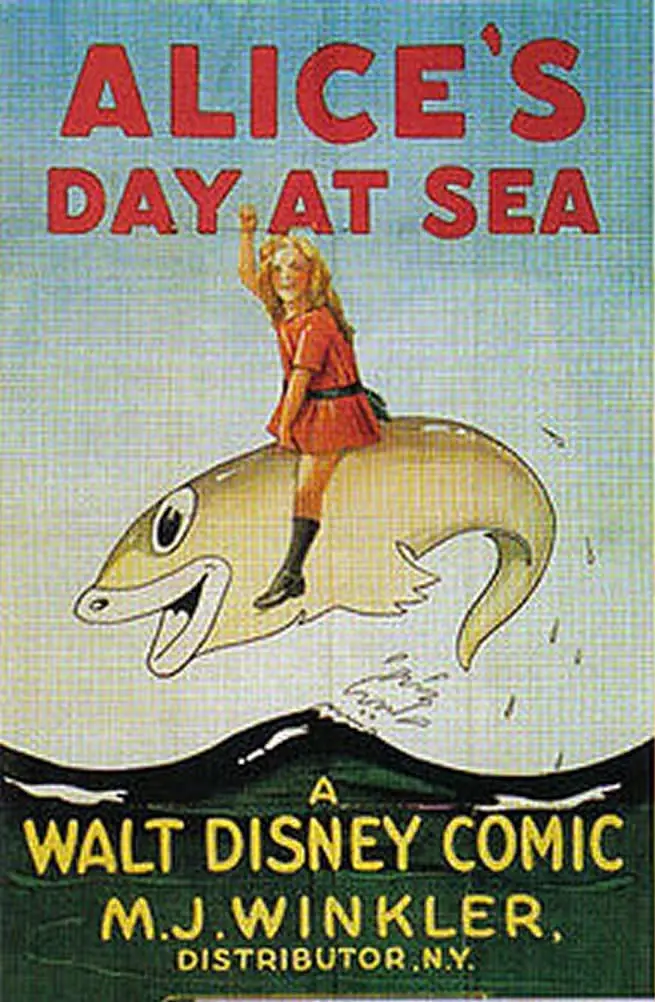
A definitive 5.4/10 rating for a film that redefined the boundaries of cult cinema. Alice's Day at Sea remains a cornerstone of transgressive art.
In the grand tapestry of cinematic history, few threads are as vibrant or as historically significant as the 'Alice Comedies.' To watch Alice's Day at Sea today is to witness the literal birth of a medium’s dominant paradigm. Released in 1924, this film represents the first successful iteration of the series produced by the then-fledgling Disney Brothers Studio in Hollywood. It arrived at a time when the industry was grappling with its own identity, oscillating between the stark realism found in works like The Exiles and the burgeoning demand for fantastical escapism.
The film opens with a deceptively simple premise: young Alice, played with an infectious, unforced charisma by Virginia Davis, ventures to the seaside. The live-action photography captures the rugged textures of the coastline, a stark contrast to the fluid, surrealist imagery that follows. This juxtaposition is not merely a stylistic choice but a revolutionary technical achievement. While other films of the era, such as A Perfect 36, utilized the visual language of the 1920s to explore contemporary social dynamics, Disney and his collaborator Ub Iwerks were interested in the subversion of reality itself.

One cannot discuss Alice's Day at Sea without acknowledging the sheer audacity of its production. Unlike the 'Out of the Inkwell' series by the Fleischer brothers, which placed animated characters in a live-action world, Disney inverted the formula. By filming Davis against a neutral background and then painstakingly compositing her into a fully animated environment, the filmmakers created a sense of immersion that was previously unthinkable. This was a far cry from the more traditional narrative structures seen in The Handy Man or the dramatic tropes of A Child of Mystery.
The transition from the 'real' world to the 'dream' world is handled with a poetic grace. As Alice falls asleep, the screen becomes a portal. The underwater kingdom she enters is a masterpiece of early 20th-century graphic design. Fish don top hats, sharks engage in anthropomorphic antics, and the very water seems to vibrate with a sentient energy. It is a visual feast that echoes the wonder found in Aladdin and the Wonderful Lamp, yet it feels more grounded in the idiosyncratic logic of a child's mind.

Virginia Davis occupies a unique space in film history. Her performance here is remarkably modern; she lacks the histrionic 'theatrics' that plagued many child actors of the silent era. Instead, she offers a performance of genuine curiosity and wonder. Her physical comedy, particularly when interacting with the invisible animated elements, required a level of spatial awareness and imagination that would challenge even contemporary actors working with green screens. In many ways, her role is more demanding than the character studies found in A Daughter of the West or the ensemble dynamics of Hoarded Assets.
Davis's Alice is our surrogate. When she looks at a cartoon shark with a mixture of trepidation and delight, we believe in the shark's existence. This suspension of disbelief is the bedrock upon which the entire Disney empire was built. It is fascinating to compare her naturalistic approach to the more stylized performances in European imports of the time, such as Az utolsó bohém or the emotionally fraught Oltre l'amore.

The animation in Alice's Day at Sea is where the film truly transcends its era. Ub Iwerks, the unsung genius of early animation, brought a rubbery, kinetic energy to the screen that was entirely distinct from his contemporaries. While films like Kitchener's Great Army in the Battle of the Somme were documenting the grim realities of the world, Iwerks was busy redefining the limits of the imagination. The underwater sequence is a riot of movement. The way the animated characters interact with Alice—swimming around her, reacting to her presence—demonstrates a sophisticated understanding of depth and perspective.
The humor is often dark and surreal, a precursor to the 'Silly Symphonies.' There is a sequence involving a giant octopus that feels surprisingly menacing, reminiscent of the psychological tension in Shattered. Yet, the film never loses its whimsical core. It maintains a balance between the uncanny and the delightful, a tightrope walk that many films, such as the mystery-laden Where Is My Wife?, struggle to achieve.

When we look at the landscape of 1924, Alice's Day at Sea stands out as a pivot point. It lacks the gritty social commentary of The Sport of the Gods, but it offers something perhaps more enduring: a new way of seeing. The film's structural integrity is superior to many of its peers. While Cyclone Smith Plays Trumps relied on established Western tropes, Alice was forging a new genre entirely. The 'Alice Comedies' were essentially the R&D department for the future of entertainment.
Consider the pacing. Many silent shorts of the period, like From Dusk to Dawn, could feel languid or disjointed. In contrast, Alice's Day at Sea moves with a brisk, rhythmic confidence. The editing is sharp, ensuring that the transition between the live-action framing story and the animated core is seamless. This level of craft speaks to Walt Disney's emerging sense of narrative economy—a trait that would become a hallmark of his later features.
Reflecting on Alice's Day at Sea nearly a century later, its importance has only grown. It is the document of a young man with a vision and a young girl with a smile, working in a garage to change the world. It is easy to view it as a primitive curiosity, but to do so is to ignore the complexity of its execution. The film addresses the universal human desire to escape the mundane—the same desire that drives the protagonists in Aladdin and the Wonderful Lamp—and gives it a tangible, visual form.
The 'Alice' series eventually gave way to Oswald the Lucky Rabbit, and then to a certain mouse, but the DNA of those characters is present here in the way a cartoon fish winks at the camera or the way Alice navigates her ink-drawn world. This film is a reminder that cinema was once a medium of pure, unadulterated invention. It didn't need the heavy-handed drama of Shattered or the historical weight of Kitchener's Great Army to make an impact. It only needed a girl, a sea, and a dream.
In conclusion, Alice's Day at Sea is more than just a historical footnote. It is a vibrant, breathing piece of art that continues to charm and inspire. It represents the moment when the boundaries between the real and the imagined were first truly blurred, inviting us all to take a dip into the deep, blue sea of the subconscious. Whether you are a student of animation history or simply a lover of classic cinema, this short film is an essential viewing experience—a brilliant spark that ignited a fire that still burns today across every screen in the world.

IMDb —
1919
Community
Log in to comment.