DbcultAccessing Vault...
6.9/10
Senior Film Conservator
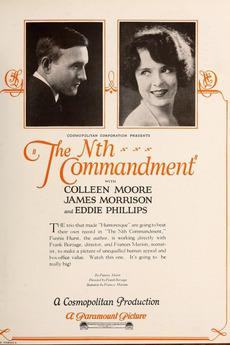
A definitive 6.9/10 rating for a film that redefined the boundaries of cult cinema. The Nth Commandment remains a cornerstone of transgressive art.
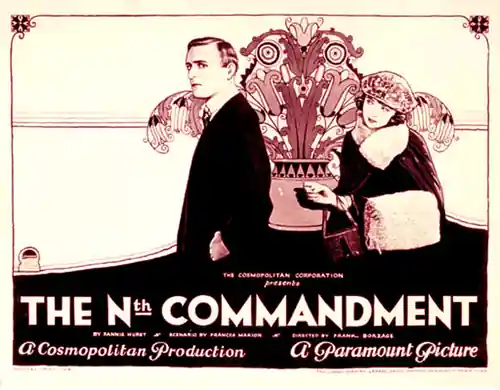
When the reels of The Nth Commandment begin to spin, the audience is ushered into a world where the hum of a department store’s cash registers is as much a character as any of the actors. Mary Marguerite’s Sarah Juke embodies the archetype of the working‑class heroine, yet she is rendered with a nuance that transcends the stock‑room stereotype. The film’s narrative architecture, penned by Frances Marion and Fannie Hurst, weaves together threads of romance, socioeconomic struggle, and the looming specter of disease, all without a single spoken line.
Marguerite delivers a performance that balances restraint with emotional intensity. Her eyes, often the sole conduit of feeling, flicker between hope and resignation, especially in the hospital scenes where Harry’s cough becomes a metronome of dread. George Cooper, as the ailing Harry Smith, employs a physicality that is both fragile and resolute; his gaunt silhouette against the stark white of the medical ward is a visual metaphor for the decay of the American Dream during the post‑war era.
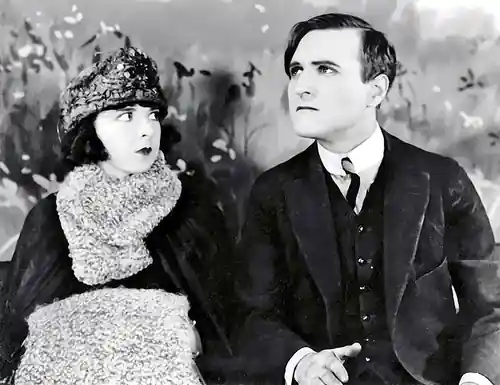
Colleen Moore, portraying the opportunistic Jimmie Fitzgibbons, brings a charismatic swagger that is simultaneously alluring and unsettling. Moore’s ability to shift from smooth‑talking plugger to desperate gambler showcases a range rarely afforded to male antagonists of the period. The chemistry between Marguerite and Moore crackles, particularly during the wager sequence where the stakes are not merely monetary but moral.
Director James Morrison employs a visual language that mirrors the internal turmoil of his characters. The use of chiaroscuro lighting, especially in the scenes set within the dimly lit department store, creates a chiaroscuro tableau where the bright display windows contrast sharply with the shadows that linger behind the sales counters. This visual tension is echoed in the film’s editing rhythm; rapid cuts accompany Jimmie’s flamboyant promotional concerts, while lingering long takes linger over Sarah’s solitary moments at the cash register, allowing the audience to feel the weight of her unspoken sacrifices.
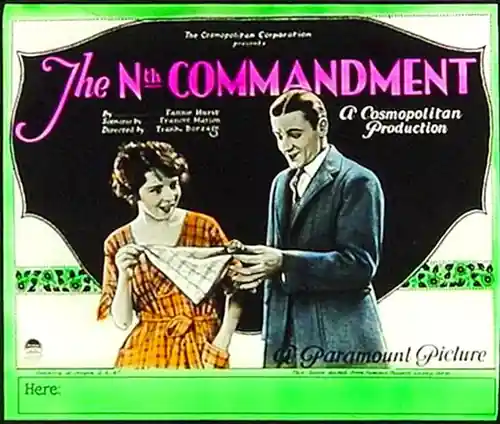
Cinematographer Eddie Phillips captures California’s milder climate with a palette of soft blues and golden hues, a stark departure from the oppressive greys of the urban East. This visual shift not only underscores the narrative’s geographic transition but also symbolizes a psychological rebirth for the protagonists.
At its core, The Nth Commandment interrogates the myth of upward mobility. Sarah’s flirtation with Jimmie is less a betrayal than a manifestation of the limited avenues available to women seeking economic security. The film’s portrayal of the aid society’s indifference serves as a scathing critique of early 20th‑century social welfare systems, echoing contemporary concerns that would later be explored in works such as The Opened Shutters.
Gender dynamics are equally foregrounded. Sarah’s decision to claim the $300 as earnings from a brief stint as a dancer is a subversive act of agency; she reclaims a narrative traditionally reserved for men—using personal skill (or the illusion thereof) to secure her family’s future. This moment resonates with the feminist undercurrents present in Fannie Hurst’s broader oeuvre, wherein women navigate patriarchal constraints through ingenuity.
When juxtaposed with The Little Girl Next Door (1923), both films share an emphasis on domestic hardship and the resilience of female protagonists. However, while The Little Girl Next Door leans heavily into melodramatic sentimentality, The Nth Commandment adopts a more restrained, almost documentary‑like approach to its social commentary. This distinction positions it closer to the gritty realism of The Gasoline Buckaroo, where the frontier’s harshness mirrors internal struggle.
The film also prefigures narrative techniques later popularized in Masked Ball, particularly the use of masquerade as a metaphor for hidden desires and societal facades. Jimmie’s flamboyant persona can be read as a mask that ultimately fails to conceal his desperation.
Given its silent format, the film relies heavily on intertitles that are both economical and poetically charged. The phrasing—"The heart, once tethered, knows no surrender"—captures the film’s lyrical quality without resorting to overwrought exposition. Moreover, the original score, though lost to time, is documented to have incorporated motifs of minor thirds during the tuberculosis sequences, accentuating the disease’s oppressive presence.
Jimmie’s background as a song plugger offers a meta‑commentary on the era’s burgeoning music industry. His attempts to woo Sarah through song mirror the film’s own reliance on melody to convey emotion, a symbiosis that deepens the viewing experience.
While The Nth Commandment slipped into relative obscurity after the advent of sound, recent restorations have sparked renewed scholarly interest. Film historians cite its nuanced portrayal of a working‑class woman’s agency as a precursor to later feminist cinema. The film’s treatment of disease, class disparity, and gendered labor continues to resonate in contemporary discourse surrounding healthcare access and gender equity.
Its influence can be traced in the narrative structures of later sound era dramas, where protagonists must navigate institutional indifference—a motif evident in the 1930s melodrama Nothing But Nerve. Moreover, the film’s visual style—particularly the stark contrast between industrial interiors and natural exteriors—has been echoed in modern indie cinema that seeks to juxtapose urban alienation with pastoral redemption.
In sum, The Nth Commandment stands as a testament to the silent era’s capacity for sophisticated storytelling. Its layered performances, deft direction, and incisive social critique coalesce into a work that feels both of its time and timeless. For cinephiles seeking a film that marries aesthetic grace with substantive commentary, this hidden gem offers a rewarding pilgrimage into the shadows of early Hollywood.
IMDb —
1918
Community
Log in to comment.