DbcultAccessing Vault...
4.7/10
Senior Film Conservator
A definitive 4.7/10 rating for a film that redefined the boundaries of cult cinema. Creation remains a cornerstone of transgressive art.
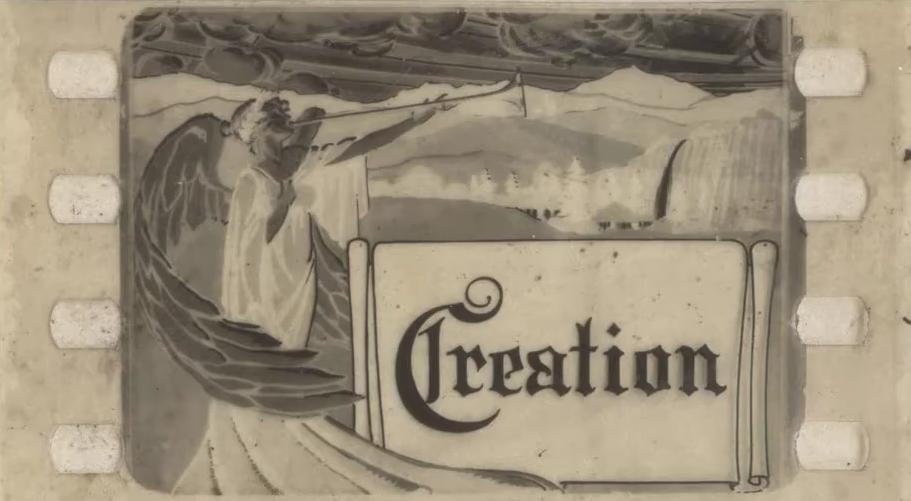
To approach a film titled 'Creation' is to prepare for an encounter with the monumental, the foundational, and perhaps, the utterly abstract. In the annals of cinema, few titles promise such grandiosity, and even fewer deliver with the audacious vision found in this silent-era marvel. Directed and penned by the collaborative genius of Tack Knight, Pinto Colvig, and Byington Ford, this picture stands as a testament to the boundless ambition of early filmmakers, daring to tackle the very genesis of existence without the crutch of spoken dialogue or advanced special effects. What unfolds on screen is not merely a narrative, but a profound, almost spiritual, journey into the primordial soup of being, a visual poem that challenges the viewer to contemplate the origins of everything.
The film’s brilliance lies in its radical departure from conventional storytelling. Instead of following characters through a linear plot, 'Creation' invites us to witness a series of allegorical tableaux, each meticulously crafted to evoke a specific stage or aspect of the universe's birth. The opening sequence, a vast expanse of unyielding darkness, is not merely a black screen; it is pregnant with possibility, a void humming with unspoken potential. The subtle shifts in light, the almost imperceptible movement of shadows, signal the first stirrings of energy, a cosmic heartbeat beginning to reverberate through nothingness. This early segment is a masterclass in minimalist filmmaking, demonstrating how atmosphere and suggestion can be far more potent than explicit exposition. It forces the audience to engage their imagination, to fill the vast emptiness with their own understanding of beginnings.
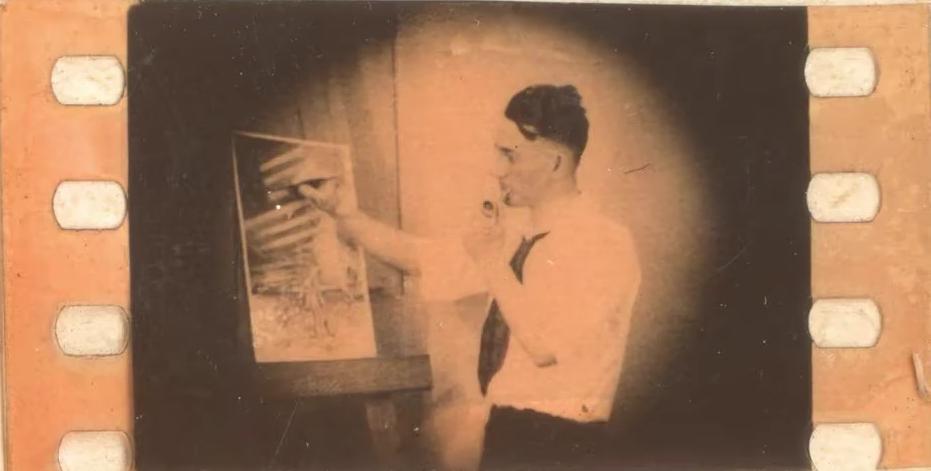
As the film progresses, we are introduced to the figures who embody the forces of creation. Tack Knight, known for his intense physicality and expressive pantomime, delivers a performance that transcends mere acting. He is the prime mover, the sculptor of worlds, his every gesture imbued with monumental effort and visionary intent. Whether wrestling with colossal, amorphous blobs of clay-like substance or gesturing with a divine authority that seems to pull light from darkness, Knight’s portrayal is less character and more a personification of will. He exudes a raw, untamed power, yet beneath it lies a profound artistic sensibility, suggesting that creation is not merely a brute force act, but a delicate, painstaking process of shaping and refining. His silent screams of effort and quiet moments of contemplation resonate deeply, communicating the immense burden and sublime joy of bringing form to the formless.
Complementing Knight’s central force,
Byington Ford, in turn, provides the necessary counterpoint of order and emergent structure. His presence is a calming, synthesizing force amidst the maelstrom. Ford’s subtle gestures and deliberate, almost architectural movements suggest the establishment of laws, the formation of patterns, and the gradual solidification of form from chaos. He is the quiet architect, the one who lays the foundations, who brings symmetry and balance to the wild energies unleashed by Colvig and harnessed by Knight. His scenes often depict the aggregation of smaller elements into larger, more complex structures, or the serene establishment of celestial bodies in their orbits. Together, these three performers, under their own directorial guidance, craft a stunning visual allegory for the intricate dance between will, chaos, and order that underpins all existence.
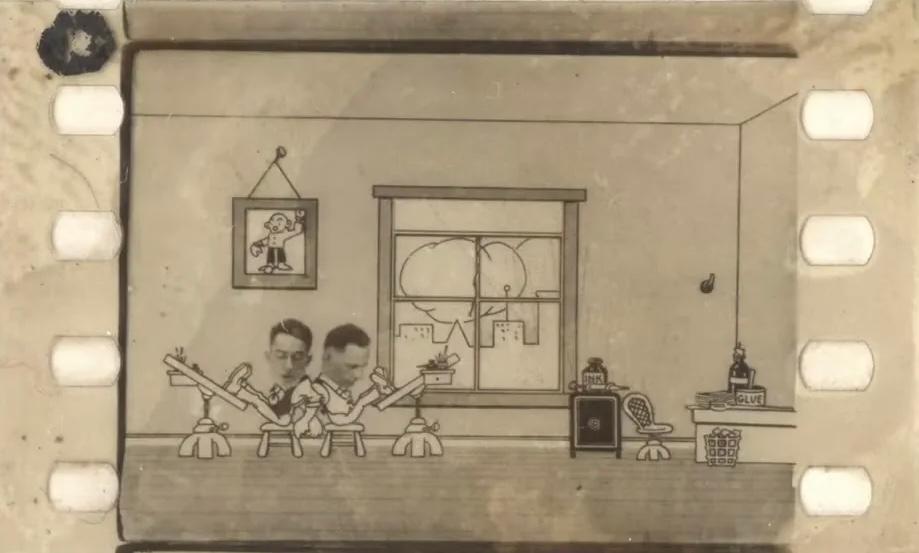
The technical achievements of 'Creation' are nothing short of revolutionary for its era. The filmmakers ingeniously employ a myriad of techniques, from innovative stop-motion animation that brings abstract shapes to life, to sophisticated matte paintings that depict vast, alien landscapes. The use of double exposure and carefully controlled lighting creates ethereal, otherworldly effects, suggesting cosmic dust clouds and nascent galaxies. The pacing is deliberate, allowing the audience to absorb the visual information, to meditate on the profound implications of each frame. It’s a rhythmic experience, almost like a symphony without sound, where the visual crescendos and diminuendos guide the emotional and intellectual journey. The film’s silent nature is not a limitation but a liberation, allowing for a universal language of imagery that transcends cultural and linguistic barriers.
Comparing 'Creation' to other films of its time reveals its pioneering spirit. While films like The Life of Our Saviour; or, The Passion Play delved into foundational religious narratives, they did so with a more conventional, albeit epic, storytelling approach. 'Creation', by contrast, seeks to explore the *mechanics* of genesis itself, rather than a specific divine act, offering a more philosophical and less dogmatic interpretation. Its abstract nature also sets it apart from more narrative-driven features like The Warning or Tangled Hearts, which focused on human drama and emotional entanglements. Instead, 'Creation' aligns more closely with the experimental spirit found in early avant-garde movements, pushing the boundaries of what cinema could represent beyond mere documentation or melodramatic spectacle.
The influence of 'Creation', though perhaps not immediately obvious in mainstream cinema, can be felt in the undercurrents of experimental film and animation for decades to come. Its bold visual language and thematic ambition laid groundwork for future artists exploring non-linear storytelling and abstract concepts. One could even draw parallels to the existential dread and the creation of artificial life explored in later works like The Golem, though 'Creation' approaches its subject with a more cosmic, less human-centric perspective. The film's ability to evoke profound wonder and philosophical inquiry without a single spoken word is a testament to the sheer power of visual narrative when wielded by true masters.
The collaborative writing and directing process, shared by Tack Knight, Pinto Colvig, and Byington Ford, is crucial to understanding the film’s unique texture. This was clearly not a project where one vision dominated; rather, it feels like a synthesis of distinct artistic voices, each contributing a vital component to the whole. Knight’s conceptual rigor, Colvig’s dynamic energy, and Ford’s sense of structural elegance combine to form a cohesive, yet multifaceted, exploration of creation. Their shared authorship suggests a deep mutual respect and a collective drive to push the boundaries of cinematic expression, resulting in a work that feels both intensely personal and universally resonant.
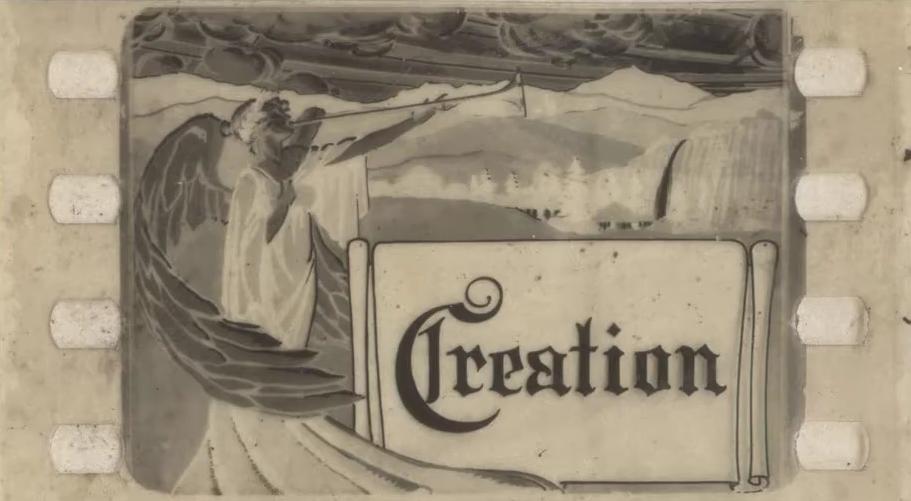
What truly elevates 'Creation' beyond a mere technical exercise is its profound emotional and intellectual impact. Despite its abstract nature, the film manages to evoke a sense of awe, fragility, and wonder. The birth of stars, the formation of oceans, the first stirrings of life – these are not just visual spectacles, but moments imbued with a deep sense of significance. The film taps into a collective human curiosity about our origins, offering a visual hypothesis that is both poetic and thought-provoking. It’s a reminder that even in the earliest days of cinema, filmmakers were grappling with the biggest questions, using the nascent art form to explore the very fabric of reality.
While many films from this era, such as The Boer War or 1915 World's Championship Series, focused on documenting contemporary events or popular culture, 'Creation' turned its gaze inward and outward simultaneously, exploring an internal landscape of ideas while depicting a cosmic external reality. It eschews the sensationalism of melodramas like Under the Gaslight or the intricate character studies of Dr. Rameau, choosing instead to operate on a more primal, universal level. This daring choice is precisely what makes it endure as a singular piece of cinematic art. It’s a film that demands multiple viewings, each revealing new layers of symbolism and new depths of artistic intention.
The legacy of 'Creation' is not found in blockbuster ticket sales or widespread popular acclaim upon its release, but in its quiet, persistent influence on the artistic consciousness of cinema. It is a film for thinkers, for dreamers, for those who seek more than simple entertainment from the moving image. It challenges perceptions, expands the notion of what film can be, and remains a powerful testament to the pioneering spirit of its creators. The visual poetry, the philosophical depth, and the sheer artistic audacity of 'Creation' secure its place as an essential, albeit often overlooked, masterpiece in the history of film. It is a film that doesn't just tell a story; it performs an act of creation itself, right before your eyes.
Even when considering films that explored complex human emotions or societal issues, such as The Sins of the Mothers or Infatuation, 'Creation' stands apart by shifting the scale of its inquiry. It doesn't ask about individual human failings or romantic entanglements; it probes the very conditions that allow for human existence, for emotion, for love, and for sin. It’s a grander, more encompassing narrative, even in its abstractness. This film serves as a reminder that the art of cinema, from its earliest moments, possessed the capacity for profound philosophical discourse, not just escapist fantasy. The ingenious use of light and shadow, the meticulous composition of each frame, and the evocative performances by Tack Knight, Pinto Colvig, and Byington Ford combine to form a truly unforgettable experience that continues to resonate with anyone who engages with its timeless themes.
The film, a veritable ballet of nascent forms and evolving landscapes, masterfully utilizes its silent medium to elevate the visual experience to an almost spiritual plane. The absence of dialogue compels the viewer to focus intensely on the imagery, on the subtle shifts in expression from Knight, on the dynamic contortions of Colvig, and on the serene gestures of Ford. This focus transforms the act of viewing into a meditative process, allowing the abstract concepts of emergence and formation to sink in without the distraction of verbal exposition. It's a testament to the early pioneers of film who understood the profound power of purely visual storytelling, crafting a universal language that transcends any spoken tongue. 'Creation' remains an unparalleled achievement, a daring and beautiful exploration of the most fundamental question of all: how did it all begin?

IMDb 5.9
1931
Community
Log in to comment.