DbcultAccessing Vault...
Cult Review
Senior Film Conservator
Is 'Creeps' worth watching today? Short answer: If you possess a particular, perhaps peculiar, appreciation for pre-code cinematic oddities and proto-horror slapstick, then absolutely. This film is for the adventurous cinephile who relishes uncovering the forgotten, the bizarre, and the utterly unhinged, but it is decidedly not for anyone seeking conventional narrative, polished production, or anything resembling modern horror sensibilities.
This obscure 1930s curiosity, largely forgotten by the mainstream, operates on a logic entirely its own. It's a film that defies easy categorization, blending slapstick comedy with nascent horror elements and a dash of surrealism that feels almost accidental. For those willing to embrace its anachronistic charm and questionable comedic choices, 'Creeps' offers a fascinating, if sometimes uncomfortable, glimpse into early genre experimentation.
To approach 'Creeps' with contemporary expectations is to set oneself up for disappointment. This is a film born of an era where narrative coherence often took a backseat to sight gags and rapid-fire absurdity. Its plot, a series of increasingly outlandish events, seems less meticulously crafted and more like a stream of consciousness from a particularly mischievous dream. The central premise—inheriting a property with a thirty-day occupancy clause—is a classic setup, but the execution quickly veers into the delightfully unhinged.
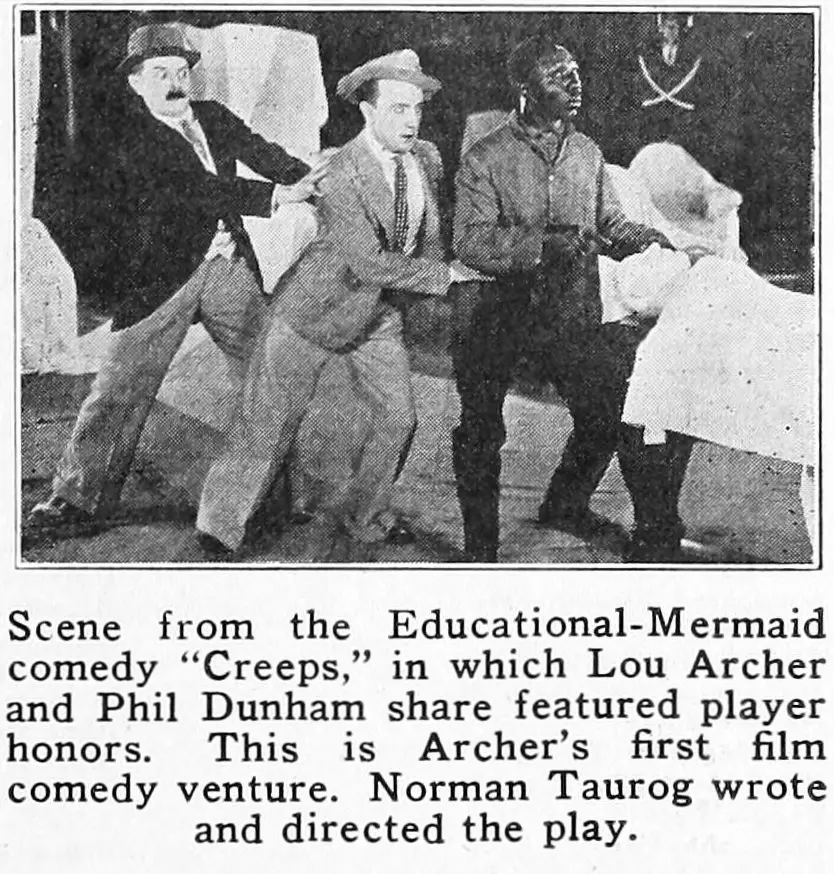
The journey of Phil and Lou (played by Phil Dunham and Lou Archer, respectively, who also co-wrote the film) is less an adventure and more a descent into a comedic fever dream. The accidental shooting of a black man, who then inexplicably joins their party, is a moment that immediately dates the film and raises significant ethical questions for modern audiences. It’s a stark reminder of the problematic racial tropes prevalent in early cinema, handled here with a casualness that is both shocking and historically illuminating. This moment, more than any other, serves as a litmus test for a viewer's tolerance for the film's outdated sensibilities.
The direction by Norman Taurog, who would later win an Oscar for 'Skippy', here feels less like a meticulously planned endeavor and more like a series of improvisational decisions. The pacing is frantic, almost breathlessly so, jumping from one bizarre scenario to the next without much concern for logical transitions. This contributes to the film's dreamlike quality, where cause and effect are often secondary to the visual gag or the sudden appearance of another 'weird-form'.
The 'weird-forms' themselves are a highlight of the film's proto-horror ambition. While rudimentary by today's standards, they represent an early attempt at creating on-screen scares through costumed figures and shadow play. These sequences, driven by Anita Garvin's villainous Anita and her hired henchmen, introduce a genuinely unsettling element amidst the slapstick. They are less terrifying and more bizarre, contributing to the overall sense of disorienting fun. One particular sequence involving a figure contorting through a doorway, though brief, showcases a surprising ingenuity with limited resources.
The cast, including Stanley Blystone and Spencer Bell, lean into the absurdity with an admirable commitment. Phil Dunham and Lou Archer, as the beleaguered protagonists, embody a brand of wide-eyed confusion that serves the film's tone perfectly. Their reactions to the escalating madness are often the most grounded elements, providing an anchor for the audience amidst the narrative's wild swings. Anita Garvin, as the scheming cousin, chews scenery with delightful villainy, her motivations simple but effective in driving the plot's chaotic engine.
It’s difficult to critique the acting in 'Creeps' by modern metrics. These are performances steeped in the theatricality of early sound film, often exaggerated for comedic effect. There's a certain charm in their broad gestures and straightforward delivery, a refreshing lack of subtlety that stands in stark contrast to the nuanced performances we expect today. The film’s strength lies in its ensemble’s willingness to embrace the outlandish, rather than their ability to craft complex character arcs.
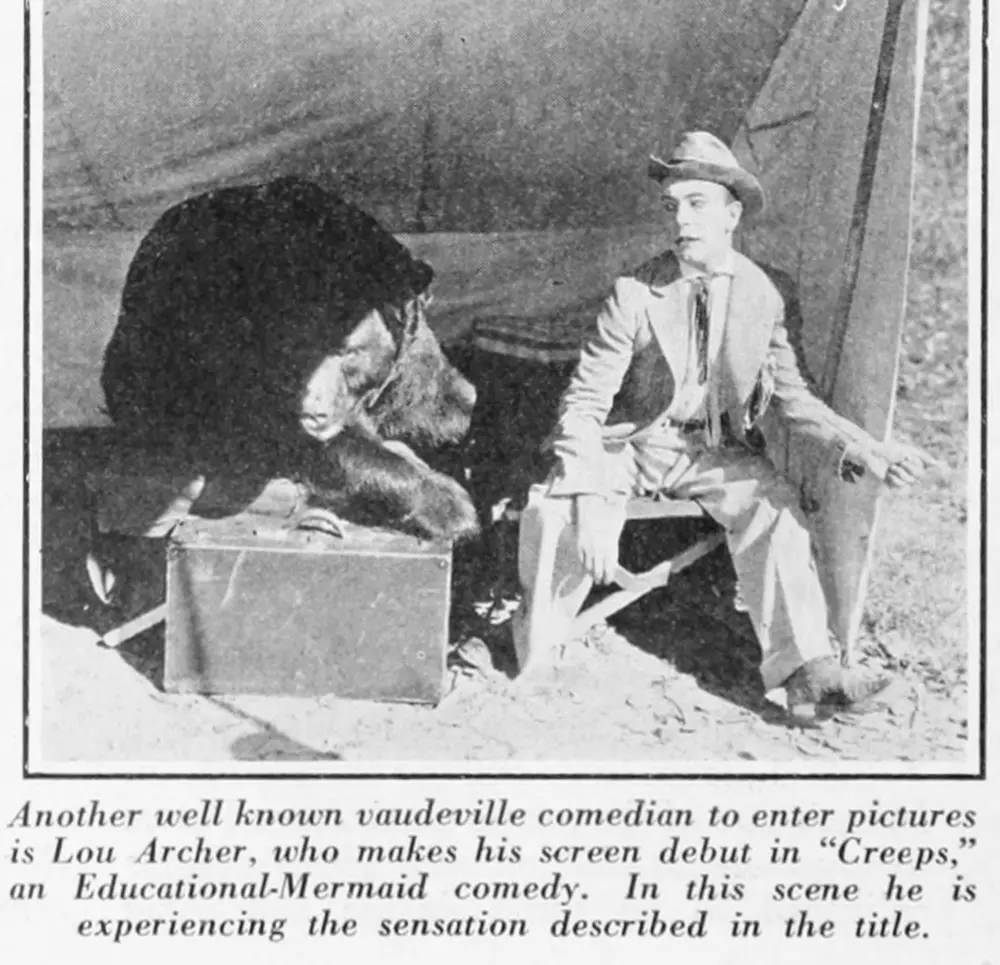
The cinematography, while not groundbreaking, effectively conveys the film's atmosphere. Shots are functional, designed to capture the action and the gags rather than to create elaborate visual poetry. The use of shadows in the 'weird-form' sequences is particularly notable, hinting at a nascent understanding of how to build suspense with minimal lighting. This is a film that was likely made quickly and efficiently, and its visual style reflects that practicality.
One of the most striking visual moments, and indeed the film's climax, is the reveal of the swimming pool as a signboard. This moment is pure surrealism, a meta-commentary on the illusion of cinema itself, or perhaps just a supremely odd punchline. It shatters any lingering illusion of reality, leaving the audience to ponder the entire journey as a grand, nonsensical prank. It’s a moment that sticks with you, long after the credits roll, precisely because of its unexpected, almost Dadaist, nature.
For the casual viewer, 'Creeps' will likely be a bewildering, perhaps even frustrating, experience. Its humor is dated, its narrative logic is tenuous, and its problematic elements cannot be ignored. However, for those with a deep appreciation for film history, particularly the transitional period of early sound cinema, 'Creeps' offers invaluable insights. It showcases the raw, unbridled experimentation that characterized the era, where filmmakers were still figuring out the rules, and often, gleefully breaking them.
It's a historical document as much as it is an entertainment piece. Viewing it allows us to trace the lineage of horror-comedy, to see the seeds of future genre conventions being planted in the fertile, if sometimes muddy, ground of pre-code cinema. Its sheer audacity and commitment to its own peculiar vision make it a fascinating, if not always enjoyable, watch. It's a relic, yes, but a genuinely curious one.
The film's pacing is relentlessly quick, perhaps to prevent the audience from dwelling too long on any single plot hole or questionable gag. This rapid-fire approach keeps the energy high, even when the humor doesn't quite land. The tone oscillates wildly between broad slapstick and moments of genuine, albeit mild, menace. This tonal inconsistency is part of its charm, reflecting a period when genre boundaries were far more fluid.
The humor is often physical, relying on pratfalls, chases, and exaggerated reactions. There are elements that feel akin to early silent film comedies, adapted for the sound era. The dialogue, while present, often serves to set up the next visual gag rather than to deliver witty repartee. It's a very specific brand of humor, one that requires a certain level of historical empathy to fully appreciate, or at least tolerate. It works. But it’s flawed.
'Creeps' exists in a fascinating pocket of film history, a pre-Code era where censorship was less stringent, allowing for more risqué or simply stranger content. Films like The Splendid Sinner or Are Parents People? might have offered more conventional narratives, but 'Creeps' chose a different path entirely. It's a testament to the sheer variety of cinematic output during this period, from grand dramas to utterly bizarre genre mashups.
Its lasting impact is perhaps less about its influence on future films and more about its existence as a unique artifact. It’s a film that reminds us that cinema, even in its early days, was a playground for the weird and wonderful. While it might not be a 'masterpiece' by any conventional definition, it is undeniably memorable for its sheer audacity and its commitment to its own peculiar vision.
For all its flaws and anachronisms, 'Creeps' stands as a fascinating, if deeply strange, piece of cinematic history. It's a film that demands an open mind and a willingness to forgive its more egregious missteps in favor of its sheer, unadulterated oddity. It will not appeal to everyone, and indeed, it shouldn't. But for those who delight in uncovering the forgotten corners of film, who appreciate the raw, experimental energy of early cinema, 'Creeps' offers a chaotic, unforgettable ride. It’s not a film you’ll necessarily love, but it’s certainly one you won’t forget. Its surreal ending alone is worth the price of admission for the curious cinephile. Dive in, if you dare, and prepare for a journey unlike any other.
IMDb 6.6
1916
Community
Log in to comment.