DbcultAccessing Vault...
4.5/10
Senior Film Conservator
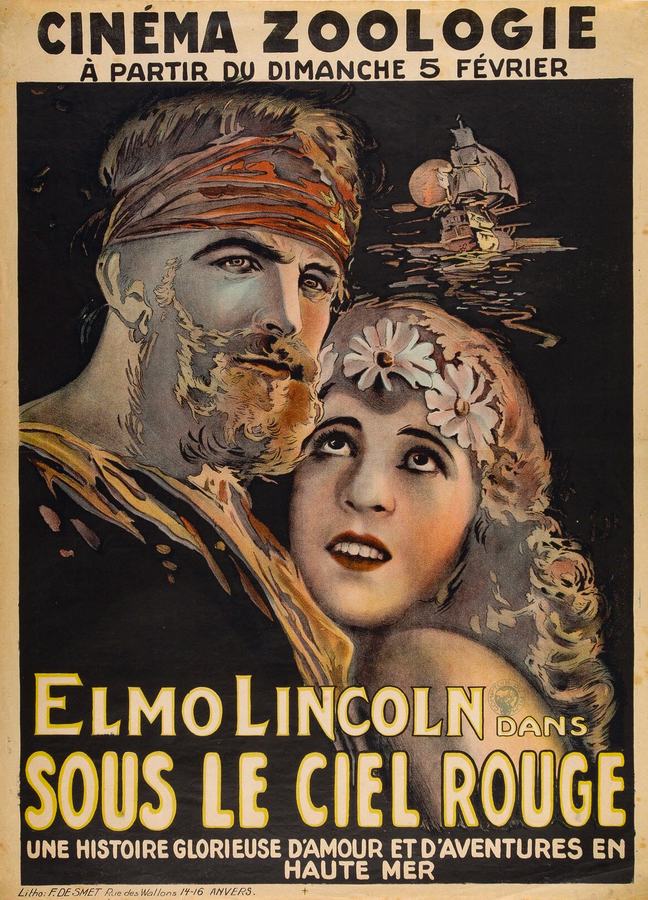
A definitive 4.5/10 rating for a film that redefined the boundaries of cult cinema. Under Crimson Skies remains a cornerstone of transgressive art.
In the pantheon of 1920s cinema, few artifacts capture the sheer visceral magnitude of maritime existentialism quite like Under Crimson Skies. Directed with a surprising penchant for grit and atmospheric dread, the film serves as a stark departure from the more sanitized adventures of the era. We are introduced to Captain Anthony Yeatman, played with a heavy-set gravitas by Elmo Lincoln. Lincoln, largely immortalized as the screen's first Tarzan, sheds the loincloth for the naval jacket, bringing a physicality to the role that feels grounded in the actual labor of the sea. Unlike the refined protagonists found in The Moral Code, Yeatman is a man of the elements, whose eventual fall from grace feels less like a moral lapse and more like a collapse of structural integrity.
The plot’s inciting incident—an affair with a passenger's wife—might seem pedestrian by modern standards, yet within the claustrophobic confines of a sailing vessel, it functions as a catalytic agent for absolute disaster. The cinematography utilizes the tight spaces of the ship to mirror the tightening noose of the Captain's choices. This isn't the lighthearted romantic friction one might expect from a film like On the Quiet; rather, it is a suffocating, guilt-ridden liaison that threatens the safety of everyone on board. The wife, portrayed with a haunting vulnerability by Mabel Ballin, becomes a symbol of the Captain's lost North Star. Their interactions are framed through shadows and the constant, rhythmic swaying of the ship, creating a sense of instability that permeates the entire first act.

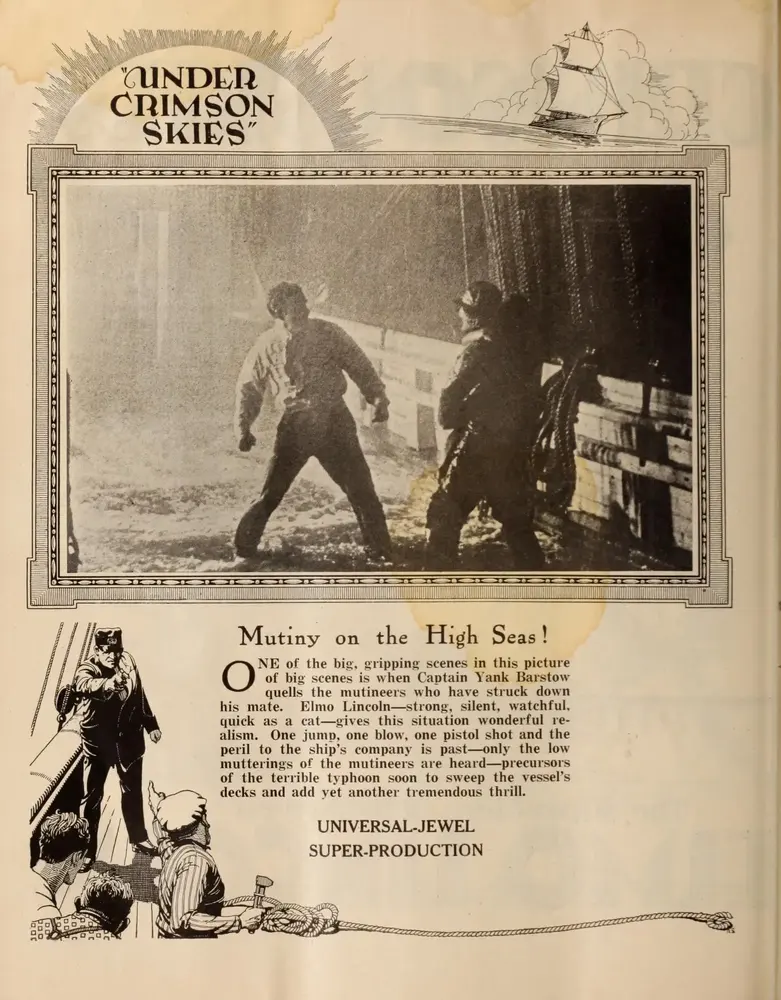
When the mutiny finally erupts, it is not merely a plot point but a cinematic explosion. The crew, led by the imposing Noble Johnson, represents a disenfranchised proletariat that has finally found the Captain’s weakness. Johnson’s presence is electrifying; as one of the most prolific Black actors and filmmakers of the silent era, his role here carries a weight of authority that challenges the racial hierarchies of 1920 Hollywood. The choreography of the revolt is chaotic and brutal, eschewing the polished stunts of Lightning Bryce for something more akin to a back-alley brawl. The deck becomes a stage for a primal struggle, where the romantic delusions of the upper deck are violently dismantled by the reality of the hold.
While many films of this period, such as The Walls of Jericho, focused on the crumbling of social structures within the safety of drawing rooms, Under Crimson Skies takes that destruction to the edge of the world. The ship, once a symbol of human ingenuity and order, becomes a drifting tomb. The writing by J.G. Hawks and Harvey F. Thew is particularly sharp here, using the isolation of the sea to strip the characters down to their most basic, and often ugliest, instincts.
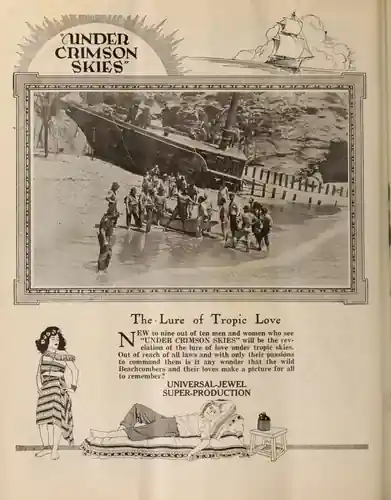
Just as the audience begins to believe the maritime disaster is the film’s zenith, the narrative shifts gears with a jarring, yet effective, transition into a South American revolution. This second act expansion provides a scale that was rarely seen in the early 20s. The Captain, now a disgraced wanderer, finds himself embroiled in a struggle that mirrors his internal conflict. The revolution is depicted with a surprising amount of political nuance, avoiding the simplistic 'good vs evil' tropes found in One More American. Instead, it presents a world in flux, where loyalty is a currency that is rapidly devaluing. The use of location shooting (or highly convincing sets for the time) adds a layer of dust and heat that contrasts beautifully with the cold, blue-tinted scenes of the Atlantic.
The supporting cast, including the likes of Ethel Irving and Harry von Meter, provide a textured backdrop to the Captain’s redemption arc. Von Meter, in particular, excels as a figure of calculating menace, providing a foil to Lincoln’s more visceral performance. The film’s pacing during the revolutionary sequences is frantic, mirroring the instability of the government it depicts. It shares a certain thematic DNA with Harakiri in its exploration of duty and the heavy price of honor, though it trades the latter’s poetic stillness for a more aggressive, American style of storytelling.
From a technical perspective, Under Crimson Skies is a marvel of early editing. The cross-cutting between the ship’s descent into mutiny and the rising tensions on land creates a sense of inevitable doom. The tinting—deep ambers for the desert heat and haunting indigos for the night at sea—is not merely decorative; it is emotional. When the titular 'Crimson Skies' appear, the screen is bathed in a blood-red hue that signals the finality of the characters' fates. This visual flair reminds one of the experimental risks taken in The Splendid Sin, where the camera was used as a subjective tool rather than just a recording device.
The score (as reconstructed in modern archives) often emphasizes the rhythmic creaking of the ship, a sound that silent film directors had to convey through purely visual cues. The way Lincoln grips the wheel, the sweat on the brows of the mutineers, the fluttering of the tattered sails—all of these elements work in concert to create a sensory experience that transcends the lack of spoken dialogue. It is a testament to the power of visual storytelling before the advent of the 'talkie' flattened the medium’s creative grammar.
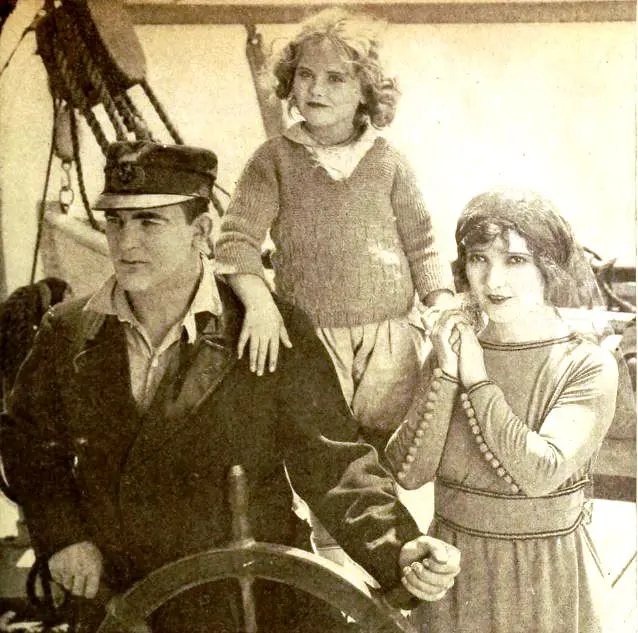
Why does Under Crimson Skies resonate today? Perhaps it is because it refuses to offer easy redemptions. Captain Yeatman is not a hero in the traditional sense; he is a man who fails his post, fails his moral code, and spends the rest of the film trying to survive the consequences. In an era where many films were preoccupied with moral didacticism, this work feels refreshingly modern in its cynicism. It doesn't possess the whimsical charm of Chris and His Wonderful Lamp, nor the straightforward detection of The Detectress. It is a heavy, brooding piece of work that demands the viewer's full attention.
The film also serves as a crucial point of comparison for other maritime dramas of the period, such as Der Seelenverkäufer. While the European counterparts often veered into expressionism, Under Crimson Skies remains firmly rooted in a rugged American realism. The sheer scale of the production, from the storm sequences to the street battles, highlights the ambition of the early studio system before it became overly formulaic.
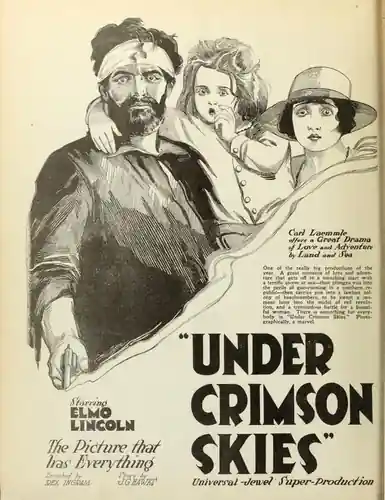
As the final frames flicker out, leaving the audience in the silence of the theater, the impact of the film’s journey remains. We have traveled from the disciplined deck of a merchant vessel to the lawless streets of a nation in revolt. We have seen the destruction wrought by a single moment of passion. Under Crimson Skies is more than just a silent melodrama; it is a profound exploration of the fragility of human institutions. Whether it be the command of a ship or the sovereignty of a nation, everything is subject to the whims of the 'crimson skies'—those moments of bloody transition that define history and the individual alike.
For those who appreciate the historical evolution of the action-drama, this film is essential viewing. It bridges the gap between the theatrical staginess of the 1910s and the cinematic fluidity of the late 20s. It is a reminder that even a century ago, filmmakers were grappling with the same themes of power, betrayal, and the search for a moral compass in a world that often seems to have lost its way. It stands alongside works like The Turn of the Road as a quintessential piece of silent storytelling that deserves to be pulled from the shadows of obscurity and viewed with fresh, appreciative eyes.
Final Rating: A Haunting 8.5/10 - A Maritime Epic That Still Bites.
IMDb —
1923
Community
Log in to comment.