DbcultAccessing Vault...
Cult Review
Senior Film Conservator
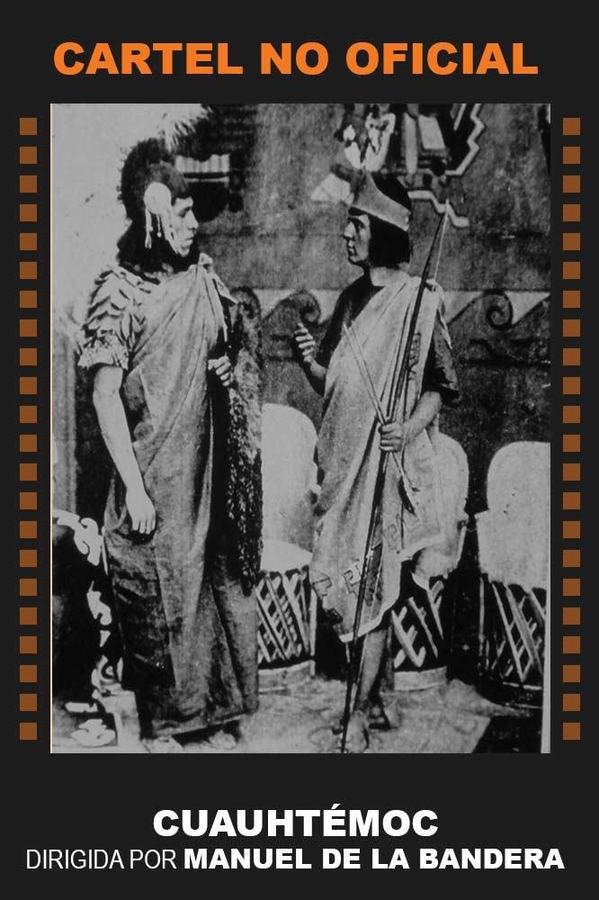
Cuauhtémoc emerges not merely as a historical chronicle but as a visceral exploration of power, faith, and the inexorable tide of empire. Set against the backdrop of the 16th-century Spanish conquest, the film immerses viewers in a world where every stone of Tenochtitlan whispers with ancestral memory. The screenplay, though rooted in documented history, infuses its characters with a psychological depth that transcends historical reenactment. It is this alchemy of fact and artistry that elevates Cuauhtémoc beyond its peers in the annals of cinematic historiography.
The narrative unfolds in three acts, each marked by a distinct tonal shift. The first act, a vibrant celebration of Aztec cosmology, introduces Cuauhtémoc as a young monarch grappling with the weight of his dynasty’s legacy. Director Concepción juxtaposes scenes of ritualistic dance with quiet moments of introspection, highlighting the duality of leadership as both sacred duty and existential burden. The second act, a harrowing descent into conflict, mirrors the psychological unraveling of its protagonist as the Spanish, led by Hernán Cortés, encroach upon the empire’s heartland. Here, the film’s pacing accelerates, with montages of battle interspersed with fragmented dialogues that echo the dissonance of a culture under siege.
Salvador Quiroz’s performance is the emotional cornerstone of the film. His portrayal of Cuauhtémoc is devoid of the hagiographic gloss often afforded to historical figures; instead, the character is rendered as a man torn between pragmatism and principle. A standout scene occurs during a clandestine meeting with a Spanish emissary, where Quiroz’s subtle micro-expressions—a fleeting glance, a clenched jaw—convey the agony of a leader aware of his impending defeat. This scene, when compared to the tense courtroom dynamics in A Wife on Trial, illustrates a shared directorial fascination with moral crossroads, though Cuauhtémoc’s stakes are rendered on a grander, more mythic scale.
The third act, a slow-motion surrender, is the film’s most audacious segment. Rather than glorifying resistance or lamenting defeat, it interrogates the futility of both. In one memorable sequence, the cinematographer frames Cuauhtémoc’s capture not as a climactic confrontation but as an exhausted resignation, the camera lingering on the emperor’s bare feet trudging through ash-covered ruins. This visual motif, a recurring theme in The Mill on the Floss, underscores the quiet heroism of individuals lost to history’s grand narratives.
Technically, Cuauhtémoc is a marvel. The production design, a collaboration between artisans from Mexico and Spain, resurrects the splendor of Aztec architecture with astonishing fidelity. The use of natural light in key scenes—particularly during the ritual of Huitzilopochtli—creates an almost ethereal quality, contrasting sharply with the harsh, desaturated palette of the siege sequences. Sound design further enhances this dichotomy: traditional drumbeats and flutes give way to the percussive clang of steel, a sonic metaphor for cultural erasure.
Yet, the film is not without its detractors. Some critics argue that the pacing in the second act becomes overly frenetic, sacrificing narrative coherence for stylistic flair. Additionally, the depiction of Cortés, played with chilling detachment by Miguel Ángel Ferriz, has been met with mixed reactions. While some laud the villain’s lack of overt villainy as a bold artistic choice, others find it undercuts the emotional impact of Cuauhtémoc’s plight. These critiques, however, do little to diminish the film’s broader achievements.
Thematically, Cuauhtémoc thrives in its exploration of memory and myth. The film’s final act, which follows the emperor’s captivity in Spain, is less about his death than about the commodification of his legacy. This meta-commentary on historical memory resonates with contemporary audiences, drawing parallels to how modern nations mythologize their pasts. In this respect, the film finds kinship with Die Landstraße, which similarly interrogates the malleability of memory in post-war Europe.
In conclusion, Cuauhtémoc is a triumph of historical storytelling, offering a poignant reflection on the costs of empire and the resilience of cultural identity. Its technical prowess, coupled with its nuanced performances and philosophical depth, cements its place as a modern classic in the canon of global cinema. For those seeking a film that marries historical rigor with artistic innovation, Cuauhtémoc is an unmissable experience.

IMDb 7.3
1934
Community
Log in to comment.