DbcultAccessing Vault...
Cult Review
Senior Film Conservator
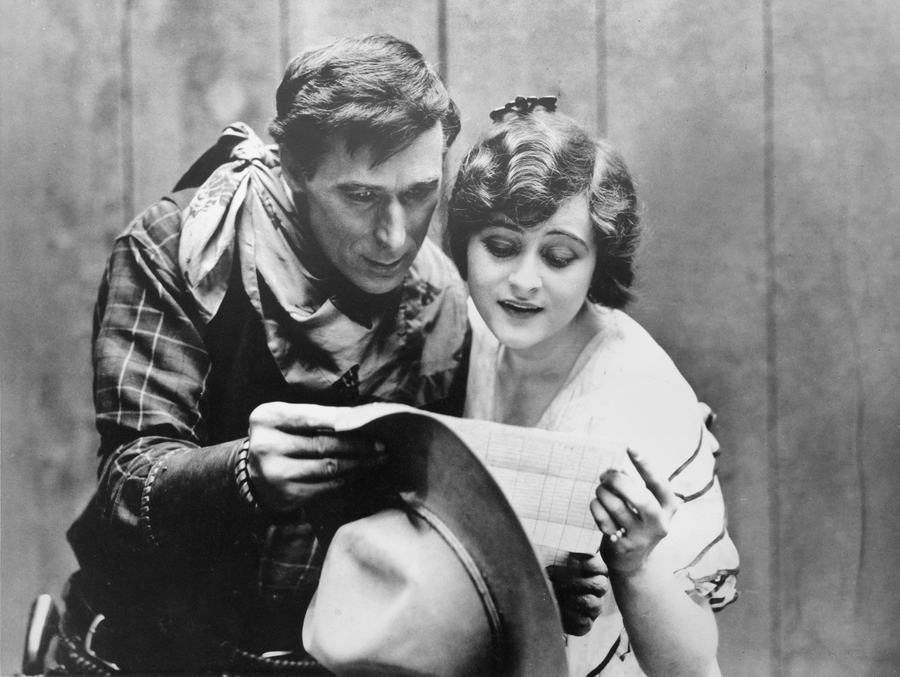
In the expansive, often brutal tapestry of early American cinema, few figures cast a shadow as long and indelible as William S. Hart. His persona, that of the 'good-bad man,' a stoic figure embodying a complex moral code in the heart of the Wild West, found perhaps one of its most definitive articulations in Truthful Tulliver. This cinematic gem, a silent film from an era when narrative depth was conveyed through gesture, expression, and the sheer force of a performer's presence, offers more than just a thrilling Western adventure; it presents a profound meditation on justice, redemption, and the establishment of societal order in a lawless land.
The film opens with the arrival of Truthful Tulliver, a newspaperman by trade but a moral crusader by nature, in the aptly named Glory Hole. He is not merely seeking to print headlines; he is intent on forging a community, on bringing the light of truth and the weight of public opinion to a place shrouded in the shadows of vice. Accompanying him is Silver Lode Thompson, his loyal printer, a testament to the idea that even in the most rugged environments, the tools of civilization – the printing press, the written word – hold immense power. This initial setup immediately establishes Tulliver as an outsider, a harbinger of change, armed not with a six-shooter, though he proves adept with one, but with an ink-stained hand and an unwavering conviction. His commitment to establishing a newspaper in such a raw, untamed settlement speaks volumes about his character, suggesting a belief in the inherent good of humanity and the transformative potential of transparency.
Glory Hole, however, is far from glorious. It is a town under the insidious sway of York Cantrell, an Easterner whose veneer of respectability barely conceals his deep-seated corruption, and his local enforcer, the ironically monikered "Deacon" Doyle. Doyle presides over the Forty Rod saloon, a veritable cesspool of depravity and the epicenter of the town's moral decay. This saloon is not just a place for drinking and gambling; it is a symbol of the unchecked power that threatens to engulf Glory Hole, a stark contrast to the burgeoning promise Tulliver represents. The narrative quickly brings into focus the plight of the Burton sisters, Grace and Daisy, two figures of innocence in a landscape ripe with predatory intentions. Their public humiliation at the hands of Doyle's rowdy patrons serves as the catalytic event, an affront that Tulliver, with his innate sense of chivalry and justice, cannot ignore. This moment is quintessential Hart, showcasing his hero's immediate, visceral response to injustice, a theme recurrent in his filmography, perhaps most notably echoed in the stern moral reckoning found in The Lash.
Tulliver's intervention is swift and decisive, marking him as a formidable adversary to Doyle and the entrenched corruption. Yet, his primary weapon is not brute force, but the very newspaper he has established. The next day, under bold, declarative headlines, Tulliver’s paper demands Doyle's expulsion, a powerful demonstration of the press as a force for societal cleansing. This is a fascinating aspect of the film, highlighting the nascent power of media in shaping public discourse and challenging established, albeit corrupt, authority. It’s a testament to the belief that truth, when given a platform, can indeed shake the foundations of even the most entrenched wrongdoing. Doyle’s response is predictable: a public challenge, a gauntlet thrown down in the heart of his domain, the Forty Rod Saloon, at a precise hour. This sets the stage for a classic Western confrontation, but with a Hartian twist.
The ensuing showdown is a masterclass in silent film action and character development. Tulliver, ever the strategist, confounds Doyle and his henchmen by entering not through the front, but from the rear, a tactical surprise that underscores his unconventional approach to justice. What follows is an iconic sequence: Tulliver, mounted on his horse, deftly lassoes Doyle and his gang, dragging them unceremoniously out into the desert. This act is not merely a display of physical prowess; it is a symbolic expulsion, a cleansing of the town's moral pollutants. He doesn't kill them; he banishes them, issuing a stark warning never to return to Glory Hole. This method of frontier justice—swift, decisive, and without unnecessary bloodshed—aligns perfectly with Hart's 'good-bad man' archetype, a figure who operates outside strict legal frameworks but within an unshakeable moral code. It resonates with the kind of self-reliant heroism seen in other Westerns of the era, where the individual, rather than an established system, becomes the arbiter of right and wrong. The scene, devoid of dialogue, relies solely on Hart’s commanding presence and the visual storytelling, a hallmark of early cinema that still captivates today.
However, the narrative takes a darker turn as Doyle, defying banishment, returns under the cover of night, driven by a thirst for vengeance. He shoots at Tulliver from York Cantrell's room, revealing a deeper, more sinister connection between the two villains. This act forces Tulliver to take more drastic measures, driving both men out of town. The hero, in his pursuit of justice, remains tragically unaware of the profound personal damage Cantrell has inflicted upon Daisy Burton. This revelation, that Cantrell has wronged Daisy, adds a layer of moral complexity to the narrative, shifting the stakes from mere public corruption to deeply personal betrayal. It’s a moment that underscores the often-hidden suffering beneath the surface of frontier life, a theme that can be found in the subtle emotional dramas of films like Mice and Men, even if their genres diverge significantly.
The ensuing emotional turmoil is palpable, particularly through the silent, expressive performances. Daisy, burdened by her secret, confesses to her sister Grace. Grace, in turn, seeks out Tulliver, desperate for a resolution, for justice. Yet, in a classic narrative device of tragic misunderstanding, Tulliver misinterprets Grace's fervent plea, believing her concern for Cantrell stems from personal affection. His promise to bring Cantrell back, therefore, is rooted in a misguided sense of chivalry, a willingness to sacrifice his own burgeoning feelings for what he perceives as Grace's happiness. This moment is crucial, highlighting the internal conflict of the stoic hero, forced to act against his own desires for a perceived greater good. It speaks to a common trope in melodramas of the era, where communication breakdowns often drive the emotional core of the story, reminiscent of the intricate social dances in films like The White Rosette.
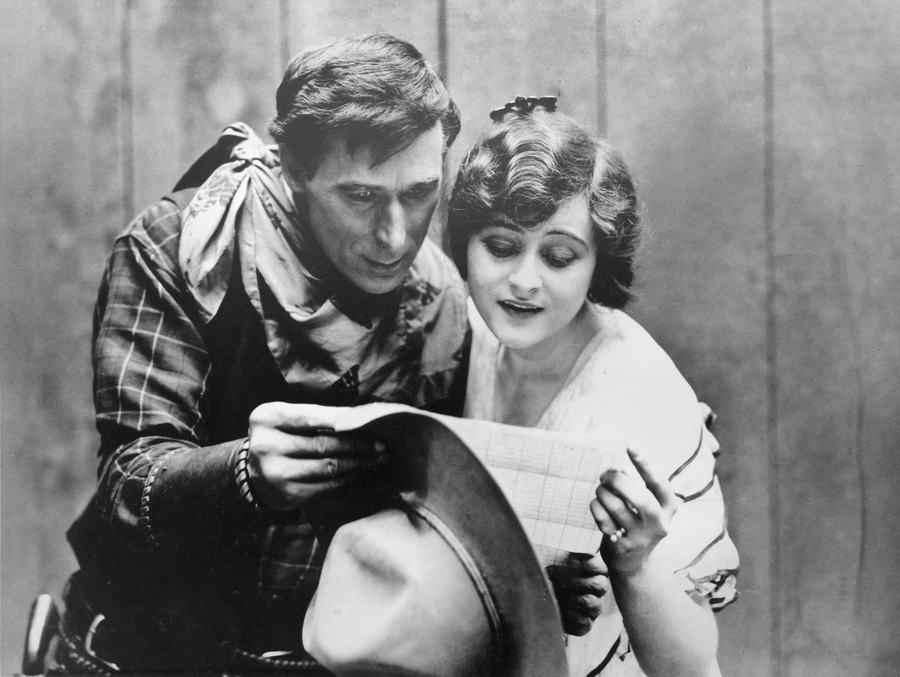
Tulliver, true to his word, embarks on a relentless pursuit, intercepting Cantrell at the railroad and compelling his return to Glory Hole. This act of forcing a man back into the very place he sought to escape is a testament to Tulliver’s unwavering commitment to his promises, even those born of misunderstanding. It is here, upon Cantrell’s forced return, that the layers of misapprehension finally begin to unravel. The truth emerges: Cantrell, perhaps genuinely chastened by his expulsion and the confrontation with Tulliver, expresses a desire for redemption. He wishes to marry Daisy, to make amends, and to embark on a new, honorable life. This pivotal moment of revelation is where Tulliver’s own understanding crystallizes. He comprehends his mistake, recognizing the true nature of Grace’s concern and Cantrell’s newfound penitence. It’s a powerful arc of redemption, not just for Cantrell, but for Tulliver himself, whose initial, albeit noble, misjudgment gives way to profound empathy and clarity.
The film culminates in a deeply satisfying resolution, a testament to the power of truth, forgiveness, and love. As Cantrell and Daisy are united in marriage, signifying a new beginning for both them and for Glory Hole, the camera turns to Grace and Tulliver. Grace, her face alight with relief and gratitude, turns towards the man who brought about this resolution, seeing him watching her with an eloquence that transcends words. Her eyes, for a moment, fall, a silent acknowledgment of the unspoken affection between them. Then, with a gesture of profound tenderness, she comes to him, their hands clasping, sealing a bond forged in the crucible of frontier justice and shared humanity. As the priest blesses the newly wedded couple, Tulliver draws Grace close, a silent embrace that speaks volumes about their future together. This final scene is a beautiful synthesis of the film's themes: the triumph of good over evil, the possibility of redemption, and the quiet, enduring power of love. It’s a conclusion that elevates Truthful Tulliver beyond a simple Western, placing it firmly in the realm of profound human drama, much like the enduring struggle for justice and humanity depicted in Les misérables, albeit with a distinctly American frontier flavor.
William S. Hart's performance as Truthful Tulliver is a masterclass in silent acting. His stoic demeanor, piercing gaze, and economical gestures convey a depth of character that many actors struggle to achieve even with dialogue. He embodies the ideal of the Western hero: a man of principle, capable of decisive action, yet possessing a deep well of compassion and an unwavering moral compass. Hart’s films, including Truthful Tulliver, were instrumental in shaping the iconography of the Western genre, presenting a more nuanced, often melancholic, portrayal of the frontier than many of his contemporaries. He understood the soul of the West, depicting its harsh realities alongside its inherent potential for heroism and redemption.
The film's exploration of the press as a tool for justice is particularly noteworthy. In an era before widespread mass media, the local newspaper in a frontier town served as a vital forum for public discourse and accountability. Tulliver's use of his paper to challenge Doyle's corruption is a powerful statement about the Fourth Estate's role in a democratic society, even a nascent one. It suggests that truth, when disseminated effectively, can be a more potent weapon than any firearm. This theme, while perhaps not as overtly explored in other films like One Hour which focused on personal drama, resonates strongly in the context of creating order out of chaos.
Furthermore, the narrative's intricate dance of misunderstanding and eventual clarity adds significant emotional weight. It's a testament to the writing of J.G. Hawks and the direction that such complex emotional arcs could be conveyed without spoken words. The audience is drawn into Tulliver's mistaken assumption about Grace, sharing in his noble, yet misguided, commitment, and then experiencing the catharsis of the truth's revelation. This sophisticated storytelling sets Truthful Tulliver apart, demonstrating that silent films were far from simplistic in their narrative construction or emotional resonance. The film's ability to weave together themes of public justice, personal redemption, and romantic love into a cohesive and compelling whole is a testament to its enduring quality.
The supporting cast, while overshadowed by Hart's commanding presence, contributes significantly to the film's texture. Nina Byron as Grace and Alma Rubens as Daisy bring a vulnerability and strength to their roles, embodying the women of the frontier who often bore the brunt of its harshness. Norbert A. Myles as Silver Lode Thompson provides a loyal counterpoint to Tulliver, representing the steadfastness required to build a new society. Walter Perry as "Deacon" Doyle and Milton Ross as York Cantrell effectively portray the forces of villainy, their actions driving much of the conflict and providing the necessary foil for Tulliver's heroism. The interplay between these characters, often conveyed through subtle glances and body language, is a masterclass in ensemble silent film acting.
In conclusion, Truthful Tulliver is more than just a historical artifact; it is a vibrant, engaging piece of cinema that continues to speak to universal themes of justice, redemption, and the human capacity for change. William S. Hart's iconic performance anchors a narrative rich with moral complexity and emotional depth. For aficionados of classic Westerns, or indeed anyone interested in the foundational narratives of American cinema, Truthful Tulliver offers a compelling glimpse into a bygone era, reminding us that the pursuit of truth and the establishment of a just society are timeless endeavors, as relevant today as they were in the dusty streets of Glory Hole.
IMDb 6.8
1934
Community
Log in to comment.