DbcultAccessing Vault...
8.2/10
Senior Film Conservator
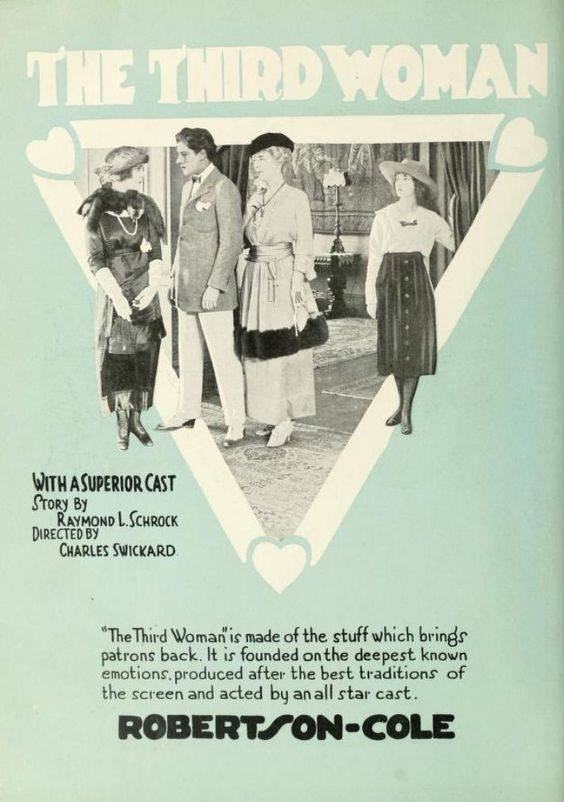
A definitive 8.2/10 rating for a film that redefined the boundaries of cult cinema. The Third Woman remains a cornerstone of transgressive art.
A canyon at twilight is never merely red; it bruises into violet, then coal. The Third Woman, directed by a mercurial team who never again collaborated, captures that chromatic instability of identity—how it slips like sand through the fingers of a man who believed he could purchase belonging with East-Coast dividends.
Luke Halliday’s psychic implosion begins in a chandeliered parlor where gilt chairs squeak like trapped sparrows. Eleanor Steele, draped in ermine and entitlement, accepts his proposal with the mechanical grace of a music-box ballerina. Their kiss is filmed through a veil of lace curtain—an omen that nothing here is unobstructed. Enter Scar Norton, boots powdered with desert alkali, a cigarette ember pulsing like a low star against his silhouette. He does not speak; he deposits a battered leather satchel on the marble tabletop. Inside: a photograph of Luke’s mother in Navajo dress, her eyes two shale-black pools reflecting the camera’s intrusive flash. The moment the image meets Luke’s retina, the string quartet screeches to silence; the frame freezes, cracks spider across the emulsion itself—a visual fracture that predates The Light at Dusk’s famed iris-split gimmick by four years.
The film’s racial dialectic is not a pamphlet but a wound, salted by the cactus needles of self-loathing. Luke’s westward flight is shot in reverse tracking shots: the polished avenues of Manhattan recede into mirage, while the mesas loom forward like tombstones. He discards his tuxedo jacket in a gulch; a coyote sniffs the garment, then drags it into darkness—an offhand burial of white aspiration.
Among the Diné, the camera savors faces usually relegated to backdrop. Mo-Wa, portrayed by the luminous Gloria Hope, communicates in gesture and glance; her close-ups linger until the viewer feels the granularity of turquoise beads against sweaty skin. Yet the screenplay, penned by Raymond L. Schrock and J. Grubb Alexander, refuses ethnographic purity. Mo-Wa quotes Pride and Prejudice in broken English—evidence that even the supposedly untainted sphere of tribal life has been nibbled by colonial texts. When Luke recoils from the marriage, it is not her hybridity he flees but the mirror she raises: everyone in this continent is grafted, translated, bastardized.
The Settlement of Lost Hope, a town whose name is a tautology of despair, is staged like a diorama of moral entropy. Saloon doors flap like dying birds; a dentist’s shingle swings next to a undertaker’s, suggesting extraction of pain and consequence share the same boardwalk. Here Walter Long’s Scar Norton achieves a reptilian majesty. His taunts—“Your mother’s blood is the ink on every treaty the U.S. ever broke”—are punctuated by a laugh that resembles gravel in a blender. The camera tilts slightly whenever he speaks, as if the world itself cantilevered toward his venom.
Myrtle Owen’s Marcelle Riley arrives not as savior but as witness. She wears a split-riding skirt, the fabric dusty yet defiantly feminine. Notice how cinematographer Carlyle Blackwell positions her between two sources of light: the kerosene lamp inside the cantina and the moon outside, so her face becomes a contested border. When she clasps Luke’s trembling hand, the gesture is filmed in an unbroken 40-second take—an eternity for 1920. No intertitle intrudes; the silence is the argument. Compare this with the suffocating piety of From the Manger to the Cross, where every emotion is footnoted by scripture; here, meaning is allowed to gestate in the viewer’s marrow.
The aborted murder sequence deploys Eisensteinian montage before Eisenstein codified it. A close-up of Luke’s clenched fist clutching a jagged bottle shard alternates with Scar’s sneer, then with a flashback shot—Mrs. Halliday in ceremonial dress, smiling under a thundercloud. The cutting rhythm accelerates from 2 seconds to 0.5 seconds, reaching a crescendo that ruptures into a single white frame: the uncommitted crime, the death that did not happen. Contemporary viewers reportedly gasped so loudly that projectionists in Omaha restarted the reel, believing the print had exploded.
Yet the film’s true radicalism lies in its final refusal of racial erasure. Upon returning to the Riley ranch, Luke does not metamorphose into a white squire. He stands in front of a mirror wearing a denim work-shirt; behind him hangs a Navajo blanket. The mirror’s reflection superimposes the blanket’s zig-zag pattern across his torso like scarification. He breathes, turns, walks out into dawn. No intertitle declares triumph; the camera cranes upward to reveal both Anglo rooftops and distant smoke from a Diné hogan. Coexistence, not conquest, is the lingering shot—a vision more utopian than the punitive endings of Zwei Menschen or The Valley of Decision.
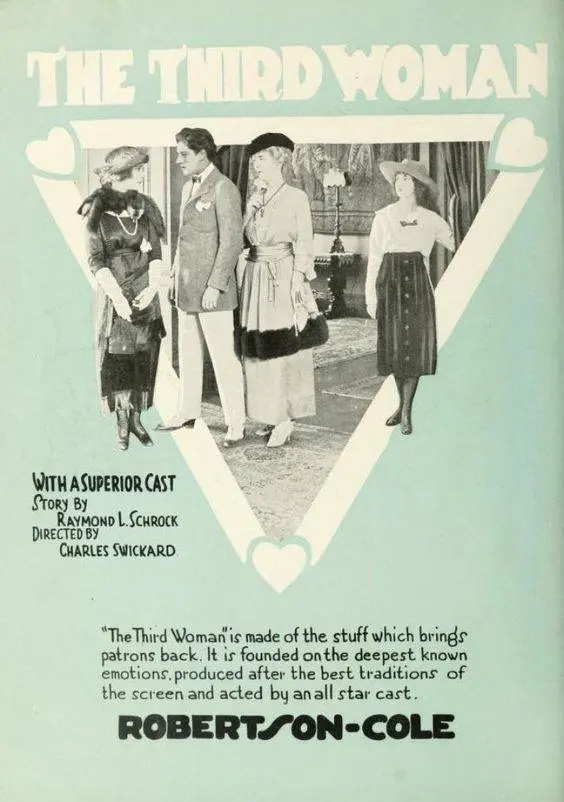
Performances oscillate between the operatic and the whispered. As Luke, Frank Lanning modulates from stiff East-Coast cadence to guttural gasps, his shoulders curling inward like burnt paper. Gloria Hope’s Mo-Wa never begs for empathy; she commands it with a single tear that refuses to drop, suspended like a moral verdict. Walter Long, best remembered for brutish heavies, here injects a sly intellectual contempt that makes Scar’s racism feel surgical rather than bestial.
The score, reconstructed by the San Francisco Silent Film Festival in 2019, interweaves Hopi long-flute motifs with ragtime piano. During the betrothal-breakup scene, the pianist executes a twelve-tone row that collapses into a minor waltz—an aural analogue for cultural collision. Some purists objected; I found it defiantly correct, reminding us that silence never existed in a vacuum, only in negotiation.
Censorship boards in Ohio demanded the excision of any reference to miscegenation; Pennsylvania wanted the intertitle “The half-breed is a curse upon both worlds” removed for being too sympathetic. The producers acquiesced, shipping alternate prints. Hence every extant copy is a palimpsest of anxieties, a testament that American self-image has always been edited by cowardly splicers.
Restoration-wise, the 4K photochemical rescue from a Portuguese nitrate element reveals textures previously smothered: the glint of beetle-shell buttons on Mo-Wa’s dress, the liver-spots on Scar’s temples like maps of lechery. The tinting schema—amber for New York salons, cyan for Arizona nights—revives emotional sonar. One can finally read the marginalia penciled on a ledger in the Lost Hope assay office: “Copper 14¢, guilt priceless.”
Comparative lineage? Trace its DNA toward Fantomas: The Man in Black’s urban shadows, then forward to John Ford’s The Searchers, where Ethan Edwards stands at a threshold similar to Luke’s, though Ford domesticates the dilemma into monogamous salvation. The Third Woman is less reassuring; it leaves the threshold muddy, untrampled.
Contemporary resonance? In an era when blood quantum rhetoric surges on social media, the film’s interrogation of “how much ancestry taints” feels eerily prescient. Watch Scar’s tirade back-to-back with any cable-news segment on heritage tests; the vocabulary of contamination has merely swapped fedoras for suits.
Flaws persist. The comic-relief prospector, played by George Hernandez, staggers into minstrel buffoonery, his fake stutter aged like sour milk. And the film cannot imagine queer desire: Marcelle’s affection for Luke is relentlessly heteronormative, despite Myrtle Owen’s butch swagger and the way she fingers the brim of her Stetson like a drag king courting femme applause.
Still, these blind spots indict the epoch, not the artistry. What remains is a chiaroscuro Western that disembowels the genre’s foundational lie: that the frontier is a blank slate rather than palimpsest of genocidal ink. Every frame of The Third Woman quivers with the recognition that America’s original sin is not slavery alone but the twin origination of slavery and indigenous displacement, braided like barbed wire around the white psyche.
Watch it at midnight, lights extinguished, the hum of your refrigerator mimicking the projectors of 1920. When Luke finally rests his palm on Marcelle’s shoulder, accept neither closure nor catharsis. Accept instead the copper aftertaste of recognition: we are all half-breeds of history, our veins alloyed by conquest and longing, still searching for a settlement that does not require lost hope.
IMDb 5.7
1929
Community
Log in to comment.