DbcultAccessing Vault...
Cult Review
Senior Film Conservator
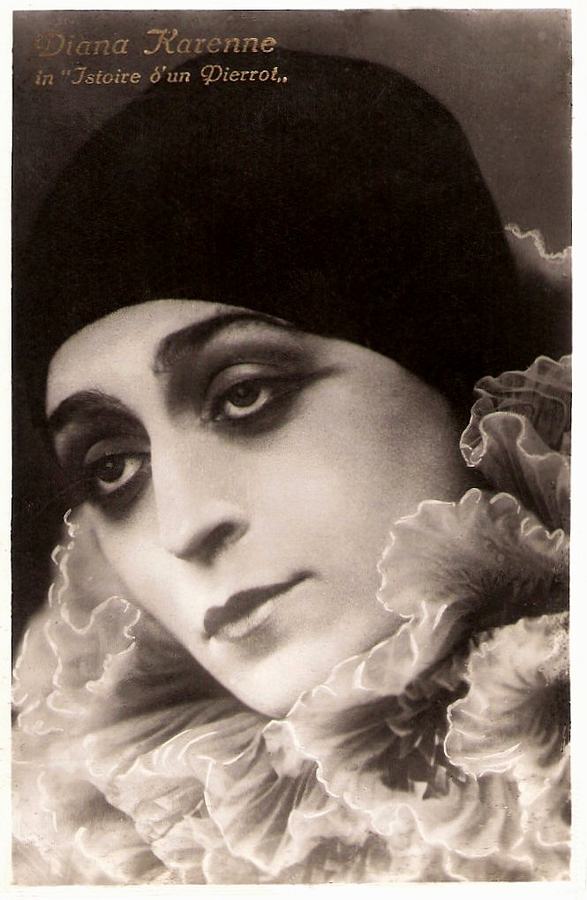
There are films that speak, and then there are films that sing, not with audible notes, but with the profound, resonant echo of the human spirit. Pierrot, an often-overlooked masterpiece from an era defined by grand gestures and silent declarations, belongs unequivocally to the latter. It is a cinematic lament, a ballet of sorrow choreographed on the stage of the soul, anchored by a performance so devastatingly authentic it transcends the very medium of film itself. This is not merely a story; it is an experience, an immersion into the melancholic beauty of unrequited devotion and the artist's eternal burden.
At the heart of this poignant drama lies Diana Karenne's portrayal of Luna, a mime artist whose every sinew and muscle becomes an instrument of expression. Karenne does not merely act; she transmutes. Her Luna is not just a character; she is the living embodiment of the Pierrot archetype, a figure of profound, almost unbearable sadness, trapped behind a mask of performative joy. Her eyes, even in the stark black and white of the film stock, convey an ocean of unspilled tears, a silent scream that reverberates long after the frame has faded. The subtlety of her gestures, the way a hand might tremble almost imperceptibly, or a shoulder slump with the weight of invisible burdens, speaks volumes where dialogue would only diminish. It is a masterclass in physical storytelling, a testament to the power of the human form to convey the most complex emotional landscapes.
Consider the scene where Luna observes Julian and Elara from the shadows of the wings. Karenne’s face, initially still and composed, slowly crumbles. It’s not a sudden, dramatic collapse, but a gradual, agonizing descent into despair, a silent implosion witnessed only by the audience. Her body language shifts from poised observer to a figure of utter desolation, her shoulders drawing inward as if to protect a heart already shattered. This nuanced approach to grief is what elevates her performance beyond mere theatrics, imbuing Luna with a tragic dignity that is both captivating and heartbreaking. In an era where many performances leaned towards the bombastic, Karenne's quiet intensity is a revelation, a precursor to the understated power we often laud in modern cinema.
Opposite Karenne's subdued anguish, Vittorina Moneta as Elara provides a vibrant, almost cruel counterpoint. Elara is the sun to Luna's moon, a dancer whose vivacity and effortless charm draw all light and attention, particularly that of Julian. Moneta's performance is less about internal struggle and more about outward allure, a kinetic energy that radiates across the screen. Her movements are fluid, her smiles genuine and infectious, highlighting the chasm between her character's joyous existence and Luna's cloistered sorrow. Elara is not a villain, but rather a force of nature, an unwitting catalyst for Luna's deepening despair. Moneta plays her with a natural grace that makes Julian's attraction entirely understandable, thus amplifying the tragedy of Luna's unrequited love. The contrast between these two formidable actresses creates a dynamic tension that propels the narrative, making every shared frame a study in emotional chiaroscuro.
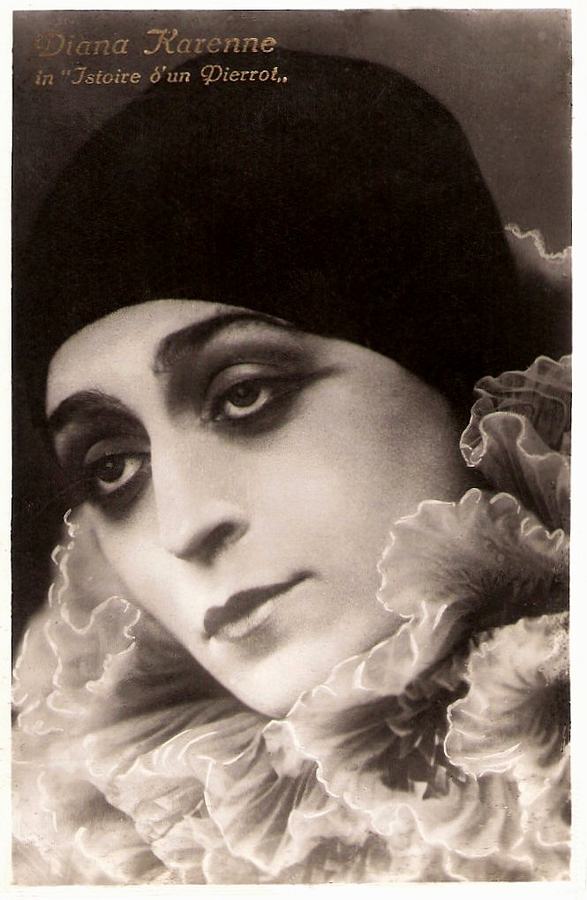
The film masterfully uses their contrasting energies. When Elara dances, the screen seems to brighten, her joy almost palpable. When Luna performs, a somber, ethereal glow envelops her, a testament to the profound artistry born of suffering. This dichotomy isn't just thematic; it's visual, a deliberate choice in cinematography and blocking that underscores the emotional gulf. It's reminiscent of the stark emotional contrasts found in films like Jealousy, where the interplay of rival affections creates a similar, albeit more overtly dramatic, tension. Here, however, the jealousy is internalized, a silent, festering wound within Luna's heart, made all the more poignant by Elara's innocent radiance.
Beyond the stellar performances, Pierrot is a visual poem, a testament to the expressive power of early cinema's aesthetic choices. The cinematography is exquisite, utilizing deep shadows and stark contrasts to reflect Luna's internal world. Backstage scenes are often bathed in gloom, broken only by the harsh glare of stage lights filtering through cracks, symbolizing the fleeting nature of her public persona versus the enduring darkness of her private anguish. The stage itself, with its ornate backdrops and theatrical flourishes, becomes a character in its own right, a gilded cage where Luna's spirit finds both its greatest expression and its deepest torment. The costumes, particularly Luna's iconic Pierrot ensemble, are not mere attire but extensions of her emotional state, initially pristine, then gradually appearing more worn, mirroring her deteriorating spirit.
The direction masterfully employs close-ups to capture the minutiae of Karenne's expressions, allowing the audience to witness the subtle tremors of her lips, the flicker of pain in her eyes. These moments are crucial, transforming the theatricality of mime into an intimate confession. The framing often isolates Luna, placing her in vast, empty spaces even when surrounded by others, visually reinforcing her profound loneliness. This sense of isolation, even amidst a crowd, is a recurring motif that distinguishes Pierrot from more conventional melodramas. It echoes the solitary figures often found in expressionistic art of the period, where the individual's inner turmoil is projected onto the external world.
The thematic depth of Pierrot is truly remarkable. It delves into the harrowing dichotomy between the artist's public persona and their private agony. Luna's Pierrot is not merely a costume; it is a spiritual extension of herself, a vessel for her deepest, most inexpressible emotions. The film explores the idea that true art often springs from profound suffering, that the most beautiful performances are frequently born of the greatest personal cost. Her stage provides an outlet, a place where her sorrow is not just tolerated but celebrated, albeit by an audience oblivious to its true source. This exploration of the artist's sacrifice is a timeless theme, one that resonates across generations and artistic disciplines.
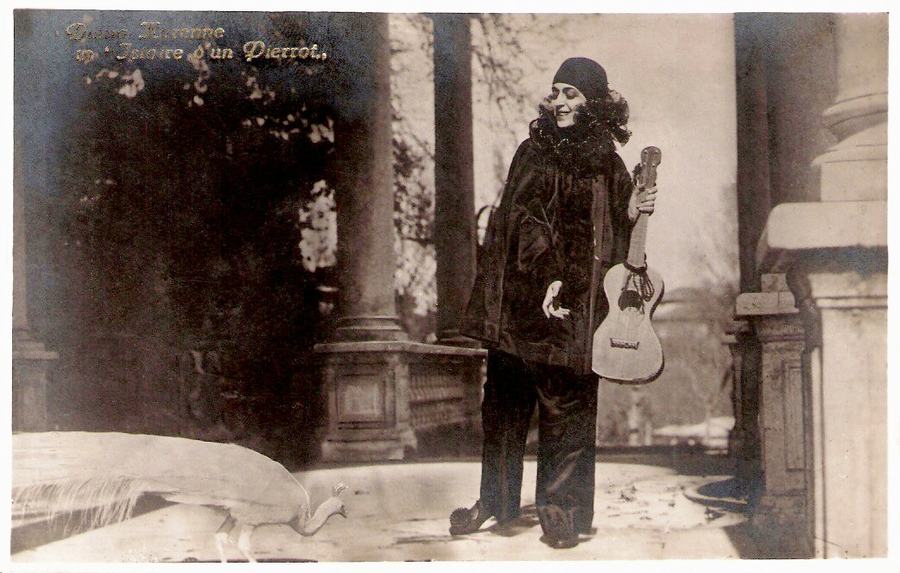
Furthermore, the film is a meditation on unrequited love, presenting it not as a fleeting romantic trope, but as a consuming, soul-altering force. Luna's love for Julian is a silent, unacknowledged burden, a love that can never be spoken, only performed. The tragedy lies not just in its unreciprocated nature, but in its very ineffability. She cannot declare it, cannot fight for it; she can only embody its pain. This distinguishes it from more overt romantic dramas like The Three of Us, where the complexities of relationships are often articulated through dialogue and direct confrontation. In Pierrot, the emotional landscape is communicated through the language of silence and longing, making it all the more potent.
The film also subtly critiques societal indifference to the artist's true self. The audience applauds Luna's performances, marveling at her ability to evoke such profound emotion, yet they remain utterly blind to the raw, personal agony that fuels her art. They consume the spectacle without ever seeing the human being behind the mask. This theme of public perception versus private reality is handled with a delicate touch, avoiding heavy-handed moralizing while still delivering a powerful message. It reminds one of the subtle societal critiques found in films like Slander, though here the 'slander' is not of reputation, but of the soul's true suffering being misread as mere entertainment.
The narrative of Pierrot is a carefully constructed descent, a slow, inexorable journey towards a tragic, yet artistically transcendent, climax. The pacing is deliberate, allowing the audience to fully absorb Luna's gradual decline, to feel the weight of each unexpressed emotion. There are no sudden plot twists or contrived resolutions; instead, the story unfolds with the inevitability of a Greek tragedy. Each scene builds upon the last, deepening the sense of pathos and drawing the viewer further into Luna's internal world. The film understands that true emotional impact often comes from sustained tension and gradual revelation, rather than abrupt shocks.
The final performance is, without hyperbole, one of the most powerful sequences in early cinema. It is a raw, unflinching exposé of Luna's soul, a public confession of a love that can never be reciprocated. Karenne's performance here is nothing short of iconic, a cathartic explosion of all the suppressed emotions that have simmered beneath the surface throughout the film. Her movements become more frantic, her expressions more desperate, as if she is literally tearing her soul open on stage. It's a moment of profound artistic sacrifice, where the line between performer and character completely dissolves. The audience, still applauding, remains unaware that they are witnessing not a theatrical spectacle, but a real-life immolation of the spirit. This devastating climax elevates Pierrot from a mere melodrama to a profound statement on art, love, and human vulnerability.
Pierrot is more than just a historical artifact; it is a timeless exploration of themes that continue to resonate with contemporary audiences. The pain of unrequited love, the burden of artistic expression, the struggle to be seen and understood – these are universal human experiences that transcend the silent film era. Diana Karenne's Luna stands as one of cinema's most indelible tragic figures, a testament to the enduring power of a performance that speaks volumes without uttering a single word. The film's aesthetic beauty, its profound emotional depth, and its daring exploration of the human psyche ensure its place as a pivotal work, deserving of rediscovery and re-evaluation.
In an age preoccupied with sound and spectacle, Pierrot serves as a powerful reminder of the profound eloquence of silence, of the capacity of the moving image to convey the most intimate and heartbreaking truths. It is a film that lingers, its melancholic strains echoing in the mind long after the final frame, a poignant testament to the enduring power of human sorrow transformed into transcendent art. It asks us to look beyond the surface, to listen to the silent screams, and to empathize with the unseen struggles of those who perform for our pleasure. A true masterpiece, its legacy is not just in its historical significance, but in its ability to touch the deepest chords of our shared humanity.
IMDb 5.2
1932
Community
Log in to comment.